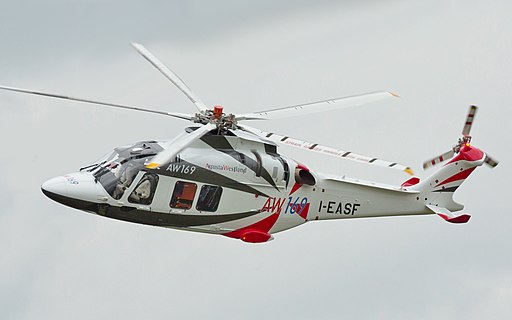
AgustaWestland AW169
AgustaWestland AW169: A Modern Marvel in Rotary-Wing Aviation
The AgustaWestland AW169 represents a pinnacle in modern helicopter design. Combining elegant engineering with high-performance attributes, this twin-engine rotorcraft is tailored to a broad range of missions—from civilian emergency services to specialized military operations. Its sophisticated blend of power, avionics, and structural innovation positions it at the forefront of today’s aerospace technology .
Development and Background
Origins and Design Philosophy
Born out of the need for a light-intermediate rotorcraft, the AW169 was developed to build on proven concepts from predecessors like the AW139. The design philosophy emphasized commonality with larger rotorcraft while delivering a compact and efficient solution ideal for various demanding environments. The helicopter’s first flight in May 2012 ushered in a new era of performance, paving the way for certification in 2015 and subsequent global service. This agile aircraft combines state-of-the-art materials, ergonomic cockpit design, and a dynamic structure aimed at maximizing both safety and operational efficiency .
Mission Flexibility and Operational Roles
The AW169 is not built for a single purpose. Its adaptable design allows it to serve in multiple roles:
- Emergency Medical Services (EMS): With a spacious, configurable cabin, it meets stringent requirements for rapid patient transport and life-critical missions.
- Search and Rescue (SAR): The helicopter’s power-to-weight ratio and advanced systems enable operations in challenging weather and rugged terrains.
- VIP and Corporate Transport: Offering superior comfort combined with a modern, noise-reducing interior, it caters to high-end clientele as well as corporate needs.
- Military and Government Applications: Its robust construction and versatile equipment suite support surveillance, border patrol, and light transport missions.
This multi-role capability, coupled with dual-engine redundancy and advanced safety features, makes the AW169 a trusted asset around the world .
Technical Specifications
Overall Dimensions and Performance
The AW169 is a compact yet robust helicopter featuring dimensions that ensure superior aerodynamics and ample cabin space:
- Length: Approximately 14.65 meters
- Main Rotor Diameter: Around 12.12 meters
- Tail Height: About 4.50 meters
- Fuselage Diameter: Roughly 1.40 meters
- Maximum Takeoff Weight: 4,800 kg (10,582 lbs)
These specifications provide the aircraft with high agility and stability in flight while ensuring a comfortable, spacious cabin environment for up to 10 occupants. Its carefully tuned aerodynamic profile minimizes drag, allowing for efficient cruise and rapid climb performance, which is crucial during emergency operations or precision-required missions .
Power Plant and Engine Characteristics
The propulsion system of the AW169 is central to its high performance and reliability:
- Engines: Twin Pratt & Whitney Canada PW210A turboshaft engines
- Horsepower per Engine: Approximately 1,000 hp each
- Total Power: Combined output that ensures rapid climbs and sustained cruising even under adverse conditions
This dual-engine configuration guarantees not only exceptional performance but also provides a critical redundancy feature, enhancing safety during single-engine operations. The PW210A engines are optimized for efficiency, ensuring reduced fuel consumption while maintaining the robust power required for versatile mission profiles .
Avionics and Flight Control Systems
Modern avionics are a hallmark of the AW169, allowing pilots to operate confidently in complex environments:
- Integrated Avionics Suite: Incorporates advanced digital displays, flight management systems, and health & usage monitoring systems (HUMS) for real-time diagnostics.
- Cockpit Design: Ergonomically optimized to enhance pilot situational awareness, featuring intuitive controls and clear instrumentation that reduce workload during critical operations.
- Navigation: Seamless integration with modern GPS and satellite communication systems for precise navigation and efficient route management.
These technological advances ensure that the AW169 not only meets rigorous safety standards but also offers unmatched operational efficiency in diverse mission scenarios .
Safety Enhancements and Redundancy
Safety is paramount in the design of the AW169, with a range of systems integrated to secure every flight:
- Tuned Mass Damper System: Minimizes vibrations and stabilizes the airframe, contributing to a smoother ride and extending the aircraft’s service life.
- Redundant Control Systems: Dual-engine setup alongside multiple safety backups ensures reliability even in the event of a component failure.
- Advanced Flight Control Aids: Automated flight controls assist pilots during takeoff, landing, and turbulent conditions—a critical factor for operations in unpredictable environments.
These features collectively bolster the AW169’s reputation as one of the safest and most reliable helicopters in its class .
Design and Construction
Structural Innovations
The construction of the AW169 exemplifies modern aerospace engineering:
- Materials: A blend of high-strength alloys and composite materials is used to strike the perfect balance between weight and durability.
- Rotor System: The main rotor is designed for optimal lift and efficient power transmission with minimized aerodynamic drag.
- Cabin Flexibility: The interior is engineered for multiple configurations, whether it be a medical evacuation setup, VIP carriage, or specialized military equipment installation.
This focus on advanced materials and aerodynamic efficiency is pivotal to the AW169’s outstanding performance, ensuring both longevity and adaptability in various operational scenarios .
Manufacturing Excellence and Global Production
Produced under the auspices of Leonardo’s helicopter division, the AW169 benefits from global manufacturing standards:
- Production Facilities: With operations in Italy and strategic partnerships worldwide, the AW169 is manufactured to meet international certification standards.
- Quality Control: Rigorous testing procedures and continuous improvements in production processes ensure that every unit delivered upholds the highest quality and safety benchmarks.
- Scalability: Modern production techniques allow for flexible manufacturing volumes, enabling Leonardo to adapt quickly to market demands and evolving regulatory requirements.
These facets of production not only improve efficiency but also solidify the helicopter’s place as a world-class product in the rapidly evolving aerospace market .
Operational Versatility and Future Outlook
Civilian and Commercial Operations
Within the civilian sector, the AW169 is celebrated for its flexibility and performance:
- Emergency Operations: Its rapid response capabilities and customizable interior have proven indispensable in emergency medical response, search and rescue, and disaster relief operations.
- Corporate Transport: The helicopter’s modern aesthetics, combined with a low-noise, high-comfort cabin, have made it a popular choice for VIP transport and high-end corporate travel.
- Utility Missions: Its operational efficiency and robust performance allow it to accommodate paraprofessional uses, including aerial surveys, media operations, and environmental monitoring.
Such versatility underscores the AW169’s broad appeal, demonstrating how state-of-the-art engineering can be harmonized with practical, real-world functions .
Military and Governmental Applications
The military applications of the AW169 extend its operational reach:
- Surveillance and Reconnaissance: The helicopter can be fitted with a range of sensors and communication gear, making it ideal for border patrol and reconnaissance missions.
- Special Operations Support: Adaptable for various mission parameters, the AW169 can transition from a transport role to light attack configurations when required by modern defense strategies.
- Law Enforcement: Enhanced with technology for real-time communication and data processing, it serves critical roles in surveillance, rapid deployment, and tactical support for security forces.
These military applications further demonstrate the AW169’s capability to perform under the most demanding conditions while maintaining the highest standards of reliability and performance .
Conclusion
The AgustaWestland AW169 stands as a beacon of modern rotorcraft innovation—a dynamic blend of power, safety, and technological sophistication. Its advanced twin-engine configuration, comprehensive avionics suite, and versatile design make it an invaluable asset in both civilian and military aviation sectors. As global demands for rapid, reliable, and adaptable aerial platforms continue to evolve, the AW169 is poised to lead the next generation of helicopter technology.
.jpg)