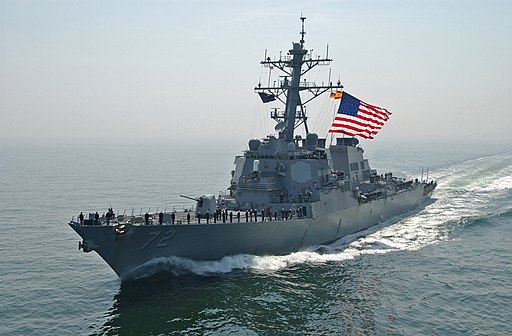
USS Mahan (DDG-72)
USS Mahan (DDG-72): A Modern Arleigh Burke-Class Destroyer
The USS Mahan (DDG-72) is a formidable example of United States naval innovation. As an Arleigh Burke-class guided missile destroyer and the first of the Flight II variant, she embodies the blend of advanced engineering, versatile combat capabilities, and operational flexibility that define modern naval warfare. Named in honor of Rear Admiral Alfred Thayer Mahan, a seminal naval strategist whose ideas have guided maritime doctrine for over a century, USS Mahan stands as a testament to the enduring power of sea control and forward defense .
Historical Background
Namesake and Legacy
Rear Admiral Alfred Thayer Mahan was a visionary whose influential writings on naval power and maritime strategy transformed how nations prepare for and project military force at sea. His concepts on sea power remain a cornerstone of maritime strategy today. By naming the vessel after him, the U.S. Navy pays homage not only to his scholarship but also to the essential role that naval supremacy plays in national security .
Construction and Commissioning
USS Mahan was built at Bath Iron Works in Bath, Maine—a shipyard renowned for its craftsmanship and longstanding relationship with the U.S. Navy. The construction timeline reflects the precision and urgency required by modern defense needs:
- Ordered: April 8, 1992
- Laid Down: August 17, 1995
- Launched: June 29, 1996
- Commissioned: February 14, 1998
Since her commissioning, USS Mahan has been homeported at Naval Station Norfolk in Virginia and has actively participated in numerous naval exercises and real-world operations, underscoring her readiness and adaptability in today’s complex maritime environment .
Design and Construction
Shipyard Excellence
Bath Iron Works has built many ships that have contributed significantly to U.S. national defense, and USS Mahan is no exception. The vessel’s design integrates decades of naval architectural expertise with state-of-the-art technology. Every facet of her construction—from the hull’s steel integrity to the advanced combat systems—reflects attention to detail and a commitment to operational excellence.
Flight II Evolution
As the first Flight II variant of the Arleigh Burke class, USS Mahan features innovations and enhancements that differ from earlier ships in her class. Improved sensor packages, updated combat systems, and refined weapon integration mark this evolution. These improvements allow the destroyer to perform multiple roles simultaneously, whether engaging air, surface, or subsurface threats during dynamic operational scenarios .
Technical Specifications
The USS Mahan is engineered with a suite of design features that ensure she remains among the most capable destroyers afloat. Below is an in-depth look at her technical characteristics.
General Characteristics
- Class and Type: Arleigh Burke-class Guided Missile Destroyer (Flight II)
- Displacement: Approximately 8,637 long tons at full load
- Length: 505 feet (154 meters)
- Beam: 59 feet (18 meters)
- Draft: Approximately 31 feet (9.4 meters)
- Complement: Roughly 33 commissioned officers, 38 chief petty officers, and about 210 enlisted personnel
These dimensions are carefully optimized to balance stability, maneuverability, and the capacity to integrate advanced systems—all while ensuring crew effectiveness during prolonged deployments .
Propulsion and Performance
Propulsion System
- Engine Configuration: 4 × General Electric LM2500-30 gas turbines
- Installed Power: Approximately 100,000 shaft horsepower (75,000 kW)
- Propulsion Type: Two independent shafts driven by the turbines
The powerful turbine system delivers an excess of 30 knots, ensuring rapid repositioning in tactical operations. This propulsion not only provides significant speed but also contributes to the destroyer’s agility and responsiveness during high-intensity engagements .
Operational Range and Endurance
- Range: Approximately 4,400 nautical miles at 20 knots
- Speed: In excess of 30 knots under full-power conditions
The impressive range allows USS Mahan to deploy in extended missions, effectively projecting power while maintaining a high state of combat readiness over vast areas of the ocean .
Armament and Defensive Systems
Primary Gun Systems
- Main Gun: 1 × 5-inch (127 mm) Mk 45 Mod 1/2 lightweight gun This naval gun provides both offensive fire support and defensive capabilities, ensuring that the ship can counter threats at relatively close range when needed.
Missile Systems
- Vertical Launching System (VLS):
- Configuration: Combined 29-cell and 61-cell Mk 41 VLS (totaling 90 cells)
- Missile Capabilities:
- Surface-to-air missiles such as the RIM-66M and RIM-156, essential for fleet air defense
- Anti-ballistic missiles like the RIM-161 to intercept various aerial threats
- Tomahawk cruise missiles (BGM-109), which provide a potent land-attack capability
The strategic flexibility of the VLS enables USS Mahan to engage threats over a broad spectrum, reinforcing her role as a multi-mission combatant .
Anti-Ship and Point Defense
- Harpoon Missile System:
- Launchers: 2 × Mk 141 Harpoon anti-ship missile launchers These systems provide the destroyer with a potent offensive capability against surface targets.
- Close-In Weapon Systems (CIWS):
- Phalanx CIWS: 2 × 20 mm units Designed as a last line of defense, the CIWS rapidly intercepts incoming missiles and anti-ship projectiles.
Torpedo Systems
- Anti-Submarine Warfare (ASW):
- Torpedo Tubes: 2 × Mark 32 triple torpedo tubes
- Torpedo Types: Compatible with Mark 46, Mark 50, and Mark 54 lightweight torpedoes These systems bolster the ship’s ability to counter underwater threats effectively.
Aviation Facilities
- Helicopter Support:
- Aircraft Carried: 1 × Sikorsky MH-60R Seahawk The integration of aviation capabilities enhances reconnaissance, anti-submarine warfare, and rapid response functions during multi-domain operations .
Sensor and Electronic Warfare Systems
Combat Systems
- Aegis Combat System: The Aegis system lies at the heart of USS Mahan’s operational prowess, integrating data from various sensors to provide an unparalleled combat information center. It coordinates both offensive and defensive measures against incoming threats, ensuring rapid and precise engagement.
Radar and Sonar Suites
- Primary Radar: AN/SPY-1D phased array radar This powerful sensor tracks multiple targets simultaneously, offering 3D surveillance in complex maritime environments.
- Fire-Control Radar: AN/SPG-62 Critical for precise targeting and missile guidance during engagements.
- Sonar Systems: Advanced sonar arrays, combined with towed array systems, provide early detection of submarines and enhance situational awareness during underwater operations.
Electronic Warfare
- Countermeasures:
- AN/SLQ-32 suite and related decoy systems enhance survivability by disrupting enemy targeting systems. These capabilities form an integrated sensor and countermeasure network that helps maintain dominance in contested theaters .
Operational Capabilities and Fleet Integration
Multi-Mission Combatant
USS Mahan is engineered to fulfill a diverse array of missions. Whether engaging enemy aircraft, surface vessels, or submarines, she is designed to adapt rapidly to evolving tactical scenarios. The combination of long-range missile capabilities with precision defensive systems makes her a critical asset in any naval task force.
Strategic Presence and Deterrence
As part of the U.S. Navy’s forward-deployed forces, USS Mahan plays a vital role in deterrence. Her advanced Aegis Combat System coupled with a versatile armament allows her to protect carrier strike groups and amphibious assault ships while simultaneously projecting power across vast maritime domains.
Interoperability and Network-Centric Warfare
The ship’s robust communications and sensor systems ensure seamless integration with allied naval vessels and joint force operations. By sharing real-time tactical data, USS Mahan enhances the operational effectiveness of the entire fleet, embodying the principles of network-centric warfare that are essential in modern combat scenarios .
Future Outlook
Upgradability and Modernization
The modular design of the Arleigh Burke-class destroyers facilitates periodic upgrades, enabling USS Mahan to incorporate emerging technologies in radar, cyber defense, and missile interception. This adaptability ensures that she remains at the cutting edge of naval capabilities well into the future.
Sustained Relevance in a Changing World
In an era characterized by rapid technological advancements and evolving threats, the operational versatility and continual modernization of USS Mahan guarantee that she will continue to serve as a linchpin of U.S. maritime strategy. Her ability to function across multiple domains—from air defense to anti-surface warfare—affirms the enduring value of the Arleigh Burke-class design in today’s high-technology battlespace .
Conclusion
USS Mahan (DDG-72) exemplifies the fusion of legacy and innovation that defines U.S. naval power. As the first Flight II variant of the Arleigh Burke-class, she not only honors the historical contributions of Rear Admiral Alfred Thayer Mahan but also sets the standard for modern, multi-mission combatants. With her robust propulsion, an integrated suite of advanced radar and combat systems, and a versatile armament package, USS Mahan remains a cornerstone of maritime superiority and a critical component of the nation’s defense strategy.
In an age where technological evolution drives the nature of warfare, the continued success and modernization of vessels like USS Mahan ensure that the U.S. Navy stays at the forefront of maintaining global stability and security.
_approaches_guided-missile_cruiser_USS_Normandy_(CG_60)_during_a_Sail_Pass_in_the_Baltic_Sea.jpg)