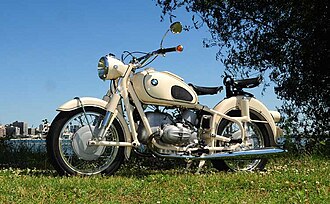
The BMW R69S occupies a unique and revered position in the history of motorcycling. It is not merely a continuation of the lineage established by the earlier R68—it is a refined, technically evolved, and performance-focused machine that elevated BMW Motorrad into the realm of world-class sport touring motorcycles. Produced between 1960 and 1969, the R69S was the ultimate expression of BMW’s pre-/5 series engineering philosophy: a harmonious blend of durability, mechanical precision, and high-speed capability.
This article explores the R69S in depth—its historical origins, engineering philosophy, mechanical design, and enduring legacy—while paying special attention to the technical parameters that defined it as one of the most advanced motorcycles of its era.
Historical Evolution: From R68 to R69S
The Legacy of the R68 and the Need for Advancement
The R69S did not emerge in isolation. It was the direct successor to the R68, BMW’s first serious attempt at a high-performance motorcycle. While the R68 proved that BMW could achieve 100 mph, it also exposed limitations in chassis design, braking, and engine tuning.
By the mid-1950s, BMW engineers had already begun developing a more advanced platform. The R69 series was introduced in 1955, and by 1960, the R69S variant represented a major leap forward.
Production and Market Position
Between 1960 and 1969, approximately 2,956 units of the R69S were produced, making it relatively rare compared to other BMW models.
The R69S was positioned as a premium sport-touring motorcycle—capable of high-speed performance while retaining BMW’s hallmark reliability. It was a machine equally suited for long-distance travel, spirited riding, and even sidecar use.
Engineering Philosophy: Precision Above All
BMW’s Boxer Engine Tradition
At the heart of the R69S lies BMW’s iconic horizontally opposed flat-twin engine. This configuration, known as the “boxer,” offers several inherent advantages:
- Excellent balance and reduced vibration
- Low center of gravity for improved handling
- Efficient air cooling due to cylinder exposure
BMW had been refining this architecture since the 1920s, and by the time of the R69S, it had reached a remarkable level of sophistication.
Engine Design and Technical Characteristics
Core Engine Architecture
The R69S engine was internally designated as type 268/3 and featured:
- Displacement: 594 cc
- Configuration: Four-stroke, air-cooled flat twin
- Bore × stroke: 72 mm × 73 mm
- Compression ratio: 9.5:1
This higher compression ratio, compared to earlier models, was a key factor in its increased performance.
Power Output and Performance
The engine produced:
- 42 horsepower at 7,000 rpm
This made it the most powerful BMW production twin of its time.
The increase in power was achieved through several technical improvements:
- Enlarged intake ports
- Higher compression pistons
- Improved carburetion
- Enhanced crankcase ventilation
Carburetion and Fuel System
The R69S utilized twin Bing carburetors, which provided:
- Precise fuel metering
- Improved throttle response
- Enhanced high-speed efficiency
These carburetors were critical in achieving the engine’s performance characteristics while maintaining reliability.
Performance Capabilities: Speed and Endurance
Top Speed and Acceleration
The R69S achieved a top speed of approximately 175 km/h, placing it among the fastest motorcycles of the 1960s.
This level of performance allowed it to compete with leading British sport motorcycles of the era.
Endurance Records
In 1961, a modified R69-based machine set multiple endurance records at Montlhéry, demonstrating not only speed but also durability.
This reinforced BMW’s reputation for engineering motorcycles capable of sustained high-speed operation.
Chassis and Suspension: Stability and Versatility
Frame Construction
The R69S employed a double-loop steel tubular frame, providing:
- High structural rigidity
- Excellent load-bearing capacity
- Compatibility with sidecars
This robust design was essential for both performance riding and utility applications.
The Earles Fork System
One of the most distinctive features of the R69S was its front suspension:
- Earles fork (leading-link design)
This system offered several advantages:
- Reduced front-end dive under braking
- Increased stability when using a sidecar
- Improved durability
However, it also contributed to a unique handling feel that differed from telescopic forks.
Rear Suspension
The rear featured a swingarm with oil-damped shock absorbers, providing:
- Better ride comfort
- Improved traction
- Enhanced stability at high speeds
Drivetrain and Transmission
Gearbox and Clutch
The R69S was equipped with:
- 4-speed manual gearbox
- Foot-operated shifting
- Dry single-plate clutch
The gearbox featured close ratios, enhancing acceleration and maintaining engine efficiency across different speeds.
Shaft Drive System
BMW’s signature shaft drive was retained, offering:
- Low maintenance
- Long service life
- Clean operation compared to chain drives
This system became a defining characteristic of BMW motorcycles.
Braking System: Limitations of the Era
Drum Brakes
The R69S used:
- 200 mm drum brakes (front and rear)
The front brake employed a duplex design, improving stopping power relative to simpler systems.
Performance Considerations
While adequate for the time, drum brakes had limitations:
- Reduced effectiveness under heavy use
- Heat buildup during prolonged braking
Despite these limitations, the system was considered advanced for its era.
Dimensions and Ergonomics
Physical Characteristics
The R69S featured:
- Wheelbase: approximately 1,415 mm
- Length: 2,125 mm
- Wet weight: around 202 kg
These dimensions contributed to its stability and touring capability. (Wikipedia)
Fuel Capacity and Efficiency
- Fuel tank: 17 liters
- Consumption: approximately 5.3 L/100 km
This made the R69S a practical long-distance machine.
Design and Aesthetics: Functional Elegance
Visual Identity
The R69S maintained BMW’s classic design language:
- Black paint with white pinstriping
- Chrome accents
- Minimalist bodywork
The design emphasized function over ornamentation.
Ergonomics
The riding position was adaptable:
- Upright for touring
- Adjustable posture for high-speed riding
Optional accessories allowed customization, including seats, handlebars, and instrumentation.
Versatility: Solo Riding and Sidecar Use
One of the most unique aspects of the R69S was its versatility. Unlike many sport motorcycles, it was designed to accommodate:
- Solo riding
- Passenger use
- Sidecar attachment
This adaptability made it popular with police forces and touring riders worldwide.
Riding Experience: Mechanical Purity
Characteristics on the Road
Riding the R69S is a distinctive experience:
- Smooth power delivery due to the boxer engine
- Stable handling at high speeds
- Predictable behavior in corners
Challenges
However, it also requires skill:
- Drum brakes demand anticipation
- Weight affects low-speed maneuverability
- Suspension differs from modern systems
Despite these challenges, the R69S offers a deeply engaging riding experience.
Technological Innovations
Engine Improvements
The R69S introduced several advancements:
- Higher compression ratio
- Improved airflow and exhaust systems
- Enhanced lubrication
These changes contributed to its superior performance.
Modular Engineering
BMW’s modular approach allowed multiple engine variants to be developed from a common design, improving efficiency and reliability.
Cultural and Historical Significance
The R69S represents a critical period in BMW’s history:
- Transition from post-war recovery to innovation
- Establishment of BMW as a premium motorcycle brand
- Influence on future models
It was also among the last BMW motorcycles produced in Munich before production shifted to Berlin.
Legacy and Influence
Impact on Future Models
The R69S directly influenced later BMW motorcycles, including the /5 series, which introduced modern features such as telescopic forks.
Collector Status
Today, the R69S is highly valued:
- Rare production numbers
- Historical importance
- Timeless engineering
It remains a centerpiece in vintage motorcycle collections worldwide.
Technical Specifications Table
| Parameter | Specification |
|---|---|
| Model | BMW R69S |
| Production Years | 1960–1969 |
| Units Produced | ~2,956 |
| Engine Type | Air-cooled OHV flat-twin (boxer) |
| Displacement | 594 cc |
| Bore × Stroke | 72 mm × 73 mm |
| Compression Ratio | 9.5:1 |
| Power Output | 42 hp @ 7,000 rpm |
| Carburetion | Twin Bing carburetors |
| Lubrication | Forced feed, gear pump |
| Ignition | Magneto |
| Transmission | 4-speed manual |
| Clutch | Single plate, dry |
| Final Drive | Shaft drive |
| Frame | Double-loop steel tubular |
| Front Suspension | Earles fork |
| Rear Suspension | Swingarm with shock absorbers |
| Front Brake | 200 mm duplex drum |
| Rear Brake | 200 mm simplex drum |
| Wheelbase | 1,415 mm |
| Length | 2,125 mm |
| Weight (wet) | ~202 kg |
| Fuel Capacity | 17 L |
| Fuel Consumption | ~5.3 L/100 km |
| Top Speed | Up to 175 km/h |
Conclusion: A Masterpiece of Mechanical Engineering
The BMW R69S stands as a testament to an era when engineering excellence defined performance. It was not the most radical motorcycle of its time, nor the most visually extravagant—but it was among the most refined, reliable, and technically accomplished.
Even decades later, the R69S continues to captivate enthusiasts, not because of nostalgia alone, but because it represents a philosophy of design that prioritizes balance, precision, and longevity. In a world increasingly dominated by electronics and automation, the R69S remains a pure mechanical experience—a machine that rewards understanding, respect, and skill.
