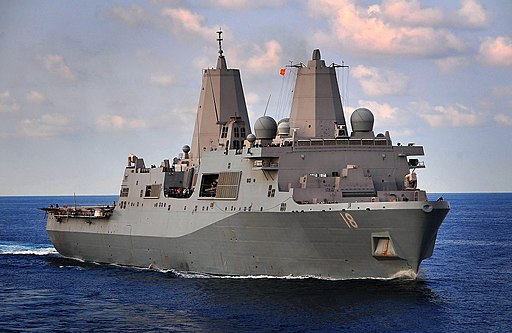
USS New Orleans (LPD-18): A Cornerstone of Modern Amphibious Warfare
USS New Orleans (LPD-18) stands at the forefront of the U.S. Navy’s amphibious transport dock fleet, marrying advanced command capabilities with robust ship-to-shore delivery systems. As a San Antonio-class vessel, she fulfills expeditionary strike group requirements, rapid response missions, and humanitarian relief operations with unparalleled flexibility and endurance.
Class Overview and Mission Role
San Antonio-Class Emergence
Conceived in the 1990s to replace aging dock landing ships and amphibious transports, the San Antonio class introduced signature-reduction measures, digital command centers, and expanded well decks. USS New Orleans embodies these innovations, enabling embarkation of Marines, vehicles, and aircraft into contested littorals while minimizing detectability behind modern sensors.
Role within Expeditionary Strike Groups
Operating alongside amphibious assault ships, destroyers, and support vessels, LPD-18 provides a mobile hub for command staff and a launch platform for Marine Expeditionary Units. Her ability to launch landing craft air cushion (LCAC) vehicles, support rotary wing operations, and house joint task force commanders makes her indispensable during high-intensity conflict and crisis response alike.
Construction and Early Service
Contract Award and Keel Laying
On 18 December 1998 the Navy awarded Northrop Grumman Ship Systems the contract to build USS New Orleans at its New Orleans yard. Fabrication of modular sections began in 2002, culminating in keel laying on 14 October of that year.
Christening, Launch, and Commissioning
Christened on 20 November 2004, the hull entered water on 11 December 2004. Sea trials and builder’s acceptance tests followed, leading to official commissioning on 10 March 2007. She steamed through the Panama Canal to assume her homeport at Naval Base San Diego later that spring.
Hull and Dimensions
Overall Dimensions
- Length overall: 208.4 m (684 ft)
- Beam extreme: 32 m (105 ft)
- Draft: 7 m (23 ft)
These proportions strike a balance between deck space for aircraft operations, well-deck volume for landing craft, and hull form optimized to reduce radar and acoustic signatures.
Displacement and Materials
Fully loaded displacement reaches 24,433 tons. High-strength steel and advanced composites in select superstructure panels reduce weight while preserving structural integrity under heavy loads and high sea states.
Propulsion and Performance
Propulsion Machinery
LPD-18 employs four Colt-Pielstick diesel engines driving twin shafts, producing approximately 40,000 shaft horsepower. A combined diesel-and-gas (CODAG) plant was considered during design studies, but the chosen configuration offers proven reliability and simplified maintenance.
Speed, Range, and Endurance
Top speed exceeds 22 knots, enabling rapid transit between theaters. At economical cruising speeds, her range surpasses 6,000 nautical miles without refueling. Shipboard stores, water-maker systems, and optimized fuel-management protocols permit deployments of several months in austere environments.
Amphibious Capabilities
Well Deck and Landing Craft
A 180-foot well deck supports two LCAC hovercraft or one conventional landing craft utility (LCU). The retractable stern gate floods the dock, allowing swift loading and launch of combat vehicles, engineering equipment, and personnel directly onto hostile shores.
Aviation Facilities
The flight deck accommodates up to two CH-53E Super Stallion helicopters, MV-22 Ospreys, or a mix of light and medium lift assets. Enclosed hangar spaces shelter aircraft from the elements and facilitate maintenance, while aviation fuel storage and ordnance magazines support prolonged air operations.
Combat Systems and Defense
Armament and Missile Systems
Self-defense weaponry includes two 30 mm Bushmaster II guns for close-in surface threats and two RIM-116 Rolling Airframe Missile launchers for point defense against anti-ship missiles and aircraft. Provisioning exists for additional machine-gun mounts, small-caliber cannons, and directed-energy systems in future upgrades.
Sensors and Electronic Warfare
An integrated mast houses air and surface search radar, electro-optical sensors, and electronic support measures. Combat information center consoles fuse data from embarked headquarters, embarked unmanned systems, and coalition networks to maintain situational awareness in complex littoral battlespaces.
Crew and Embarked Forces
Ship’s Complement
USS New Orleans sails with approximately 33 officers and 364 enlisted sailors. Automation in engine control, damage control systems, and digital navigation reduces watchstanding demands, enabling a leaner crew while sustaining high operational tempos.
Marine Embarkation Capacity
Designed to carry a reinforced Marine Expeditionary Unit, LPD-18 can accommodate up to 700 Marines under normal loading and surge to 800. Vehicle decks stow amphibious assault vehicles, light armored vehicles, and logistics support trucks, placing force projection assets close to shore.
Habitability and Command Facilities
Command and Control Spaces
An afloat command suite provides secure communications, network-centric planning rooms, and deployable command modules for joint task force leaders. These spaces integrate satellite, radio, and data‐link channels to orchestrate multi-domain operations across maritime, land, and air components.
Medical and Support Facilities
A Role 2 medical section with surgical capability, intensive care beds, and dental facilities serves both crew and embarked forces. Galley and laundry systems sized for surge capacity, plus improved ventilation and noise reduction measures, enhance crew resilience during extended deployments.
Operational History
Deployments and Exercises
Since 2007, New Orleans has conducted Pacific Fleet patrols, joint exercises with allied navies, and crisis-response operations in Southeast Asia and the Western Pacific. She has also integrated unmanned surface and underwater vehicles to expand reconnaissance and mine-countermeasure roles.
Humanitarian and Disaster Response
The ship’s well deck and aviation assets have supported disaster relief after typhoons and tsunamis, delivering food, medical supplies, and evacuation teams ashore when ports and airfields were compromised.
Modernization and Upgrades
Under continuous maintenance cycles, New Orleans will receive upgraded electronic warfare suites, enhanced cyber defense architecture, and space-reserved mounts for future missile and directed energy systems. Integration of unmanned aerial and surface platforms will further multiply her operational reach.
Conclusion
USS New Orleans (LPD-18) exemplifies a new generation of multi-mission amphibious ships, blending powerful command facilities with robust ship-to-shore connectors, aviation versatility, and self-defense weaponry. Her adaptable design and forward-leaning upgrades ensure relevance across high-end conflict, crisis response, and humanitarian missions well into the decades ahead.
_conducts_operations_in_preparation_for_an_underway_replenishment.jpg)