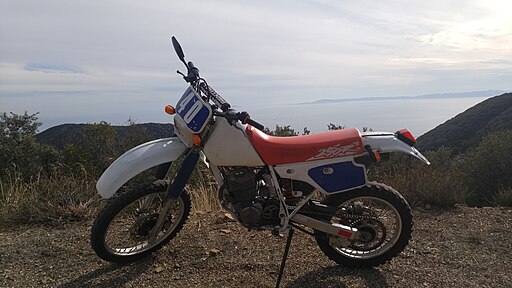
Honda XR250R
The Honda XR250R set the benchmark for lightweight, four-stroke off-road motorcycles when it launched in 1989. Designed to excel in desert races, trail rides, and dual-sport adventures, it packed a torquey engine and long-travel suspension into a durable, easy-to-ride chassis. Over more than a decade of production, the XR250R became revered for its balanced power delivery, low maintenance needs, and rider-friendly ergonomics. This article delves into every technical facet of the XR250R—from its engine architecture and fueling system to its frame geometry, suspension tuning, braking hardware, electronics, dimensions, and real-world character.
Engine and Performance
Engine Architecture
At the heart of the XR250R lies a 249 cc, air-cooled, single-cylinder four-stroke engine featuring a single overhead camshaft (SOHC) and four valves. Honda chose a slightly oversquare bore and stroke of 79 mm × 50.9 mm to deliver quick rev response without sacrificing low-end tractability. A compression ratio of 9.3 :1 strikes a balance between torque richness and reliable street tuning.
Key engine design points:
- SOHC, four-valve head for efficient breathing
- Solid cam chain tensioner to minimize maintenance
- High-strength aluminum piston with ceramic skirt coating
- Reinforced crankcase and humidified cylinder head fins for heat dissipation
Fuel Delivery and Exhaust
Fueling is handled by a 32 mm Keihin constant-velocity carburetor. The vacuum-slide design ensures smooth throttle transition both at idle and mid-range, making technical trail maneuvers more predictable. An automatic decompression valve eases starts, while a manual choke enriches the mixture for cold cranking.
Exhaust gases exit through a lightweight steel header feeding a short, high-mounted muffler. The header’s carefully tuned length scavenges cylinder pulses to broaden the usable powerband, yielding strong pull from 3,000 rpm up through a 7,500 rpm redline.
Transmission and Final Drive
A close-ratio six-speed gearbox keeps the engine in its sweet spot, whether crawling over rocks or blasting open desert sections. Gear spacing favors first through third for tight-trail control, with taller fourth to sixth ratios for higher-speed cruising.
Power travels to the rear via a sealed O-ring chain. A robust hardened-steel sprocket and enclosed chain slider protect against mud and debris, reducing routine adjustment frequency.
Chassis and Suspension
Frame and Geometry
The XR250R’s cradle-style steel frame serves as a durable backbone, using large-diameter down tubes to maximize stiffness while keeping weight in check. By mounting the engine as a semi-stressed member, Honda achieved a low center of gravity that aids balance at slow speeds.
Key geometry figures:
- Wheelbase: 1,460 mm
- Rake: 27°
- Trail: 108 mm
This geometry delivers stability at speed without compromising agility on twisty single-track.
Front Suspension
A 39 mm conventional telescopic fork offers 264 mm of travel, valved to absorb big hits without wallowing on smaller bumps. Rubber-sealed fork legs and wide-mouth dust boots protect internal components from grit and water.
Rear Suspension
The Pro-Link rear shock features a rising-rate linkage and 265 mm of wheel travel. Spring preload adjustment requires no tools, enabling rapid setup tweaks for solo riding, two-up carrying, or pannier loads. The damper is valved to balance mid-stroke support with plush initial compliance.
Brakes and Wheels
Braking System
- Front Brake: 256 mm hydraulic disc with two-piston caliper
- Rear Brake: 110 mm sealed drum
The potent front disc provides strong, fade-resistant stopping power, while the rear drum remains maintenance-friendly in muddy environments. Progressive feel at the lever lets riders modulate braking force precisely on loose terrain.
Wheels and Tires
Spoked steel rims wrap tubed off-road tires sized 80/100-21 at the front and 110/100-18 at the rear. The tall, narrow front tire delivers precise steering on tight trails, while the beefier rear section anchors power pulses and resists punctures when airing down.
Electrical System and Instrumentation
Charging and Lighting
A compact 12 V, 35 W alternator powers headlight and tail lamp circuits without requiring a heavy battery. The lightweight 12 Ah lead-acid battery ensures reliable starting after long trail sections and minimal parasitic drag on engine output.
Cockpit and Controls
Instrument duties are pared down for durability:
- Minimalist speedometer calibrated to 180 km/h
- Neutral and high-beam indicator lamps
- Engine-check lamp linked to basic oil-pressure monitoring
Thumb-operated choke lever, kill switch, and indicator buttons feature oversized rubber boots to keep out mud and water.
Dimensions and Capacities
| Specification | Measurement |
|---|---|
| Engine Displacement | 249 cc |
| Bore × Stroke | 79 mm × 50.9 mm |
| Compression Ratio | 9.3 :1 |
| Peak Power | 20 PS @ 7,000 rpm |
| Peak Torque | 21 Nm @ 6,000 rpm |
| Transmission | 6-speed, chain final drive |
| Frame Type | Steel cradle, engine stressed member |
| Front Suspension | 39 mm telescopic fork, 264 mm travel |
| Rear Suspension | Pro-Link mono shock, 265 mm travel, adjustable preload |
| Front Brake | 256 mm disc, 2-piston caliper |
| Rear Brake | 110 mm drum |
| Front Tire | 80/100-21 |
| Rear Tire | 110/100-18 |
| Wheelbase | 1,460 mm |
| Seat Height | 935 mm |
| Ground Clearance | 330 mm |
| Fuel Capacity | 10 L |
| Wet Weight | 130 kg |
Ergonomics and Rider Comfort
An upright handlebar position combined with a narrow, ribbed seat encourages both standing and seated riding. The 935 mm seat height clears obstacles easily, while the slim tank section lets shorter riders reposition for tight maneuvers. Wide steel footpegs with serrated teeth maintain footing in muddy or wet conditions.
Maintenance and Servicing
Routine tasks on the XR250R remain straightforward:
- Oil and filter change every 3,000 km
- Air-filter cleaning or replacement every 500 km in dusty conditions
- Valve clearance check every 12,000 km
- Fork seal inspection annually
- Chain lubrication every 500 km
Durable components and Honda’s global parts network ensure long-term support even decades after production ended.
Riding Experience
On dusty desert stretches, the XR250R feels confidence-inspiring: ample travel soaks up square-edge hits while the torquey four-stroke engine pulls cleanly out of whoops. In tight single-track sections, its light curb weight and narrow profile reward precise body positioning. On road, the sixth gear and smooth torque curve make highway sections surprisingly comfortable, with the front disc brake offering reassuring bite in an emergency stop.
Conclusion
The Honda XR250R remains a legend in the dual-sport world for good reason. Its robust four-stroke engine, plush long-travel suspension, and balanced chassis deliver an inviting blend of off-road capability and on-road usability. Low maintenance demands and global parts availability keep these bikes rolling decades after their final production, ensuring the XR250R’s status as a timeless trail conqueror and adventure companion.
