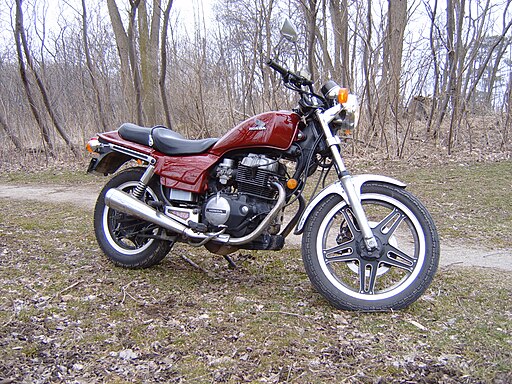
Honda CB450SC
The Honda CB450SC, commonly known as the Nighthawk 450, debuted in the early 1980s as a blend of classic twin-cylinder character and modern reliability. It carried forward Honda’s reputation for smooth power delivery, refined engineering, and everyday practicality. Positioned between entry-level commuters and full-blown sportbikes, the CB450SC carved out a niche among riders seeking versatility without sacrificing performance.
Design and Styling
Evolution and Positioning
Honda introduced the CB450SC at a time when naked streetbikes were gaining popularity. Its clean lines, modest bodywork, and discreet tail section embodied the emerging “standard” aesthetic. Chrome-plated exhausts and subtle pinstriping provided a touch of flair without overwhelming the bike’s functional demeanor.
Frame and Chassis Lines
The CB450SC’s steel tubular cradle frame offered a balance of rigidity and comfort. Smooth welds and neatly routed cables underscored Honda’s attention to detail. The minimalist rear subframe supported both solo and two-up riding, making it equally at home on urban commutes or weekend jaunts.
Engine and Performance
Engine Architecture
Powering the CB450SC is a 447 cc air-cooled parallel-twin featuring double overhead camshafts and four valves per cylinder. Each cylinder has a 67 mm bore and 50 mm stroke, optimized for a broad torque curve. Electronic ignition replaced earlier points systems, enhancing cold-start reliability and reducing routine adjustment.
Power Output and Torque
The engine produces approximately 43 horsepower at 8,500 rpm and 35 Nm of torque at 7,000 rpm. Its narrow profile and modest weight let the bike accelerate briskly off the line, while the smooth midrange makes passing slower traffic effortless. A 9,000 rpm redline rewards riders who enjoy exploring the top-end revs.
Transmission and Final Drive
A five-speed constant-mesh gearbox channels power to the rear wheel via a roller chain. Gear ratios were selected to balance city agility with highway cruising comfort. The multi-plate wet clutch delivers predictable lever feel, and clutch pull remains light even after heavy use.
Chassis and Suspension
Frame Construction
The tubular steel cradle frame underpins agile handling without harshness. Engine mounting points were strategically arranged to reduce vibration and enhance high-speed stability. A wheelbase of 1,410 mm strikes a compromise between nimble turn-in and reassuring straight-line composure.
Front Suspension
Telescopic forks offer 120 mm of travel and damping tuned for mixed road surfaces. The forks feature polished sliders and sealed bushings to resist wear and maintain consistent action. Fork angle and rake were calibrated to deliver precise steering without twitchiness.
Rear Suspension
Dual shock absorbers with adjustable preload provide 100 mm of travel. Progressive springs and twin damping cartridges absorb highway ripples and minor potholes with ease. Adjustability lets riders dial in ride height for solo or two-up riding scenarios.
Brakes and Wheels
Front Brake System
A single 296 mm hydraulic disc brake at the front delivers strong stopping power. Paired with a two-piston caliper, it offers good initial bite and smooth lever modulation. Steel-braided lines were optional on later years to reduce lever expansion under heavy use.
Rear Brake System
The rear wheel uses a 180 mm drum brake with a sealed actuator, ensuring dependable performance in all weather. Its progressive engagement complements the front disc, allowing riders to balance braking effort front to back.
Wheels and Tires
Cast alloy wheels measure 18 inches front and rear. They wear 100/90-18 front and 120/90-18 rear radial tires, providing a comfortable contact patch and stable cornering feel. The alloys require minimal maintenance compared to wire-spoke designs.
Electrical and Instrumentation
Ignition and Charging
The CB450SC uses a transistorized ignition system fed by a 12 V, 35 A alternator. Maintenance-free coils and a self-adjusting camchain tensioner reduce routine service intervals. A modern compact regulator-rectifier replaced earlier bulky units for improved heat dissipation.
Lighting and Instruments
A rectangular 55 W/60 W headlamp illuminates the road with a wide, even beam. Turn signals feature flush-mount indicators for a clean look. The instrument cluster houses an analog speedometer, tachometer, fuel gauge, and temperature warning light, all set against a black background for easy night reading.
Ergonomics and Bodywork
Rider Comfort
The Nighthawk’s seat height sits at a forgiving 785 mm, enabling riders of various statures to plant both feet firmly. A stepped saddle supports rider and passenger, while wide handlebars promote an upright posture that minimizes fatigue over longer distances.
Fuel Tank and Panels
A 14-liter teardrop fuel tank offers a range of 200 to 250 km between fill-ups. Its shape allows riders to grip with their knees for added control. Plastic side panels and a small cowl around the headlight complete the uncluttered profile, ensuring easy access to the battery and electrical components.
Technical Specifications
| Specification | Detail |
|---|---|
| Engine type | 447 cc air-cooled parallel-twin, DOHC, 4 valves per cylinder |
| Bore × Stroke | 67 mm × 50 mm |
| Compression Ratio | 9.3 : 1 |
| Maximum Power | 43 hp @ 8,500 rpm |
| Maximum Torque | 35 Nm @ 7,000 rpm |
| Ignition System | Transistorized |
| Carburetion | Dual Keihin CV carburetors |
| Transmission | 5-speed constant mesh |
| Final Drive | Roller chain |
| Frame | Tubular steel twin-cradle |
| Front Suspension | Telescopic forks, 120 mm travel |
| Rear Suspension | Dual shocks, 100 mm travel |
| Front Brake | 296 mm single disc, 2-piston caliper |
| Rear Brake | 180 mm drum |
| Wheelbase | 1,410 mm |
| Seat Height | 785 mm |
| Dry Weight | 178 kg |
| Fuel Capacity | 14 L |
| Electrical System | 12 V, 35 A alternator |
Maintenance and Owner Tips
Scheduled Servicing
Valve clearance checks every 8,000 km, oil and filter changes every 4,000 km, and carburetor synchronizing at 12,000 km keep the twin running smoothly. Brake fluid replacement every two years preserves responsive braking.
Popular Upgrades
Enthusiasts often swap to modern electronic ignition modules for flawless starts, upgrade to braided brake lines for firmer lever feel, and fit aftermarket exhausts to refine sound and reduce weight. LED lighting conversions and better fork springs can modernize handling and visibility.
Legacy and Impact
The CB450SC bridged the gap between Honda’s classic CB twins of the 1970s and the more powerful four-cylinder Nighthawks that followed. Its combination of reliability, manageable performance, and approachable ergonomics inspired a generation of riders. Today, well-maintained examples remain sought after for their balance of old-school charm and everyday usability.
Conclusion
The Honda CB450SC stands as a testament to Honda’s commitment to blending technology, practicality, and rider engagement. Its refined twin engine, balanced chassis, and low maintenance ethos make it an enduring favorite among enthusiasts. Decades on, the Nighthawk 450 continues to carve out smiles in winding backroads and city streets alike, proving that good design never truly ages.
