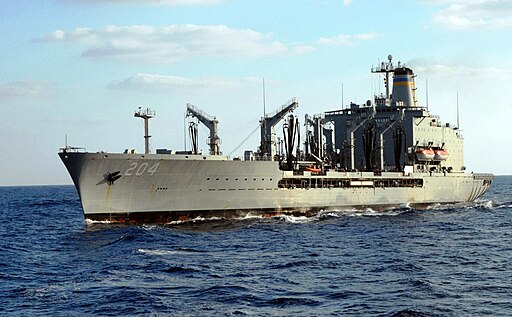
The USNS Rappahannock (T-AO-204) is a vital asset within the United States Navy’s Military Sealift Command (MSC) fleet. It serves primarily as a fleet replenishment oiler, designed to provide underway replenishment of fuel to Navy ships, ensuring sustained operations at sea. This vessel plays a critical role in extending the operational range and endurance of the U.S. Navy’s surface combatants, aircraft carriers, and other maritime forces. The Rappahannock is part of the Henry J. Kaiser-class oilers, a series of replenishment ships built during the late 20th century to modernize and expand the Navy’s logistical capabilities.
Design and Construction
The USNS Rappahannock was constructed by the Avondale Shipyards, located near New Orleans, Louisiana, a facility known for producing a variety of complex naval support vessels. Laid down in the mid-1980s, the ship was launched and commissioned into service in the late 1980s. The design of the Henry J. Kaiser-class is optimized for efficient fuel transport and transfer operations. The hull is constructed to handle large quantities of liquid cargo, while the superstructure and deck arrangements facilitate multiple replenishment stations. The ship’s hull design balances cargo capacity with seakeeping abilities, ensuring stable operations in a variety of sea states.
Dimensions and Displacement
The USNS Rappahannock measures approximately 206.5 meters (678 feet) in overall length, with a beam of 29.7 meters (97.5 feet). Its full load displacement reaches around 41,000 tons, reflecting the massive volume of fuel and other supplies it carries. The ship’s draft, which is the vertical distance between the waterline and the bottom of the hull, varies depending on its load but generally sits around 11 meters (36 feet). These dimensions enable the vessel to maintain the necessary stability and maneuverability while laden with fuel and other logistical materials during underway replenishment missions.
Propulsion and Performance
Powering the USNS Rappahannock is a robust propulsion system consisting of two diesel engines that deliver a combined output exceeding 25,000 horsepower. These engines drive a single fixed-pitch propeller, enabling the ship to reach a top speed of approximately 20 knots (about 23 miles per hour). While the vessel is not designed for combat speed, its propulsion setup balances fuel efficiency with the ability to keep pace with carrier strike groups and other naval task forces during underway replenishment operations. The Rappahannock’s range exceeds 7,000 nautical miles at a cruising speed of 15 knots, allowing it to operate over long distances without frequent refueling stops.
Cargo Capacity and Replenishment Capabilities
The core function of the USNS Rappahannock is to transport and deliver fuel to naval vessels at sea. It can carry up to 180,000 barrels (approximately 7.5 million gallons) of various types of fuel, including aviation fuel (JP-5) and marine diesel fuel (F-76). In addition to fuel, the ship has limited capacity to transport potable water, lubricants, and some dry cargo, making it a versatile logistics platform. The replenishment system aboard includes multiple alongside refueling stations, allowing the Rappahannock to simultaneously refuel two ships. The ship employs a combination of hose rigs, fueling masts, and transfer pumps capable of delivering thousands of gallons of fuel per minute, facilitating rapid and efficient underway replenishment.
Crew and Operational Role
The USNS Rappahannock operates primarily under the Military Sealift Command with a civilian crew complemented by a small contingent of Navy personnel responsible for communications, supply coordination, and operational liaison duties. The civilian mariners manage the ship’s navigation, engineering, and cargo operations, reflecting a hybrid military-civilian operational model common in MSC vessels. The ship’s role extends beyond simple fuel delivery; it is a critical enabler of sustained naval presence and power projection, providing logistical support during peacetime operations, exercises, and combat deployments. The Rappahannock’s capability to conduct replenishment underway without interrupting the receiving ship’s mission allows the U.S. Navy to maintain continuous presence and readiness worldwide.
Defensive and Support Systems
While primarily a support vessel, the USNS Rappahannock is equipped with defensive systems designed for self-protection in hostile environments. These typically include electronic warfare suites, radar systems for situational awareness, and the capacity to mount small arms or close-in weapon systems (CIWS) for defense against surface and aerial threats. The ship’s communications infrastructure supports secure, real-time coordination with task force command elements and other logistical assets. Safety and damage control systems are integral to the design, ensuring that the ship can effectively respond to onboard emergencies such as fuel leaks or fire hazards, which are critical considerations given the flammable nature of its cargo.
Conclusion
The USNS Rappahannock remains a cornerstone of the U.S. Navy’s underway replenishment capability, embodying a blend of engineering, logistical expertise, and operational flexibility. Its technical specifications, from its large cargo capacity to its propulsion and replenishment systems, reflect the specialized demands of naval logistics in modern maritime operations. By ensuring that combatant ships can stay at sea longer and maintain operational tempo, the Rappahannock exemplifies the vital, though often understated, role of auxiliary ships in sustaining naval power projection across the globe.
.jpg)