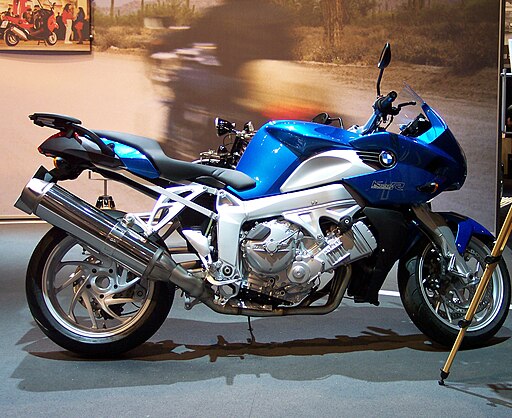
The BMW K1200R is a powerful naked sport motorcycle developed by BMW Motorrad and produced between 2005 and 2008. Designed as a stripped-down version of the sport-touring K-series machines, the K1200R combines the high-performance engine architecture of the K1200S with an aggressive streetfighter design. At the time of its release, the model stood among the most powerful production naked motorcycles in the world and represented a significant technological leap for BMW’s high-performance lineup. The motorcycle integrates advanced chassis technology, a high-revving inline-four engine, and distinctive engineering solutions such as a shaft final drive and the brand’s proprietary Duolever suspension system.
Design and Concept
The BMW K1200R was conceived as a high-performance naked roadster capable of delivering superbike-level performance without the extensive fairings typical of sport motorcycles. BMW designers adopted a radical visual approach characterized by an asymmetrical headlight cluster, minimal wind protection, and muscular bodywork. This aesthetic emphasized mechanical components such as the aluminum frame, exposed engine, and single-sided swingarm.
Unlike many traditional naked bikes derived from older platforms, the K1200R was developed from a modern supersport architecture. The frame is a bridge-type cast aluminum structure in which the engine acts as a stressed load-bearing component. This configuration increases torsional rigidity while reducing overall mass. The aggressive stance of the motorcycle, combined with its forward-leaning riding position, provides a balance between sport performance and everyday usability.
Ergonomically, the K1200R offers a slightly more upright riding posture compared to full supersport models. This improves rider comfort during longer rides while maintaining the sporty handling characteristics expected from a high-performance naked machine.
Engine and Performance
At the heart of the BMW K1200R lies a transversely mounted inline four-cylinder engine with a displacement of 1,157 cc. The power unit is liquid-cooled and equipped with double overhead camshafts (DOHC) and four valves per cylinder. The engine uses electronic fuel injection with digital engine management, ensuring precise control over combustion parameters and efficient power delivery.
One of the unique features of the K1200R engine layout is the 55-degree forward tilt of the cylinder block. This design lowers the center of gravity and allows the intake system to be positioned above the engine, directly under the fuel tank. The result is improved mass centralization and more compact packaging of mechanical components.
The engine produces approximately 163 horsepower at 10,250 rpm and 127 Nm of torque at 8,250 rpm, delivering extremely strong acceleration across a wide rev range. Power is transmitted through a six-speed constant-mesh gearbox and a shaft final drive, a traditional BMW solution known for durability and reduced maintenance compared to chain systems.
Performance figures were impressive for the time. The motorcycle could accelerate from 0 to 100 km/h in roughly 2.6 seconds and achieve a top speed close to 260 km/h, placing it among the fastest naked bikes of its era.
Chassis and Suspension Technology
One of the most distinctive engineering elements of the BMW K1200R is its front suspension system. Instead of conventional telescopic forks, BMW implemented the Duolever design, a sophisticated double-wishbone structure derived from earlier Telelever concepts. This configuration separates steering and suspension forces, which improves stability under braking and reduces front-end dive.
The rear suspension uses BMW’s Paralever single-sided swingarm system with a centrally mounted monoshock absorber. This design minimizes the torque reaction typically associated with shaft-drive motorcycles, ensuring smooth power delivery and predictable handling during acceleration.
The motorcycle was also available with Electronic Suspension Adjustment (ESA) as an optional feature. ESA allowed riders to electronically adjust suspension settings such as preload and damping according to riding conditions or load.
Overall, the chassis design focused on combining high-speed stability with responsive cornering behavior, making the K1200R suitable for both spirited riding and long-distance touring.
Braking and Safety Systems
The braking system of the BMW K1200R was engineered to handle the motorcycle’s high performance. The front wheel is equipped with dual 320 mm brake discs paired with four-piston calipers, providing strong and consistent stopping power. The rear wheel uses a single 265 mm disc brake.
Many models were equipped with ABS (Anti-lock Braking System), significantly improving safety in emergency braking situations or low-traction conditions. BMW also offered partially integrated braking systems in certain versions, which distribute braking force automatically between front and rear wheels.
These systems, combined with the stable Duolever suspension, give the K1200R excellent braking performance even during aggressive riding.
Riding Characteristics and Practicality
Despite its impressive power output, the BMW K1200R is designed to be relatively practical for everyday riding. The upright handlebar position reduces strain on the rider’s wrists compared to supersport motorcycles, while the seat height of around 820 mm accommodates a wide range of riders.
The motorcycle includes a fuel tank with a capacity of approximately 19 liters, providing reasonable touring range for a high-performance bike. Optional accessories offered by BMW included heated grips, anti-theft systems, luggage racks, and navigation systems, further enhancing the bike’s versatility.
With its blend of extreme performance, distinctive design, and advanced engineering solutions, the BMW K1200R remains one of the most iconic naked motorcycles produced by BMW Motorrad.
Technical Specifications – BMW K1200R
| Parameter | Specification |
|---|---|
| Manufacturer | BMW Motorrad |
| Production years | 2005–2008 |
| Category | Naked / sport roadster |
| Engine type | Liquid-cooled, 4-stroke, inline-4, DOHC, 4 valves per cylinder |
| Displacement | 1,157 cc |
| Bore × stroke | 79 mm × 59 mm |
| Compression ratio | 13.0:1 |
| Maximum power | 163 hp (120 kW) at 10,250 rpm |
| Maximum torque | 127 Nm at 8,250 rpm |
| Fuel system | Electronic fuel injection |
| Transmission | 6-speed manual |
| Final drive | Shaft drive |
| Frame | Aluminum bridge-type frame |
| Front suspension | BMW Duolever |
| Rear suspension | BMW Paralever monoshock |
| Front brakes | Dual 320 mm discs, four-piston calipers |
| Rear brake | Single 265 mm disc |
| Front tire | 120/70 ZR17 |
| Rear tire | 180/55 ZR17 |
| Wheelbase | 1,580 mm |
| Seat height | 820 mm |
| Fuel tank capacity | 19 L |
| Dry weight | ~211 kg |
| Top speed | ~260 km/h |
| 0–100 km/h acceleration | ~2.6 s |
