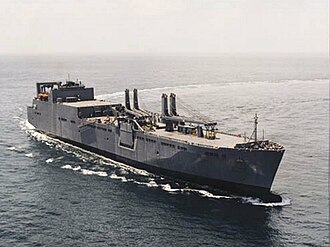
The USNS Watson (T-AKR-310) represents a critical component of the United States’ strategic sealift capability, embodying the logistical backbone that enables rapid global military deployment. Unlike combat vessels that capture public imagination through firepower and dramatic engagements, ships like the Watson operate in a quieter but equally vital domain: ensuring that troops, vehicles, and supplies arrive where they are needed, when they are needed. This article explores the ship in depth, from its design and construction to its operational role, technical systems, and strategic importance within modern military logistics.
Historical Context and Strategic Role
The Evolution of Strategic Sealift
To fully appreciate the importance of the USNS Watson, it is necessary to understand the broader context of strategic sealift. Modern military operations depend not only on combat readiness but also on the ability to project power across vast distances. Since the mid-20th century, the United States has relied heavily on maritime logistics to support overseas operations, whether in Europe, the Middle East, or the Indo-Pacific region. Sealift vessels provide the heavy-lift capacity required to transport armored vehicles, engineering equipment, and sustainment supplies that cannot be feasibly moved by air due to weight and volume constraints.
The Watson belongs to the Large, Medium-Speed Roll-on/Roll-off (LMSR) class of ships, specifically designed to address the need for rapid deployment of mechanized forces. These ships are capable of carrying thousands of tons of cargo, including tanks, trucks, and helicopters, while also being fast enough to keep pace with operational timelines. The LMSR program emerged in the 1990s as a response to lessons learned from earlier conflicts, where delays in logistics hampered operational flexibility.
Role Within the Military Sealift Command
The USNS Watson is operated by the Military Sealift Command (MSC), a branch of the United States Navy responsible for providing ocean transportation for all U.S. military services. Unlike commissioned naval vessels, USNS ships are crewed primarily by civilian mariners, supplemented by a small number of military personnel for communications and security. This hybrid model allows for efficient operation while freeing uniformed personnel for other duties.
Within MSC, the Watson is part of the Ready Reserve Force and prepositioning programs, which ensure that critical equipment is stationed strategically around the globe. The ship can be activated quickly in times of crisis, providing a surge capability that is essential for rapid response operations.
Design and Construction
Shipyard and Build Process
The USNS Watson was constructed at the National Steel and Shipbuilding Company (NASSCO) shipyard in San Diego, California. NASSCO has a long history of building both commercial and military vessels, and its expertise was instrumental in delivering a ship that meets the demanding requirements of the LMSR program. The Watson was launched in the early 2000s as part of a broader fleet expansion aimed at modernizing U.S. sealift capabilities.
The construction process involved integrating advanced cargo handling systems, reinforced decks capable of supporting heavy armored vehicles, and a propulsion system designed for both efficiency and reliability. Particular attention was given to survivability and redundancy, ensuring that the ship could continue operating even in challenging conditions.
Structural Design and Layout
The structural design of the Watson emphasizes cargo capacity and operational flexibility. The ship features multiple vehicle decks connected by internal ramps, allowing for efficient loading and unloading of wheeled and tracked vehicles. This roll-on/roll-off configuration significantly reduces port time compared to traditional cargo ships that rely on cranes.
The hull is designed to maximize internal volume while maintaining stability in rough seas. Ballast systems allow the ship to adjust its draft and trim, ensuring safe operations during loading and unloading. The superstructure is positioned to optimize visibility and protect critical systems, while also providing accommodations for the crew.
Propulsion and Engineering Systems
Main Propulsion System
At the heart of the USNS Watson is a diesel-powered propulsion system that drives a single large propeller. The engine is designed to deliver a balance of speed and fuel efficiency, enabling the ship to sustain long voyages without frequent refueling. This is particularly important for missions that involve transoceanic travel.
The propulsion system is supported by auxiliary generators that provide electrical power for onboard systems, including navigation, communications, and cargo handling equipment. Redundancy is built into the system to ensure reliability, with backup generators capable of maintaining essential functions in the event of a failure.
Maneuverability and Navigation
Despite its large size, the Watson is equipped with bow thrusters and advanced navigation systems that allow for precise maneuvering in confined ports. Modern radar, GPS, and electronic chart systems provide situational awareness, while automated controls assist the crew in maintaining optimal course and speed.
The ship’s bridge is equipped with integrated systems that consolidate navigation data, reducing workload and enhancing safety. These systems are essential for operating in congested shipping lanes and during complex port operations.
Cargo Handling Capabilities
Roll-on/Roll-off Efficiency
The defining feature of the USNS Watson is its roll-on/roll-off capability. Vehicles can be driven directly onto the ship via stern and side ramps, eliminating the need for cranes and significantly reducing loading times. This capability is crucial during military deployments, where speed is often a decisive factor.
The internal layout includes multiple decks with reinforced surfaces capable of supporting heavy equipment such as main battle tanks and armored personnel carriers. Tie-down points are strategically placed to secure cargo during transit, preventing movement that could compromise safety.
Capacity and Flexibility
The Watson can carry tens of thousands of square feet of cargo, accommodating a wide range of equipment. In addition to vehicles, the ship can transport containers, helicopters, and other specialized cargo. The flexibility of its design allows it to adapt to different mission requirements, whether supporting combat operations or humanitarian missions.
Operational History
Deployment and Missions
Since its commissioning, the USNS Watson has participated in numerous deployments, supporting operations around the world. These missions have included transporting equipment to conflict zones, participating in joint exercises, and providing logistical support for disaster relief efforts.
The ship’s ability to operate independently for extended periods makes it a valuable asset in both peacetime and wartime scenarios. Its presence in strategic regions serves as a deterrent and a reassurance to allies.
Humanitarian Assistance and Disaster Relief
In addition to military operations, the Watson has been involved in humanitarian missions, delivering aid and equipment to areas affected by natural disasters. Its large cargo capacity and self-sustaining capabilities make it ideal for such missions, where infrastructure may be damaged or nonexistent.
Crew and Life Onboard
Civilian Mariners and Military Personnel
The crew of the USNS Watson consists primarily of civilian mariners employed by the Military Sealift Command. These professionals bring a wealth of experience from the commercial maritime industry, ensuring efficient and safe operation of the vessel.
A small contingent of military personnel is also onboard, responsible for communications, security, and coordination with other military units. This combination of civilian and military expertise creates a unique operational environment.
Living Conditions and Facilities
Life onboard the Watson is designed to support long deployments, with accommodations that include cabins, dining facilities, and recreational areas. While not luxurious, these सुविधities are functional and comfortable, providing crew members with the resources they need to perform their duties effectively.
Strategic Importance in Modern Warfare
Power Projection and Rapid Deployment
The ability to move large quantities of equipment quickly is a cornerstone of modern military strategy. The USNS Watson plays a key role in this capability, enabling the United States to respond rapidly to emerging threats. Its speed and capacity allow for the deployment of heavy forces that would otherwise be difficult to mobilize.
Integration with Joint Operations
The Watson operates as part of a larger network of logistical assets, including airlift, prepositioned stocks, and allied support. This integrated approach ensures that forces can be sustained over long periods, even in remote or hostile environments.
Future Outlook and Upgrades
Technological Advancements
As technology evolves, ships like the Watson are likely to receive upgrades to improve efficiency and capability. These may include more advanced propulsion systems, improved cargo handling equipment, and enhanced communication systems.
Continued Relevance
Despite changes in warfare, the need for strategic sealift remains constant. The USNS Watson is expected to continue serving as a vital asset for decades to come, adapting to new challenges and requirements.
Conclusion
The USNS Watson (T-AKR-310) is a testament to the importance of logistics in modern military operations. While it may not capture headlines like combat ships, its role is indispensable. By providing the means to transport heavy equipment across the globe, it ensures that military forces are ready and capable of responding to any situation.
Technical Specifications Table
| Parameter | Value |
|---|---|
| Ship Name | USNS Watson (T-AKR-310) |
| Class | Watson-class LMSR |
| Type | Large, Medium-Speed Roll-on/Roll-off Ship |
| Operator | Military Sealift Command |
| Builder | NASSCO, San Diego |
| Length | Approx. 290 meters |
| Beam | Approx. 32 meters |
| Draft | Approx. 10.8 meters |
| Displacement | Approx. 62,000 tons |
| Speed | Approx. 24 knots |
| Propulsion | Diesel engine, single shaft |
| Crew | Civilian mariners + military detachment |
| Cargo Capacity | Over 300,000 sq ft |
| Features | Roll-on/roll-off ramps, multiple vehicle decks |
.jpg)