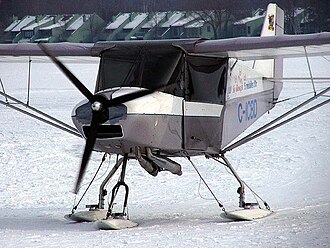
The Best Off Skyranger has earned a reputation as one of the most practical, affordable, and versatile microlight aircraft ever developed in Europe. While it may not possess the sleek appearance of high-performance composite tourers or the impressive speed of advanced light sport aircraft, the Skyranger has achieved something arguably more important—it has introduced thousands of pilots to aviation by offering a dependable, economical, and remarkably forgiving aircraft that excels in everyday flying.
Designed with simplicity in mind, the Skyranger combines lightweight construction, excellent visibility, predictable handling, and impressive short takeoff and landing (STOL) capability into an aircraft that can operate comfortably from grass strips, small regional airfields, and recreational flying clubs. Over the years, it has become a familiar sight throughout Europe and in many other parts of the world, where its practicality has made it a favorite among private owners, flight schools, aerial photographers, agricultural operators, and recreational aviators alike.
Unlike aircraft created primarily to demonstrate cutting-edge technology, the Skyranger was designed around a very different philosophy. Every major engineering decision sought to reduce costs, simplify maintenance, maximize reliability, and make flying accessible to as many people as possible. Rather than relying upon expensive composite manufacturing or highly specialized systems, the aircraft employs proven structural concepts that are easy to inspect, straightforward to repair, and inexpensive to maintain.
The result is an aircraft whose success has never depended upon spectacular performance figures or extravagant marketing campaigns. Instead, its popularity has grown steadily through positive experiences shared by pilots who appreciate an airplane that consistently performs its intended mission without unnecessary complication. In many ways, the Skyranger represents the essence of modern recreational aviation: practical, enjoyable, economical, and capable of bringing aviation within reach of individuals who might otherwise never have considered owning or flying an aircraft.
The Growth of Modern Microlight Aviation
The Skyranger emerged during a period when microlight aviation was undergoing a remarkable transformation. Earlier generations of ultralight aircraft often consisted of little more than simple tubular structures covered with lightweight fabric, powered by relatively small engines, and equipped with minimal instrumentation. Although these pioneering aircraft played an important role in expanding recreational aviation, they were frequently limited in payload, comfort, reliability, and operational flexibility.
Technological progress during the late twentieth century changed these expectations dramatically. New aluminum alloys, stronger synthetic fabrics, improved aerodynamics, and highly reliable four-stroke engines allowed manufacturers to create aircraft that offered many of the capabilities traditionally associated with certified general aviation airplanes while remaining significantly lighter and less expensive to operate.
European regulations also encouraged innovation by establishing clear categories for ultralight and microlight aircraft. Manufacturers responded by designing airplanes that complied with weight limitations while maximizing performance, safety, and comfort.
Within this evolving environment, the Skyranger quickly established itself as one of the most balanced and successful designs available.
Origins of the Skyranger
The Skyranger was developed in France with a clear understanding of what recreational pilots actually needed rather than what marketing departments believed they desired. Instead of emphasizing maximum cruise speed or advanced technology, the designers concentrated on producing an aircraft that would be dependable, affordable, easy to fly, and suitable for a wide variety of missions.
The aircraft entered a market populated by numerous lightweight designs, many of which specialized in particular areas such as cross-country touring or extreme STOL performance. The Skyranger sought to combine several desirable characteristics into one practical package.
Its development reflected lessons learned from decades of ultralight aviation. Engineers recognized that simplicity often contributes more to long-term success than technical sophistication. Every unnecessary system increases weight, maintenance requirements, and acquisition costs. By carefully balancing performance with practicality, the Skyranger became attractive to a remarkably broad range of operators.
The aircraft’s widespread acceptance soon demonstrated that this philosophy resonated strongly within the aviation community.
Design Philosophy
The central design philosophy behind the Skyranger can be summarized in three principles: simplicity, efficiency, and versatility.
Simplicity begins with the structure itself. Rather than employing complex composite molds or intricate manufacturing techniques, the aircraft uses a straightforward aluminum tube framework that can be assembled, inspected, and repaired with relative ease.
Efficiency appears throughout the design. Lightweight construction minimizes fuel consumption, improves climb performance, and enhances short-field capability. Aerodynamic refinement focuses on practical cruising speeds rather than extreme performance, ensuring economical operation throughout the aircraft’s service life.
Versatility perhaps defines the Skyranger more than any other characteristic. It performs equally well as a trainer, recreational touring aircraft, observation platform, or utility airplane. Few aircraft within its category demonstrate such adaptability.
This balanced approach has contributed greatly to its enduring popularity.
Airframe Construction
One of the most distinctive features of the Skyranger is its uncomplicated but highly effective structure.
The fuselage consists primarily of bolted aluminum tubing arranged in a carefully engineered framework. This method provides an excellent balance between strength and weight while allowing damaged components to be replaced individually if necessary.
Unlike welded steel structures, bolted aluminum assemblies simplify repairs and reduce corrosion concerns. Individual tubes can often be replaced without extensive structural work, minimizing maintenance costs.
The wings employ aluminum spars combined with lightweight ribs covered by modern synthetic fabric. Contemporary covering materials offer impressive durability while maintaining the low structural weight essential for microlight aircraft.
Control surfaces follow similar construction methods, emphasizing reliability and straightforward maintenance.
The aircraft’s modular design also facilitates transportation and storage, an important consideration for owners without permanent hangar facilities.
High-Wing Configuration
The Skyranger employs a high-wing layout, a configuration particularly well suited to recreational and utility aviation.
One of its greatest advantages is outstanding visibility. Because the wing is positioned above the cabin, occupants enjoy unobstructed downward views, making the aircraft ideal for sightseeing, aerial photography, wildlife observation, and flight instruction.
The high wing also contributes to natural lateral stability. During normal flight, gravitational forces and aerodynamic characteristics encourage the aircraft to return toward level flight after minor disturbances.
Ground operations benefit as well. The elevated wing reduces the likelihood of striking obstacles while providing easier cabin access for passengers.
Furthermore, wing-mounted fuel tanks simplify fuel system design through gravity feed, reducing mechanical complexity and improving reliability.
These practical advantages explain why high-wing aircraft continue to dominate flight training and recreational aviation.
STOL Performance
Although not specifically designed as an extreme STOL aircraft, the Skyranger demonstrates excellent short takeoff and landing performance.
Its relatively large wing generates substantial lift at low speeds, allowing safe operations from relatively short grass runways.
The lightweight airframe further enhances this capability by reducing takeoff distance and improving climb rate.
Large flaperons increase lift during departure and approach while simultaneously maintaining effective roll control.
This combination allows pilots to operate confidently from numerous rural airfields that would be inaccessible to larger general aviation aircraft.
Short-field performance also contributes significantly to operational safety by expanding the range of suitable emergency landing sites during cross-country flights.
Aerodynamic Characteristics
Aerodynamically, the Skyranger emphasizes stability and predictability rather than maximum speed.
Its wing employs an airfoil selected to provide forgiving stall characteristics and efficient cruise performance within the aircraft’s intended operating envelope.
Wing struts permit lighter structural construction while maintaining excellent rigidity.
The fuselage presents a relatively low frontal area, helping reduce drag without sacrificing cabin space.
Tail surfaces are generously proportioned, ensuring positive directional and longitudinal stability throughout all phases of flight.
These aerodynamic choices collectively produce an aircraft that responds smoothly to pilot inputs while remaining remarkably forgiving during low-speed flight.
Engine Options
Perhaps no component has contributed more to the Skyranger’s operational reputation than its engine options.
Most aircraft are equipped with engines manufactured by Rotax, particularly the highly regarded Rotax 912 series.
These four-cylinder, four-stroke engines provide an excellent combination of reliability, fuel efficiency, low vibration, and straightforward maintenance.
Earlier or lower-powered versions have occasionally employed alternative engines depending upon local regulations and owner preferences, but the Rotax family remains by far the most common installation.
The engines allow impressive climb performance while consuming relatively small quantities of fuel compared with larger certified aircraft.
This economical operation significantly reduces overall ownership costs.
Cabin Layout
The Skyranger’s cockpit reflects its emphasis on practicality.
Two occupants sit side by side, facilitating communication during both training and recreational flights.
Large transparent doors and extensive glazing provide panoramic visibility that greatly enhances the flying experience.
Despite the aircraft’s compact dimensions, thoughtful ergonomic design creates a surprisingly spacious cabin environment.
Modern examples often feature digital avionics, GPS navigation, engine monitoring systems, transponders, and radio equipment comparable to those installed in significantly larger aircraft.
Heating systems further improve comfort during colder seasons, extending the practical flying year.
Baggage space remains sufficient for weekend touring and recreational travel.
Flight Characteristics
Pilots consistently praise the Skyranger for its exceptionally forgiving handling.
Taxiing is straightforward thanks to good forward visibility and responsive steering.
Takeoff requires relatively little runway, with the aircraft climbing confidently even under moderate loading.
Once airborne, control forces remain light but not overly sensitive.
The aircraft naturally seeks stable flight, reducing pilot workload during cross-country operations.
Turns are coordinated easily, while pitch response remains predictable across a broad speed range.
Perhaps most importantly, stall behavior develops gradually with ample aerodynamic warning.
This forgiving nature makes the aircraft particularly well suited to inexperienced pilots while remaining enjoyable for seasoned aviators.
Training Applications
The Skyranger has become a common training aircraft throughout Europe.
Several factors contribute to this popularity.
Its forgiving flight characteristics encourage student confidence.
Simple systems reduce cockpit workload.
Excellent visibility enhances traffic awareness and situational understanding.
Operating costs remain relatively low, allowing schools to offer more affordable flight training.
Maintenance requirements also compare favorably with more complex aircraft, maximizing fleet availability.
Because the aircraft handles predictably while still requiring proper pilot technique, it serves as an excellent educational platform.
Many pilots complete their first solo flight in a Skyranger before progressing to larger aircraft.
Recreational Flying
While flight training remains important, recreational flying represents the heart of the Skyranger’s mission.
The aircraft encourages exploration.
Small grass airfields become accessible destinations rather than obstacles.
Scenic flights over countryside, coastlines, lakes, and mountains become particularly rewarding thanks to outstanding visibility.
Fuel efficiency encourages longer adventures without imposing excessive operating costs.
Many owners describe the Skyranger as an aircraft that emphasizes enjoyment rather than urgency.
Its moderate cruise speed allows pilots to appreciate landscapes while still covering meaningful distances.
Touring Capability
Although classified as a microlight, the Skyranger possesses genuine touring capability.
Modern navigation equipment simplifies route planning.
Reasonable baggage capacity supports overnight trips.
Comfortable seating reduces fatigue during longer flights.
Fuel consumption remains sufficiently low that extended journeys remain economically practical.
Its ability to operate from numerous smaller airfields dramatically expands travel possibilities compared with aircraft requiring major airports.
Many owners regularly undertake international touring flights throughout Europe.
Maintenance and Ownership
Ownership costs represent one of the aircraft’s strongest selling points.
Routine maintenance procedures remain relatively uncomplicated.
The aluminum structure permits straightforward inspection.
Fabric coverings generally require minimal maintenance when properly cared for.
Rotax engines have established excellent worldwide support networks.
Spare parts availability remains strong due to the aircraft’s widespread popularity.
Insurance costs also compare favorably with larger certified aircraft in many jurisdictions.
Collectively, these advantages make ownership financially realistic for many recreational pilots.
Safety
The Skyranger incorporates numerous features promoting safe operation.
Stable flight characteristics reduce pilot workload.
Predictable stalls minimize loss-of-control risk.
Excellent visibility enhances collision avoidance.
Reliable engines improve operational dependability.
Strong structural design provides occupant protection appropriate to its category.
Many examples also incorporate ballistic recovery parachute systems capable of lowering the entire aircraft safely under specific emergency circumstances.
These characteristics collectively explain the aircraft’s excellent reputation within flight training organizations.
International Success
The Skyranger has achieved remarkable international popularity.
Examples operate throughout Europe, Australia, Africa, Asia, and other regions where lightweight recreational aviation continues to grow.
Different national aviation regulations have encouraged several variants optimized for local requirements.
Flying clubs appreciate the aircraft’s economy.
Private owners value its versatility.
Training organizations depend upon its reliability.
Agricultural operators employ it for observation.
Photographers appreciate its exceptional visibility.
Few aircraft within the microlight category have demonstrated such broad operational appeal.
Legacy
The Best Off Skyranger represents one of the defining aircraft of modern European microlight aviation.
Its success demonstrates that outstanding aircraft need not rely upon extreme performance or technological extravagance.
Instead, thoughtful engineering, reliable components, practical design, and careful attention to pilot needs have produced an aircraft that continues serving thousands of aviators worldwide.
More importantly, the Skyranger has helped democratize aviation. By reducing acquisition costs, operating expenses, and maintenance complexity, it has allowed countless individuals to experience the freedom of personal flight who might otherwise never have entered aviation.
Its influence extends beyond its own production numbers. Many subsequent lightweight aircraft have adopted similar philosophies emphasizing simplicity, versatility, and economical operation.
Whether employed as a primary trainer, recreational tourer, observation platform, or personal adventure aircraft, the Skyranger continues proving that practical engineering often delivers the most enduring success. Decades after its introduction, it remains one of the best-known and most respected microlight aircraft ever built, embodying the ideal balance between affordability, capability, and the simple joy of flying.
Technical Specifications
| Parameter | Specification* |
|---|---|
| Aircraft | Best Off Skyranger |
| Role | Ultralight / Microlight utility aircraft |
| Manufacturer | Best Off (France) |
| Country of origin | France |
| Aircraft category | High-wing ultralight / microlight |
| Crew | 1 |
| Passenger capacity | 1 |
| Seating | Side-by-side |
| Construction | Bolted aluminum tube fuselage, aluminum wing structure, synthetic fabric covering |
| Landing gear | Fixed tricycle (taildragger versions also produced) |
| Length | Approximately 5.8 m (19.0 ft) |
| Wingspan | Approximately 9.5 m (31.2 ft) |
| Height | Approximately 2.3 m (7.5 ft) |
| Wing area | Approximately 14.5 m² |
| Empty weight | Approximately 250–285 kg (configuration dependent) |
| Maximum takeoff weight | 450–600 kg, depending on national regulations and variant |
| Engine | Commonly 1 × Rotax 912 ULS four-cylinder, four-stroke engine |
| Engine power | 80–100 hp, depending on engine version |
| Propeller | Two- or three-blade composite propeller (fixed-pitch or ground-adjustable) |
| Cruise speed | Approximately 140–160 km/h (87–99 mph) |
| Maximum speed | Approximately 170–185 km/h (106–115 mph) |
| Stall speed | Approximately 55 km/h (34 mph) with flaperons |
| Range | Approximately 600–800 km, depending on fuel capacity and engine setting |
| Fuel capacity | Approximately 65–70 liters |
| Rate of climb | Approximately 4.5–6.5 m/s |
| Service ceiling | Approximately 4,500–5,000 m (14,800–16,400 ft) |
| Takeoff distance | Approximately 80–150 m under favorable conditions |
| Landing distance | Approximately 80–150 m under favorable conditions |
| Primary missions | Flight training, recreational flying, cross-country touring, aerial observation, photography, STOL operations |
