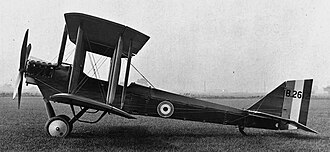
Airco DH.6 – The Forgotten Trainer That Quietly Helped Build Britain’s First World War Air Arm
When discussing the legendary aircraft of the First World War, attention almost always turns toward glamorous fighters such as the Sopwith Camel, the Royal Aircraft Factory S.E.5a, or the German Fokker D.VII. Bombers like the Handley Page O/400 and reconnaissance aircraft such as the B.E.2 also receive frequent recognition because of their direct contributions to the battlefield. Hidden behind these famous machines, however, were aircraft that performed an equally indispensable function by preparing thousands of young pilots for military service. Among these overlooked aircraft was the Airco DH.6, a modest two-seat trainer whose greatest achievement was not aerial victories or spectacular technological innovation, but reliability, simplicity, and forgiveness. Although it never became a household name, the DH.6 represented an essential component of Britain’s wartime aviation infrastructure, enabling novice pilots to develop confidence before progressing to more demanding operational aircraft. It became one of the most widely used elementary trainers of its era, and its influence extended far beyond the training fields where it quietly served.
The Airco DH.6 emerged during a period when military aviation was developing at an extraordinary pace. Between 1914 and 1918, aircraft evolved from fragile experimental machines into increasingly sophisticated weapons capable of reconnaissance, bombing, artillery spotting, naval patrol, and aerial combat. This rapid evolution created an unprecedented demand for trained pilots. Every month brought new squadrons, new aircraft, and unfortunately, significant losses that required continual replacement. Britain faced the enormous challenge of expanding its pilot training system quickly while maintaining acceptable standards of safety. Existing trainers were often converted operational aircraft that possessed handling characteristics entirely unsuitable for inexperienced aviators. Training accidents became alarmingly common, revealing the urgent need for an aircraft designed specifically with beginners in mind.
The DH.6 answered this need by embracing a philosophy almost opposite to that of contemporary combat aircraft. Instead of maximizing speed, climb rate, maneuverability, or combat capability, its designers concentrated on stability, predictability, and ease of operation. Every design decision reflected the understanding that student pilots would inevitably make mistakes. Rather than punishing these errors with dangerous spins or uncontrollable stalls, the aircraft was intended to remain manageable and forgiving. This philosophy made the DH.6 one of the earliest examples of an aircraft designed explicitly around pilot instruction rather than military performance, marking an important step in the professionalization of military flight training.
The Birth of the Airco DH.6
Britain’s Expanding Air Services
By 1916, the Royal Flying Corps and the Royal Naval Air Service had expanded at a remarkable rate. Air operations over the Western Front had become increasingly sophisticated, with aircraft supporting nearly every aspect of military planning. New reconnaissance missions demanded skilled observers and capable pilots, while the emergence of dedicated fighter squadrons intensified the need for competent aviators. Britain also began developing strategic bombing capabilities and strengthening maritime patrol operations around its extensive coastline. All of these missions required trained personnel, and training organizations struggled to keep pace with demand.
Initially, many students learned to fly using obsolete front-line aircraft. While practical from a logistical standpoint, these machines often possessed challenging handling characteristics that increased accident rates. Aircraft designed for reconnaissance or combat could be unstable at low speeds, sensitive to control inputs, or susceptible to dangerous stalls. Young pilots frequently damaged or destroyed valuable aircraft before ever reaching operational units.
Military authorities recognized that producing skilled pilots required more than simply providing aircraft; it required aircraft specifically engineered for teaching. Such a machine needed to withstand rough landings, tolerate incorrect control inputs, and inspire confidence rather than fear. This realization led Aircraft Manufacturing Company—better known as Airco—to begin work on what would become the DH.6.
Geoffrey de Havilland’s Vision
The DH designation originated from Geoffrey de Havilland, one of Britain’s most gifted aircraft designers. Before establishing the company that would later bear his name, de Havilland served as Airco’s chief designer, creating a succession of successful military aircraft that included reconnaissance machines, bombers, and trainers. His practical engineering philosophy emphasized efficient construction, operational reliability, and straightforward maintenance, qualities that naturally influenced the DH.6.
Unlike many designers who viewed training aircraft merely as simplified versions of combat machines, de Havilland appreciated that instructional flying demanded an entirely different approach. Beginners needed predictable behavior more than exciting performance. Consequently, the DH.6 was conceived not as a downgraded combat aircraft but as an entirely new design whose primary objective was helping inexperienced pilots survive their earliest hours in the air.
The resulting aircraft reflected remarkable discipline in engineering priorities. Every unnecessary complication was eliminated. Structural components were designed for straightforward manufacture, maintenance, and repair. Flying qualities received greater attention than speed. Operational economy became an important consideration because thousands of training sorties would be flown during the aircraft’s service life. The design successfully balanced military necessity with industrial practicality, allowing rapid production at a time when Britain urgently required large numbers of trainers.
Design Philosophy and Engineering
Prioritizing Stability Above All Else
Perhaps the defining characteristic of the Airco DH.6 was its extraordinary stability. Modern pilots often associate enjoyable flying with responsiveness and agility, but these qualities can become liabilities when handling inexperienced students. The DH.6 deliberately sacrificed maneuverability in favor of gentle, predictable flight characteristics that minimized surprises.
Its large wings generated substantial lift at relatively low speeds, allowing comfortable takeoffs and landings. The generous wing area also reduced wing loading, making stalls less abrupt and easier to recover from. Control surfaces were intentionally designed to avoid excessive sensitivity, meaning that accidental overcorrections by nervous students were less likely to produce dangerous oscillations.
The aircraft naturally sought level flight when properly trimmed, reducing pilot workload during instruction. Student pilots could therefore concentrate on fundamental skills such as maintaining altitude, coordinating turns, monitoring engine performance, and learning navigation rather than constantly fighting an unstable aircraft. These qualities significantly improved both training efficiency and safety.
The DH.6 eventually gained the affectionate nickname “The Clutching Hand” because of its remarkable reluctance to depart controlled flight. Experienced instructors joked that the aircraft seemed determined to remain airborne regardless of what mistakes its occupants made. Although this reputation involved some exaggeration, it reflected genuine appreciation for an aircraft that consistently protected inexperienced crews from the consequences of common errors.
Structural Simplicity
Like many aircraft of the First World War, the DH.6 employed a wooden framework reinforced with steel fittings and covered primarily with fabric. While this construction may appear primitive by modern standards, it represented an effective balance between strength, weight, manufacturing speed, and available materials. Skilled craftsmen could construct airframes relatively quickly using woodworking techniques already familiar to many British industries.
The fuselage consisted of a conventional box-girder structure braced internally with wires that maintained rigidity while minimizing weight. Wings incorporated wooden spars and ribs carefully shaped to produce the desired aerodynamic profile. Fabric covering reduced overall mass while remaining relatively simple to repair following minor damage. If a student damaged a wingtip during landing practice, maintenance personnel could often replace or repair the affected components without requiring an entirely new aircraft.
The undercarriage deserved particular attention because student pilots inevitably subjected it to repeated hard landings. Designers emphasized durability, creating a landing gear capable of absorbing punishment that might have destroyed lighter or more delicate structures. This ruggedness substantially reduced maintenance demands while keeping valuable training aircraft available for continued instruction.
The open cockpits reflected aviation practice of the period. Instructor and student sat in tandem, allowing dual control during training flights. Communication relied primarily on shouted instructions and prearranged hand signals because effective intercom systems did not yet exist. Although exposure to wind, engine noise, and weather created an uncomfortable environment by modern standards, these conditions prepared pilots for operational flying, where enclosed cockpits remained uncommon.
Powerplant and Performance
Choosing Reliability Over Speed
One of the most practical aspects of the DH.6 involved its compatibility with multiple engine types. Wartime production frequently encountered shortages of specific engines, and designing an aircraft dependent upon only one powerplant could easily interrupt manufacturing. Airco therefore ensured that the DH.6 could accept several different rotary and inline engines depending upon availability.
This flexibility proved invaluable. Aircraft could continue leaving production lines despite fluctuations in engine supply, helping maintain the steady flow of trainers required by expanding flying schools. Although performance naturally varied slightly between engine installations, the aircraft’s primary mission remained unaffected because extreme performance had never been a design objective.
Maximum speed remained relatively modest, reflecting the aircraft’s educational role rather than any engineering deficiency. Training flights emphasized smooth handling, navigation, takeoffs, landings, and emergency procedures instead of speed records or combat maneuvering. Consequently, instructors often appreciated the aircraft’s leisurely pace because it gave students additional time to recognize mistakes and respond appropriately.
Climb performance similarly reflected practical compromise. The DH.6 reached suitable training altitudes without unnecessary haste, conserving fuel while allowing instructors to conduct extended lessons. Endurance remained adequate for multiple exercises within a single sortie, maximizing the value obtained from every flight.
Forgiving Flight Characteristics
Perhaps more important than numerical performance figures was the aircraft’s behavior throughout the flight envelope. Contemporary reports consistently emphasized its predictable nature. Stalls occurred gradually, providing ample warning through decreasing control effectiveness and gentle aerodynamic buffeting rather than sudden wing drops. Recovery generally required straightforward corrective action, enabling instructors to demonstrate proper technique with reduced risk.
Turns remained stable and coordinated when properly flown. Although the DH.6 lacked the exhilarating agility of contemporary fighters, this characteristic proved advantageous during instruction because students learned disciplined flying rather than relying upon instinctive reactions. Basic airmanship developed more effectively in an aircraft that rewarded smooth control inputs and penalized aggressive handling only mildly.
The machine also tolerated varying weather conditions reasonably well. Moderate turbulence that might unsettle lighter or more sensitive aircraft generally produced manageable reactions, allowing flying schools to continue operations under a broader range of conditions. Increased training availability translated directly into greater pilot production, an important strategic consideration during wartime.
Manufacturing the DH.6
Industrial Expansion During Wartime
Producing thousands of military aircraft during the First World War required an industrial transformation unprecedented in British history. Traditional manufacturers expanded rapidly, while companies with little previous aviation experience entered aircraft production under government supervision. The DH.6 benefited enormously from this nationwide mobilization because its straightforward construction made it particularly suitable for distributed manufacturing.
Multiple firms participated in production, reducing dependence upon any single factory and improving resilience against material shortages or industrial disruptions. Standardized drawings, interchangeable components where practical, and uncomplicated structural arrangements enabled manufacturers to maintain consistent quality despite differing levels of previous aviation experience.
The aircraft’s uncomplicated design shortened assembly times compared with more sophisticated combat types. Workers required less specialized training, while inspection procedures remained relatively straightforward. This manufacturing efficiency proved invaluable because every completed trainer ultimately contributed to expanding Britain’s pool of qualified military pilots.
By the end of production, well over two thousand DH.6 aircraft had been built, making it one of the most numerous British training aircraft of the First World War. Although overshadowed by more famous combat designs, these production figures demonstrate the strategic importance attached to elementary pilot instruction.
Supporting the Training Pipeline
The true measure of the DH.6’s success lay not in combat achievements but in the number of aviators it helped prepare for operational service. Training organizations required dependable aircraft capable of flying numerous sorties every day with minimal maintenance interruptions. The DH.6 fulfilled this role admirably.
Students typically encountered the aircraft during the earliest stages of flight instruction after mastering basic ground procedures. Under close supervision, they learned takeoff techniques, straight-and-level flight, climbing, descending, turning, circuit work, and landing. As confidence increased, instructors introduced navigation exercises, emergency drills, and increasingly complex maneuvers before transitioning graduates to more advanced operational trainers.
This gradual progression significantly improved overall pilot competence. Instead of confronting demanding front-line aircraft immediately, students developed sound flying habits in an aircraft specifically engineered to accommodate their inexperience. Countless British and Commonwealth pilots therefore began aviation careers in the humble DH.6 before eventually flying reconnaissance aircraft, bombers, naval patrol machines, and fighters over Europe, the Mediterranean, the Middle East, and beyond.
The Airco DH.6 may never have enjoyed the fame associated with legendary combat aircraft, yet its contribution to Allied air power was profound. Every successful operational pilot represented not only individual talent but also the effectiveness of the training system that shaped those skills. The DH.6 stood at the very beginning of that journey, transforming nervous beginners into competent aviators through patient, dependable service. Its legacy was measured not in victories credited to its own airframe but in the achievements of the thousands of pilots whose first confident flights took place behind its controls.
The Airco DH.6 Beyond Training: Wartime Service and Operational Roles
From Training Fields to Front-Line Support
Although the Airco DH.6 was created primarily as a training aircraft, the demands of the First World War often required military equipment to perform roles beyond its original purpose. Aircraft shortages were common, and commanders frequently adapted available machines for secondary missions. The DH.6 was no exception. While it was never intended to compete with dedicated reconnaissance aircraft or fighters, its reliability, endurance, and forgiving handling qualities made it useful in several supporting roles.
The most important non-training application of the DH.6 was maritime patrol. The British Empire depended heavily on maintaining secure sea routes, and the threat posed by German submarines became increasingly serious during the later years of the war. Aircraft offered a valuable method of observing coastal waters, identifying suspicious activity, and supporting naval forces. While the DH.6 lacked the speed and payload capability of specialized patrol aircraft, it could remain airborne for useful periods and operate safely at low altitudes, making it suitable for coastal surveillance duties.
The aircraft’s low-speed handling characteristics were particularly valuable in this environment. Searching for submarines required crews to fly slowly while carefully observing the sea surface. A faster aircraft optimized for combat might have been more difficult to operate effectively during long observation missions. The DH.6, however, provided a stable platform from which pilots and observers could conduct patrols with relatively little workload.
Some aircraft were equipped to carry light loads for maritime duties, although their capabilities remained limited compared with purpose-built naval aircraft. Their contribution was therefore primarily observational rather than offensive. By extending the eyes of naval forces over coastal waters, DH.6 patrols contributed to Britain’s wider anti-submarine strategy.
The Royal Naval Air Service and Coastal Defence
The Royal Naval Air Service recognized the usefulness of simple and dependable aircraft for protecting Britain’s coastline. During the war, coastal air stations expanded rapidly, requiring large numbers of pilots and observers. The DH.6 fitted naturally into this environment because it combined ease of operation with sufficient endurance for routine patrol tasks.
Coastal flying presented unique challenges. Pilots often operated over open water, where engine problems or navigational mistakes could have serious consequences. An aircraft intended for such missions needed to inspire confidence and remain predictable under demanding conditions. The DH.6’s reputation for stability made it suitable for pilots who were still gaining experience.
Observers flying in the front cockpit performed tasks such as scanning the water for enemy vessels, reporting naval movements, and assisting with reconnaissance. These missions lacked the drama of aerial combat, but they represented an important element of Britain’s defensive network. The DH.6 became part of a broader system that combined ships, coastal stations, and aircraft to monitor approaches to the British Isles.
The aircraft’s limitations were obvious. It was slow, lightly armed if armed at all, and vulnerable against enemy fighters. However, coastal patrol missions generally emphasized persistence and reliability rather than speed. The DH.6 succeeded because it could perform ordinary duties repeatedly and safely, qualities that were highly valued during a prolonged conflict.
International Use and Post-War Service
Service Throughout the British Empire
The conclusion of the First World War did not immediately end the usefulness of the DH.6. Large numbers of aircraft remained available, and many were distributed throughout the British Empire. Aviation organizations in countries such as Canada, Australia, and other territories required affordable and practical aircraft for training and early aviation development.
For many nations, the DH.6 represented an opportunity to establish or expand aviation capabilities without the expense of purchasing more advanced machines. Its uncomplicated construction made it easier to maintain in locations where specialized aviation infrastructure was limited. Mechanics could work with familiar materials and straightforward systems rather than requiring highly specialized equipment.
In Canada, for example, the aircraft became associated with early military aviation training efforts. The country’s vast geography and harsh climate created unique aviation challenges, yet simple and durable aircraft were valuable assets during the development of flying organizations. Similar patterns occurred elsewhere, where former wartime equipment became the foundation of peacetime aviation programs.
The DH.6 also contributed indirectly to the growth of civilian aviation. As governments reduced military aircraft inventories after the war, many machines entered civilian ownership. They were used for flight instruction, aerial demonstrations, passenger experimentation, and general aviation activities. While newer aircraft eventually replaced them, the DH.6 helped bridge the transition between wartime aviation and the emerging civilian aviation industry of the 1920s.
The Aircraft as a Civilian Trainer
After 1918, aviation experienced a major transformation. Military organizations reduced their aircraft fleets, but public interest in flying increased dramatically. Former military pilots sought employment, aviation companies explored commercial opportunities, and flying clubs emerged in many countries. Reliable training aircraft were therefore in demand.
The DH.6 was naturally suited for this new environment. Its forgiving handling characteristics made it attractive to civilian flying schools, especially those introducing newcomers to aviation. Operating costs were relatively manageable, and spare parts remained available because of the large wartime production numbers.
Although it lacked the performance expected from newer aircraft, the DH.6 remained useful because beginner training did not require speed or advanced capabilities. A student pilot learning basic principles benefited more from stability and simplicity than from high performance. In this respect, the aircraft continued performing essentially the same mission for which it had originally been designed.
Eventually, improved trainers replaced the DH.6. Aircraft designers learned from wartime experience and developed more efficient trainers with better performance, improved visibility, and more modern engines. Nevertheless, the DH.6 remained an important transitional aircraft that helped maintain aviation education during the uncertain years following the First World War.
Comparing the DH.6 with Other First World War Aircraft
The DH.6 Versus Combat Aircraft
Comparing the Airco DH.6 directly with famous First World War fighters can create misleading conclusions because the aircraft served completely different purposes. A fighter such as the Sopwith Camel was designed around maneuverability, speed, and weapons performance. Its pilot needed to manage a powerful but demanding machine in combat situations where fractions of a second could determine survival.
The DH.6 represented the opposite design philosophy. It was not intended to dominate the sky but to introduce pilots to the fundamentals of flight. Its slow speed, gentle handling, and limited maneuverability would have been serious disadvantages in combat, but these same characteristics became strengths in training.
The contrast highlights an important principle in aviation design: the best aircraft for one mission may be completely unsuitable for another. A racing car and a school bus are both vehicles, but their requirements differ enormously. Similarly, the DH.6 and a fighter aircraft occupied entirely different categories. Measuring one against the other only demonstrates how effectively each fulfilled its intended purpose.
The DH.6 Compared with Other Trainers
During the First World War, several nations developed training aircraft, but the DH.6 became particularly notable because of its numbers and reliability. German, French, and British air forces all recognized that pilot preparation required specialized equipment, although approaches differed.
Some training aircraft were modified versions of earlier operational designs. While this approach simplified production, it sometimes preserved undesirable handling characteristics. The DH.6’s purpose-built nature gave it an advantage because every aspect of its design reflected instructional requirements.
Its greatest competitor within British service was not another aircraft but the evolving concept of pilot training itself. As aviation matured, schools developed increasingly structured programs involving ground instruction, progressive flight exercises, and specialized trainers. The DH.6 represented one of the earliest successful examples of an aircraft designed specifically for this educational system.
The Legacy of the Airco DH.6
An Aircraft Measured by People, Not Victories
The historical importance of military aircraft is often judged by combat records. Aircraft that achieved famous victories or introduced revolutionary technology naturally receive attention from historians and enthusiasts. The DH.6 followed a different path. Its success cannot be measured through enemy aircraft destroyed, bombing tonnage delivered, or strategic operations completed.
Instead, its legacy exists in the pilots it trained. Thousands of aviators began their careers in aircraft like the DH.6 before moving on to more advanced machines. The skills learned during those first flights—maintaining control, understanding aircraft behavior, managing emergencies, and developing confidence—formed the foundation of effective military aviation.
The aircraft demonstrated that training systems were as important as front-line technology. A nation could build the fastest or most advanced aircraft in the world, but without competent pilots those machines would remain ineffective. The DH.6 supported the human element of aviation, creating the connection between engineering achievement and operational success.
Influence on Future Training Aircraft
The principles demonstrated by the DH.6 influenced later generations of training aircraft. Designers increasingly recognized that trainers required specific characteristics rather than simply being less powerful versions of combat machines. Stability, durability, ease of maintenance, and predictable handling became recognized priorities.
Modern training aircraft continue to reflect many of these ideas. While technology has changed dramatically, beginner pilots still need machines that provide confidence while teaching essential skills. Advanced electronics and improved materials have transformed aviation, but the fundamental relationship between student and trainer remains similar to that established during the First World War.
The DH.6 therefore occupies an important place in aviation history. It represented a shift toward deliberate aircraft specialization and helped establish the idea that training aircraft deserved dedicated design attention.
Airco DH.6 Technical Specifications
The following specifications represent typical figures for the Airco DH.6. Variations existed because different production batches could use different engines and equipment configurations.
| Specification | Details |
|---|---|
| Aircraft Name | Airco DH.6 |
| Role | Primary military trainer; coastal patrol aircraft |
| Manufacturer | Aircraft Manufacturing Company (Airco) |
| Designer | Geoffrey de Havilland |
| First Flight | 1916 |
| Introduced | 1917 |
| Primary Operators | Royal Flying Corps, Royal Air Force, Royal Naval Air Service, Commonwealth aviation organizations |
| Configuration | Two-seat single-engine biplane |
| Construction | Wooden frame with fabric covering |
| Length | Approximately 7.8 m (25 ft 7 in) |
| Wingspan | Approximately 10.7 m (35 ft) |
| Powerplant | Various engines including RAF 1a and other available wartime engines |
| Engine Power | Approximately 90–150 hp depending on installation |
| Maximum Speed | Approximately 70–85 mph (113–137 km/h), depending on engine and configuration |
| Armament | Generally unarmed; some patrol aircraft carried limited equipment |
| Crew | Two (student pilot and instructor/observer) |
| Main Purpose | Elementary flight training and pilot instruction |
| Production | More than 2,000 aircraft built |
| Key Characteristics | Exceptional stability, durability, simple maintenance, forgiving handling |
Conclusion: The Quiet Importance of the Airco DH.6
The Airco DH.6 was never designed to become a legend of aerial combat, and perhaps that explains why it remains relatively unknown today. It did not win famous battles, introduce revolutionary weapons, or establish speed records. Instead, it performed a quieter but equally important mission: teaching people how to fly during one of aviation’s most challenging periods.
Its designers understood that the foundation of military air power was not only advanced aircraft but also skilled pilots capable of using them effectively. By providing a safe, stable, and dependable platform for instruction, the DH.6 helped transform inexperienced students into operational aviators. Its contribution was measured not by the achievements of the aircraft itself but by the accomplishments of those who learned their first lessons in its cockpit.
In aviation history, some aircraft become famous because of what they achieved in combat. Others become important because of the countless individuals they helped prepare. The Airco DH.6 belongs firmly in the second category. It was a humble machine with an enormous influence, a reminder that behind every celebrated pilot and every famous aircraft stood the training systems and instructors that made their success possible.
