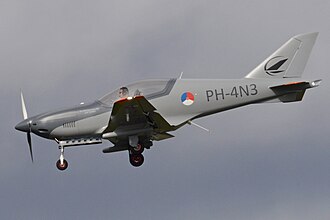
Blackshape Prime – The Italian Carbon-Fiber Aircraft That Redefined the Modern Ultralight
In the world of modern aviation, few aircraft demonstrate the combination of elegance, innovation, and engineering ambition quite like the Blackshape Prime. Developed in Italy during a period when advanced composite materials were transforming the light aircraft industry, the Prime represents a new generation of aircraft that blends the performance philosophy of high-end racing machines with the practicality of a two-seat personal aircraft. Rather than simply following traditional ultralight aircraft design principles, Blackshape created a machine that challenged expectations about what a lightweight aircraft could achieve. With its sleek aerodynamic profile, carbon-fiber construction, retractable landing gear, and emphasis on efficiency, the Prime occupies a unique position between conventional ultralights, light sport aircraft, and advanced personal aviation machines.
The aircraft immediately attracted attention because of its appearance. At first glance, the Blackshape Prime looks more like a miniature military trainer or a scaled-down racing aircraft than a typical recreational airplane. Its sharply sculpted fuselage, low wing configuration, enclosed cockpit, and carefully integrated aerodynamic surfaces give it a distinctive appearance that reflects its performance-oriented philosophy. However, the aircraft is not merely a design exercise. Every visible feature serves a purpose, from reducing drag to improving structural efficiency and enhancing the pilot’s connection with the flying experience.
The story of the Blackshape Prime is also a story about the evolution of aviation materials and manufacturing methods. For much of the twentieth century, small aircraft relied heavily on aluminum structures, steel components, and fabric-covered designs. These approaches produced reliable aircraft, but they imposed limitations in weight, aerodynamic refinement, and manufacturing flexibility. Advances in composite technology changed this equation by allowing designers to create lighter, stronger, and more aerodynamically efficient airframes. Blackshape embraced these possibilities fully, using carbon-fiber composites as the foundation of an aircraft designed around modern performance expectations.
Although the Prime belongs to the light aircraft category, its development philosophy shares similarities with high-performance aviation. The designers focused on reducing unnecessary weight, optimizing airflow, and creating a structure that could efficiently transfer aerodynamic forces. The result was an aircraft that demonstrated how modern materials and careful engineering could produce impressive performance without requiring a large engine or complex mechanical systems.
The Origins of Blackshape and the Creation of the Prime
An Italian Approach to Advanced Light Aviation
Italy has a long tradition of aviation innovation, combining artistic design sensibilities with engineering expertise. From early pioneers of aircraft development to modern aerospace companies, Italian aviation has frequently emphasized both technical capability and visual elegance. The Blackshape Prime emerged from this environment, reflecting a design culture where aesthetics and performance were considered closely connected.
The company behind the aircraft, Blackshape Aircraft, was established with the goal of developing advanced composite aircraft that could appeal to private pilots, flight schools, and aviation enthusiasts seeking something beyond conventional recreational aircraft. Instead of competing directly with basic trainers, Blackshape aimed at a higher level of refinement. The Prime was conceived as a premium aircraft that would provide exceptional handling, efficiency, and style within the lightweight aviation market.
The aircraft’s development coincided with increasing interest in carbon-fiber construction throughout aviation. Composite materials had already proven their value in gliders, racing aircraft, military projects, and commercial aviation components. However, their application in smaller personal aircraft opened new possibilities. Designers were no longer limited by traditional manufacturing methods and could create smoother aerodynamic shapes with fewer structural compromises.
The Prime became a showcase for this approach. Its smooth composite surfaces eliminated many of the joints, seams, and aerodynamic imperfections common in older aircraft construction methods. The aircraft’s form was shaped by aerodynamic considerations rather than by the limitations of traditional assembly techniques.
From Concept to Production Aircraft
Developing a modern aircraft involves balancing many competing requirements. Designers must consider performance, safety, manufacturing costs, regulatory requirements, maintenance needs, and customer expectations. The Blackshape Prime project sought to achieve a difficult combination: sports-car-like performance with aircraft-level reliability and accessibility.
The designers focused heavily on structural efficiency. A lightweight aircraft benefits from reduced fuel consumption, improved acceleration, better climb performance, and lower operating costs. However, reducing weight cannot come at the expense of strength. Carbon-fiber composites offered an ideal solution because they provide excellent strength-to-weight ratios when properly engineered.
The Prime’s airframe was designed around a composite monocoque structure, where the outer shell contributes significantly to overall strength. This approach allows engineers to create a rigid and lightweight fuselage while maintaining a smooth aerodynamic profile. Unlike traditional structures that rely on numerous internal supports and external panels, composite construction can integrate structural and aerodynamic functions into a single carefully shaped component.
The aircraft’s development also reflected changing expectations among private pilots. Modern aviation enthusiasts increasingly seek aircraft that offer more than basic transportation. They want machines that are enjoyable to fly, visually distinctive, efficient to operate, and technologically advanced. The Prime was positioned precisely for this audience.
Design Philosophy: Performance Through Simplicity
The Importance of Weight Reduction
Weight is one of the most important factors in aircraft design. Every kilogram removed from an aircraft can improve performance in several ways. A lighter aircraft requires less power to climb, accelerates more efficiently, consumes less fuel, and experiences lower structural loads during flight. For small aircraft, where engine power is limited compared with larger airplanes, weight reduction becomes especially important.
The Blackshape Prime demonstrates how designers can achieve impressive performance through careful weight management rather than simply installing a larger engine. Instead of increasing power dramatically, the aircraft focuses on aerodynamic efficiency and structural optimization. This approach allows it to deliver responsive handling and excellent efficiency while maintaining relatively low operating costs.
The use of carbon fiber throughout the structure was central to this philosophy. Traditional metal aircraft require numerous components connected through fasteners, brackets, and joints. While effective, these systems add weight and can introduce aerodynamic imperfections. Composite construction allows larger integrated sections, reducing complexity while improving surface quality.
This philosophy also influenced the aircraft’s interior. The cockpit was designed to provide essential information and controls without unnecessary complexity. The goal was not to overwhelm pilots with equipment but to create a focused flying environment where the aircraft itself remained the primary experience.
Aerodynamic Efficiency and the Shape of the Prime
The Blackshape Prime’s appearance immediately reveals its aerodynamic priorities. The aircraft features a low-mounted wing, streamlined fuselage, and carefully shaped control surfaces designed to reduce drag. In aviation, minimizing drag is essential because aerodynamic resistance directly affects speed, fuel consumption, and efficiency.
Every curve of the Prime contributes to its overall aerodynamic performance. The fuselage transitions smoothly into the wing area, reducing airflow disruption. The enclosed cockpit canopy provides a clean surface that allows air to pass efficiently over the aircraft. The landing gear system, when retracted, further reduces aerodynamic resistance and contributes to the aircraft’s streamlined appearance.
The wing design balances stability and performance. A low wing configuration offers advantages including improved visibility, efficient airflow management, and favorable handling characteristics. For pilots, it creates a feeling more similar to operating a performance aircraft rather than a basic training platform.
The aircraft’s aerodynamic refinement also contributes to its distinctive flying characteristics. Pilots often describe advanced composite aircraft as feeling more precise because the rigid structure transmits control inputs directly. The Prime was designed to provide this type of responsive yet predictable handling.
Carbon-Fiber Construction and Engineering Excellence
Why Composite Materials Matter
The adoption of carbon fiber represents one of the most important technological developments in modern aircraft design. Carbon-fiber composites consist of strong carbon strands embedded within a resin matrix, creating a material that combines low weight with exceptional rigidity. These characteristics make composites especially valuable in aircraft where every reduction in mass can improve performance.
For the Blackshape Prime, carbon fiber enabled designers to create a structure that would have been difficult or impossible to achieve using traditional materials. The smooth curves, integrated components, and lightweight construction all benefited from composite manufacturing techniques.
Composite materials also offer advantages in fatigue resistance. Aircraft structures experience thousands of cycles of loading and unloading throughout their operational lives. Properly designed composite structures can maintain strength over extended periods while resisting certain types of fatigue damage associated with metal structures.
However, composite construction requires specialized knowledge. Manufacturing processes must be carefully controlled to ensure consistent quality. Repairs require different techniques compared with aluminum aircraft, and maintenance personnel must understand composite inspection methods. Blackshape’s use of carbon fiber therefore represented not only a design choice but also a commitment to advanced manufacturing standards.
The Retractable Landing Gear Concept
One of the features that separates the Blackshape Prime from many ultralight aircraft is its retractable landing gear. In aviation design, retractable gear is often associated with higher-performance aircraft because it reduces aerodynamic drag during flight.
For a lightweight aircraft, adding a retractable system introduces additional complexity and weight. Designers must balance the performance benefits against mechanical considerations. In the Prime’s case, the system contributes to the aircraft’s high-speed efficiency and reinforces its identity as a performance-oriented machine.
The landing gear also contributes to the aircraft’s visual character. When retracted, the Prime presents a clean aerodynamic profile, emphasizing the aircraft’s racing-inspired appearance. When extended, the system provides practical ground handling capability while maintaining the aircraft’s lightweight philosophy.
The Cockpit Experience
A Sports Car Feeling in the Sky
The cockpit of the Blackshape Prime reflects the aircraft’s overall philosophy: focused, modern, and performance-oriented. Rather than resembling a traditional trainer cockpit filled with numerous analog instruments, it provides a streamlined environment designed around pilot awareness and control.
The seating position places pilots in close contact with the aircraft. The low-profile canopy creates a sensation of sitting within the machine rather than simply riding inside it. This arrangement enhances the feeling of speed and connection with the surrounding environment.
Visibility is an important consideration in any aircraft, particularly those used for recreational flying. The Prime’s canopy design provides broad external views, allowing pilots to enjoy the flying experience while maintaining awareness of their surroundings.
The aircraft’s controls are arranged to support intuitive operation. Modern avionics options allow owners to customize the cockpit according to their preferences, from basic recreational setups to more sophisticated navigation and flight-management systems.
The Blackshape Prime’s Position in Modern Aviation
The Blackshape Prime occupies an unusual place in the aviation market. It is not simply a basic ultralight designed for low-cost flying, nor is it a traditional general aviation aircraft intended for long-distance transportation. Instead, it represents a category of aircraft focused on performance, efficiency, and enjoyment.
For enthusiasts who appreciate engineering details, the Prime offers many qualities associated with advanced aircraft: composite construction, refined aerodynamics, responsive handling, and premium design. For pilots transitioning from conventional trainers, it provides an opportunity to experience a more sophisticated aircraft without moving into the complexity and expense of larger airplanes.
Its appeal comes from balance. The aircraft demonstrates that performance does not necessarily require size or excessive complexity. Through careful engineering, advanced materials, and thoughtful design, Blackshape created a machine that delivers a unique aviation experience.
The Prime’s significance extends beyond its sales numbers. It represents a broader movement in modern light aviation toward aircraft that combine technology, efficiency, and emotional appeal. It shows how small aircraft can benefit from innovations originally developed for higher-performance aviation sectors.
Conclusion of Part 1
The Blackshape Prime stands as an example of what happens when traditional aviation principles are combined with modern composite technology and a strong design vision. From its carbon-fiber structure to its aerodynamic shape and performance-focused cockpit, every element reflects a commitment to creating a distinctive flying machine.
While many aircraft are designed primarily around transportation or training requirements, the Prime was created around the experience of flight itself. It appeals to pilots who value precision, craftsmanship, and the sensation of operating an advanced aircraft.
In the next section, the article will continue with the Blackshape Prime’s performance characteristics, engine options, flight behavior, operational use, ownership considerations, comparisons with competing aircraft, long-term legacy, and a complete HTML technical specification table.
Blackshape Prime – Performance, Operation, Legacy, and Technical Specifications
Powerplant and Performance Philosophy
The Blackshape Prime was designed around a simple but ambitious idea: an aircraft does not need enormous power to provide an exciting flying experience. Instead of relying on a large engine, the aircraft combines a lightweight carbon-fiber structure with refined aerodynamics to achieve impressive performance from a relatively compact powerplant. This philosophy follows a tradition found throughout aviation history, where carefully engineered lightweight aircraft often outperform heavier machines with more powerful engines.
The Prime is commonly associated with the Rotax 912 series engine family, particularly the 100-horsepower Rotax 912 ULS, although specific configurations can vary depending on market requirements, certification category, and customer specifications. The Rotax engine family has become extremely popular in light aviation because of its combination of reliability, efficiency, smooth operation, and relatively low maintenance demands. For an aircraft such as the Prime, the engine’s characteristics complement the overall design approach perfectly.
The aircraft’s performance is not based solely on engine output. The low weight of the airframe means that available power is used effectively. A lighter aircraft requires less energy to accelerate and climb, while its aerodynamic efficiency allows it to maintain speed with reduced fuel consumption. This relationship between weight, power, and drag is one of the fundamental principles of aircraft design, and the Prime demonstrates how well-balanced engineering can create impressive results.
Cruising speeds are significantly higher than those of many traditional ultralight aircraft, allowing pilots to travel efficiently while still enjoying economical operation. The aircraft’s retractable landing gear and smooth composite surfaces contribute to reduced drag, helping it maintain performance throughout longer flights. Although the Prime is not designed as a long-range touring aircraft in the same category as larger general aviation airplanes, it provides enough capability for recreational travel, cross-country flights, and advanced pilot enjoyment.
Flight Characteristics and Handling
One of the defining qualities of the Blackshape Prime is the way it feels in flight. Aircraft enthusiasts often describe flying as a combination of technical control and emotional experience. A well-designed aircraft should respond naturally to pilot inputs while providing enough feedback to create confidence. The Prime was developed with this balance in mind.
The rigid carbon-fiber structure contributes significantly to the aircraft’s handling qualities. Flexible structures can absorb some control forces and create a less direct feeling between pilot and aircraft. In contrast, a stiff composite airframe transmits aerodynamic forces more directly, allowing pilots to better sense how the aircraft is responding.
Control harmony is an important element of enjoyable aircraft design. The pilot should not feel that one control requires significantly more effort than another. The Prime’s control system was engineered to provide a coordinated response, making the aircraft suitable for pilots who appreciate precision flying.
The low-wing configuration also contributes to the aircraft’s handling personality. Low-wing aircraft are often favored by pilots who enjoy responsive maneuvering because of their stability characteristics and aerodynamic efficiency. The Prime’s design encourages smooth, coordinated inputs rather than abrupt movements, rewarding pilots who fly with precision.
Despite its performance-oriented appearance, the aircraft remains approachable. It is not intended to be an unpredictable racing machine requiring constant attention. Instead, it offers advanced handling characteristics within a manageable package. This balance makes it attractive to experienced recreational pilots as well as those seeking a step beyond basic trainers.
Training and Recreational Applications
Although the Blackshape Prime has a sporty appearance, its two-seat configuration gives it practical value for instruction and recreational flying. The aircraft can serve as a platform for pilots who want to develop more advanced skills after completing basic training.
Traditional training aircraft are usually designed around durability and simplicity. They prioritize forgiving behavior and low operating costs above speed or refinement. The Prime occupies a different position. It is better suited to pilots who already understand fundamental aircraft handling and want to experience a more advanced machine.
The aircraft’s characteristics can help pilots develop important skills, including energy management, precise approach techniques, efficient navigation, and smooth control coordination. Because it responds accurately to pilot inputs, it encourages disciplined flying habits.
However, the Prime’s performance also means that proper pilot preparation is important. Faster aircraft require greater awareness of planning, weather conditions, airspace management, and landing procedures. The aircraft rewards good technique but expects the pilot to operate with appropriate attention and respect.
For recreational pilots, the Prime offers something beyond simple transportation. Many aircraft owners are attracted not only by where an airplane can take them but also by the experience of flying itself. The Prime was created for those who value the connection between pilot, machine, and environment.
Ownership Experience and Practical Considerations
Maintenance and Composite Aircraft Ownership
Owning a carbon-fiber aircraft provides many advantages, but it also introduces different considerations compared with traditional aluminum or fabric-covered airplanes. Composite construction offers excellent durability and resistance to corrosion, but inspections and repairs require specialized knowledge.
Owners of aircraft like the Blackshape Prime must understand that advanced materials require advanced maintenance practices. Damage that may be obvious on a metal aircraft can sometimes be more subtle in composite structures, meaning careful inspection procedures are essential. Proper maintenance ensures that the aircraft continues to deliver the performance and safety benefits intended by its designers.
One advantage of composite construction is the aircraft’s resistance to environmental issues that affect traditional materials. Carbon-fiber structures do not suffer from aluminum corrosion in the same way, and the smooth exterior surfaces maintain aerodynamic quality over time when properly cared for.
The engine and mechanical systems are based on proven light aviation technology, which helps simplify routine servicing. The Rotax engine family, widely used in sport and ultralight aviation, benefits from extensive operational experience and established maintenance practices.
Efficiency and Operating Costs
A major advantage of the Blackshape Prime is efficiency. Aviation enthusiasts often face a compromise between aircraft performance and operating expense. Larger, faster aircraft can provide greater capability but usually require more fuel, more maintenance, and higher ownership costs.
The Prime attempts to reduce this compromise by combining strong performance with economical operation. Its lightweight structure allows it to achieve useful speeds without requiring a large engine. Fuel consumption remains relatively modest compared with many conventional aircraft capable of similar cruising performance.
The aircraft’s efficiency is particularly attractive for private pilots who fly for enjoyment rather than commercial purposes. Many owners want an aircraft that can be used frequently without excessive operating costs. A machine that is enjoyable but too expensive to operate often spends more time in a hangar than in the sky.
By focusing on lightweight design and aerodynamic efficiency, Blackshape created an aircraft that aligns with the needs of modern recreational aviation. It demonstrates how intelligent engineering can sometimes achieve more than simply increasing power or size.
The Prime Compared with Other Aircraft Categories
Against Traditional Ultralights
The Blackshape Prime differs significantly from many traditional ultralight aircraft. Conventional ultralights often emphasize affordability, simplicity, and minimal operating requirements. They may feature open cockpits, basic structures, and straightforward systems designed for accessible recreational flying.
The Prime takes a more premium approach. Its enclosed cockpit, composite construction, retractable landing gear, and advanced styling place it closer to the performance end of the light aircraft spectrum. It appeals to pilots who want the efficiency of a lightweight aircraft combined with the refinement normally associated with larger airplanes.
While traditional ultralights excel at providing affordable access to aviation, the Prime focuses on providing a higher-end experience. It demonstrates how the ultralight and light sport aircraft categories have evolved beyond simple recreational machines.
Against Conventional Training Aircraft
Compared with common training aircraft used by flight schools, the Prime represents a different philosophy. Aircraft such as basic trainers are designed for heavy use, easy maintenance, and forgiving operation by large numbers of students. They are practical tools intended to produce pilots efficiently.
The Prime is more personal and performance-focused. It is designed for owners and enthusiasts who value the aircraft as much as the destination. The difference is similar to comparing a practical everyday vehicle with a carefully engineered sports car. Both can accomplish transportation, but they provide very different experiences.
The Prime’s advanced construction and aerodynamic refinement give it qualities that appeal to pilots seeking a more engaging flying environment. It is less about mass training and more about individual enjoyment.
Against Other Composite Sport Aircraft
The aircraft also competes conceptually with other high-performance composite light aircraft. Across the world, manufacturers have explored similar ideas: creating efficient, attractive, and technologically advanced airplanes for private pilots.
What distinguishes the Prime is its combination of Italian design aesthetics and performance engineering. The aircraft presents itself not merely as a machine but as a carefully crafted aviation product. Its visual appeal is a major part of its identity, reflecting a design philosophy where appearance and function are closely connected.
The Legacy of the Blackshape Prime
A Symbol of Modern Light Aviation
The Blackshape Prime represents an important moment in the evolution of personal aircraft design. It arrived during a period when composite materials, digital manufacturing methods, and advanced avionics were reshaping expectations in the light aviation market.
Its significance is not measured only by production numbers or commercial success. Instead, the Prime represents a broader movement toward aircraft that are lighter, more efficient, and more enjoyable to operate. It demonstrates that small aircraft can incorporate technologies once reserved for more expensive aviation sectors.
The aircraft also reflects changing attitudes among pilots. Modern aviation enthusiasts increasingly seek aircraft that provide an emotional connection. They want machines that are efficient but also inspiring, practical but also distinctive. The Prime was developed specifically for this audience.
The Future Influence of Aircraft Like the Prime
Aircraft such as the Blackshape Prime influence the future direction of personal aviation by demonstrating what is possible when designers are willing to move beyond traditional assumptions. The aircraft shows that lightweight aviation does not have to mean basic aviation.
Future aircraft will likely continue using composite materials, improved propulsion systems, digital avionics, and advanced manufacturing methods. The Prime belongs to the generation that helped prove these technologies could transform even relatively small aircraft.
As electric propulsion, hybrid systems, and new materials continue developing, the principles demonstrated by the Prime will remain relevant. Efficient structures, aerodynamic optimization, and intelligent design will continue to define successful aircraft.
Conclusion: The Blackshape Prime as a Modern Aviation Statement
The Blackshape Prime is more than simply a two-seat light aircraft. It represents a philosophy of aviation centered around efficiency, craftsmanship, and the enjoyment of flight. Through its carbon-fiber structure, aerodynamic design, and performance-focused approach, it demonstrates how modern engineering can transform the experience of personal aviation.
The aircraft does not attempt to compete with large touring airplanes or professional training fleets. Instead, it occupies its own category: a refined, lightweight performance aircraft created for pilots who appreciate technology and design.
Its greatest achievement is showing that small aircraft can deliver a sophisticated experience. The Prime combines the efficiency of lightweight aviation with the excitement of a high-performance machine, proving that innovation is not limited by aircraft size.
For aviation enthusiasts, the Blackshape Prime represents a modern interpretation of the classic idea of personal flight: a close relationship between pilot and machine, where engineering excellence enhances the simple pleasure of being airborne.
Blackshape Prime Technical Specifications
The following specifications represent commonly published figures for the Blackshape Prime. Exact values may vary depending on aircraft configuration, engine selection, equipment, and certification category.
| Specification | Details |
|---|---|
| Aircraft Name | Blackshape Prime |
| Manufacturer | Blackshape Aircraft |
| Country of Origin | Italy |
| Aircraft Type | Two-seat high-performance light aircraft / ultralight |
| Configuration | Low-wing, single-engine, retractable landing gear aircraft |
| Construction | Carbon-fiber composite monocoque structure |
| Crew | Two occupants in tandem or side-by-side configuration depending on version |
| Engine | Rotax 912 series four-cylinder engine |
| Power Output | Approximately 100 hp (varies by configuration) |
| Propeller | Variable-pitch or fixed-pitch propeller depending on installation |
| Maximum Cruise Speed | Approximately 220–250 km/h (137–155 mph), depending on configuration |
| Range | Approximately 1,000 km class depending on fuel load and conditions |
| Fuel Capacity | Configuration dependent |
| Wing Type | Low-mounted composite wing |
| Landing Gear | Retractable tricycle landing gear |
| Avionics | Modern digital avionics systems depending on customer specification |
| Primary Roles | Recreational flying, personal aviation, advanced pilot training |
| Key Design Features | Carbon construction, aerodynamic efficiency, lightweight performance, premium cockpit design |
.jpg)