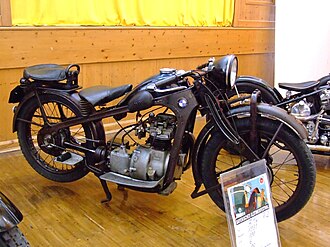
BMW R2 – The Early BMW Motorcycle Icon
The BMW R2, produced from 1923 to 1925, represents one of the first significant milestones in BMW’s early motorcycle history. At a time when the company was primarily known for its aircraft engines, the R2 marked BMW’s serious entry into the two-wheeled market, combining precision engineering with compact design. The R2 was a single-cylinder, four-stroke motorcycle, built to be lightweight, reliable, and accessible to a growing number of enthusiasts and commuters. Its engineering reflected the era’s focus on simplicity, durability, and mechanical efficiency, laying the groundwork for BMW’s future in motorcycle manufacturing.
The R2 was particularly notable for its use of shaft drive—a BMW hallmark that would continue in later motorcycles—and for demonstrating how high-quality German engineering could be applied to smaller, economical machines. Despite its modest engine size, the R2 offered a smooth, predictable riding experience, making it popular among both new riders and seasoned riders looking for an economical urban motorcycle.
Historical Context: BMW Enters the Motorcycle Market
In the early 1920s, BMW was transitioning from aircraft engine manufacturing to broader automotive and motorcycle production. The company recognized the growing demand for motorcycles in Germany and Europe after World War I. Small, reliable motorcycles were needed both for transportation and for recreational use, as cars remained expensive and less accessible.
BMW’s first motorcycles, such as the R32 introduced in 1923, were larger two-cylinder machines. The R2, however, targeted a different market segment: it was smaller, lighter, and more affordable. With a single-cylinder engine producing modest power, it could meet the needs of urban riders, commuting professionals, and recreational enthusiasts. The R2 demonstrated BMW’s ability to scale their engineering philosophy across different engine sizes while maintaining reliability and innovation.
The development of the R2 also reflected broader trends in the European motorcycle industry during the 1920s. Lightweight motorcycles were becoming increasingly popular due to lower fuel consumption and simpler mechanics. BMW’s response was a machine that combined compactness with long-term durability—a philosophy that remains central to BMW motorcycles to this day.
Design Philosophy and Engineering Principles
The BMW R2 was built around a philosophy of minimalism combined with mechanical precision. Its single-cylinder engine allowed for a simpler frame, reduced weight, and easier maintenance. The motorcycle featured a tubular steel frame that was both rigid and lightweight, providing stability without excessive bulk.
The R2’s engine displacement of 198 cc was small compared to BMW’s larger motorcycles, but it offered sufficient torque for urban riding. Its four-stroke design ensured smooth power delivery, fuel efficiency, and reliability. The inclusion of a shaft drive instead of a traditional chain set the R2 apart from most motorcycles of the era. This choice reduced maintenance requirements, minimized wear, and enhanced overall durability.
Other engineering details reflected BMW’s commitment to precision. The R2 included a kickstarter for engine ignition, a simple but effective manual gear system, and drum brakes mounted on both wheels. The suspension used a combination of sprung seat and rigid frame with telescopic forks, a standard design at the time, optimized for comfort on rough roads. The combination of these elements made the R2 both practical and technically sophisticated for a 1920s motorcycle.
Engine and Transmission
The BMW R2’s engine was a single-cylinder, overhead-valve, four-stroke unit. With a displacement of 198 cc, it was relatively small, but it was engineered to extract maximum efficiency and reliability from its size. The compression ratio was modest, reflecting the fuel quality available in the early 1920s.
The engine produced approximately 6–8 horsepower, enough to reach speeds of around 75 km/h (46 mph), which was impressive for a lightweight single-cylinder motorcycle of the era. Its torque characteristics were tuned for low- to mid-range performance, enabling steady acceleration in urban environments.
The transmission was a three-speed manual gearbox. It allowed riders to shift smoothly through the gears, accommodating both city riding and longer, straighter stretches of road. The shaft drive connected the engine to the rear wheel via an enclosed driveshaft, ensuring a clean, low-maintenance power transfer. Unlike chain-driven motorcycles, the shaft drive minimized oil contamination and extended the service interval, making the R2 particularly user-friendly.
Frame, Suspension, and Ride Quality
The BMW R2 employed a rigid tubular steel frame, which was both lightweight and strong enough to handle the stresses of daily riding. This frame design contributed to the motorcycle’s stability at moderate speeds and facilitated easy handling in tight urban conditions.
The front suspension utilized telescopic forks with basic damping, while the rear suspension was effectively rigid, with a sprung saddle to absorb minor bumps. Although primitive by modern standards, this setup provided a comfortable ride over cobblestone streets and unpaved roads, which were common in the 1920s.
The motorcycle’s low weight, compact geometry, and balanced center of gravity made it highly maneuverable. Riders appreciated its ability to navigate crowded city streets while maintaining a predictable and safe handling characteristic.
Wheels, Tires, and Braking
The BMW R2 used wire-spoke wheels with narrow tires, consistent with the standards of the era. The tires were mounted on steel rims and provided a firm grip on the road, adequate for the vehicle’s top speed and weight. Tire sizes were smaller than those on larger BMW motorcycles, emphasizing agility and lightness.
Braking was provided by drum brakes on both the front and rear wheels. These brakes offered sufficient stopping power for the speeds achievable by the R2 but required careful modulation to prevent skidding, especially on wet surfaces. Despite the rudimentary braking system, the R2 was regarded as safe and reliable for everyday urban and suburban use.
Fuel System and Efficiency
The BMW R2 featured a small-capacity carburetor, calibrated for precise fuel delivery. The fuel tank was modest in size, typically around 8–10 liters, which was adequate for urban commuting and short trips. Fuel consumption was very efficient, averaging approximately 2–3 liters per 100 km, making it economical compared to larger motorcycles or cars of the period.
The carburetor design, combined with the single-cylinder four-stroke engine, ensured predictable throttle response and minimal maintenance requirements. This efficiency reinforced the R2’s appeal to cost-conscious riders in the postwar economy.
Electrical System and Lighting
The R2 was equipped with a basic electrical system for ignition and lighting. Early models used magneto ignition, which eliminated the need for a battery and increased reliability. The headlamp was a small, acetylene or early electric lamp, suitable for city riding in low-light conditions.
Taillights were simple, often small incandescent bulbs mounted to the rear fender. While the lighting system was primitive by today’s standards, it fulfilled the needs of urban commuting and ensured visibility at night or during inclement weather.
Ergonomics and Rider Experience
Ergonomics on the BMW R2 focused on comfort and accessibility. The seat was designed for a single rider, though some later models accommodated a passenger with an auxiliary saddle. Handlebars were positioned to allow an upright riding posture, reducing fatigue on longer journeys.
Controls were mechanically straightforward: throttle twist grip, clutch lever, front brake lever, and gear shifter positioned near the rider’s leg. The instrumentation was minimal, typically a speedometer integrated into the headlamp or mounted directly on the fuel tank. Despite its simplicity, the cockpit provided all essential information while maintaining clean lines and ease of operation.
Production Numbers and Variants
BMW produced approximately 2,000 units of the R2 between 1923 and 1925. It was primarily available in a single configuration, though minor variations existed depending on year and customer requirements. Some models featured slightly larger fuel tanks, alternative paint colors, or optional luggage racks.
The limited production numbers reflect both the early stage of BMW’s motorcycle development and the niche market for small displacement motorcycles in the 1920s. Today, surviving R2 motorcycles are considered rare collector’s items and are highly prized in classic motorcycle circles.
Legacy and Historical Significance
The BMW R2 established several principles that would define BMW motorcycles for decades: precision engineering, the use of shaft drive, and a focus on reliability. It also demonstrated that BMW could produce smaller, more economical motorcycles without sacrificing quality.
Although its production was brief, the R2 influenced subsequent single-cylinder models and helped BMW build a reputation for engineering excellence. The R2’s lightweight design, efficient engine, and practical features set a benchmark for urban motorcycles of the era.
Collectors today value the R2 not only for its rarity but also as a representation of BMW’s early innovation in the motorcycle sector.
Comparison with Contemporary Motorcycles
During the 1920s, many European manufacturers produced small motorcycles. Compared to contemporaries from companies like DKW, NSU, and Triumph, the BMW R2 stood out for its shaft drive and robust engineering.
While chain-driven motorcycles were lighter and cheaper to produce, the shaft drive of the R2 offered durability and low maintenance—a significant advantage for buyers looking for long-term reliability. The R2 also featured a more refined four-stroke engine compared to the simpler two-stroke engines commonly used by competitors.
Collectibility and Modern Restoration
Today, the BMW R2 is a highly sought-after classic. Its rarity, historical significance, and distinctive design make it a prized collector’s motorcycle. Restorers face challenges due to the scarcity of original parts, particularly for the shaft drive system, carburetor components, and period-correct electrical equipment.
Restored models are often displayed in museums or classic motorcycle events, and they serve as a testament to BMW’s innovative engineering during the formative years of motorcycle production.
Technical Innovations in Retrospect
Despite its modest size, the BMW R2 incorporated several forward-thinking technical innovations for its time:
- Shaft-driven rear wheel
- Four-stroke single-cylinder engine with overhead valves
- Lightweight tubular steel frame
- Reliable kickstart ignition
- Efficient fuel consumption for the period
These features not only enhanced the motorcycle’s performance and reliability but also demonstrated BMW’s commitment to combining innovation with practicality.
Conclusion: The BMW R2 as a Milestone
The BMW R2 represents an essential chapter in BMW’s motorcycle history. As one of the first small-displacement motorcycles from the company, it combined innovative engineering, lightweight design, and reliable mechanics. Its legacy is evident in BMW’s continued focus on durability, technical refinement, and rider-centric design.
Though production was limited and its market impact modest, the R2 remains an important reference point for historians, collectors, and enthusiasts who appreciate early 20th-century motorcycle engineering. Its rarity, innovation, and historical context make it a true icon in BMW’s storied history.
Technical Specifications of the BMW R2 (1923–1925)
| Parameter | Specification |
|---|---|
| Model | BMW R2 |
| Production Years | 1923–1925 |
| Engine Type | Single-cylinder, four-stroke, OHV |
| Displacement | 198 cc |
| Bore x Stroke | 63 mm x 63 mm |
| Compression Ratio | 5.5:1 |
| Max Power | 6–8 hp at 4000 rpm |
| Max Torque | 11 Nm at 3000 rpm |
| Transmission | 3-speed manual |
| Final Drive | Shaft drive |
| Frame Type | Tubular steel rigid frame |
| Front Suspension | Telescopic fork |
| Rear Suspension | Rigid frame, sprung seat |
| Brakes | Drum brakes front and rear |
| Wheelbase | 1320 mm |
| Seat Height | 780 mm |
| Dry Weight | 95–100 kg |
| Fuel Tank Capacity | 8–10 liters |
| Top Speed | ~75 km/h |
| Fuel Consumption | 2–3 L/100 km |
| Tires | 26 x 2.25 inches, wire-spoke wheels |
