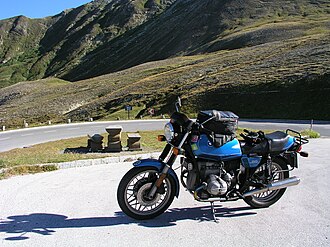
The BMW R65 occupies a unique and often underestimated place in the history of BMW motorcycles. Introduced in 1978, it was conceived as a mid-sized machine that retained the brand’s hallmark engineering principles while making them accessible to a wider range of riders. Unlike many entry-level motorcycles that compromise on construction or technology, the R65 was engineered with the same seriousness as its larger siblings.
This long-form blog article explores the R65 in depth, from its historical background and engineering philosophy to its technical systems, riding dynamics, and enduring legacy. The goal is to provide a comprehensive, technically rich perspective on a motorcycle that continues to fascinate enthusiasts decades after its introduction.
Historical Context: Expanding the BMW Lineup
In the late 1970s, BMW faced a changing motorcycle market. Japanese manufacturers were rapidly gaining dominance with affordable, high-performance machines, and European brands needed to adapt. BMW’s response was not to abandon its identity but to diversify its lineup.
The introduction of the R65 alongside the smaller R45 marked a strategic shift. These models were designed to attract new riders while maintaining BMW’s reputation for durability and engineering excellence. The R65, with its larger displacement and improved performance, was positioned as a bridge between entry-level motorcycles and the company’s larger touring machines.
Production of the original R65 continued until 1984, after which the model evolved into the Monolever series, incorporating updated suspension technology and chassis improvements.
Engineering Philosophy: Compact Without Compromise
BMW’s approach to the R65 was rooted in a simple but demanding principle: reduce size, not quality. Engineers sought to create a motorcycle that was smaller and more agile than the flagship models, yet still embodied the mechanical integrity associated with BMW.
The R65 retained key features such as the boxer engine, shaft drive, and robust construction. However, it introduced changes in geometry, weight distribution, and engine characteristics to suit a different riding experience.
Interestingly, despite being perceived as smaller, early R65 models shared many structural elements with larger R-series motorcycles. The shorter swingarm and revised proportions gave it a more compact feel, enhancing maneuverability without fundamentally altering the underlying architecture.
Engine Design: The 649 cc Boxer Twin
At the heart of the R65 lies its 649 cc air-cooled flat-twin boxer engine. This engine, derived from BMW’s well-known “airhead” family, featured two horizontally opposed cylinders, each with two valves operated by pushrods.
The bore and stroke of approximately 82 mm × 61.5 mm created a short-stroke engine design. This configuration allowed the engine to rev more freely compared to larger BMW boxer engines, resulting in a more responsive and lively character.
Power output varied depending on the model year, but early versions produced around 45 horsepower at 7,250 rpm, with torque figures of approximately 45 Nm. Later models saw increases in both power and torque, improving overall performance.
This engine was not designed for extreme performance but rather for smooth, predictable power delivery. It excelled in real-world conditions, offering a balance between efficiency and usability.
Boxer Configuration: Balance and Cooling Efficiency
The boxer engine layout provided several inherent advantages. The opposing motion of the pistons minimized vibration, resulting in a smoother ride compared to many inline or single-cylinder engines.
Additionally, the exposed cylinders allowed for effective air cooling. This eliminated the need for complex liquid cooling systems, reducing weight and maintenance requirements.
The low placement of the engine contributed to a lower center of gravity, enhancing stability and handling. These characteristics made the R65 particularly well-suited for both urban and touring applications.
Carburetion and Fuel System
The R65 utilized dual Bing constant-velocity carburetors, a standard feature in BMW motorcycles of the era. These carburetors automatically adjusted airflow based on engine demand, ensuring consistent fuel delivery.
This design improved throttle response and rideability, particularly in varying conditions. It also simplified maintenance, as the carburetors were relatively easy to service and adjust.
Fuel capacity was approximately 22 liters, including reserve, providing a substantial range for long-distance travel.
Ignition System: Transition to Electronic Reliability
One of the significant updates in the R65’s evolution was the transition from traditional contact points to electronic ignition systems. From 1981 onward, the motorcycle featured breaker-less electronic ignition, which improved reliability and reduced maintenance requirements. (Wikipedia)
This system ensured more consistent spark timing and eliminated the need for frequent adjustments, making the R65 more user-friendly for everyday riders.
Transmission and Shaft Drive
The R65 was equipped with a five-speed manual transmission, providing a versatile range of gearing for different riding conditions. This gearbox was paired with a single dry plate clutch, a configuration known for its durability.
Power was transmitted to the rear wheel via a shaft drive system. This feature, a hallmark of BMW motorcycles, offered several advantages over chain drives, including reduced maintenance, improved cleanliness, and enhanced longevity.
The shaft drive system also contributed to the motorcycle’s smooth power delivery, particularly during long-distance riding.
Frame and Chassis: Stability Meets Agility
The R65 featured a steel tubular frame designed for strength and stability. While early models shared similarities with larger BMW frames, the shorter wheelbase and revised geometry gave the R65 a more agile character.
This combination allowed the motorcycle to handle tight urban environments with ease while maintaining stability at higher speeds. The frame’s rigidity ensured predictable handling and long-term durability.
The compact proportions of the R65 made it particularly appealing to riders seeking a more manageable alternative to larger touring motorcycles.
Suspension System: Traditional Yet Effective
The suspension system of the R65 consisted of telescopic front forks and dual rear shock absorbers. This setup, while conventional, was well-suited to the motorcycle’s intended use.
Front suspension travel of approximately 175 mm and rear travel of around 110 mm provided a comfortable ride over a variety of road conditions.
Later models introduced the Monolever rear suspension system, which replaced the dual shocks with a single-sided swingarm and shock absorber. This design improved handling and reduced unsprung weight, marking a significant evolution in BMW’s suspension technology.
Braking System: Progressive Improvements
The braking system of the R65 evolved over time. Early models featured a single front disc brake and a rear drum brake, while later versions introduced dual front discs for improved stopping power.
The front disc brake provided reliable performance, particularly when combined with the motorcycle’s balanced weight distribution. The rear drum brake offered additional control during deceleration.
These improvements reflected BMW’s commitment to enhancing safety and performance throughout the model’s lifecycle.
Performance Characteristics: Real-World Capability
The R65 delivered a top speed of approximately 175 km/h, making it capable of highway travel and long-distance touring.
Acceleration was smooth and predictable, with the engine providing consistent power across the rev range. The short-stroke design allowed for higher revving compared to larger boxer engines, giving the R65 a more dynamic feel.
Fuel efficiency was another strong point, with consumption figures typically around 4.5–5.5 liters per 100 km, depending on riding conditions.
The motorcycle’s handling was widely praised for its agility and stability, making it a versatile choice for both city commuting and weekend touring.
Riding Experience: Balance and Accessibility
The R65 offered a riding experience that emphasized balance and accessibility. Its relatively low seat height and manageable weight made it suitable for a wide range of riders.
The upright seating position provided comfort during long rides, while the responsive handling made it enjoyable in urban environments. The smooth engine and shaft drive contributed to a refined riding experience.
According to enthusiast discussions on Reddit, the R65 is often described as being in the “sweet spot” of BMW’s airhead lineup, offering an ideal balance of power and handling.
Variants: R65LS and Monolever Evolution
The R65 lineup included several notable variants. The R65LS, introduced in 1981, featured a distinctive fairing designed by Hans Muth. This version offered a sportier aesthetic and improved aerodynamics.
Later, the Monolever models introduced a single-sided swingarm and updated chassis design, aligning the R65 with BMW’s evolving engineering standards.
These variants demonstrated BMW’s ability to adapt the R65 platform to different market demands and technological advancements.
Maintenance and Longevity
One of the defining characteristics of the R65 is its ease of maintenance. The boxer engine’s exposed cylinder heads allow for straightforward valve adjustments, while the shaft drive reduces routine maintenance tasks.
BMW also provided comprehensive tool kits with the motorcycle, enabling owners to perform basic servicing themselves. This focus on user-friendly maintenance contributed to the R65’s reputation for reliability.
With proper care, many R65 motorcycles remain operational decades after their production, a testament to their robust engineering.
Market Impact and Legacy
The R65 played a crucial role in expanding BMW’s reach in the motorcycle market. It attracted new riders while maintaining the brand’s core values of quality and reliability.
Although it was sometimes overshadowed by larger models, the R65 developed a loyal following among enthusiasts who appreciated its balance and versatility.
Today, it is considered a classic motorcycle, valued for its engineering, design, and historical significance.
Technical Parameters Table
| Parameter | Specification |
|---|---|
| Model | BMW R65 |
| Production Years | 1978–1984 (original), 1985–1993 (Monolever) |
| Engine Type | Air-cooled, 4-stroke, flat-twin (boxer), OHV |
| Displacement | 649 cc |
| Bore x Stroke | 82 mm × 61.5 mm |
| Compression Ratio | ~9.2:1 |
| Power Output | 45–50 hp @ 7,250 rpm |
| Torque | ~45–52 Nm |
| Fuel System | Dual Bing CV carburetors |
| Ignition | Electronic (post-1981) |
| Transmission | 5-speed manual |
| Final Drive | Shaft drive |
| Frame | Steel tubular |
| Front Suspension | Telescopic forks (175 mm travel) |
| Rear Suspension | Dual shocks / Monolever (later models) |
| Front Brake | Single or dual disc |
| Rear Brake | Drum |
| Wheelbase | ~1,400 mm |
| Weight (wet) | ~205–210 kg |
| Fuel Capacity | ~22 liters |
| Top Speed | ~175 km/h |
| Fuel Consumption | ~4.5–5.5 L/100 km |
Final Thoughts: The Underrated Precision Machine
The BMW R65 is a motorcycle that rewards deeper understanding. It may not command the same attention as larger or more powerful models, but it embodies a refined approach to engineering that prioritizes usability, reliability, and balance.
It represents a moment in BMW’s history when the company successfully adapted to changing market conditions without compromising its core identity. For riders seeking a machine that combines classic design with practical performance, the R65 remains an exceptional choice.
