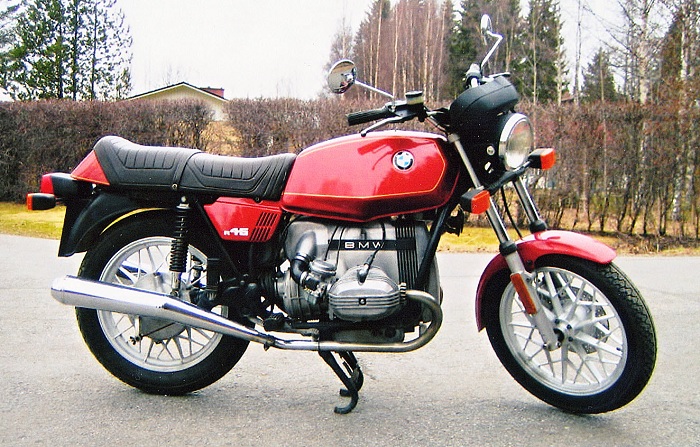
The BMW R45 represents a fascinating chapter in the evolution of BMW motorcycles. Introduced in the late 1970s, the R45 was designed as an accessible entry point into the world of BMW’s renowned boxer-engine machines. However, reducing displacement did not mean compromising engineering integrity. Instead, the R45 became a carefully balanced machine that reflected BMW’s dedication to durability, smoothness, and everyday usability.
This article explores the R45 in depth—from its historical context and engineering philosophy to its mechanical systems and long-term significance. It is not just a smaller BMW; it is a case study in how engineering constraints can produce elegant and highly functional solutions.
Historical Context: Why the R45 Was Created
By the mid-1970s, BMW had firmly established itself as a manufacturer of premium motorcycles, particularly with its larger-displacement boxer twins such as the R75 and R90 series. These machines were known for their reliability, touring capability, and mechanical sophistication. However, they were also relatively expensive and, for some riders, intimidating in size and power.
Market conditions were shifting. There was increasing demand for smaller, more affordable motorcycles that could serve both urban commuters and new riders entering the motorcycling world. Additionally, insurance and licensing regulations in various European markets incentivized lower-displacement machines.
BMW responded with the R45 and its slightly larger sibling, the R65. The goal was not simply to shrink an existing design but to create a motorcycle that retained the essence of BMW engineering while being more approachable. The result was a machine that balanced tradition with practicality, offering the same fundamental architecture in a lighter, more manageable package.
Design Philosophy: Maintaining Identity in a Smaller Package
The development of the R45 required careful consideration of what defined a BMW motorcycle. Engineers had to decide which elements were essential and which could be modified without compromising the brand’s identity.
The boxer engine layout, shaft drive, and robust construction were non-negotiable. These features were deeply embedded in BMW’s engineering philosophy and were critical to the brand’s reputation. However, dimensions, weight, and performance characteristics could be adapted to suit the target audience.
The R45 ultimately became a scaled-down interpretation of the classic BMW formula. It was not a stripped-down machine but rather a refined one, where every component was optimized for efficiency, reliability, and ease of use. This approach ensured that even entry-level riders could experience the distinctive qualities of a BMW motorcycle.
Engine Architecture: The 473 cc Boxer Twin
At the core of the R45 lies its air-cooled, two-cylinder boxer engine. With a displacement of 473 cc, the engine was significantly smaller than BMW’s flagship models but retained the same fundamental configuration.
The horizontally opposed cylinders provided excellent balance, minimizing vibrations and contributing to the smooth riding experience for which BMW motorcycles are known. This configuration also allowed for effective air cooling, as both cylinders were exposed directly to airflow.
The engine produced approximately 27 horsepower at around 6,500 rpm. While this output may appear modest, it was well-suited to the motorcycle’s intended purpose. The power delivery was linear and predictable, making the R45 easy to control and forgiving for less experienced riders.
Compression ratios, combustion chamber design, and carburetion were all optimized to deliver reliable performance rather than maximum output. This focus on usability over raw power is a recurring theme throughout the R45’s design.
Carburetion and Fuel Delivery
The R45 utilized Bing constant-velocity carburetors, a tried-and-tested solution in BMW motorcycles of the era. These carburetors were known for their reliability and smooth throttle response.
Constant-velocity carburetors function by automatically adjusting the airflow based on engine demand, ensuring a consistent air-fuel mixture. This design improves rideability, particularly at varying throttle positions, and reduces the likelihood of abrupt power delivery.
The simplicity of the carburetion system also made maintenance straightforward. Riders and mechanics could easily service the components without specialized tools, reinforcing the R45’s reputation as a practical and user-friendly motorcycle.
Transmission and Drivetrain
The R45 featured a five-speed manual transmission, which was a significant advantage at the time. Many smaller motorcycles still relied on four-speed gearboxes, making the R45 more versatile in both urban and highway conditions.
The gear ratios were carefully selected to complement the engine’s characteristics. Lower gears provided adequate acceleration, while higher gears allowed for comfortable cruising at moderate speeds.
Power was transmitted to the rear wheel via BMW’s signature shaft drive system. This feature set the R45 apart from many competitors, which typically used chain drives. The shaft drive offered several benefits, including reduced maintenance, improved durability, and cleaner operation.
The enclosed nature of the shaft drive protected it from dirt and environmental factors, making it particularly suitable for long-term use in varying conditions.
Frame and Chassis Construction
The R45 utilized a steel double-cradle frame, a design known for its strength and stability. This frame provided a solid foundation for the motorcycle, ensuring predictable handling and durability.
The geometry of the frame was optimized for a balance between agility and stability. The relatively short wheelbase contributed to maneuverability, making the R45 well-suited for urban environments. At the same time, the low center of gravity—thanks to the boxer engine—enhanced stability at higher speeds.
The overall construction reflected BMW’s commitment to longevity. The materials and manufacturing processes were chosen to withstand years of use, even under demanding conditions.
Suspension System: Balancing Comfort and Control
The suspension system of the R45 consisted of telescopic front forks and dual rear shock absorbers. While not groundbreaking, this setup was effective and reliable.
The front forks provided adequate damping and responsiveness, allowing the motorcycle to handle uneven road surfaces with confidence. The rear suspension offered adjustable preload, enabling riders to tailor the setup to their weight and riding conditions.
This combination resulted in a comfortable ride without sacrificing control. The R45 was not designed for aggressive performance but rather for consistent and predictable behavior across a variety of scenarios.
Braking System and Safety Features
The braking system of the R45 evolved over its production run. Early models were equipped with a single front disc brake and a rear drum brake, while later versions introduced improvements such as dual front discs in some markets.
The front disc brake provided reliable stopping power, particularly compared to the drum brakes commonly found on smaller motorcycles at the time. The rear drum brake complemented the system, offering additional control during deceleration.
While modern safety features such as ABS were not available, the R45’s braking system was considered advanced for its class and era. Proper weight distribution and predictable handling further contributed to safe operation.
Performance Characteristics and Riding Experience
The R45 was not designed to be a high-performance motorcycle, but it excelled in delivering a refined and enjoyable riding experience. Its top speed was approximately 145 km/h, making it suitable for both city riding and occasional highway use.
Acceleration was smooth rather than aggressive, with the engine delivering power in a controlled and linear manner. This characteristic made the motorcycle particularly appealing to new riders and those seeking a relaxed riding style.
The low center of gravity, combined with the balanced engine configuration, resulted in excellent handling. The R45 felt stable in corners and easy to maneuver at low speeds, making it an ideal choice for urban environments.
Fuel efficiency was another strong point. The relatively small engine and efficient design allowed for economical operation, further enhancing the motorcycle’s practicality.
Ergonomics and Rider Comfort
The R45 was designed with rider comfort in mind. The seating position was upright, providing a natural and relaxed posture. This ergonomic setup reduced fatigue during longer rides and improved overall control.
The seat itself was well-padded, and the handlebar position allowed for easy reach without excessive strain. Footpeg placement was also optimized to accommodate a wide range of riders.
These ergonomic considerations made the R45 accessible to both experienced motorcyclists and beginners, reinforcing its role as an entry-level model within the BMW lineup.
Maintenance and Reliability
One of the defining characteristics of the R45 was its reliability. BMW’s engineering standards ensured that the motorcycle could withstand extensive use with minimal issues.
Routine maintenance tasks, such as valve adjustments and oil changes, were straightforward thanks to the accessible design of the boxer engine. The exposed cylinder heads allowed for easy servicing, reducing the time and effort required for upkeep.
The shaft drive system further minimized maintenance requirements, eliminating the need for regular chain lubrication and adjustment.
These factors contributed to the R45’s reputation as a dependable and long-lasting motorcycle, capable of covering significant distances without major problems.
Market Reception and Legacy
The R45 was well-received in many markets, particularly among riders seeking a premium motorcycle with manageable performance. It served as an entry point into the BMW brand, attracting customers who might later upgrade to larger models.
While it did not achieve the same iconic status as some of BMW’s larger motorcycles, the BMW R45 played an important role in expanding the company’s reach. It demonstrated that BMW could successfully adapt its engineering principles to different market segments.
Today, the R45 is appreciated by enthusiasts and collectors for its simplicity, reliability, and historical significance. It represents a period of transition and innovation within BMW’s motorcycle division.
Technical Parameters Table
| Parameter | Specification |
|---|---|
| Model | BMW R45 |
| Production Years | 1978–1985 |
| Engine Type | Air-cooled, 4-stroke, flat-twin (boxer) |
| Displacement | 473 cc |
| Bore x Stroke | 70 mm × 61.5 mm |
| Compression Ratio | ~8.2:1 |
| Power Output | ~27 hp @ 6,500 rpm |
| Torque | ~36 Nm @ 5,000 rpm |
| Carburetion | Bing CV carburetors |
| Transmission | 5-speed manual |
| Final Drive | Shaft drive |
| Frame | Steel double-cradle |
| Front Suspension | Telescopic forks |
| Rear Suspension | Dual shock absorbers |
| Front Brake | Single disc (later dual disc optional) |
| Rear Brake | Drum brake |
| Wheelbase | ~1,405 mm |
| Seat Height | ~760 mm |
| Dry Weight | ~195 kg |
| Fuel Tank Capacity | ~17 liters |
| Top Speed | ~145 km/h |
| Fuel Consumption | ~4.5–5.0 L/100 km |
Final Thoughts
The BMW R45 stands as a testament to the idea that engineering excellence is not solely defined by power or size. Instead, it is about balance, usability, and thoughtful design. By maintaining its core principles while adapting to new demands, BMW created a motorcycle that remains relevant decades after its introduction.
