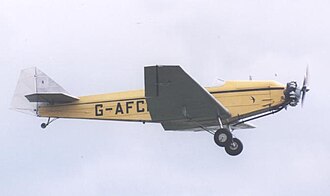
British Aircraft Swallow: The Story of a Classic 1930s Light Aircraft
The British Aircraft Swallow was a small, elegant, and practical aircraft that helped make private flying and elementary aviation training more accessible during the 1930s. Developed in Britain from the successful German Klemm L.25 design, the Swallow combined a lightweight wooden airframe, a low-powered piston engine, and a simple two-seat configuration. Although it lacked the speed, range, and carrying capacity of larger contemporary aircraft, it offered qualities that mattered enormously to private pilots and flying schools: economical operation, straightforward handling, and the freedom to explore the skies without the enormous expense associated with larger aircraft.
The Swallow’s story is also closely connected with the development of British aircraft manufacturing during the interwar period. Its production began under the name British Klemm Swallow, before the company became the British Aircraft Manufacturing Company and introduced the improved B.A. Swallow II. Over the course of its production life, the aircraft served private owners, flying clubs, training organizations, and, eventually, military establishments. Some examples were even involved in unusual wartime experiments and remarkable personal adventures. Despite being overshadowed by more famous British aircraft, the Swallow remains an important part of the history of light aviation.
The Origins of the British Aircraft Swallow
The Influence of the German Klemm L.25
The British Aircraft Swallow was not an entirely new design created from the ground up in Britain. Its origins can be traced to the German Klemm L.25, a light aircraft developed by Hanns Klemm’s company during the late 1920s. The L.25 was designed as an economical, low-powered touring and training aircraft, and its configuration made it particularly suitable for private flying. It featured a low-wing, cantilever monoplane layout, tandem seating, and a lightweight wooden structure. More than 600 examples of the Klemm L.25 and related versions were produced, demonstrating the popularity of this type of aircraft in the expanding European civil aviation market.
Several Klemm aircraft were imported into Britain, where they attracted attention among pilots and aviation enthusiasts. Their combination of attractive appearance, economical performance, and relatively simple operation made them appealing to a country with a growing interest in private flying. During the interwar years, aviation was no longer restricted entirely to military organizations and wealthy industrialists. Flying clubs, private owners, and training organizations were increasingly interested in affordable aircraft that could introduce more people to aviation.
Major E. F. Stephen, who acted as a British dealer for the Klemm L.25, recognized an opportunity to manufacture a British version of the aircraft. He established the British Klemm Aeroplane Company at London Air Park, Hanworth, in Middlesex. The company obtained permission to build a licensed version of the Klemm design, adapting it to suit British production methods and airworthiness requirements. This decision marked the beginning of the Swallow’s British career and laid the foundation for a small but significant aircraft manufacturing enterprise.
The First British-Built Swallow
The prototype of the British-licensed aircraft, initially known as the B.K. Swallow, made its first flight at Hanworth in November 1933. The aircraft retained the fundamental characteristics of the Klemm L.25, including its low-wing monoplane arrangement, tandem cockpits, and all-wooden construction. However, the British version incorporated modifications intended to meet local airworthiness standards and accommodate different engine installations.
The British aircraft was strengthened in several areas and was generally equipped with more powerful engines than some of the original German examples. Early Swallows were fitted with engines such as the British-Salmson A.D.9R and the Pobjoy Cataract radial. These powerplants were compact, relatively light, and suitable for an aircraft whose principal purpose was economical touring and training rather than high-speed performance.
The choice of a wooden airframe reflected the manufacturing practices of the period. Wood was widely used in light aircraft because it offered a favorable combination of strength, weight, and ease of construction. Skilled craftsmen could produce wooden fuselage frames, wing structures, and plywood-covered surfaces without requiring the extensive industrial facilities associated with all-metal aircraft. The Swallow’s wooden construction also contributed to its distinctive appearance, with smooth fuselage lines and a graceful wing profile that made it instantly recognizable.
Design and Construction
A Lightweight Cantilever Monoplane
One of the most important characteristics of the British Aircraft Swallow was its low-wing, cantilever monoplane configuration. Unlike a biplane, which uses two sets of wings supported by struts and bracing wires, a cantilever monoplane is designed so that the wing carries its aerodynamic loads internally, without the need for external wing-support struts. This arrangement reduced drag and gave the aircraft a clean appearance.
The Swallow’s wings were constructed from wood and covered using traditional aircraft-building techniques. The structure had to be sufficiently strong to withstand the stresses of flight while remaining light enough for the aircraft’s modest engine to provide useful performance. The low-wing arrangement also gave the aircraft a stable and visually appealing profile, while the absence of external wing bracing helped improve aerodynamic efficiency.
The fuselage was similarly constructed from wood, with a streamlined outer covering. Two occupants sat in tandem, one behind the other, in open cockpits. This seating arrangement was common among light aircraft of the era, particularly those intended for training. It allowed an instructor and student to occupy the aircraft together while maintaining a narrow fuselage and relatively low frontal area.
The open cockpit arrangement provided excellent visibility and a strong sense of connection with the surrounding environment. However, it also exposed occupants to wind, weather, and noise. Flying in an open-cockpit aircraft required suitable clothing and a willingness to accept conditions that would be considered uncomfortable by modern aviation standards. For many pilots, however, this direct experience was one of the great attractions of early recreational flying.
The Transition to the Swallow II
In 1935, the aircraft underwent a significant revision. By this time, the British Klemm Aeroplane Company had changed its name to the British Aircraft Manufacturing Company, and the improved aircraft became known as the B.A. Swallow II. The new version retained the basic concept of the original aircraft but incorporated several changes intended to simplify production and improve the design.
The most noticeable alterations involved the aircraft’s external appearance. The curved wing tips, rudder, and tailplane associated with the original Klemm design were replaced by straighter forms. The fuselage top decking was also revised. These changes gave the Swallow II a somewhat more angular appearance, while also helping the manufacturer simplify construction.
The Swallow II could be powered by different engines, including the Pobjoy Cataract and the Blackburn Cirrus Minor. The availability of alternative powerplants allowed the manufacturer to serve customers with different preferences and engine-maintenance arrangements. The Cirrus Minor, in particular, was a four-cylinder, air-cooled inline engine that became associated with several British light aircraft during the 1930s.
The improvements made the Swallow II more suitable for continued production and helped extend the aircraft’s commercial life. Production continued until 1938, by which time the Swallow had established a useful reputation among private pilots and flying schools.
Performance and Flying Characteristics
Designed for Touring Rather Than Speed
The British Aircraft Swallow was a touring and training aircraft, and its performance reflected that mission. It was not intended to compete with racing aircraft or military fighters. Instead, its designers aimed to create a machine that could cruise economically, provide pleasant handling, and allow pilots to travel between airfields or enjoy recreational flights.
Depending on the engine and configuration, the Swallow II could reach a maximum speed of approximately 104 miles per hour, or 167 kilometers per hour. Its cruising speed was commonly listed at around 90 miles per hour, equivalent to approximately 140 kilometers per hour. These figures were modest compared with those of larger aircraft, but they were entirely suitable for the aircraft’s intended role.
The aircraft’s range was approximately 420 miles, or about 676 to 680 kilometers, according to commonly cited specifications. This gave it the ability to undertake meaningful cross-country journeys, provided pilots planned carefully around weather conditions, fuel availability, and the limitations of a small aircraft. A range of this order was useful for private touring and enabled owners to travel between towns and regions without requiring frequent fuel stops.
The Swallow’s service ceiling was approximately 17,000 feet, although normal recreational flights would generally have taken place at much lower altitudes. The aircraft’s low power and lightweight structure meant that its climb performance depended heavily on the engine installed, the aircraft’s loading, and the prevailing atmospheric conditions.
A Welcoming Aircraft for Private Pilots
The Swallow’s appeal extended beyond its numerical performance. Its relatively simple design and predictable handling made it suitable for pilot training and recreational aviation. Aircraft used by flying schools needed to be reliable, manageable, and economical, because training involved repeated takeoffs, landings, circuits, and short flights. A machine that was expensive to operate or difficult to maintain could quickly become impractical for a small flying club.
The Swallow’s tandem seating arrangement also made it useful for instruction. An experienced pilot could sit in one cockpit while a student occupied the other, allowing the aircraft to serve as a platform for developing basic flying skills. The open cockpits provided a clear view of the runway and surrounding terrain, while the aircraft’s relatively low speeds allowed students time to understand its behavior.
Nevertheless, the Swallow was still a vintage aircraft, and flying it required care. Wooden airframes demand regular inspection for deterioration, moisture damage, and structural problems. Older engines also require specialized maintenance and careful attention to their operating limitations. The aircraft’s light construction and historic systems make it important for modern operators to follow appropriate restoration and airworthiness procedures.
Civilian Service and Popularity
Private Owners and Flying Schools
Most British Aircraft Swallows were sold to private owners or flying schools in the United Kingdom. During the 1930s, flying clubs played an important role in broadening access to aviation. They introduced newcomers to aircraft, provided basic training, and offered members the opportunity to fly for recreation. Affordable aircraft such as the Swallow were central to this movement.
For private owners, the aircraft offered a practical means of personal transportation and leisure. A pilot could use the Swallow for short touring trips, visits to other airfields, or simply the pleasure of flying. The aircraft’s modest operating costs were particularly attractive during a period when aviation remained expensive compared with ordinary forms of transportation.
The Swallow also reflected the enthusiasm and optimism surrounding civil aviation before the Second World War. Aircraft ownership represented modernity, independence, and adventure. Small aircraft allowed individuals to experience the freedom of flight, even if their performance was limited by the technology of the time.
An Unusual International Adventure
One of the most remarkable stories associated with a British Aircraft Swallow concerns British mining engineer Brian Grover. In 1938, Grover flew a Swallow from Stockholm, Sweden, into the Soviet Union in an unauthorized attempt to reunite with his wife, who was a Soviet citizen. The flight attracted international attention, and the resulting diplomatic and personal circumstances eventually led to his wife being permitted to emigrate to Britain with him in early 1939.
The incident demonstrated how even a small touring aircraft could become involved in events far beyond its intended purpose. The Swallow was designed for ordinary civil aviation, but its range, portability, and ability to travel across national borders made it a tool for an extraordinary personal journey. The episode remains one of the more unusual stories in the history of interwar light aviation.
Military Use During the Second World War
Aircraft Requisitioned for Wartime Duties
When the Second World War began in 1939, many privately owned civilian aircraft in Britain were taken into military service or otherwise placed under government control. The Swallow was among the light aircraft used in wartime support roles. Most examples that entered military service were associated with instructional duties, including use by the Air Training Corps as ground-training airframes.
The aircraft’s relatively simple construction made it useful for teaching basic aircraft recognition, familiarizing trainees with cockpit layouts, and demonstrating the principles of aircraft structure. Although it was not a combat aircraft, its presence in training environments allowed young aviation enthusiasts to gain practical knowledge that could later support military service.
One Swallow was also impressed into service with the Royal New Zealand Air Force in September 1939. It was used as a communications aircraft until April 1940. This example illustrates how small civilian aircraft could be adapted for military needs when larger or more specialized aircraft were unavailable or unnecessary.
Experimental Glider Training at RAF Ringway
An especially unusual chapter in the Swallow’s wartime history involved the Royal Air Force’s glider-training experiments. During late 1940, several Swallows were taken on charge by the Glider Training Squadron within the Central Landing Establishment at RAF Ringway, near Manchester.
In this role, the aircraft were modified by removing their propellers and attaching tow hooks to the leading edges of their wings. Retired Armstrong Whitworth Whitley bombers then towed the Swallows, sometimes individually, in pairs, or even in groups of three. Once released, the aircraft glided toward a designated area on the airfield.
This unusual procedure was intended to assist in evaluating techniques associated with the use of heavy gliders in airborne assaults. The Swallows were not themselves heavy assault gliders, but their use in these experiments provided an opportunity to practice towing, release, and gliding procedures. The episode highlights the versatility of the aircraft and the willingness of wartime aviation organizations to use available airframes for experimental purposes.
Production and Variants
The B.K. Swallow and B.A. Swallow II
The first production version was known as the B.K. Swallow, and approximately 28 examples were built. These aircraft were based closely on the licensed Klemm design but incorporated British modifications and engine options. Some were fitted with British-Salmson engines, while others used Pobjoy Cataract powerplants.
The improved B.A. Swallow II followed after the company changed its name to the British Aircraft Manufacturing Company. Approximately 107 Swallow IIs were produced, bringing the total number of British-built Swallows to about 135 aircraft. The Swallow II featured revised tail surfaces, straighter wing tips, modified fuselage decking, and structural changes intended to simplify production.
Engine installations varied between examples. The Pobjoy Cataract was a compact radial engine, while the Blackburn Cirrus Minor was an inline engine with a different configuration and maintenance profile. These differences mean that surviving aircraft may not all have identical performance characteristics.
The production total was modest compared with that of major military aircraft, but it was significant within the specialized market for light civil aircraft. The Swallow helped establish the British Aircraft Manufacturing Company as a participant in the interwar aviation industry, even though the company’s existence was relatively brief.
Preservation and Historical Legacy
Surviving Aircraft Today
The Second World War, changing aviation requirements, and the passage of time resulted in the loss of many Swallows. Wooden aircraft are particularly vulnerable to neglect, moisture, accidents, and the difficulty of obtaining replacement components. Nevertheless, a number of examples survived, and some were eventually restored to flying condition.
By the postwar period, only a relatively small number of Swallows remained active. A few continued to fly under private ownership, while others entered museums or were preserved as historical exhibits. Their survival is important because the aircraft represents a period when light aviation was developing rapidly and wooden construction remained central to aircraft manufacturing.
Restoring a Swallow is a demanding undertaking. Specialists must inspect the wooden structure, assess the condition of the fabric and plywood coverings, rebuild or repair components, and ensure that the engine and control systems are safe. Authentic restoration can involve extensive research because original drawings, components, and maintenance documentation may be difficult to locate.
Why the Swallow Still Matters
The British Aircraft Swallow deserves recognition not because it was exceptionally fast or technologically revolutionary, but because it fulfilled an important practical role. It helped make recreational flying and basic pilot training possible for a wider group of people. Its design represented a careful balance between affordability, performance, and structural simplicity.
The aircraft also illustrates the international nature of aviation development during the interwar period. A German design was adapted and manufactured in Britain, modified to meet British requirements, and then used by civilian and military organizations in several countries. Its story demonstrates how aircraft designs could cross national borders and evolve in response to local manufacturing capabilities and operational needs.
For aviation historians, the Swallow offers insight into the development of light aircraft, the growth of flying clubs, the transition from wood to metal construction, and the ways in which civilian aircraft were absorbed into wartime service. For enthusiasts, its graceful lines and open-cockpit layout provide a tangible connection to the early days of recreational flying.
Conclusion
The British Aircraft Swallow was a modest but influential light aircraft that played a meaningful role in the development of British civil aviation. Derived from the German Klemm L.25, it was adapted and produced in Britain by the British Klemm Aeroplane Company, later known as the British Aircraft Manufacturing Company. Its wooden cantilever monoplane structure, tandem seating, economical engines, and manageable performance made it well suited to private touring and pilot training.
The introduction of the Swallow II in 1935 brought improvements to the design and helped extend its production life. The aircraft went on to serve flying schools, private owners, and military organizations, while individual examples became associated with remarkable adventures and unusual wartime experiments. Although only around 135 aircraft were built, the Swallow’s contribution to light aviation was considerable.
Today, surviving examples are valuable historical aircraft. They preserve the memory of an era when aviation was becoming more accessible, when wooden construction remained a sophisticated engineering solution, and when even a small two-seat aircraft could inspire adventure, independence, and innovation. The British Aircraft Swallow may not be among the most famous aircraft in British history, but it remains a charming and important representative of the golden age of light aviation.
