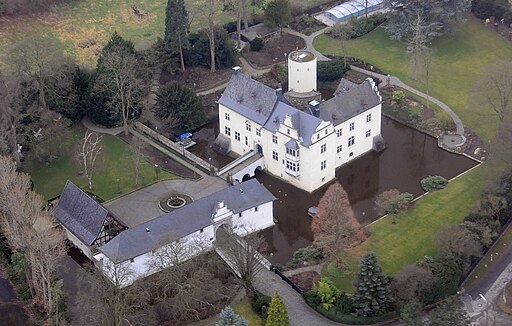
Burg Odenhausen emerges from its tranquil setting as a striking example of medieval fortification adapted across centuries of change, its form defined not only by stone and structure but also by the protective embrace of water that surrounds it. Situated within a landscape that blends rural charm with historical depth, the castle conveys an enduring sense of stability and measured grandeur. Unlike hilltop fortresses that dominate from above, Burg Odenhausen asserts its presence through grounded solidity, its reflective moat reinforcing an atmosphere of secluded dignity. This setting creates a powerful impression of continuity, where the past feels gently interwoven with the present, and every architectural line speaks of intention, resilience, and the passage of time.
Defensive Origins and Structural Evolution
The earliest foundations of Burg Odenhausen reveal its primary function as a defensive bastion designed to control and protect the surrounding territory. The construction of thick walls and the incorporation of a surrounding moat served as essential elements in securing the stronghold against potential threats. Towers and fortified gateways underscored its readiness for siege and surveillance, projecting authority across the nearby countryside. Over successive generations, however, the rigid severity of its military features softened as residential comfort and representational elegance gained prominence. Additions and modifications reflected changing tastes and political stability, transforming the castle into a noble residence that balanced security with cultivated refinement.
The Castle as a Center of Feudal Life
Within the bounds of its fortified perimeter, Burg Odenhausen fulfilled a central role in shaping the economic and social fabric of the region. The castle functioned as the seat of local governance, where decisions influencing agriculture, trade, and communal responsibilities were determined. Its presence structured daily life for the surrounding population, reinforcing hierarchical relationships while providing a focal point of order and protection. The rhythms of work, celebration, and obligation all connected to the authority emanating from within its walls, giving the castle an influence that extended far beyond its physical footprint.
Endurance Through Time and Change
The passing centuries subjected Burg Odenhausen to the shifting tides of political transformation, economic fluctuation, and evolving cultural priorities. Periods of neglect alternated with moments of restoration, each phase adding depth to its historical narrative. Rather than diminishing its significance, these transitions layered the castle with meaning, embedding within its structure a visible record of human adaptation and continuity. Its survival into the modern era reflects a collective recognition of its historical and architectural value, ensuring that its presence remains firmly anchored within the identity of the region.
Landscape, Water, and Architectural Harmony
The visual character of Burg Odenhausen is inseparable from the natural elements that define its surroundings. The moat, still water mirroring the castle’s silhouette, enhances its sense of tranquility while recalling the strategic considerations that shaped its early design. Lush greenery and open fields create a harmonious frame that emphasizes the balanced proportions of its architecture. Seasonal variations alter the mood of the scene, from the vibrant freshness of spring to the subdued elegance of winter, each transformation enriching the castle’s visual narrative and deepening its emotional resonance.
Contemporary Presence and Cultural Memory
Today, Burg Odenhausen stands as a compelling testament to the enduring relevance of historical architecture in shaping collective memory and regional identity. Its continued existence invites reflection on the interplay between permanence and impermanence, highlighting how structures rooted in the past can inform modern appreciation of heritage. The castle offers a tangible connection to an era defined by feudal structures and evolving artistry, serving as both historical witness and cultural symbol. Through its persistent form and atmospheric setting, Burg Odenhausen preserves its voice within the landscape, affirming its place as a lasting marker of time, tradition, and human endeavor.
