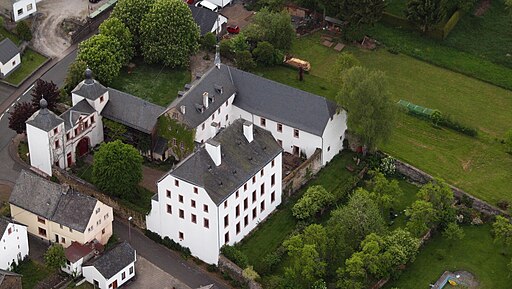
Schloss Oberehe stands with understated dignity amid the serene landscape of the Eifel region, embodying a fusion of historical depth and architectural refinement that has unfolded over many centuries. Unlike more imposing fortresses defined by martial ambition, this noble residence conveys a subtler narrative shaped by stability, cultivated taste, and the rhythms of aristocratic life. Its presence harmonizes with the surrounding countryside, where gentle hills, winding waterways, and stretches of forest create an atmosphere of contemplative calm. The castle appears less as a symbol of conquest and more as a reflection of continuity, suggesting a long-standing relationship between human habitation and the natural environment that sustains it.
Architectural Character and Historical Formation
The structural identity of Schloss Oberehe reveals a gradual evolution from fortified origins toward the refined appearance of a stately manor. Early construction emphasized durability and controlled access, with stone walls and carefully positioned vantage points ensuring both protection and order. As generations passed, these severe features gave way to expanded wings, decorative elements, and more expansive interior spaces designed for comfort as well as representation. Tall windows invited light into formerly austere chambers, while symmetrical courtyards and carefully proportioned facades asserted a sense of balance and cultivated grace. This transformation reflects a shift in purpose, from defensive necessity to an expression of noble refinement and residential prestige.
The Sphere of Noble Life and Social Influence
Within its walls, Schloss Oberehe served as a focal point of governance, hospitality, and social order, shaping the patterns of life throughout the surrounding area. The castle hosted gatherings that reinforced alliances, celebrated tradition, and demonstrated the cultural sophistication of its inhabitants. Its influence extended beyond ceremonial life into the practical domain, guiding agricultural production and economic activity in nearby settlements. The presence of such a residence established a central hierarchy, where authority and responsibility were intertwined, and the rhythms of rural life flowed subtly in response to decisions made within its chambers.
Time, Transition, and Preservation
As political systems evolved and the structures of aristocratic power declined, Schloss Oberehe experienced periods of transformation that altered its role within the region. The passing of eras brought new functions and shifting expectations, yet the core integrity of the building endured. Restoration efforts and thoughtful preservation have ensured that the castle’s historical essence remains intact, allowing it to continue as a visible link to the past rather than a forgotten remnant. These careful interventions demonstrate a respect for heritage that acknowledges the importance of memory in shaping contemporary identity.
The Surrounding Landscape and Harmonious Setting
The setting of Schloss Oberehe plays a vital role in reinforcing its character as a place of quiet distinction. The gently undulating terrain and verdant meadows provide a natural frame that enhances its architectural poise, creating a seamless integration between structure and environment. Seasonal changes reveal new perspectives on the castle’s silhouette, from soft spring light to the subdued tones of autumn, each phase deepening its visual and emotional resonance. This enduring relationship between land and architecture underscores a dialogue that has persisted through generations, enriching the sense of place and continuity.
Contemporary Significance and Lasting Presence
Today, Schloss Oberehe continues to stand as a meaningful symbol of regional heritage, conveying the enduring relevance of historical architecture in a rapidly changing world. Its preserved elegance invites reflection on the values, traditions, and human aspirations that shaped its existence. The castle offers a space where history is experienced not as a distant abstraction but as a tangible presence manifested in stone, form, and atmosphere. Through its quiet grandeur and careful preservation, Schloss Oberehe affirms its role as a living testament to the enduring dialogue between past and present, maintaining its place within the collective memory of the region.
