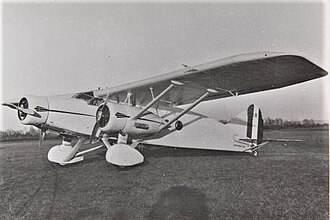
The Ca.133 first flew in the mid-1930s and entered service as Italy expanded its military aviation capabilities. Its development coincided with the Italian invasion of Ethiopia and the growth of operations across Italian East Africa, a region in which aircraft were expected to support troops over extensive distances and from airfields that could be rudimentary or isolated. The Ca.133 was adapted to this environment through its relatively simple structure, three-engine layout and ability to carry either people, cargo or military equipment. Civil versions also operated with the Italian airline Ala Littoria, demonstrating that the airframe had uses beyond the military sphere. Although its design was already becoming conservative as faster monoplanes emerged, the Ca.133 remained valuable in the roles for which it had been developed.
The aircraft’s history also reflects the changing nature of military aviation during the 1930s and the Second World War. At the beginning of its career, the Ca.133 could serve as a transport, a reconnaissance platform or a light bomber in areas where opposition was limited and operational flexibility mattered more than outright speed. As the war progressed and air defences became more effective, the weaknesses of a slow, lightly protected aircraft became increasingly apparent. Its role consequently shifted towards transport, liaison and medical evacuation wherever circumstances permitted. Understanding the Caproni Ca.133 therefore requires looking beyond its appearance and basic specifications to examine the conditions for which it was designed, the campaigns in which it operated, the different variants produced and the reasons why it continued to be used even as more advanced aircraft entered service.
Origins and Development of the Caproni Ca.133
The Caproni company and the interwar aircraft industry
Caproni was one of Italy’s important aircraft manufacturers, with a history that included large aircraft, military designs and civil aviation projects. During the interwar period, Italian aircraft production was influenced by the need to modernise the armed forces, support expanding colonial ambitions and provide transport aircraft for both government and commercial operators. Manufacturers often developed families of related aircraft rather than creating completely new designs for every requirement. By improving an existing airframe, a company could make use of established manufacturing methods, retain familiar maintenance practices and offer operators an aircraft that was easier to introduce into service than a wholly new type.
The Ca.133 emerged from this approach. Its predecessor, the Caproni Ca.101, had already established the general concept of a multi-engined aircraft capable of carrying passengers, troops or military loads. The Ca.133 retained the broad high-wing, three-engine arrangement but introduced improvements intended to reduce drag, refine the tail surfaces and make the aircraft more practical in service. The design is associated with engineer Rodolfo Verduzio, who worked on the development of Caproni’s existing aircraft range. The Ca.133 was consequently an evolutionary design: rather than replacing every element of the earlier aircraft, it sought to improve a familiar platform while preserving the qualities that made it useful for transport and military support.
Development from the Ca.101
The Ca.101 provided the conceptual and structural starting point for the Ca.133, but the later aircraft incorporated several changes that improved its practical performance. These included more carefully shaped engine cowlings, fairings around the landing gear, revised tail surfaces and the addition or refinement of features such as flaps. The changes were important because an aircraft designed for transport and bombing had to balance payload, range, speed and ease of operation. Even modest reductions in aerodynamic drag could improve performance, particularly when a relatively heavy airframe was powered by several medium-output radial engines. The Ca.133’s design therefore reflected an effort to make a proven configuration more efficient without abandoning its robust, utility-focused character.
The Ca.133 was developed as both a civil transport and a military aircraft. Its passenger-carrying configuration could accommodate a substantial group for an aircraft of its generation, while military versions could be rearranged to carry troops or equipment. The airframe could also be adapted for bombing, with defensive machine guns and bomb-carrying provisions in military configurations. These different roles did not make the aircraft equally effective at every task; rather, they gave operators the ability to employ a common basic design across a range of duties. In an era when military aviation fleets were expanding and overseas deployments demanded logistical flexibility, this adaptability was a meaningful advantage.
First flight and entry into service
Historical references generally place the Ca.133’s first flight in 1934, with one account identifying the prototype’s flight on 16 September of that year. Series production and operational introduction followed in 1935. The timing was significant because Italy was preparing for its campaign in Ethiopia, and military planners required aircraft capable of transporting personnel and supplies as well as performing reconnaissance and bombing missions. The Ca.133 was well suited to the broad logistical needs of this period, although its actual capabilities depended on its configuration, payload and the conditions under which it operated.
Production totals vary between historical summaries. The Italian Air Force’s museum entry gives an overall figure of approximately 416 aircraft, while other references list totals in the region of 400–500 or separate military production from civil aircraft and later derivatives. The difference likely reflects variations in what each source counts, including prototypes, civil examples and related versions. For a general history, it is safest to describe the Ca.133 as a type built in several hundred examples rather than to present one total as universally agreed. Its production was sufficient to establish it as a significant component of Italian military transport and support aviation during the period.
Airframe Design and Construction
High-wing monoplane configuration
The Caproni Ca.133 was a high-wing monoplane, with its wing mounted above the fuselage. This arrangement provided useful space beneath the wing for the passenger or cargo compartment and allowed the engines to be positioned without obstructing the cabin. The high-wing configuration was well suited to an aircraft intended to carry people and equipment, because it provided a relatively unobstructed fuselage and helped keep the wing and engines clear of the ground during loading and routine servicing. It also gave the aircraft a characteristic silhouette, with a broad wing spanning three engines and a deep fuselage suspended beneath it.
The wing had a generally elliptical planform and incorporated a structure combining wood and metal, according to historical descriptions. Its relatively large area helped the aircraft generate lift at moderate speeds, a useful quality for a transport intended to operate from airfields that might not offer the length or surface quality of major paved runways. The high-wing design also suited the aircraft’s mixed military and civil roles, since the wing could support a substantial fuselage without requiring a low-wing layout that might complicate access to the cabin or cargo space. However, the Ca.133 was still a large, multi-engined aircraft whose take-off and landing performance depended on weight, weather, runway condition and engine output; its configuration did not eliminate the need for proper operating procedures.
Mixed construction and structural strength
The Ca.133 used a mixed-construction airframe, with a welded steel-tube fuselage structure and a combination of metal, fabric and other materials in the aircraft’s external surfaces. Historical accounts describe the wing structure as incorporating wood and steel, while the fuselage and other components used different materials according to their structural purpose. This approach reflected the engineering practices of the 1930s, when manufacturers often combined metal frameworks with fabric or metal coverings to achieve a workable balance between weight, strength and manufacturing complexity. Such construction could be maintained by workshops familiar with traditional aircraft repair techniques, an important consideration for aircraft expected to operate far from major industrial centres.
The design placed emphasis on durability and serviceability rather than on the clean, high-speed aerodynamic forms that would become more common among later military transports. The Ca.133’s fixed landing gear, engine nacelles and fuselage structure were all part of a practical system intended to support regular operations. Fairings and cowlings reduced some of the drag associated with exposed components, but the aircraft retained a conservative layout compared with later streamlined transport designs. This was not necessarily a failure of design; it reflected the priorities of an aircraft whose operators valued a combination of payload, accessibility and reliability over maximum speed.
Fuselage and internal arrangement
The Ca.133’s fuselage was designed to accommodate a useful passenger or military load within a relatively compact aircraft. Civil examples operated as airliners and could carry up to approximately 16 passengers in published specifications, while troop-transport configurations could accommodate as many as 18 fully equipped soldiers according to some accounts. The exact capacity depended on the internal arrangement, equipment and intended role. A passenger aircraft needed seating and access suitable for civilian travel, whereas a military transport could be stripped of conventional passenger fittings to make room for personnel or supplies. Medical versions required still another arrangement, with the cabin adapted to carry wounded personnel and medical attendants.
This flexibility was one of the Ca.133’s most important practical features. The ability to modify the internal space allowed the same basic airframe to serve different purposes without requiring a wholly separate aircraft design for each role. It also meant that payload figures and crew descriptions could vary significantly across versions. A civil transport might carry a pilot and a smaller operating crew, while a bomber version required additional personnel to manage navigation, communications and defensive armament. The Ca.133 should therefore be understood as a versatile aircraft family whose internal arrangements were determined by the mission being performed.
Landing gear and ground operations
The Ca.133 had fixed landing gear with spatted main wheels. Fixed gear was a straightforward solution for an aircraft designed in the early 1930s, avoiding the additional weight and mechanical complexity of a retractable system. The wheel fairings helped reduce aerodynamic drag, while the overall undercarriage was designed to support the aircraft’s substantial loaded weight. This arrangement was consistent with the Ca.133’s role as a rugged transport and support aircraft, where dependable operation and manageable maintenance were more important than the last increment of speed.
Ground operations could nevertheless be demanding, particularly when the aircraft was heavily loaded or operating from rough surfaces. A multi-engined transport requires careful management of engine power during taxiing and take-off, and the condition of the runway can influence acceleration, directional control and the distance required to become airborne. The Ca.133’s robust layout helped it operate in varied conditions, but it was not immune to the limitations imposed by terrain, weather or maintenance. Its reputation as a practical aircraft rested on a combination of design, crew skill and support arrangements rather than on any single structural feature.
Engines and Flight Performance
Three Piaggio radial engines
The Ca.133’s defining mechanical feature was its three-engine arrangement, with one engine mounted in the nose and one beneath each wing. This configuration provided thrust from three separate powerplants while allowing the aircraft to retain a relatively simple, fixed-gear airframe. Historical specifications commonly associate the type with three Piaggio Stella P.VII C.16 seven-cylinder, air-cooled radial engines rated at approximately 460 horsepower each. Other references describe Piaggio P.VII installations rated at around 435 horsepower, and the Italian Air Force museum identifies three Piaggio P.VII engines in its historical summary. The variation in published ratings reflects the different engine designations and rating conventions found in references, so it is best to treat the Ca.133 as a three-engine radial-powered aircraft rather than assume that every production example had precisely the same engine rating.
Radial engines were well established in aviation during the 1930s. Their cylinders were arranged around the crankshaft, allowing air to flow directly around the cylinders for cooling. This was useful in aircraft expected to operate in warm climates and at airfields where specialised ground equipment might be limited. Air-cooled engines also avoided the radiators, coolant pipes and pumps required by liquid-cooled installations. However, radial engines still demanded regular inspection, lubrication and attention to operating temperatures, particularly when the aircraft was heavily loaded or climbing in hot conditions. The Ca.133’s three-engine installation was designed to provide the power needed to lift a substantial payload, but its practical performance depended on engine condition, weight, altitude and ambient temperature.
Why three engines?
The choice of three engines reflected the aircraft’s intended role and the engineering practices of its period. A single engine powerful enough to provide the required thrust might have imposed different structural and operational demands, while a twin-engine layout would have required each engine to deliver a greater share of the total power. The three-engine arrangement allowed the aircraft to distribute its power across the nose and wings, providing a practical compromise for the technology available to Caproni’s designers. It also gave the aircraft a recognisable configuration shared by a number of interwar transport designs, when multi-engine layouts were commonly used for passenger aircraft, bombers and military transports.
Having three engines did not mean that the Ca.133 could continue operating normally after any engine failure. A loss of power would reduce total thrust and create an asymmetric condition if one of the wing-mounted engines stopped, requiring the crew to respond according to the aircraft’s operating procedures. The additional engines also brought more maintenance tasks, more fuel and oil systems to monitor, and greater complexity than a single-engine aircraft. The benefit was the availability of substantial combined power for a transport aircraft of its size. The design should therefore be judged in the context of the period: it offered a useful balance of capability and technology for the missions envisaged, even though later aircraft would achieve similar or better transport performance through more advanced engines and aerodynamic designs.
Maximum speed, cruising speed and range
The Ca.133 was a relatively slow aircraft by the standards of later military transports, but its speed was adequate for many of its intended support missions. The Italian Air Force’s museum reference gives a maximum speed of approximately 230 km/h and a maximum range of 1,350 km. Other technical summaries list a cruising speed around 200 km/h, while some secondary accounts give different maximum-speed figures. These variations can arise from different engine ratings, loading conditions and the distinction between maximum speed and normal cruise performance. The figures should therefore be treated as representative historical values rather than as a guarantee for every Ca.133 configuration.
Range was particularly important for an aircraft operating across extensive territories where fuel facilities and established airfields could be widely separated. A range of around 1,350 kilometres, as listed in the museum data, provided a useful capability for transport and military support, although actual mission radius would be lower once allowances for reserves, weather, payload, diversions and operating conditions were considered. A fully loaded aircraft would not necessarily achieve the same performance as one carrying a lighter load, and operations at high temperatures or from elevated airfields could reduce engine output and take-off performance. For this reason, historical range figures are best understood as general indicators of capability, not as a direct measure of the distance a particular aircraft could safely fly on every mission.
Ceiling, climb and payload considerations
Technical references commonly place the Ca.133’s service ceiling at approximately 5,500 metres, although published values differ. Its ability to climb depended heavily on the combined power of the three engines, the aircraft’s weight and the atmospheric conditions. Carrying troops, medical patients or a substantial load of supplies naturally increased the demand on the powerplants and affected climb performance. In the hot climates where the Ca.133 frequently operated, high ambient temperatures could further reduce engine performance and the density of the air, making take-off and climbing more challenging than under cooler conditions.
Payload flexibility was more important than any single performance statistic. A Ca.133 configured for troop transport might carry a group of soldiers, while a medical version would have a different balance of patients, attendants and equipment. A bomber configuration had to accommodate defensive weapons and ordnance, affecting the aircraft’s mass and mission planning. The aircraft’s utility therefore depended on choosing a configuration appropriate to the task and respecting its approved loading limits. Its historical record illustrates the central challenge of military transport design: carrying more equipment and personnel increases usefulness, but it also affects speed, range, climb and the ability to operate from short or rough airfields.
Military Roles and Operational Use
Transport and troop-carrying duties
Transport was among the Ca.133’s most important military roles. The aircraft could carry personnel and supplies to locations where road or rail transport was limited, and its three-engine layout provided the power needed for useful loads. Troop-transport versions, commonly identified as the Ca.133T, could be fitted to carry up to 18 fully equipped soldiers in some configurations. This capacity made the aircraft valuable for moving personnel between bases, supporting isolated units and carrying small groups where a larger transport would have been unnecessary or unavailable. The cabin could be arranged for military use, prioritising the number of people and equipment carried over the comfort and amenities expected in a civil passenger aircraft.
The Ca.133’s transport duties were especially relevant in overseas territories, where the distance between settlements and military positions could make conventional logistics difficult. Aircraft could move personnel and urgently needed supplies without relying on long ground journeys, although the usefulness of air transport still depended on suitable landing areas, weather and fuel availability. The Ca.133 was not a modern heavy transport, but it provided a practical means of carrying people and materials in an era when military aviation was still developing its specialised logistics fleets. Its service demonstrates that transport aircraft were important not only for strategic movements but also for the routine support of forces operating far from major bases.
Light bomber and night-bombing missions
The Ca.133 also served as a light bomber. Its military configuration could incorporate defensive machine guns and internal bomb bays, with provision for additional ordnance carried externally on some versions. Published accounts describe a defensive armament of four 7.7 mm machine guns in positions that could include dorsal, ventral and lateral stations. Bomb-carrying capacity varies in the historical literature, with some sources describing an internal load of around 500 kilograms and other references listing different maximum payload figures depending on the arrangement and definition used. These values should not be combined as if they all describe the same aircraft configuration.
The Ca.133’s bombing role was shaped by the conditions in which it was expected to operate. Against limited opposition, an aircraft with modest speed and defensive armament could carry out reconnaissance and bombing missions, particularly when operating at night or against targets with limited air-defence capabilities. However, the aircraft lacked the speed, protection and performance of more advanced bombers that entered service during the late 1930s and early 1940s. Its ability to carry bombs did not make it equivalent to a modern frontline bomber; rather, it was a multipurpose aircraft whose bombing capability could be useful in circumstances where its limitations were manageable. As air opposition became more dangerous, the Ca.133’s exposure and vulnerability increasingly restricted the situations in which it could be used effectively.
Reconnaissance and liaison
The Ca.133 was also suited to reconnaissance and liaison tasks. Its endurance and ability to carry crew members and equipment allowed it to support observation missions, communications and the movement of personnel. Reconnaissance duties could involve observing routes, settlements, troop movements or areas of operational interest, while liaison flights helped connect headquarters and field units. These tasks were often essential to military operations but did not always require the specialised performance of a dedicated fighter or modern reconnaissance aircraft.
The aircraft’s operational flexibility was a major reason for its continued usefulness. A transport aircraft could sometimes be reassigned to reconnaissance or liaison duties with relatively modest changes in equipment and internal arrangement. Nevertheless, the success of such missions depended on visibility, weather, navigation and the level of opposition encountered. In a permissive environment, the Ca.133 could provide valuable support; in an area dominated by modern enemy fighters, its relatively low speed and limited defensive capabilities made it far more vulnerable. Its service history thus illustrates how the same aircraft could remain useful for logistical tasks even as its suitability for combat missions declined.
Medical evacuation and ambulance service
One of the most important specialised versions was the Ca.133S, developed for medical transport and evacuation. The letter “S” is associated with the Italian word sanitario, meaning medical or sanitary. In this role, the cabin could be configured to carry wounded or ill personnel, with space for stretchers and medical attendants as required by the specific arrangement. Medical evacuation was especially valuable in remote or difficult regions, where transferring casualties by road could take a long time or be impractical. An aircraft that could transport patients directly to a better-equipped medical facility could reduce the time between injury and treatment, although the success of an evacuation still depended on the availability of airfields, medical personnel and suitable weather.
The Ca.133’s relatively spacious fuselage and multi-engine layout made it a useful platform for this work. Medical transport required more than the ability to carry a person: the cabin needed to accommodate patients securely and provide sufficient access for attendants to monitor them during flight. The aircraft was not designed as a modern intensive-care air ambulance, but its role was an important early example of fixed-wing evacuation in military aviation. It also illustrates the value of a multipurpose airframe: an aircraft designed for transport and military support could be adapted to a humanitarian function when operational needs changed.
The Caproni Ca.133 in the Ethiopian Campaign
Service during the Second Italo-Ethiopian War
The Ca.133 entered operational use during the period of Italy’s invasion of Ethiopia in 1935–1936. Italian military aviation was expected to support ground forces across a region where distances were considerable and transport infrastructure could be limited. Aircraft were used for moving personnel and supplies, observation, communications and bombing, while the ability to operate from relatively basic airfields was an important consideration. The Ca.133’s combination of a substantial cabin, three engines and a versatile military configuration made it suitable for many of these tasks. The type became closely associated with Italian operations in East Africa, where it served as part of a broader aviation system supporting the Italian campaign.
The aircraft’s capabilities must be considered within the wider historical context of the conflict. The Ca.133 was designed for utility and could carry a useful load, but its performance was modest compared with later combat aircraft. Its effectiveness depended on the operational environment, including the level of enemy opposition, the availability of friendly bases and the conditions under which missions were flown. The Ca.133 could perform transport and bombing duties in circumstances where its limitations were manageable, but its service in Ethiopia should not be mistaken for evidence that it was a modern, survivable frontline bomber. It was a multipurpose aircraft deployed in a campaign where air power was used for a variety of military objectives.
Operations in Italian East Africa
Following the conquest of Ethiopia and the establishment of Italian East Africa, the Ca.133 continued to support military activities across the region. Its transport capacity was useful for connecting bases and moving personnel and supplies, while reconnaissance and liaison missions helped units communicate across large distances. The aircraft was well suited to roles that demanded endurance and adaptability rather than high speed. In this environment, the Ca.133 became a practical workhorse, contributing to the logistical and operational functions that kept military units supplied and connected.
The conditions of East Africa could also place substantial demands on aircraft and their crews. High temperatures, dust, long distances and limited maintenance facilities complicated flight operations and affected engine performance. The Ca.133’s reputation for relatively straightforward maintenance was important in such circumstances, but no aircraft could entirely escape the effects of heat, wear or supply shortages. Its operational success depended on ground crews, spare parts, fuel arrangements and the skill of the pilots and other crew members. The aircraft’s history therefore illustrates a wider lesson about military aviation: the usefulness of a design depends not only on its technical specification but also on the infrastructure and people that support it.
Service During the Second World War
From colonial workhorse to wartime transport
When the Second World War began, the Ca.133 was already an established aircraft rather than a new design. Its relatively conservative construction and moderate speed meant that it was increasingly outclassed by more modern aircraft, but its utility remained significant in transport and support roles. Italian forces needed to move personnel and supplies, evacuate casualties and maintain communications across theatres that included North Africa, the Mediterranean and other operational areas. The Ca.133 could fulfil some of these duties where enemy opposition and operating conditions permitted, particularly when its payload and range mattered more than speed.
The distinction between combat and support roles became increasingly important as the war progressed. An aircraft designed in the early 1930s could remain useful for carrying people or cargo even when its ability to survive in a contested airspace had diminished. Transport and ambulance duties could sometimes be carried out away from the most heavily defended areas, whereas bombing missions required the aircraft to approach targets where it might face ground fire or enemy fighters. The Ca.133’s continued service therefore reflected its usefulness as a general-purpose platform, but also the practical need to retain older aircraft when newer types were not available in sufficient numbers.
The North African campaign
The Ca.133 saw service in the North African theatre, where long distances and the demands of desert operations created a continuing need for transport aircraft. The movement of personnel, supplies and equipment across a sparse network of roads and airfields made air transport a valuable complement to ground logistics. However, the desert environment could be harsh for aircraft: sand and dust affected engines and mechanical systems, while heat reduced the density of the air and could impair take-off and climb performance. A heavily loaded Ca.133 operating from a rough airstrip faced very different conditions from one flying from a well-maintained base in a cooler climate.
As Allied air power increased, the Ca.133’s weaknesses became more serious. Its relatively low speed and limited defensive protection left it vulnerable when operating within reach of modern fighters or concentrated anti-aircraft fire. Aircraft could be lost not only during missions but also while parked at exposed airfields, where raids could destroy them before they had an opportunity to take off. These circumstances contributed to the gradual decline of the Ca.133’s combat utility. Its continued usefulness was greatest in roles and locations where it could avoid the most dangerous opposition and where transport, liaison or evacuation tasks remained necessary.
The East African campaign and isolated units
The Ca.133’s association with East Africa continued into the Second World War, when Italian forces faced the challenge of defending an extensive territory with increasingly constrained resources. Isolated units depended on communications and supply arrangements that were difficult to maintain once enemy forces gained control of important routes and airfields. Transport aircraft could help move essential personnel and supplies, but the aircraft’s usefulness was limited by fuel availability, maintenance capacity, weather and the threat posed by opposing forces.
In such circumstances, the Ca.133 was part of a larger system rather than an independent solution to logistical problems. Its range and payload could be valuable, but aircraft could not overcome every obstacle created by geography, shortages or enemy air superiority. The type’s service in East Africa demonstrates both the practical value of air transport and the limitations of a relatively slow aircraft when operating in a changing military environment. It remained useful where circumstances allowed, but the wider strategic situation ultimately mattered more than any single aircraft’s capabilities.
Later service and postwar use
Some Ca.133 aircraft survived into the period after Italy’s armistice in 1943, when the country’s military aviation was divided between different political and military authorities. Aircraft that remained serviceable could continue to operate under changing command arrangements, and the type also appeared in postwar Italian aviation. Its continued use was possible because transport and liaison duties did not always require the speed or armament of a frontline combat aircraft. An older aircraft could still perform useful work if its engines, structure and equipment remained serviceable and the mission suited its capabilities.
The Ca.133’s postwar history also illustrates how military aircraft could outlast their original design era when they remained useful for modest tasks. The development of newer transport aircraft gradually reduced the need for the type, but its long service life reflected the value of the original design philosophy. The Ca.133 had not been created to dominate the skies through speed or sophisticated weapons; it had been created to carry people and equipment while performing a range of supporting duties. That practical purpose helped it remain relevant even after its combat role had diminished.
Variants of the Caproni Ca.133
Ca.133: The basic transport and bomber version
The designation Ca.133 covered the principal production aircraft, which could be configured for transport or light bombing duties. The military version combined the three-engine airframe with defensive armament and provision for bombs, while the transport arrangement prioritised cabin space for personnel or cargo. Historical summaries sometimes count these configurations separately and sometimes group them under the main Ca.133 designation, which contributes to differences in published production totals. The distinction is important because the internal layout, crew complement and payload of a bomber were not identical to those of a transport aircraft.
The basic Ca.133 was designed around versatility, allowing operators to employ the aircraft in different roles according to operational needs. This adaptability could reduce the need to maintain separate airframes for every support function, although each conversion still required appropriate equipment and maintenance. A transport aircraft could not simply be treated as a fully equipped bomber without the necessary weapons, aiming equipment and defensive positions, and a medical version required its own internal arrangement. The Ca.133 family is therefore best understood as a common airframe adapted to several distinct missions.
Ca.133T: Troop transport
The Ca.133T was the troop-transport version, with the cabin modified to carry soldiers and their equipment. Published descriptions state that it could accommodate up to 18 fully equipped troops, although actual capacity depended on the configuration and the loading requirements of a particular mission. This version was intended to support military movement and logistics rather than passenger comfort. Seats and other fittings could be arranged around the need to carry personnel securely and efficiently, while the aircraft’s three engines provided the thrust needed to transport a useful load.
The Ca.133T illustrates how military transports were often adapted from aircraft that had originally been developed for civilian passenger service or a broader combination of roles. The underlying fuselage and powerplant arrangement could remain substantially the same while the cabin and mission equipment changed. In operational terms, troop transport helped connect airfields, bases and isolated positions, but the aircraft’s relatively low speed meant that missions had to be planned around weather, air defence and the availability of safe landing areas.
Ca.133S: Medical transport
The Ca.133S was the medical-transport version, intended to carry wounded or ill personnel. Its cabin could be adapted to accommodate patients and attendants, making it useful for evacuation from locations where ground transport was slow or difficult. Medical aircraft did not necessarily need the same armament or internal layout as bombers, and their operational value lay in the ability to move casualties to better-equipped facilities. The Ca.133’s large fuselage and general transport configuration made it suitable for this role, even though it lacked the specialised equipment found in modern air ambulances.
The Ca.133S also represents an important humanitarian dimension of military aviation. An aircraft developed for a variety of military functions could be used to support casualty evacuation, demonstrating how transport capability could be applied to a task directly concerned with preserving life. The aircraft was not designed as a modern medical intensive-care platform, and its capabilities were constrained by the equipment and medical practices of the period, but it provided an early example of the use of a dedicated fixed-wing configuration for medical transport.
Ca.148: The stretched development
The Caproni Ca.148 was a related development featuring a lengthened fuselage and an altered passenger or transport arrangement. It is generally described as a stretched civil and military transport version, with capacity commonly listed at around 18 passengers compared with approximately 16 for the Ca.133’s civil configuration. Some historical accounts identify around 54 Ca.148 aircraft, although production totals can vary depending on the source and the way related models are counted.
The Ca.148 shows how the Ca.133’s basic design could be extended to meet changing transport requirements. Increasing fuselage length could provide additional cabin space, but it also affected the aircraft’s weight distribution, structure and operating characteristics. The Ca.148 should therefore be treated as a related model rather than an identical Ca.133 with a different name. Its development reflects a familiar pattern in aviation: manufacturers extended successful airframes when operators required more capacity, allowing an existing design family to remain useful without a completely new development programme.
Civil passenger aircraft and airline service
The civil Ca.133 was used by Ala Littoria, Italy’s national airline of the period, on routes that included services to East Africa. The passenger version could carry approximately 16 people according to widely reproduced specifications. Although its speed and cabin environment were modest compared with modern airliners, the aircraft offered a practical way to move passengers along routes where larger aircraft or more advanced infrastructure were not available. Its three engines and transport-focused fuselage made it suitable for scheduled services that demanded more capacity than a small single-engine aircraft could provide.
Civil operations also demonstrate that the Ca.133’s design was not exclusively military in origin or purpose. The aircraft could serve passenger routes and then be adapted for military duties, or it could be built in configurations that differed from the outset. This crossover between civil and military aviation was common during the interwar period, when transport aircraft often formed the basis of military logistics platforms. The Ca.133’s airline history therefore forms an important part of its overall story, linking the aircraft to the expansion of commercial aviation as well as to the military campaigns for which it later became known.
International Operators and Captured Aircraft
Service beyond the Italian military
Although the Ca.133 was primarily associated with Italy, its history extended beyond the Regia Aeronautica. Historical summaries list Austrian military aviation among its foreign users, while other accounts record Spanish service and the operation of captured aircraft by British forces during the Second World War. The exact number of aircraft associated with each foreign operator and the circumstances of their transfer differ between references, so individual claims should be checked against the relevant national records. Nevertheless, these international connections show that the Ca.133 was encountered outside the Italian military system and remained relevant as a transport platform in a variety of circumstances.
Foreign service and captured-aircraft use were not unusual during the Second World War. Aircraft could be transferred, captured, repaired and returned to service under new operators, particularly when transport capability was urgently needed. A captured Ca.133 could be useful for moving personnel or equipment if spare parts, fuel and maintenance expertise were available. However, operating an unfamiliar aircraft also presented challenges: crews needed suitable training, technical staff needed access to documentation and parts, and the aircraft’s condition had to be assessed before it could be used reliably. The Ca.133’s international history therefore reflects the wider realities of wartime aviation, where the usefulness of a machine could extend beyond its original national service.
The Ca.133’s place among interwar transport aircraft
The Ca.133 belonged to a generation of multi-engine aircraft designed before the widespread adoption of more streamlined all-metal transports. Its high wing, fixed landing gear, mixed construction and radial engines reflected an engineering approach that prioritised practicality and adaptability. Similar design philosophies appeared in other countries, where aircraft were expected to perform a combination of passenger transport, military logistics and secondary combat duties. The Ca.133 was not unique in this respect, but its extensive use in Italian colonial operations gave it a distinctive historical identity.
By the late 1930s, aircraft design was advancing quickly. Faster monoplanes, more powerful engines and improved construction methods were changing the expectations placed on military aircraft. Against this background, the Ca.133 became increasingly outdated as a combat platform, particularly where enemy air defences were strong. Yet its continued utility as a transport and support aircraft demonstrates that technological obsolescence is not always absolute. An aircraft can lose its competitive edge in one role while remaining useful in another, provided that its capabilities still match the needs of the operator.
Strengths and Limitations of the Caproni Ca.133
Strengths: Versatility, capacity and serviceability
The Ca.133’s principal strength was its versatility. Its spacious fuselage and three-engine arrangement allowed it to transport passengers, troops, supplies or medical patients, while military versions could also perform reconnaissance and light bombing missions. This flexibility was particularly valuable in areas where the number of available aircraft was limited and operators needed each machine to perform more than one function. The aircraft’s mixed construction and relatively conservative design also reflected an emphasis on practical maintenance, an important consideration for units operating far from major industrial centres.
Its transport capacity was another major advantage. A machine capable of carrying a group of passengers or soldiers could support logistics more effectively than a smaller liaison aircraft, while its range enabled it to connect locations separated by considerable distances. The Ca.133 was also adaptable enough to appear in civil airline service and specialised military versions. These qualities help explain why the aircraft remained in use even as its performance became less competitive compared with newer designs. It fulfilled a practical requirement that was not eliminated simply by the arrival of faster aircraft.
Limitations: Speed, protection and changing technology
The Ca.133’s main limitations were associated with its age and intended role. Its maximum speed was modest by the standards of later military transports, and its defensive armament could not compensate for the lack of speed and protection when facing modern enemy fighters. A large, three-engine aircraft carrying a substantial payload was also vulnerable during take-off, landing and ground operations, particularly when airfields were exposed to attack. These limitations became increasingly important as the Second World War progressed and opposing air forces acquired more capable aircraft.
Its mixed construction and older systems also meant that the Ca.133 could not match the performance or operational features of later all-metal transports. The aircraft required careful maintenance, and its ability to operate from rough or isolated airfields still depended on suitable ground support, fuel and spare parts. It would therefore be misleading to describe the Ca.133 as either an exceptionally advanced aircraft or an unsuccessful design. It was a practical machine developed for a specific set of requirements, and its strengths were most apparent in transport and support roles where its limitations could be managed.
Caproni Ca.133 Technical Specifications
The following table summarises representative specifications for the Ca.133. The Italian Air Force’s historical aircraft entry lists a length of 15.45 metres, a height of 4 metres, a wingspan of 21.44 metres, a wing area of 65 square metres, an unladen weight of 4,000 kilograms, a total weight of 6,500 kilograms, a maximum speed of 230 km/h and a maximum range of 1,350 kilometres. Other published references give slightly different dimensions, weights, engine ratings and performance figures. The specifications below use the Italian Air Force data where available, with additional role information drawn from historical aircraft summaries.
| Specification | Caproni Ca.133 |
|---|---|
| Country of origin | Italy |
| Manufacturer | Caproni |
| Designer | Rodolfo Verduzio is associated with the design |
| Aircraft type | Three-engine transport and light bomber |
| First flight | 1934 |
| Introduction to service | 1935 |
| Primary military operator | Regia Aeronautica |
| Crew | Depended on version and mission; bomber crews were larger than transport crews |
| Civil passenger capacity | Approximately 16 passengers in commonly cited specifications |
| Troop transport capacity | Up to 18 equipped troops in some configurations |
| Configuration | High-wing monoplane, three engines |
| Construction | Mixed construction, including a welded steel-tube fuselage and wood, metal and fabric components |
| Length | 15.45 m |
| Wingspan | 21.44 m |
| Height | 4.00 m |
| Wing area | 65 m² |
| Empty or unladen weight | Approximately 4,000 kg in Italian Air Force museum data |
| Maximum or total weight | Approximately 6,500 kg in Italian Air Force museum data |
| Powerplant | 3 × Piaggio P.VII-series air-cooled radial piston engines |
| Representative engine output | Approximately 435–460 hp per engine, depending on version and rating |
| Maximum speed | Approximately 230 km/h in Italian Air Force museum data |
| Cruise speed | Approximately 200 km/h in commonly cited specifications |
| Maximum range | Approximately 1,350 km |
| Service ceiling | Approximately 5,500 m in commonly cited specifications |
| Landing gear | Fixed landing gear with spatted main wheels |
| Defensive armament | Military versions commonly described with four 7.7 mm machine guns; installations varied |
| Bomb load | Varied by configuration; some descriptions list approximately 500 kg internally, with other loads reported |
| Principal variants | Ca.133, Ca.133T troop transport, Ca.133S medical transport, Ca.148 stretched transport |
| Civil operator | Ala Littoria |
| Main operational regions | Italian East Africa, North Africa and other Italian military theatres |
| Approximate production | Several hundred aircraft; reported totals vary by source and counting method |
Specification note: The Ca.133 was produced in several configurations, and sources disagree on production totals and some technical figures. Engine ratings and payload capacities in particular should not be treated as identical across all versions. The table is intended as a general historical reference, not as an operational flight manual.
Conclusion: The Enduring Significance of the Caproni Ca.133
The Caproni Ca.133 was a versatile Italian three-engine aircraft that played a significant role in military transport and support aviation during the 1930s and Second World War. Developed from the Ca.101, it combined a high-wing configuration, mixed construction, three radial engines and a spacious fuselage to perform a variety of tasks. It could carry passengers and troops, transport supplies, evacuate casualties and undertake reconnaissance or light bombing missions. Its service with the Regia Aeronautica, particularly in Italian East Africa, made it closely associated with the logistical demands of Italy’s overseas military operations.
The aircraft’s story also shows how versatility can extend the useful life of a design. As faster and more capable aircraft entered service, the Ca.133 became increasingly vulnerable in contested combat environments, but it retained value in transport, liaison and medical roles. Its specialised variants, including the Ca.133T, Ca.133S and Ca.148, demonstrate how the basic airframe could be adapted to changing requirements. Civil operations with Ala Littoria further illustrate that the aircraft was not exclusively a military machine but part of the wider development of Italian aviation.
Today, the Ca.133 is best understood as a representative aircraft of the interwar period: practical, adaptable and shaped by the technological limitations of its time. It did not possess the speed or protection of a modern combat aircraft, yet it performed essential duties that supported both civil and military operations. Its history highlights the importance of transport and support aircraft in aviation, reminding us that the effectiveness of an air force depends not only on its fighters and bombers but also on the aircraft that carry people, supplies and the wounded. The Caproni Ca.133 remains a noteworthy example of that essential, if sometimes overlooked, role.
