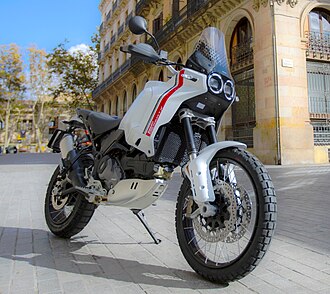
Ducati DesertX: The Italian Adventure Motorcycle Built to Go Beyond the Asphalt
The Ducati DesertX represents one of the most important departures from Ducati’s traditional road-focused philosophy. Rather than adapting a sporting motorcycle to occasional gravel use, Ducati developed the DesertX around serious adventure riding from the beginning. Its tall stance, 21-inch front wheel, 18-inch rear wheel, long-travel suspension and substantial ground clearance give it the hardware needed to explore difficult terrain, while its powerful engine, sophisticated electronics and unmistakable Italian styling preserve the character expected from a Ducati. The DesertX has also evolved significantly since its introduction: the original model used Ducati’s 937 cc Testastretta 11° L-twin, while the current 2026 generation has moved to a new 890 cc Ducati V2 engine and a redesigned chassis.
What makes the DesertX particularly interesting is that Ducati did not approach the adventure category as an afterthought. The motorcycle was designed around the requirements of off-road riding, but without sacrificing the performance and refinement necessary for long stretches of pavement. That combination gives the DesertX a personality different from both a conventional road-oriented adventure-tourer and a stripped-down enduro machine. It is intended to be comfortable enough for everyday riding, powerful enough for fast road travel and capable enough to make genuinely challenging trails part of the journey.
The Birth of the Ducati DesertX
Ducati Takes Adventure Riding Seriously
For many years, Ducati’s adventure offering was represented primarily by the Multistrada family. Those motorcycles became increasingly capable and sophisticated, but their emphasis remained strongly biased toward road performance and long-distance touring. The DesertX was created to explore a different side of adventure riding, with Ducati placing considerably greater emphasis on dirt-road and off-road performance.
The original DesertX was introduced with a distinctive rally-inspired appearance and a chassis built around a 21-inch front wheel and 18-inch rear wheel. Those dimensions are significant because they are common among serious adventure and enduro motorcycles. A larger front wheel can roll over obstacles more effectively and tends to provide greater stability on loose surfaces than the 17-inch front wheel commonly found on road-oriented adventure motorcycles.
Ducati also gave the motorcycle long suspension travel: the original model offered 230 mm at the front and 220 mm at the rear. Together with the spoke wheels and dedicated off-road tires, those characteristics established the DesertX as a genuine off-road-oriented machine rather than simply a tall sport-tourer.
A Different Kind of Ducati
The DesertX nevertheless remains immediately recognizable as a Ducati. Its sharp bodywork, narrow waist, distinctive headlight arrangement and carefully integrated fuel tank create a visual identity that is considerably more aggressive than many conventional adventure motorcycles.
This mixture of rugged hardware and sophisticated Italian design is central to the DesertX’s appeal. The motorcycle looks prepared for remote travel, but it does not abandon the visual drama associated with Ducati’s road bikes. It is an adventure motorcycle that looks like it belongs to the same family as a Panigale or Monster, even though its purpose is very different.
The Original 937 cc Testastretta Engine
Proven Ducati V-Twin Performance
The first production DesertX used Ducati’s 937 cc Testastretta 11° L-twin engine, producing 110 hp at 9,250 rpm and 92 Nm of torque at 6,500 rpm. The engine featured four valves per cylinder, desmodromic valve control, liquid cooling, electronic fuel injection and ride-by-wire throttle control.
This engine gave the DesertX a distinctly sporty character. Adventure motorcycles do not need enormous horsepower to be effective, particularly off-road, but the 110-hp output provided substantial reserves for highway travel and fast pavement riding. The engine’s torque delivery also made it suitable for climbing, overtaking and accelerating out of corners without demanding constant gear changes.
Ducati paired the engine with a six-speed gearbox and its Ducati Quick Shift system, allowing clutchless upshifts and downshifts. A slipper and self-servo wet multiplate clutch completed the drivetrain package.
The 937 cc engine therefore represented a useful compromise between performance and usability. It was substantially more powerful than a typical lightweight adventure motorcycle but remained manageable enough to be useful away from pavement.
The New Ducati V2 DesertX
A Major Change for 2026
The DesertX has now entered a new phase. For the 2026 model year, Ducati replaced the 937 cc Testastretta engine with a new 890 cc Ducati V2. The new engine produces 110.3 hp at 9,000 rpm and 92 Nm of torque at 7,000 rpm, meaning the peak power figure remains remarkably close to that of the outgoing motorcycle despite the smaller displacement.
The new V2 is a 90-degree twin-cylinder engine with four valves per cylinder and an intake variable valve-timing system. Ducati’s objective was not simply to create more peak power. Instead, the new engine was developed to provide a broad and usable torque curve, with the variable valve timing helping maintain strong response throughout the rev range.
The change is significant because it demonstrates how Ducati is attempting to make the DesertX more capable while also reducing engine mass and improving everyday usability. The new V2 is paired with a dedicated chassis rather than simply being installed into the previous platform.
Designed Around the Engine
The 2026 DesertX uses a new monocoque chassis and a dedicated trellis subframe, creating a more integrated relationship between the engine and frame. Ducati has also redesigned the fuel tank, describing the new tank as lighter and more ergonomic. The result is a motorcycle intended to be easier to control when riding away from the road.
The new model weighs 209 kg without fuel, compared with 210 kg for the previous-generation DesertX without the Discovery equipment. On paper, the reduction is modest, but weight distribution and chassis design can be just as important as the absolute number when a motorcycle is being maneuvered on loose terrain.
The current DesertX also has an 18-litre polymer fuel tank, while the earlier motorcycle used a 21-litre tank. The change reflects Ducati’s effort to rethink the motorcycle around weight, ergonomics and off-road handling rather than simply maximizing fuel capacity.
Off-Road Chassis and Suspension
The Importance of 21-Inch and 18-Inch Wheels
One of the defining characteristics of the DesertX is its wheel configuration. The current motorcycle uses a 21-inch front wheel and an 18-inch rear wheel, both fitted with tubeless cross-spoked rims. Ducati specifies 90/90-21 front and 150/70-18 rear Pirelli Scorpion Rally Street tires on the 2026 model.
The larger front wheel is particularly important when the terrain becomes rough. It can roll over rocks, ruts and uneven ground more effectively than a smaller wheel, while the narrower front tire provides a predictable contact patch on loose surfaces.
The 18-inch rear wheel also provides access to a broad range of adventure and off-road tire choices. This gives owners considerable flexibility when choosing between predominantly road-oriented tires and more aggressive rubber for dirt riding.
Long-Travel KYB Suspension
The 2026 DesertX uses a 46 mm KYB upside-down fork with 230 mm of wheel travel and a fully adjustable KYB rear shock with remote preload adjustment and 220 mm of travel. The suspension is supported by a dedicated double-sided swingarm with progressive linkage.
Those numbers reveal how seriously Ducati treats the off-road side of the motorcycle. Long travel allows the wheels to move through large amounts of suspension movement when encountering obstacles, while adjustability gives riders the opportunity to tune the chassis for different loads and terrain.
For a rider carrying luggage across a long journey, suspension setup can be very different from the ideal configuration for a lightweight solo trail ride. Remote preload adjustment at the rear is therefore particularly useful because it makes it easier to compensate for changing loads.
Braking Performance
Brembo Brakes for Road and Trail
Although the DesertX is designed to travel off-road, Ducati has not neglected its road performance. The 2026 model uses Brembo M4.32 radial calipers with dual 305 mm front discs. The braking system is integrated with a sophisticated ABS system that offers multiple levels of intervention.
The balance is important. Adventure motorcycles need powerful brakes for high-speed pavement riding, but excessive or poorly calibrated intervention can become a disadvantage on loose terrain. The DesertX’s electronic system is therefore designed to give the rider greater control over how ABS behaves according to the selected riding mode and conditions.
This makes the motorcycle more adaptable. A rider can enjoy strong braking performance on asphalt and then configure the electronic systems differently before heading onto a gravel road or technical trail.
Electronics: Six Riding Personalities
Riding Modes for Every Surface
The DesertX’s electronic package is one of its most impressive features. The original model offered six riding modes: Sport, Touring, Urban, Wet, Enduro and Rally. The 2026 motorcycle retains this six-mode philosophy while incorporating the latest generation of Ducati electronics and a six-axis inertial measurement unit.
The importance of these modes goes beyond simple throttle mapping. They can influence ABS, traction control, wheelie control, engine braking and other electronic systems. This allows the motorcycle to behave differently depending on whether it is being ridden on a highway, through a city or over loose terrain.
Sport mode emphasizes performance, while Touring provides a more relaxed configuration for longer distances. Urban and Wet modes are designed around controlled responses, whereas Enduro and Rally allow the rider to explore the motorcycle’s off-road capabilities with reduced electronic intervention.
IMU-Based Assistance
The six-axis IMU monitors the motorcycle’s dynamic behavior, allowing electronic systems to take lean angle and other movement into account. The current package includes Ducati Traction Control, Ducati Wheelie Control, Engine Brake Control and Ducati Quick Shift 2.0, alongside switchable ABS with multiple levels of cornering functionality.
This technology can make a major difference when conditions become unpredictable. Adventure riding often involves surfaces that change from asphalt to gravel, mud, sand or rocks within a short distance. The ability to adjust electronic intervention means the motorcycle does not have to behave identically in every environment.
The electronics also help make the DesertX accessible to a wider range of riders. Experienced off-road riders can reduce intervention and take greater control, while less experienced riders can retain additional electronic assistance as they develop their skills.
Ergonomics and Rider Confidence
A Tall but Purposeful Motorcycle
Adventure motorcycles naturally tend to have tall seats, and the DesertX is no exception. The current standard seat height is 880 mm, with Ducati offering a high seat at 900 mm and a low seat at 860 mm. A low seat combined with the low suspension kit can reduce the height to 840 mm.
For shorter riders, the seat height can initially appear intimidating. However, seat height alone does not tell the complete story. The shape of the seat, narrowness around the rider’s legs and overall balance of the motorcycle all influence how easy it is to manage at a standstill.
The DesertX’s upright riding position provides excellent visibility and substantial leverage through the handlebars. Once moving, the tall ergonomics become an advantage, giving the rider room to shift body position and maintain control over rough terrain.
Standing on the Footpegs
Off-road riding frequently requires the rider to stand on the footpegs, and the DesertX is designed with that technique in mind. Standing allows the motorcycle to move underneath the rider while the rider maintains control through the handlebars, footpegs and body position.
The combination of a wide handlebar, substantial suspension travel and upright chassis makes the DesertX well suited to this style of riding. Instead of trying to isolate the rider completely from the terrain, the motorcycle allows the rider to interact with it.
That is one of the most important differences between a true off-road-oriented adventure motorcycle and a purely road-focused touring machine.
The DesertX on the Road
More Than an Off-Road Specialist
Despite its off-road credentials, the DesertX is not a motorcycle that feels out of place on pavement. Its 110-hp engine, full electronic package and aerodynamic bodywork make it perfectly capable of high-speed road travel.
The engine’s broad torque delivery is useful when overtaking, while the upright position provides good visibility in traffic. Cruise control and other touring-oriented equipment further increase its usefulness on long road sections. Ducati lists cruise control, full LED lighting, USB and 12-volt power connections among the standard equipment available for the DesertX.
This road competence is important because adventure travel rarely consists entirely of dirt. A typical journey might involve several hours of highway riding before reaching a mountain trail. The best adventure motorcycles are therefore required to be good road bikes as well as capable off-road machines.
The DesertX succeeds because Ducati has resisted making either side of the equation completely dominant.
DesertX Discovery: Built for Longer Adventures
Touring Equipment From the Factory
Ducati also offers the DesertX Discovery, a version aimed at riders who want more equipment for extended adventure travel. The Discovery package builds on the standard DesertX platform with additional touring and protection equipment, making it particularly suitable for riders planning longer journeys.
The underlying motorcycle retains the same fundamental adventure architecture, including the 21/18-inch wheel combination, long-travel suspension and powerful twin-cylinder engine. This means the Discovery is not a separate motorcycle concept; instead, it represents a more travel-oriented expression of the same platform. Ducati’s current technical documentation lists both the DesertX and DesertX Discovery within the same specification family.
For riders who spend more time crossing countries than riding short local trails, the additional equipment can make the difference between a motorcycle that is merely capable of adventure and one that feels purpose-built for it.
DesertX Design: Rally Inspiration With Ducati Character
A Motorcycle That Looks Like an Adventure
The DesertX’s styling is one of its strongest selling points. Its compact front fairing, twin-element lighting signature, high front fender and narrow central bodywork create an unmistakable rally-inspired appearance.
The design is more than decoration. The relatively narrow body allows the rider to move around the motorcycle, while the standing position is supported by a chassis designed for active off-road riding. The motorcycle therefore looks purposeful because its appearance reflects its mechanical function.
The current model continues that design philosophy while adopting a more modern body and a redesigned fuel tank. Ducati describes the new tank as both lighter and more ergonomic, reinforcing the emphasis on rider control.
Ducati DesertX Technical Specifications
The following table summarizes the current 2026 Ducati DesertX, which uses the new 890 cc V2 engine. This is important because earlier DesertX models used the 937 cc Testastretta engine and have different specifications.
| Specification | Ducati DesertX 2026 |
|---|---|
| Engine | Ducati V2, 90° V2 |
| Valve system | 4 valves per cylinder, intake variable valve timing |
| Cooling | Liquid-cooled |
| Displacement | 890 cc |
| Bore × stroke | 96 × 61.5 mm |
| Compression ratio | 13.1:1 |
| Maximum power | 110.3 hp @ 9,000 rpm |
| Maximum torque | 92 Nm @ 7,000 rpm |
| Fuel injection | Electronic injection, 52 mm throttle body |
| Throttle | Ride-by-wire |
| Transmission | 6-speed |
| Quick shifter | Ducati Quick Shift 2.0 |
| Frame | Dedicated monocoque chassis |
| Subframe | Dedicated trellis subframe |
| Front suspension | 46 mm fully adjustable KYB fork |
| Rear suspension | Fully adjustable KYB monoshock with remote preload |
| Front wheel | 21-inch tubeless cross-spoked |
| Rear wheel | 18-inch tubeless cross-spoked |
| Front tire | 90/90-21 |
| Rear tire | 150/70-18 |
| Front suspension travel | 230 mm |
| Rear suspension travel | 220 mm |
| Front brakes | Twin 305 mm discs, Brembo M4.32 radial calipers |
| ABS | Cornering ABS with selectable intervention |
| Wet weight without fuel | 209 kg |
| Standard seat height | 880 mm |
| Low seat | 860 mm |
| Low seat + low suspension | 840 mm |
| Fuel tank | 18 litres |
| Riding modes | Sport, Touring, Urban, Wet, Enduro, Rally |
| Electronics | 6D IMU, DTC, DWC, EBC, DQS 2.0 |
| Lighting | Full LED |
| Dashboard | 5-inch TFT |
Final Verdict
The Ducati DesertX is one of the clearest examples of Ducati expanding beyond its traditional definition of a performance motorcycle. It combines the company’s unmistakable styling and engine character with a chassis genuinely designed for off-road use. The 21-inch front wheel, 18-inch rear wheel, long-travel KYB suspension and adjustable electronics give it the hardware required to tackle challenging terrain, while its road-oriented equipment makes it equally useful during the many paved kilometers that normally surround an adventure.
The original 937 cc DesertX established the formula with 110 hp, 92 Nm of torque, a 21/18-inch wheel combination and six riding modes. Its Testastretta 11° L-twin brought unmistakable Ducati character to a category where off-road practicality was usually more important than sporting emotion.
The 2026 model takes that philosophy further with the new 890 cc Ducati V2. Despite the smaller displacement, it maintains essentially the same headline power and torque figures while adopting variable intake valve timing, a new monocoque chassis, revised ergonomics and an updated electronic package. Ducati has also maintained the essential off-road ingredients: 230 mm of front travel, 220 mm at the rear, a 21-inch front wheel and 18-inch rear wheel.
Perhaps the DesertX’s greatest achievement is that it does not force the rider to choose between adventure and performance. It can be a fast road motorcycle in the morning, a gravel explorer in the afternoon and a long-distance touring machine the following day. Its technology helps it adapt to those different roles, while its chassis gives the rider the physical control required when the road disappears altogether.
For riders looking for an adventure motorcycle with serious off-road hardware, strong road performance and unmistakable Italian personality, the Ducati DesertX is a compelling choice. It is not simply a Ducati wearing adventure-bike clothing. It is a motorcycle built around the idea that the most interesting road is sometimes the one that stops being a road altogether.
.jpg)