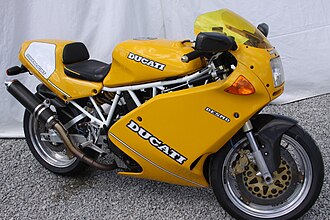
Ducati Supersport: The Italian Sportbike That Blends Performance and Everyday Riding
The Ducati Supersport occupies an interesting position in the world of modern sport motorcycles. It carries the unmistakable appearance of a Ducati performance machine, complete with a full fairing, aggressive stance, twin-cylinder engine and unmistakable Italian styling, yet it deliberately avoids the uncompromising nature of a dedicated superbike. The current Ducati SuperSport 950 is powered by a 937 cc Testastretta 11° L-twin producing 110 hp at 9,000 rpm and 93 Nm of torque at 6,500 rpm. More importantly, it is designed to combine genuine sporting ability with comfort and versatility, making it a motorcycle that can be enjoyed on a winding road, a weekend trip or an occasional track day without demanding the extreme riding position of a pure superbike.
That balance is what makes the Supersport so appealing. Ducati’s Panigale family represents the company’s uncompromising superbike philosophy, while motorcycles such as the Monster emphasize naked-bike simplicity and the Multistrada focuses on touring versatility. The Supersport sits between those worlds. It provides the protection and visual drama of a fully faired motorcycle while maintaining a relatively approachable riding position and a broad, usable power delivery. It is therefore less about chasing the highest possible horsepower figure and more about creating a rewarding relationship between rider, engine and road.
The Philosophy Behind the Ducati Supersport
A Sportbike Designed for Real Roads
The idea behind the Supersport is straightforward but increasingly unusual: build a motorcycle that looks and feels like a genuine sportbike without making every journey an endurance test. The rider still gets a forward-leaning position, a full fairing and a responsive chassis, but the ergonomics are less extreme than those of Ducati’s racing-derived machines.
This distinction matters because the majority of public-road riding does not take place at racetrack speeds. A motorcycle that produces hundreds of horsepower may possess extraordinary capability, but much of that performance can remain inaccessible outside a circuit. The Supersport instead focuses on providing enough performance to make ordinary roads exciting while retaining enough comfort to make longer rides realistic.
Ducati describes the SuperSport as a motorcycle with a sporty attitude that does not sacrifice comfort and versatility. That description is central to understanding the model. The motorcycle is not intended to replace a Panigale; it exists for riders who want the emotional appeal of a Ducati sportbike but need a broader range of everyday usability.
The Evolution of the Model
The modern Supersport builds on a long Ducati tradition of producing sporty road motorcycles that sit between conventional sport-tourers and uncompromising superbikes. Over time, the formula has evolved from simpler machines into a sophisticated package featuring ride-by-wire throttle control, multiple riding modes, cornering ABS, traction control, wheelie control and Ducati’s quick-shifting system.
The current 950 generation brought the concept closer stylistically to Ducati’s contemporary superbike family while retaining its more approachable mechanical character. The result is a motorcycle that looks considerably more aggressive than its performance philosophy might suggest. Its fairing, LED lighting and aerodynamic surfaces give it the visual presence of a much more extreme machine, while the 937 cc Testastretta engine delivers performance that is strong without being excessive.
The 937 cc Testastretta 11° Engine
Ducati’s Proven V-Twin Formula
At the heart of the SuperSport 950 is Ducati’s 937 cc Testastretta 11° L-twin. The engine uses four valves per cylinder, desmodromic valve control and liquid cooling, with a 94 mm bore and 67.5 mm stroke. Compression is 12.6:1, while peak output reaches 110 hp at 9,000 rpm and maximum torque is 93 Nm at 6,500 rpm.
These figures tell only part of the story. The engine’s greatest strength is its flexibility. Rather than being designed exclusively for high-rpm operation, the Testastretta 11° produces useful torque throughout the rev range. That makes the motorcycle easier to ride on ordinary roads because the rider does not need to keep the engine constantly near its maximum output.
The 937 cc displacement also gives the Supersport enough muscle for fast highway riding and strong acceleration between corners. It is powerful enough to feel genuinely exciting without reaching the intimidating levels of performance associated with Ducati’s V4 superbikes.
Ride-by-Wire Throttle Control
The engine breathes through 53 mm throttle bodies controlled by a full Ride-by-Wire system. This electronic throttle arrangement allows Ducati to precisely manage engine response and integrate the powertrain with the motorcycle’s riding modes and electronic assistance systems.
Ride-by-wire technology is particularly valuable on a motorcycle intended to combine sporting performance with everyday use. A sharp throttle response can be desirable during aggressive riding, but it may become tiring in traffic or uncomfortable on slippery roads. Electronic mapping allows Ducati to create different responses depending on the selected riding mode.
The rider can therefore experience the same engine in several different ways. Sport mode can emphasize immediacy and performance, while less aggressive settings can make the motorcycle smoother and easier to control during ordinary riding.
Six-Speed Transmission and Ducati Quick Shift
Fast Gear Changes Without Losing Momentum
The SuperSport 950 uses a six-speed gearbox equipped with Ducati Quick Shift up/down. The system allows the rider to shift through the transmission without relying on conventional clutch operation during acceleration and deceleration.
A quickshifter is especially effective on a motorcycle like the Supersport because it complements the bike’s road-focused sporting character. During a series of corners, the rider can concentrate on braking, steering and throttle control rather than repeatedly operating the clutch.
The gearbox also works well with the Testastretta engine’s broad torque curve. The rider has enough flexibility to carry a higher gear through many corners, while the lower gears remain available when stronger acceleration is required.
Ducati uses a wet multiplate slipper and self-servo clutch with hydraulic control. The slipper function helps reduce undesirable rear-wheel effects during aggressive downshifts, providing greater stability when the rider is braking hard for a corner.
Chassis: Sportbike Precision Without Superbike Extremes
Tubular Steel Trellis Frame
The SuperSport 950 uses a tubular steel Trellis frame attached to the cylinder head, combined with an aluminum single-sided swingarm. The configuration provides the motorcycle with a distinctive Ducati appearance while delivering the rigidity and stability required for spirited riding.
The chassis is deliberately balanced rather than excessively aggressive. Ducati has engineered the motorcycle to feel stable and precise without making it unnecessarily demanding. This is particularly important on public roads, where surface conditions can change rapidly and the rider needs a motorcycle that communicates clearly without punishing every small mistake.
The single-sided swingarm is also an important part of the Supersport’s visual identity. It exposes more of the rear wheel and contributes to the motorcycle’s premium appearance, while maintaining the adjustability and structural qualities expected of a modern performance machine.
Marzocchi and Öhlins Suspension
The standard SuperSport 950 uses a fully adjustable 43 mm Marzocchi upside-down fork and an adjustable Sachs rear shock. The front wheel uses a 3.50-inch rim, while the rear uses a 5.50-inch rim.
For riders wanting more sophisticated hardware, the SuperSport 950 S upgrades to Öhlins suspension. Ducati equips the S with a 48 mm Öhlins fork featuring TiN treatment and a fully adjustable Öhlins rear monoshock.
The difference is not simply cosmetic. Öhlins components provide a broader range of adjustment and can be particularly valuable for riders who frequently alter suspension settings for different roads, loads or track conditions. The standard motorcycle remains highly capable, but the S version is aimed at enthusiasts who want a more specialized setup.
Braking Performance
Brembo Hardware
A sportbike needs braking hardware capable of transforming high-speed momentum into controlled corner entry, and Ducati has equipped the SuperSport accordingly. The front system uses two 320 mm semi-floating discs with radially mounted Brembo M4-32 four-piston monobloc calipers and a radial master cylinder. Bosch Cornering ABS is integrated into the system.
The brakes are designed to provide strong initial response and predictable control rather than simply maximizing stopping power. That distinction is important for a road-focused motorcycle because braking performance needs to remain manageable in a wide variety of conditions.
The rear brake complements the front system and is integrated into the motorcycle’s cornering ABS strategy. Together, the braking components give the Supersport enough stopping authority for spirited riding while retaining the sophistication expected from a modern Ducati.
Electronics and Rider Assistance
Cornering ABS, Traction Control and Wheelie Control
The SuperSport 950 includes a substantial suite of electronic rider aids. Ducati lists Riding Modes, Bosch Cornering ABS, Ducati Traction Control EVO and Ducati Wheelie Control EVO among the motorcycle’s safety and performance systems.
These systems are especially valuable because the Supersport’s performance can be exploited in many different environments. Traction control can help manage rear-wheel slip when accelerating hard, while wheelie control can moderate front-wheel lift during aggressive acceleration. Cornering ABS adds another level of assistance by taking motorcycle lean angle into account.
Importantly, these systems do not fundamentally change the character of the motorcycle. Instead, they provide a safety net that allows the rider to explore the motorcycle’s performance with greater confidence.
Riding Modes
Riding modes allow the electronic systems and throttle response to be configured according to conditions and rider preference. This flexibility helps the Supersport move between different roles without feeling like a completely different motorcycle.
A rider heading out for an energetic weekend ride can select a more responsive configuration, while someone commuting through wet or congested conditions can choose a calmer setting. This adaptability reinforces the fundamental philosophy of the Supersport: performance should enhance everyday riding rather than restrict it.
Aerodynamics and Ducati Styling
A Fairing With a Purpose
The SuperSport 950’s fairing does more than create visual drama. It provides wind protection, particularly at higher speeds, while incorporating aerodynamic elements that contribute to stability. The design draws inspiration from Ducati’s superbike family without simply copying it.
The full fairing is one of the most significant differences between the Supersport and Ducati’s naked models. It allows the rider to tuck behind the windshield during faster travel, reducing fatigue caused by wind pressure. This becomes especially valuable during longer journeys.
At the same time, the motorcycle does not look like a conventional sport-tourer. Its sharp lines, narrow waist and aggressive front end communicate a clear sporting identity.
LED Lighting and Contemporary Details
The SuperSport’s front design incorporates a full-LED headlight with daytime running light, while the fairing includes side air vents that contribute to the motorcycle’s modern appearance. Ducati has carefully blended aerodynamic requirements with its contemporary design language.
The result is a motorcycle that looks fast even when stationary. The styling is unmistakably Ducati, yet the Supersport has enough individuality to distinguish itself from the more extreme Panigale family.
Ergonomics and Long-Distance Comfort
A More Forgiving Sportbike
One of the most important characteristics of the SuperSport is its riding position. The rider leans forward, but the ergonomics are less extreme than those of a dedicated superbike. The seat height is 810 mm, which is relatively approachable for a full-size sport motorcycle.
This more relaxed relationship between rider and machine makes a major difference during longer rides. Wrists and shoulders are subjected to less extreme loading, while the fairing protects the rider from wind. The result is a motorcycle that can be ridden enthusiastically for extended periods without requiring the physical commitment of a race-oriented sportbike.
That does not mean the Supersport has become soft. Its footpeg position, chassis geometry and steering response remain clearly sporting. Instead, Ducati has found a compromise that works for riders who want both excitement and practicality.
Touring Potential
The Supersport can also serve as a surprisingly capable weekend touring motorcycle. The fairing provides useful protection, the engine has enough torque for relaxed cruising and the riding position is suitable for longer distances.
Ducati’s accessory catalog further expands the motorcycle’s versatility, allowing owners to configure it according to their priorities. A rider who wants a sharper sporting machine can focus on performance equipment, while someone planning longer journeys can emphasize comfort and luggage solutions.
This versatility is perhaps the most important difference between the Supersport and a Panigale. The Panigale is fundamentally a superbike that can be ridden on the road, whereas the Supersport is designed from the beginning to make road riding one of its primary strengths.
SuperSport 950 vs SuperSport 950 S
What Changes With the S Model?
The SuperSport 950 and 950 S share the same 937 cc engine, producing the same 110 hp and 93 Nm. The fundamental chassis concept is also shared, meaning the two motorcycles have more similarities than differences.
The major distinction is equipment. The S model receives Öhlins suspension, giving riders more sophisticated adjustment and a more premium component package. Ducati has also offered special graphics and color treatments for the S, including the Iceberg White Stripe Livery introduced for the model range.
For riders who primarily use the motorcycle on public roads, the standard SuperSport 950 already provides an impressive specification. Those who frequently ride on track, experiment with suspension setup or simply want the most premium version may find the 950 S more attractive.
Why the Ducati Supersport Still Matters
A Middle Ground With a Purpose
Modern performance motorcycles have become extraordinarily capable. Superbikes now produce power figures that would have been unimaginable a few decades ago, while electronic systems can manage traction, wheel lift, braking and engine behavior with extraordinary precision.
In that environment, the Supersport occupies an important middle ground. Its 110 hp output is more than enough to make the motorcycle fast, yet it remains substantially more approachable than the most extreme superbikes. Its 205 kg wet weight without fuel is significant, but reasonable for a fully faired road motorcycle with a 937 cc V-twin.
The motorcycle therefore focuses on what many riders actually want: a machine that feels special every time it is ridden, provides enough performance to be exciting and does not become uncomfortable after an hour on the road.
The Joy of a V-Twin Sportbike
There is also an emotional argument for the Supersport. Ducati’s L-twin engine configuration has a distinctive delivery and sound that gives the motorcycle a character different from four-cylinder sportbikes.
The 937 cc Testastretta is not merely a means of producing horsepower. Its torque delivery, desmodromic valve system and unmistakable Ducati character contribute to the experience of riding the motorcycle. The engine feels mechanical and purposeful, yet the electronic systems make it much easier to manage than older generations of high-performance Ducati twins.
Ducati SuperSport 950 Technical Specifications
The following table summarizes the principal specifications of the current Ducati SuperSport 950. Some equipment differs between the standard 950 and the 950 S, and Ducati notes that specifications and equipment can vary by market.
| Specification | Ducati SuperSport 950 |
|---|---|
| Engine | Testastretta 11° L-twin |
| Valve system | Desmodromic, 4 valves per cylinder |
| Cooling | Liquid-cooled |
| Displacement | 937 cc |
| Bore × stroke | 94 × 67.5 mm |
| Compression ratio | 12.6:1 |
| Maximum power | 110 hp @ 9,000 rpm |
| Maximum torque | 93 Nm @ 6,500 rpm |
| Fuel injection | Electronic injection, 53 mm throttle bodies |
| Throttle | Full Ride-by-Wire |
| Transmission | 6-speed |
| Quick shifter | Ducati Quick Shift up/down |
| Clutch | Wet multiplate slipper/self-servo clutch |
| Frame | Tubular steel Trellis |
| Front suspension | 43 mm fully adjustable Marzocchi fork |
| Rear suspension | Adjustable Sachs monoshock |
| Front brakes | Twin 320 mm discs, Brembo M4-32 4-piston calipers |
| Rear brake | Disc with Brembo caliper |
| Front tire | 120/70 ZR17 |
| Rear tire | 180/55 ZR17 |
| Wheelbase | Approximately 1,478 mm |
| Seat height | 810 mm |
| Wet weight without fuel | 205 kg |
| Riding aids | Riding Modes, Cornering ABS, DTC EVO, DWC EVO |
| Instrumentation | Full-color TFT display |
| Fuel tank | Approximately 16 litres |
| Valve-clearance service | 30,000 km |
| Major service interval | 15,000 km / 12 months |
Final Verdict
The Ducati Supersport 950 succeeds because it understands that a sport motorcycle does not have to be uncompromising to be exciting. With 110 hp, 93 Nm of torque, a responsive 937 cc Testastretta V-twin, Brembo brakes, adjustable suspension and a sophisticated electronic package, it has more than enough performance for enthusiastic road riding. At the same time, its 810 mm seat, protective fairing and relatively approachable ergonomics make it substantially more versatile than a pure superbike.
It is particularly attractive to riders who appreciate the visual drama and mechanical character of a Ducati but do not necessarily want a motorcycle designed primarily around lap times. The Supersport can attack a sequence of corners with genuine sporting ability, yet it can also settle into a comfortable rhythm on a longer road trip. That dual personality is its greatest strength.
The SuperSport 950 S adds a more premium suspension package through Öhlins components, making it the natural choice for riders who want greater setup flexibility or more track-oriented equipment. But the standard 950 remains an impressive motorcycle in its own right, sharing the same engine, electronic philosophy and fundamental chassis architecture.
Ultimately, the Ducati Supersport is not about winning a specification-sheet battle. It is about finding the point where performance, comfort, style and usability overlap. Its 937 cc V-twin delivers enough character to make every ride memorable, the fairing provides meaningful protection, the electronics add confidence and the chassis encourages the rider to explore winding roads rather than simply endure them.
For riders who want a true Ducati sportbike for the real world, the SuperSport 950 makes a compelling argument. It does not attempt to be the most powerful motorcycle Ducati builds, and that is precisely why it remains relevant. Instead, it offers something increasingly valuable: a beautifully engineered sport motorcycle that is fast enough to thrill, comfortable enough to live with and versatile enough to make almost any road feel like the beginning of an adventure.
