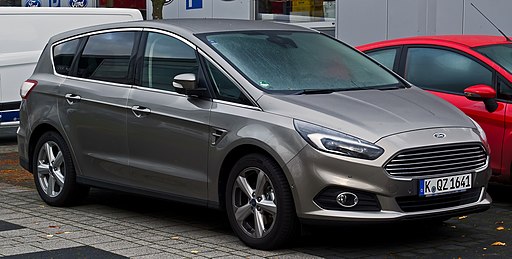
Ford S-Max as a Used Car – The Complete Buyer’s Guide
The Ford S-Max occupies a unique position in the used-car market. Introduced in 2006, it challenged the traditional perception of multi-purpose vehicles by combining the practicality of a seven-seat family car with the driving dynamics of a sporty estate. While many MPVs focused almost exclusively on maximizing passenger space, Ford engineers approached the S-Max differently. Their goal was to create a vehicle that could comfortably transport an entire family without sacrificing handling, steering precision, or driver enjoyment. The result was a car that won numerous awards, including the prestigious European Car of the Year title shortly after its launch, and quickly established itself as one of the most respected large family vehicles in Europe.
Today, the Ford S-Max remains an excellent option on the used-car market. Although the popularity of SUVs has reduced demand for traditional MPVs, this shift has created an opportunity for buyers. Used S-Max models often offer exceptional value for money, providing generous interior space, strong engines, modern technology, excellent safety equipment, and surprisingly engaging driving characteristics for significantly less than similarly equipped SUVs. Families who prioritize practicality over fashion often discover that the S-Max offers more usable space, better visibility, lower running costs, and superior driving comfort than many crossovers costing considerably more.
However, purchasing a used Ford S-Max requires careful research. The model has been available with a wide variety of petrol and diesel engines, manual and automatic transmissions, numerous trim levels, and extensive optional equipment. Some engines have proven exceptionally reliable, while others require careful maintenance to avoid expensive repairs. Understanding these differences is essential before making a purchase. This comprehensive guide examines every important aspect of buying a used Ford S-Max, including its history, strengths, weaknesses, reliability, maintenance requirements, ownership costs, and technical specifications.
The History of the Ford S-Max
Ford introduced the S-Max in 2006 as a completely new model positioned alongside the larger Galaxy. Although both vehicles shared the same platform, the S-Max was designed to appeal to buyers who wanted the practicality of an MPV combined with a more dynamic appearance and driving experience. Instead of emphasizing maximum interior volume, Ford focused on balancing passenger comfort with attractive styling and enjoyable handling.
The first generation immediately attracted praise from automotive journalists because it drove more like a large family hatchback than a conventional people carrier. Precise steering, excellent chassis tuning, and well-controlled suspension distinguished it from many competitors. Buyers appreciated that they could transport seven passengers without feeling as though they were driving a commercial van.
In 2015, Ford introduced the second generation, which refined the original concept further. The new S-Max featured updated styling, improved safety technology, more efficient EcoBoost petrol and EcoBlue diesel engines, modern infotainment systems, and significantly higher interior quality. The second generation continued Ford’s tradition of producing one of the most enjoyable vehicles in the MPV segment while maintaining excellent practicality.
Why Buy a Used Ford S-Max?
Outstanding Value for Money
One of the strongest reasons to consider a used Ford S-Max is the exceptional value it offers. As consumer preferences shifted toward SUVs, demand for MPVs declined despite their practical advantages. Consequently, used S-Max models often cost considerably less than similarly sized crossovers while providing more interior space, greater passenger comfort, and comparable technology. Buyers who prioritize functionality over current automotive trends can obtain an exceptionally well-equipped vehicle for a modest investment.
Higher trim levels often include leather upholstery, panoramic glass roofs, adaptive cruise control, premium sound systems, heated seats, electrically adjustable seating, navigation, parking cameras, and numerous driver assistance systems. Purchasing these features new required a substantial financial investment, but on the used market they often add relatively little to the purchase price.
Excellent Driving Dynamics
The S-Max has consistently been regarded as one of the best-driving MPVs ever produced. Ford invested heavily in suspension development, steering calibration, and chassis balance, allowing the vehicle to remain composed through corners while maintaining excellent ride comfort. Even heavily loaded with passengers and luggage, the S-Max feels remarkably stable and predictable.
This driving experience distinguishes the S-Max from many competitors. Instead of feeling cumbersome or van-like, it behaves much more like a large estate car. Drivers who previously owned Mondeos or Focus models often find the transition remarkably natural despite the S-Max’s larger dimensions.
Choosing the Right Generation
First Generation (2006–2015)
The original Ford S-Max remains an outstanding used-car choice. Early models offered naturally aspirated petrol engines alongside several diesel options, while later facelifted versions introduced improved styling, upgraded interiors, enhanced safety systems, and Ford’s EcoBoost turbocharged petrol engines.
Buyers should pay close attention to maintenance history, particularly on diesel variants with higher mileage. A well-maintained first-generation S-Max can easily exceed very high mileage while continuing to provide dependable service and impressive comfort.
Second Generation (2015–2023)
The second-generation S-Max introduced significant improvements in refinement, technology, efficiency, and safety. Interior materials became noticeably more premium, touchscreen infotainment systems improved substantially, and numerous electronic driver assistance features became available.
This generation remains particularly attractive because it combines modern technology with relatively affordable used prices. Buyers seeking long-term ownership often find these models represent the ideal balance between purchase price and contemporary equipment.
Engine Options
EcoBoost Petrol Engines
Ford’s EcoBoost petrol engines provide smooth performance, impressive refinement, and strong acceleration considering their displacement. Turbocharging allows smaller engines to deliver power comparable with much larger naturally aspirated units while maintaining competitive fuel economy. These engines suit drivers covering moderate annual mileage or those who primarily drive within urban environments.
Buyers should ensure servicing has been performed precisely according to manufacturer recommendations. Regular oil changes using correct lubricants are especially important for maintaining long-term reliability.
Duratorq and EcoBlue Diesel Engines
Diesel engines remain the preferred choice for many used S-Max buyers because they combine excellent fuel economy with substantial torque. Their pulling power makes motorway driving effortless even when carrying seven passengers and luggage. Drivers covering high annual mileage often recover higher purchase costs through lower fuel consumption.
However, diesel engines require appropriate usage patterns. Vehicles driven primarily on short journeys may experience diesel particulate filter problems, making petrol engines a better choice for predominantly urban driving.
Transmission Choices
Manual gearboxes remain popular because they are generally reliable and provide precise operation. Clutch wear depends largely on previous driving habits, particularly if the vehicle has regularly towed trailers or operated in heavy traffic.
Automatic transmissions deliver greater convenience, especially during long-distance journeys and congested urban commuting. Buyers should verify that gear changes occur smoothly and that transmission servicing has been completed where recommended.
Reliability
Overall reliability of the Ford S-Max is good, especially when regular maintenance has been performed. Like most modern vehicles, problems often result from neglected servicing rather than fundamental engineering weaknesses. Complete service documentation significantly increases confidence when purchasing a used example.
Suspension Components
The S-Max’s sophisticated suspension contributes significantly to its excellent handling but contains numerous components that eventually wear with age and mileage. Bushings, control arms, shock absorbers, and wheel bearings deserve careful inspection during any pre-purchase examination.
Diesel Emissions Equipment
Modern diesel engines incorporate particulate filters, exhaust gas recirculation systems, and additional emissions technology. Buyers should verify these systems operate correctly because repairs can be expensive. Regular motorway driving generally helps maintain proper operation.
Electrical Systems
Later S-Max generations include extensive electronic equipment including adaptive cruise control, lane-keeping assistance, parking systems, power tailgates, digital instrument displays, and sophisticated infotainment systems. Buyers should test every electrical function carefully during inspection.
Interior Comfort
Interior comfort remains one of the S-Max’s greatest strengths. Front seats provide excellent long-distance support, while second-row passengers benefit from generous legroom and individually adjustable seating in many versions. Even third-row seats remain genuinely usable for children and shorter adults, making the S-Max considerably more practical than many seven-seat SUVs where the rearmost seats serve mainly as emergency accommodation.
Numerous storage compartments, cup holders, folding tables, USB charging ports, climate-control vents, and flexible seating arrangements further enhance everyday usability. Long family journeys become significantly more comfortable thanks to thoughtful cabin design.
Practicality
Practicality has always been central to the S-Max’s design philosophy. Depending on seating configuration, luggage capacity ranges from generous everyday storage behind five seats to substantial cargo space with rear seats folded completely flat. Families transporting bicycles, camping equipment, sports gear, or large shopping loads appreciate this versatility.
Individual rear seats fold independently, allowing numerous passenger and cargo combinations. This flexibility remains one of the major advantages of traditional MPVs over many modern SUVs.
Safety Features
The Ford S-Max consistently achieved strong safety ratings thanks to its robust structure and comprehensive safety equipment. Depending on model year and specification, buyers may find autonomous emergency braking, adaptive cruise control, blind-spot monitoring, lane departure warning, driver fatigue monitoring, multiple airbags, electronic stability control, hill-start assistance, traffic sign recognition, and active parking assistance.
Running Costs
Ownership costs remain competitive considering the vehicle’s size. Diesel engines deliver particularly impressive motorway economy, while petrol models offer lower maintenance complexity for drivers covering fewer annual miles. Insurance costs generally remain reasonable compared with similarly sized premium SUVs.
Routine servicing, brake replacement, suspension repairs, and tire replacement naturally cost more than smaller hatchbacks, but these expenses remain modest compared with luxury seven-seat vehicles from premium manufacturers.
What to Check Before Buying
Before purchasing any used Ford S-Max, inspect the complete maintenance history carefully. Confirm regular oil changes, timing belt replacement where applicable, transmission servicing, brake maintenance, and documented repairs. A professionally maintained example almost always represents better value than a cheaper neglected vehicle.
During the test drive, evaluate engine smoothness, steering precision, suspension comfort, transmission operation, braking performance, and the functionality of every electronic system. Inspect bodywork carefully for accident repairs, corrosion, uneven paintwork, and evidence of previous damage.
Ford S-Max Compared with Competitors
The S-Max competes with vehicles including the Volkswagen Sharan, SEAT Alhambra, Renault Espace, Citroën Grand C4 SpaceTourer, Peugeot 5008, Toyota Verso, and numerous seven-seat SUVs. While SUVs currently dominate new-car sales, the S-Max frequently surpasses them in passenger comfort, luggage flexibility, driving dynamics, and purchase value on the used market.
Buyers seeking maximum practicality without paying SUV prices often discover the S-Max represents one of the smartest family-car purchases available.
Who Should Buy a Used Ford S-Max?
Large Families
Families needing genuine seven-seat capability benefit enormously from the S-Max’s spacious cabin, flexible seating, excellent safety, and comfortable ride quality.
Long-Distance Drivers
Drivers regularly covering motorway distances appreciate comfortable seating, refined engines, stable handling, and efficient diesel powertrains.
Drivers Who Dislike SUVs
Buyers seeking practicality without SUV styling often find the S-Max an ideal alternative. It offers lower fuel consumption, superior handling, and easier access while retaining outstanding passenger space.
Technical Specifications Summary
| Specification | Ford S-Max (Typical Used Models) |
|---|---|
| Vehicle Type | Large MPV / Seven-seat family vehicle |
| Production Years | 2006–2023 |
| Body Style | 5-door MPV |
| Drive Layout | Front-wheel drive (selected all-wheel-drive versions available) |
| Engine Options | Petrol EcoBoost, naturally aspirated petrol, Duratorq diesel, EcoBlue diesel |
| Power Output | Approximately 115–240 hp depending on engine and model year |
| Transmission | 6-speed manual, 6-speed automatic, PowerShift automatic, 8-speed automatic (later models) |
| Seating Capacity | 5 or 7 passengers |
| Fuel Type | Petrol or diesel |
| Luggage Capacity | Approximately 285–2,020 liters depending on seat configuration |
| Fuel Economy | Approximately 5.0–8.5 L/100 km depending on engine and driving conditions |
| Main Advantages | Excellent driving dynamics, spacious cabin, flexible seating, strong safety, outstanding value |
| Main Weaknesses | Higher maintenance costs than smaller cars, diesel emissions complexity, declining MPV popularity affecting resale |
Final Verdict: Is the Ford S-Max a Good Used Car?
The Ford S-Max remains one of the finest family vehicles available on the used-car market. Its combination of practicality, comfort, engaging driving characteristics, strong safety credentials, and competitive running costs makes it an exceptionally well-rounded choice. While SUVs currently dominate automotive trends, the S-Max demonstrates that a thoughtfully engineered MPV can outperform many crossovers in the areas that matter most to families: passenger comfort, luggage capacity, flexibility, and long-distance usability.
Choosing the right example is essential. Buyers should prioritize documented maintenance history, professional servicing, careful previous ownership, and a thorough mechanical inspection over simply selecting the lowest-priced vehicle. Paying slightly more for a well-maintained S-Max usually results in significantly lower ownership costs over the following years.
For buyers searching for an affordable, comfortable, spacious, and enjoyable family vehicle capable of transporting up to seven passengers without compromising driving pleasure, the Ford S-Max remains one of the strongest recommendations in the used-car market. Its enduring reputation for practicality and dynamic performance ensures that it continues to offer exceptional value long after production has ended.
