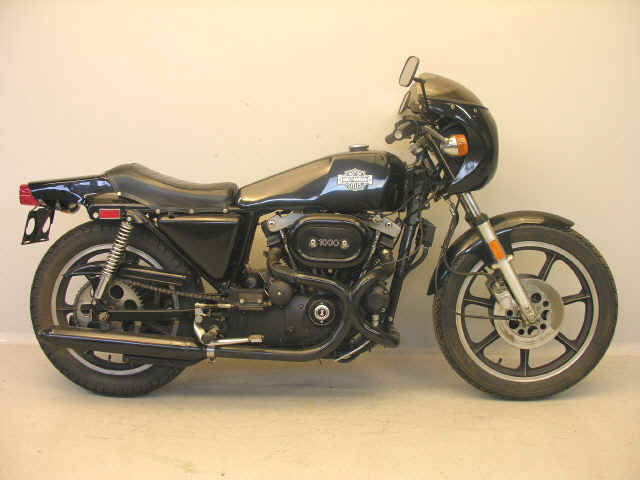
The Harley-Davidson XLCR occupies a unique and often misunderstood place in the company’s history. Introduced in 1977, the XLCR was Harley-Davidson’s first serious attempt at producing a factory-built café racer, a motorcycle style that had originated in Europe and emphasized sport-oriented handling, aggressive ergonomics, and minimalist design. At a time when Harley-Davidson was primarily associated with cruisers and touring motorcycles, the XLCR represented a bold departure from tradition. It was aimed at riders who wanted a performance-focused machine with distinctly European influences while retaining American V-twin character.
The XLCR was developed during a challenging period for Harley-Davidson, both financially and technologically. Despite this, the motorcycle showcased a high level of design cohesion and engineering intent. It was not a racing motorcycle but rather a road-going sport machine designed for spirited riding on paved roads. Although it struggled commercially, largely due to market timing and rider expectations, the XLCR later gained recognition as an innovative and forward-thinking model.
Engine Design and Mechanical Layout
The Harley-Davidson XLCR is powered by a 997 cc V-twin engine derived from the Sportster lineup. This air-cooled engine uses a 45-degree cylinder arrangement and an overhead valve configuration with pushrod-actuated valves. While the basic architecture was shared with other Sportster models of the era, the XLCR’s engine was tuned to provide a more responsive and sport-oriented riding experience.
The engine produces approximately 61 horsepower at around 6,200 rpm, with a strong emphasis on mid-range torque rather than high-revving performance. Compression ratio is moderate, typically around 9.0:1, balancing power output with durability and fuel compatibility. The engine’s cast iron cylinders and aluminum heads provide robust thermal stability, and large cooling fins help dissipate heat during sustained high-speed riding. The power delivery is smooth and predictable, reflecting Harley-Davidson’s focus on usable performance rather than outright speed.
Fuel System and Induction Characteristics
Fuel delivery on the XLCR is handled by a pair of carburetors, one for each cylinder, which was a significant departure from the single-carburetor setups common on many Harley-Davidson models of the time. This dual-carburetor arrangement improves throttle response and allows more precise fuel metering, contributing to better engine breathing and increased power consistency across the rev range.
The carburetors are fed by a relatively compact fuel tank designed to maintain a low and sleek profile consistent with café racer aesthetics. Air intake is managed through a centralized air cleaner system, optimized to balance airflow with noise control and filtration. Exhaust gases exit through a dual exhaust system with black-finished mufflers, contributing to the motorcycle’s subdued and purposeful visual identity while maintaining acceptable back pressure for engine efficiency.
Transmission and Final Drive
The Harley-Davidson XLCR is equipped with a four-speed manual transmission, which was standard for Harley-Davidson Sportster-based models during the late 1970s. Gear ratios are selected to complement the engine’s torque characteristics, providing strong acceleration in the lower gears and relaxed cruising at higher speeds. The transmission is robust and designed to handle the substantial torque output of the V-twin engine.
Power is transmitted to the rear wheel via a chain final drive, chosen for its efficiency and ease of maintenance. The chain drive also allows for relatively straightforward gearing changes, which could be beneficial for riders seeking to tailor performance characteristics. The clutch is a multi-plate wet unit, offering smooth engagement and sufficient capacity to manage spirited riding without excessive slippage.
Frame Construction and Chassis Geometry
The XLCR uses a steel tubular frame derived from the Sportster platform but modified to suit a more aggressive riding posture and improved handling characteristics. The frame geometry features a steeper steering head angle and shorter wheelbase compared to cruiser-oriented models, resulting in quicker steering response and enhanced agility in corners. This configuration was designed to inspire confidence during fast road riding and winding routes.
The frame also incorporates mounting points for a rear-set foot control system and low-mounted handlebars, reinforcing the café racer riding position. Structural rigidity was a key consideration, as the XLCR was expected to handle higher cornering loads than traditional Harley-Davidson motorcycles. While the frame is heavier than contemporary European sport bikes, it provides a stable and predictable platform suited to the engine’s power delivery.
Suspension System and Ride Control
Suspension on the Harley-Davidson XLCR reflects its sport-oriented intent. The front end is equipped with telescopic forks offering hydraulic damping, providing improved control and feedback compared to older suspension designs. Fork travel is moderate, balancing comfort with the need to maintain front-end stability during aggressive cornering and braking.
At the rear, the XLCR uses dual shock absorbers with adjustable preload, allowing riders to tailor suspension behavior based on weight and riding style. The shocks are mounted to a reinforced swingarm designed to handle increased loads and maintain alignment under hard acceleration. While suspension performance is modest by modern standards, it was competitive for its era and marked a significant step forward for Harley-Davidson in terms of handling dynamics.
Braking System and Wheel Equipment
Braking performance on the XLCR is a notable improvement over many earlier Harley-Davidson models. The motorcycle features dual disc brakes at the front, providing significantly increased stopping power and better heat dissipation. The rear brake is a single disc, offering balanced braking performance and improved control.
The wheels are cast alloy units, a departure from traditional spoked wheels, contributing to a more modern appearance and reduced maintenance. Wheel sizes are typically 19 inches at the front and 18 inches at the rear, fitted with road-oriented tires designed to provide reliable grip on asphalt. The braking and wheel combination reinforces the XLCR’s focus on paved-road performance rather than cruising comfort.
Ergonomics and Rider Interface
The riding position of the XLCR is distinctly sport-oriented, with low clip-on-style handlebars and rear-set foot pegs placing the rider in a forward-leaning posture. This configuration improves aerodynamics and front-wheel feedback, making the motorcycle feel more connected during cornering. The narrow, elongated seat is designed primarily for solo riding, emphasizing the café racer aesthetic and reducing overall weight.
Instrumentation is minimal but functional, typically consisting of a speedometer and tachometer housed in a compact, blacked-out instrument cluster. Controls are straightforward and logically arranged, allowing the rider to focus on the riding experience. The overall interface emphasizes simplicity and mechanical engagement rather than comfort or luxury.
Design Language and Visual Identity
One of the most distinctive aspects of the Harley-Davidson XLCR is its visual design. Finished almost entirely in black, including the engine, exhaust, frame, and bodywork, the XLCR presented a stark and aggressive appearance unlike any other Harley-Davidson of its time. The angular fuel tank, small front fairing, and sculpted tail section contributed to a cohesive and purposeful aesthetic.
This design approach was heavily influenced by European café racers but adapted to suit Harley-Davidson’s mechanical layout and brand identity. The result was a motorcycle that looked radical and understated at the same time, appealing to riders who valued form following function.
Technical Legacy and Modern Relevance
Although the Harley-Davidson XLCR was produced in limited numbers and discontinued after a short production run, its technical and cultural significance has grown over time. It demonstrated Harley-Davidson’s willingness to experiment with new market segments and design philosophies, even when success was not guaranteed. Technically, it represented an early attempt to improve handling, braking, and ergonomics within the constraints of existing engine architecture.
Today, the XLCR is highly regarded by collectors and enthusiasts as a visionary motorcycle that was ahead of its time. Its technical parameters, while modest by modern sport bike standards, reflect a deliberate effort to blend American V-twin character with European-inspired performance and design. The XLCR remains a compelling example of how engineering choices, chassis development, and styling can come together to create a motorcycle that leaves a lasting impression despite limited commercial success.
