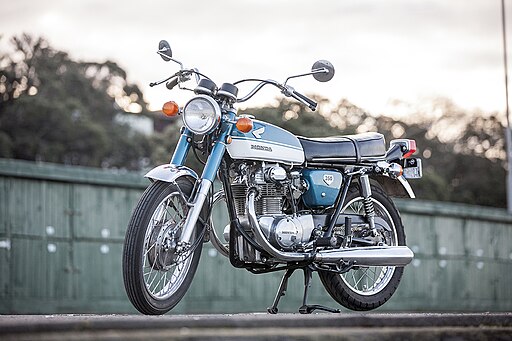
Honda CB350
The Honda CB350 stands as one of the most beloved mid-sized motorcycles of the late 1960s and early 1970s. Blending approachable power, nimble handling, and timeless styling, it introduced riders to the joys of twin-cylinder performance without the intimidation of a larger displacement machine. This article delves into every technical facet—from frame geometry to electrical details—revealing why the CB350 remains a favorite among collectors and custom builders.
Historical Overview
The CB350 debuted in 1968 as part of Honda’s “Dream” series, aiming to offer a spirited yet manageable ride for both novice and experienced riders. Its 325 cc parallel-twin engine, evolved from the earlier CB72 and CB77 platform, provided smooth acceleration and a distinctive exhaust note. Over its production run until 1973, Honda made incremental upgrades—enhanced brakes, revised styling, and electronic ignition—cementing the CB350’s reputation for reliability and fun.
Chassis and Frame
H3 Frame Construction and Geometry
- Steel double-cradle frame featuring boxed main spars for torsional stiffness
- Wheelbase: 1,330 mm for stable tracking at speed
- Rake: 27°; Trail: 100 mm, balancing sporty agility with straight-line stability
H3 Subframe and Bodywork
- Integrated subframe supports dual-seat configuration with passenger grab strap
- Fuel tank capacity: 12 L with reserve petcock (2.5 L) for extended range
- Side covers and fenders in steel, painted to match tank for a cohesive look
Engine and Performance
H3 Powerplant Architecture
| Specification | Detail |
|---|---|
| Configuration | 4-stroke SOHC parallel-twin |
| Displacement | 325 cc |
| Bore × Stroke | 63 mm × 52 mm |
| Compression Ratio | 9.3 : 1 |
| Cooling | Air-cooled |
H3 Induction and Exhaust
- Dual Keihin CV carburetors, 24 mm throat diameter, offering smooth throttle response
- Foam filters beneath pod covers to aid off-road dust protection
- 2-into-2 exhaust headers with upswept silencers on later models, producing a crisp twin note
H3 Power and Torque
- Maximum Power: 36 hp at 9,500 rpm
- Peak Torque: 2.8 kg·m at 8,000 rpm
- Redline: 10,500 rpm, enabling spirited rev-hungry riding
Transmission and Final Drive
H3 Gearbox
- 5-speed constant-mesh transmission
- Ratchet-type shift drum for precise, positive engagement
- Wet multi-plate clutch with adjustable cable tension
H3 Final Drive
- #520 O-ring chain with adjustable tensioners on swingarm
- Front Sprocket: 17 teeth; Rear Sprocket: 42 teeth
- Chain guard integrated into swingarm for debris protection
Suspension
H3 Front End
- Telescopic fork with 130 mm travel
- 35 mm fork tubes featuring simple damping and preload via top-cap spring compression
H3 Rear End
- Dual shock absorbers with 110 mm travel
- Preload adjustable via threaded collars, allowing rider to fine-tune for solo or two-up riding
- Chrome-plated springs and bodies for corrosion resistance
Brakes and Wheels
H3 Braking System
| Position | Type | Diameter |
|---|---|---|
| Front | Single leading-trailing drum | 180 mm |
| Rear | Single leading-trailing drum | 130 mm |
H3 Wheels and Tires
- Front Wheel: 19 × 1.60 in steel rim
- Rear Wheel: 18 × 2.15 in steel rim
- Standard Tires: 3.00-19 front, 3.50-18 rear, bias-ply construction
Electrical System
H3 Ignition and Charging
- 6-volt electronic points ignition (later models featured transistorized ignition)
- 6-volt, 90 W stator with flywheel magneto for charging the battery and powering lights
- 6 Ah lead-acid battery housed beneath seat
H3 Lighting and Instruments
- Headlight: 6 V, 35 W/35 W sealed-beam unit
- Taillight: 6 V, 5 W bulb with integrated reflector
- Turn Signals: 6 V incandescent bulbs in large, easy-to-see housings
- Instruments:
- Speedometer (160 km/h max)
- Tachometer (12,000 rpm max)
- Neutral and turn-signal indicators
Ergonomics and Rider Interface
H3 Controls and Layout
- Wide, swept-back handlebars mounted on rubber dampers for vibration isolation
- Twist-grip throttle with progressive cable action
- Footpegs with rubber inserts to reduce rider fatigue
H3 Seat and Comfort
- Long, flat dual-seat with minimal foam for firm support
- Passenger grab strap and optional pillion footpegs
- Ground clearance: 180 mm, allowing confident lean angles in corners
Dimensions and Weight
H3 Key Measurements
| Specification | Measurement |
|---|---|
| Overall Length | 2,040 mm |
| Overall Width | 820 mm |
| Overall Height | 1,060 mm |
| Wheelbase | 1,330 mm |
| Seat Height | 780 mm |
| Ground Clearance | 180 mm |
H3 Weight and Capacity
- Dry Weight: 161 kg
- Curb Weight (full fluids): 168 kg
- Payload Capacity: Approximately 150 kg including rider and luggage
Fuel Capacity and Range
- Fuel Tank Volume: 12 L total (with 2.5 L reserve)
- Average Fuel Consumption: 25 km/L at steady cruising speeds
- Estimated Range: Up to 280 km per full tank under mixed riding conditions
Customization and Aftermarket
The CB350’s simplicity and popularity have spawned a vibrant aftermarket community. Common upgrades include:
- Electronic ignition retrofits for improved reliability
- Upswept or megaphone-style exhausts for enhanced sound and ground clearance
- Disc brake conversions on front end for stronger stopping power
- Cafe-style clip-on handlebars or bar-backs for a sportier riding position
- Modern LED lighting kits that retain vintage appearance
Conclusion
The Honda CB350 continues to captivate riders with its blend of spirited twin-cylinder performance, approachable handling, and timeless styling. Whether restored to factory specifications or transformed into a custom cafe racer or scrambler, the CB350 remains a versatile platform that rewards both novice enthusiasts and seasoned collectors alike. Its enduring legacy is proof that great engineering and simple design transcend decades.
