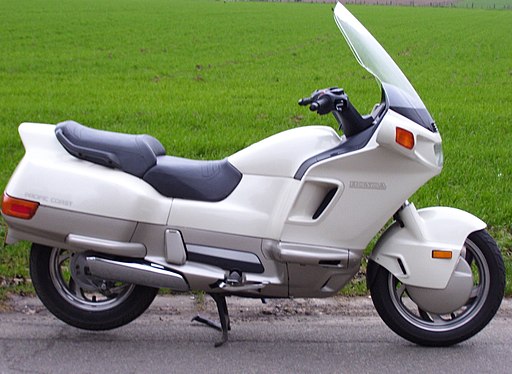
The Honda Pacific Coast, commonly known as the PC800, is a touring motorcycle produced between 1989 and 1998. Designed with practicality, comfort, and reliability in mind, it targeted commuters and long-distance riders who desired a low-maintenance machine with automotive-style features. Its fully integrated bodywork, unique storage system, and smooth V-twin engine made it stand out from conventional motorcycles of its era.
Engine and Performance
The Pacific Coast is powered by a 45-degree liquid-cooled V-twin engine derived from Honda’s Shadow series. Its performance characteristics prioritize efficiency and smooth delivery rather than aggressive acceleration.
Key engine specifications include:
-
Displacement: 797 cc
-
Configuration: 45-degree liquid-cooled SOHC V-twin
-
Bore x Stroke: 79.5 mm x 80.5 mm
-
Compression Ratio: 9.1:1
-
Valve Train: Single Overhead Camshaft, 3 valves per cylinder
-
Power Output: Approximately 57–60 horsepower at 6,500 rpm
-
Torque: Approximately 46–48 lb-ft at 5,000 rpm
-
Fuel Delivery: 2 constant-velocity carburetors
-
Ignition: Digital CDI (Capacitive Discharge Ignition)
The engine emphasizes quiet operation and low vibration, providing a relaxed riding experience suitable for daily commuting and touring.
Transmission and Drivetrain
The PC800 features a 5-speed manual transmission coupled with a low-maintenance shaft drive. The wide gear ratios support both urban riding and highway cruising. The shaft final drive reduces upkeep compared to traditional chain systems and contributes to the motorcycle’s durability.
Frame and Chassis
Honda engineered the Pacific Coast with rider comfort and stability in mind. The chassis construction accommodates fully enclosed bodywork without compromising handling.
Chassis characteristics:
-
Frame Type: Steel double-cradle
-
Wheelbase: Approximately 1,550 mm
-
Rake/Trail: Around 27.5 degrees / 113 mm
-
Dry Weight: Approximately 270–280 kg
-
Wet Weight: Around 290–300 kg depending on model year
Despite its touring-oriented weight, the PC800 maintains balanced handling and forgiving steering for riders of varying skill levels.
Suspension System
Comfortable suspension was a priority for long-distance reliability. Honda selected conventional yet adaptable components.
Front Suspension:
-
Telescopic fork
-
Travel: Approximately 140 mm
-
Non-adjustable
Rear Suspension: -
Single shock with Pro-Link linkage
-
Adjustable preload
-
Travel: Approximately 120 mm
This configuration smooths out uneven surfaces and maintains composure under load.
Braking Components
The PC800 is equipped with dependable stopping power tailored to its weight and touring nature.
Braking specifications:
-
Front Brake: Single hydraulic disc (296 mm) with dual-piston caliper
-
Rear Brake: Drum brake
Although it uses a drum rear system, braking remains stable and predictable for highway and urban riding.
Wheels and Tires
Designed for stability and comfort, the wheel sizes offer a broad contact patch.
Typical dimensions:
-
Front Wheel: 18-inch cast aluminum
-
Rear Wheel: 15-inch cast aluminum
-
Front Tire: 120/80-18
-
Rear Tire: 140/90-15
These tires provide good traction while supporting extended mileage.
Fuel System and Efficiency
Fuel capacity and consumption were critical for touring convenience.
-
Fuel Tank Capacity: Approximately 4.2 gallons (about 16 liters)
-
Fuel Economy: 40–50 mpg (US) depending on riding conditions
The combination of efficient carburetion and aerodynamic bodywork enhances overall range.
Bodywork and Aerodynamics
One of the PC800’s most defining attributes is its fully integrated bodywork. Made from molded plastic panels, it encloses the engine and frame, protecting components from weather and dirt. The fairing also channels air effectively for rider comfort and airflow management.
The seat height, windscreen, and side panels were designed for long-distance ergonomics and reduced rider fatigue.
Storage and Utility
The Pacific Coast features an automotive-style integrated trunk rather than traditional saddlebags. The rear section opens like a car trunk and provides ample sealed storage space.
Key storage details:
-
Capacity: Large enough for two full-face helmets
-
Hinged clamshell opening
-
Waterproof interior
-
Hidden handles and clean exterior appearance
This innovative storage solution reduces external luggage requirements and maintains the bike’s streamlined shape.
Electrical System and Instrumentation
Honda incorporated user-friendly and low-maintenance electronics.
-
Battery: 12V maintenance-free
-
Lighting: Halogen headlight, integrated turn signals, and tail/brake lights
-
Instrument Cluster: Speedometer, odometer, trip meter, temperature gauge, and indicator lights
The electrical system was designed for reliability and easy access for servicing.
Comfort and Ergonomics
Rider and passenger comfort are central to the design. The seat is wide and well-padded, with a relaxed upright riding posture. Footpegs and handlebars are positioned to prevent fatigue during extended trips. The fairing and windscreen protect the rider from wind and weather, making the PC800 suitable for year-round commuting.
Maintenance and Reliability
The Pacific Coast is known for its durability and minimal maintenance requirements. The shaft drive, enclosed bodywork, and dependable engine reduce servicing frequency. Valve adjustments are typically at wide intervals, and component longevity is high due to conservative engine tuning.
Model Evolution and Market Reception
The PC800 went through incremental updates across its production run. Early models (1989–1990) had subtle aesthetic differences from later versions (1994–1998), which included improved instrumentation and minor body refinements.
While not a high-volume seller, the bike developed a loyal following among riders who appreciated its practicality and understated appearance. It became particularly popular among commuters, touring riders, and those seeking a low-maintenance motorcycle.
Legacy and Influence
Though its styling was unconventional, the Honda Pacific Coast anticipated modern scooter-motorcycle hybrids and integrated touring designs. Features like its large trunk and fully faired bodywork foreshadowed future designs focused on utility and comfort. Many PC800 models remain on the road today due to build quality and ease of ownership.
Conclusion
The Honda Pacific Coast is a distinctive and innovative motorcycle that combined automotive-style practicality with touring comfort. Its enclosed bodywork, shaft drive, integrated trunk, and reliable V-twin engine created a riding experience unique in its era. While it did not dominate the market, its legacy endures among enthusiasts who value function, comfort, and low maintenance in a long-distance machine.
