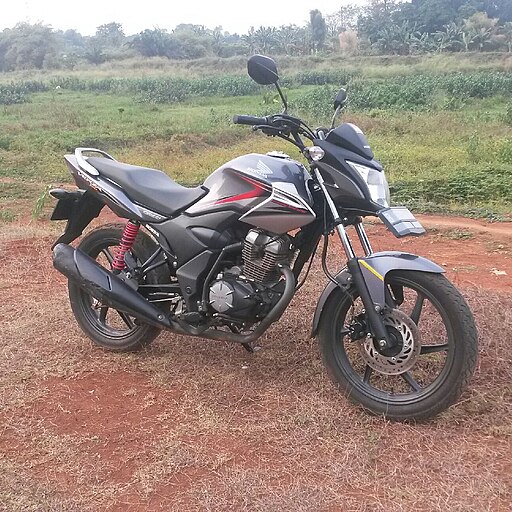
Honda Verza
The Honda Verza stands out in the fiercely competitive 150 cc commuter segment by offering a no-nonsense blend of reliability, simplicity, and frugal economy. Launched in 2013 and tailored for markets like Indonesia and the Philippines, the Verza’s minimalist design and rider-friendly ergonomics make it an ideal daily workhorse. In this deep-dive article, we’ll explore the Verza’s technical parameters—from its powerplant and chassis to its dimensions and wearable components—so you can understand exactly how Honda balances cost, comfort, and durability in this entry-level naked bike.
Development & Market Positioning
Origins of the Verza
Honda introduced the Verza to bridge the gap between its entry-level cubs and its sportier CB150 series. Instead of chasing peak horsepower or radical styling, the Verza focuses on everyday usability: an easy-to-ride chassis, straightforward controls, and a fuel-efficient engine that tolerates infrequent maintenance.
Target Audience
– Commuters who need a dependable partner for daily rides in heavy traffic. – First-time riders seeking a forgiving learning platform. – Fleet operators and courier services valuing low running costs and high uptime.
By stripping away nonessential gadgets and emphasizing ruggedness, Honda keeps both purchase price and ongoing expenses to a minimum.
Engine & Performance
Single-Cylinder Air-Cooled Heart
| Parameter | Specification |
|---|---|
| Engine type | Single-cylinder, 4-stroke, SOHC |
| Displacement | 149.16 cm³ |
| Bore × Stroke | 57.3 mm × 57.8 mm |
| Compression ratio | 9.5 : 1 |
| Fuel system | Keihin CV carburetor |
| Cooling | Air-cooled |
This simple layout generates smooth power delivery and lowers mechanical complexity, ensuring reliability even under tough conditions.
Power & Torque
| Spec | Value |
|---|---|
| Max. power | 13.1 PS (9.6 kW) @ 8 500 rpm |
| Max. torque | 13.4 Nm @ 6 500 rpm |
While these figures don’t set timing records, they provide enough grunt to tackle urban gridlock and occasional highway laps without strain.
Transmission & Drive
Five-Speed Gearbox
– Ratios: Optimized for city stop-and-go and relaxed cruise in fifth. – Shift mechanism: Precise, light-action H-pattern lever. – Clutch: Cable-actuated wet multi-plate for predictable engagement.
Final Drive
An O-ring chain links the output to the 17-tooth front and 41-tooth rear sprockets. This standard setup balances acceleration and wear resistance while keeping maintenance straightforward.
Chassis & Suspension
Semi-Double Cradle Frame
– Material: High-tensile steel – Wheelbase: 1 297 mm – Rake/Trail: 27.1° / 111 mm
This geometry yields stable tracking at speed and manageable handling when threading through congested streets.
Forks & Shock Absorbers
Front Suspension
– Type: Telescopic fork, 31 mm legs – Travel: 130 mm
Rear Suspension
– Type: Twin shock absorbers – Preload: Fixed spring rate, with a modest 110 mm travel
The set-up soaks up potholes and speed-bumps gracefully, though it errs on the firmer side to accommodate added luggage or passenger weight.
Brakes, Wheels & Tires
Braking System
| Position | Disc/Drum | Diameter | Caliper |
|---|---|---|---|
| Front | Disc | 256 mm | Single-piston |
| Rear | Drum | 130 mm | N/A |
A front hydraulic disc offers confident stopping power, while the rear drum simplifies maintenance and cuts costs.
Wheel & Tire Specification
– Front wheel: 17″ steel rim with 80/100-17 tire – Rear wheel: 17″ steel rim with 90/90-17 tire
These tire sizes strike a compromise between agile turn-in and stability under load, and the steel rims resist damage from rough roads.
Dimensions & Capacities
| Parameter | Value |
|---|---|
| Overall length | 2 042 mm |
| Overall width | 764 mm |
| Overall height | 1 059 mm |
| Seat height | 776 mm |
| Ground clearance | 167 mm |
| Wet weight | 131 kg |
| Fuel tank capacity | 12 L (incl. 2 L reserve) |
Compact footprints and a low 776 mm seat height make the Verza accessible to a wide range of rider heights, while its 12 L tank supports a real-world range of 250–300 km.
Fuel Economy & Emissions
The Verza achieves around 45–50 km/L in mixed riding, thanks to its modest power output and simple carburetion. This translates to daily running costs of just a few cents per kilometer, making it one of the thriftiest machines in its class.
Ergonomics & Rider Comfort
Riding Position
An upright rider triangle—upright handlebar, moderate peg-to-seat distance—ensures a natural posture that reduces fatigue. The wide saddle provides ample support for both short hops and extended rides.
Practical Features
– Under-seat storage: Small stowage for documents or a raincoat. – Simple switchgear: Intuitive light and indicator controls. – Passenger grab rail: Sturdy and ergonomically shaped.
Functionality takes precedence over flash, but every basic need is met.
Instrumentation & Electricals
Analog-Digital Gauge Cluster
– Analog tachometer surrounded by a digital readout. – Digital speedometer, odometer (trip 1 & 2). – Fuel gauge and tell-tales for turn indicators, high beam, oil.
Lighting
– Headlight: 35/35 W halogen – Taillight & indicators: Bulb-type for low replacement cost
A voltage regulator and reliable battery ensure consistent performance even with the engine idling in traffic.
Maintenance & Ownership
Service Intervals
– Engine oil & filter: Every 4 000 km – Valve clearance: Every 8 000 km – Air filter: Every 6 000 km (or sooner in dusty environments) – Chain adjustment & lubrication: Every 1 000 km – Brake inspection: Every major service
Ownership Advantages
– Spare parts availability: Honda’s widespread dealer network ensures easy access to consumables. – Simple mechanics: Fewer electronic bits reduce potential failure points. – Resale value: Honda’s reputation for bullet-proof engines maintains strong second-hand demand.
Conclusion
The Honda Verza may not flaunt high-tech gimmicks or record-shattering performance, but it excels at what it sets out to do: deliver trouble-free mobility, outstanding economy, and rock-solid reliability. Its unpretentious design, combined with Honda’s engineering pedigree, makes the Verza the go-to choice for budget-conscious riders, fleet operators, and beginners aiming for a trustworthy, low-stress introduction to motorcycling. With straightforward maintenance, widespread parts support, and an ergonomic layout that suits all-day riding, the CB150 Verza remains a benchmark in the commuter bike arena.
