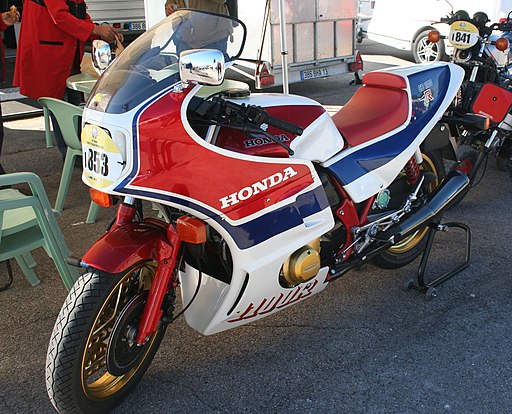
The Honda CB1100R stands as one of the most iconic production racers of the early 1980s. Designed during an era when homologation specials were the bridge between street legality and race-track domination, the CB1100R reflected Honda’s commitment to engineering excellence and precision performance. Produced between 1980 and 1983 in limited numbers, the CB1100R was developed primarily for endurance and production-based racing, serving as the road-going counterpart to Honda’s competition machines.
Development and Background
By the late 1970s, Honda’s success with the CB900F had set the stage for a more track-oriented machine. Many racing series at the time required manufacturers to use motorcycles that were derived from production models, prompting Honda to engineer a superbike that could compete without extensive modification. The result was the CB1100R, a purpose-built homologation model combining the robust foundation of the CB900F with significant performance and aerodynamic upgrades.
The motorcycle went through several iterations, identified as RSC01, RSC02, and RSC03, or more commonly as CB1100R A (1980), B (1981), C (1982), and D (1983). Each version reflected incremental refinements in chassis design, engine tuning, and bodywork, culminating in one of Honda’s finest sports motorcycles of its era.
Engine and Performance
At its core, the CB1100R utilized a 1,062 cc air-cooled inline-four engine, an evolution of the CB900F’s powerplant. It featured a DOHC (Double Overhead Camshaft) configuration with 16 valves (4 per cylinder), a hallmark of Honda’s engineering sophistication.
-
Engine Type: 4-stroke, inline-four, DOHC, air-cooled
-
Displacement: 1,062 cc
-
Bore x Stroke: 70.0 mm × 69.0 mm
-
Compression Ratio: 9.7:1
-
Fuel System: Four Keihin VB32A carburetors
-
Ignition: Electronic CDI system
-
Maximum Power Output: Approximately 115 hp (86 kW) at 9,000 rpm
-
Maximum Torque: Around 100 Nm (73.7 lb-ft) at 8,000 rpm
The engine was housed within a robust steel duplex cradle frame, providing excellent rigidity and balance. With its high-revving nature and smooth torque delivery, the CB1100R offered exhilarating acceleration and a top speed approaching 230 km/h (143 mph), remarkable for its time.
Transmission and Drivetrain
The power from the engine was transmitted through a 5-speed constant mesh gearbox, known for its crisp and precise shifting. The wet multi-plate clutch provided smooth engagement under heavy loads, ideal for endurance racing conditions. Power reached the rear wheel via a chain final drive, ensuring efficient transfer and minimal power loss.
-
Gearbox: 5-speed manual
-
Clutch: Wet, multi-plate
-
Final Drive: Chain
Chassis and Suspension
The CB1100R’s chassis was designed with racing geometry in mind. Its tubular steel frame offered superior stiffness compared to standard road bikes, while the suspension system was tuned for both agility and stability.
-
Frame Type: Tubular steel duplex cradle
-
Front Suspension: 38 mm air-assisted telescopic forks with adjustable preload
-
Rear Suspension: Dual Showa shock absorbers with adjustable preload and damping
-
Front Wheel Travel: 150 mm
-
Rear Wheel Travel: 100 mm
These suspension components provided excellent feedback at high speeds and under cornering loads, contributing to the CB1100R’s sharp handling characteristics.
Braking and Wheels
Stopping power was a crucial element for a machine of this capability. Honda equipped the CB1100R with triple hydraulic disc brakes—two at the front and one at the rear.
-
Front Brakes: Dual 276 mm discs with twin-piston calipers
-
Rear Brake: Single 276 mm disc
-
Front Tire: 110/90 V18
-
Rear Tire: 130/80 V18
The lightweight ComStar wheels, a blend of cast and spoke design, enhanced both rigidity and durability while reducing unsprung weight.
Aerodynamics and Bodywork
Distinctive among early superbikes, the CB1100R featured full aerodynamic bodywork designed for endurance racing. Its fiberglass fairing, integrated fuel tank, and rear cowl not only gave it a sleek appearance but also improved high-speed stability and rider protection.
The 1982 and 1983 models (C and D versions) introduced a redesigned fairing with a taller windscreen and improved ergonomics for long-distance racing comfort. The fuel tank capacity of 22 liters provided extended range, particularly useful in endurance competition.
Dimensions and Weight
-
Overall Length: 2,230 mm
-
Overall Width: 710 mm
-
Overall Height: 1,195 mm
-
Wheelbase: 1,490 mm
-
Seat Height: 795 mm
-
Dry Weight: Approximately 235 kg
Despite its relatively heavy frame by modern standards, the CB1100R maintained excellent balance due to its low center of gravity and aerodynamic layout.
Electrical System and Instrumentation
The CB1100R was equipped with a 12V electrical system, including a robust alternator to support lighting and ignition under racing conditions. The instrument cluster featured a tachometer, speedometer, and oil temperature gauge, along with an array of indicator lights. These analog instruments reflected the precision-focused nature of the machine.
Variants and Production Numbers
Each model year brought subtle yet important refinements:
-
CB1100R A (1980): Limited to roughly 1,000 units, with distinctive red and blue graphics and a half fairing.
-
CB1100R B (1981): Improved aerodynamics, revised suspension, and full fairing.
-
CB1100R C (1982): Major redesign with a lighter fairing, improved ergonomics, and updated livery.
-
CB1100R D (1983): Final version with slight cosmetic updates and production believed to be under 1,500 units.
Total production across all variants is estimated at fewer than 5,000 units, adding to the motorcycle’s collectible status.
Legacy and Impact
The CB1100R was not just a road machine; it was a statement of Honda’s engineering dominance in early 1980s superbike racing. It paved the way for later performance legends like the VF750R (RC30) and the CBR series, influencing the direction of Honda’s sportbike design philosophy.
Today, the CB1100R remains a sought-after collector’s item, admired for its mechanical purity, distinctive design, and historical significance in the evolution of high-performance motorcycles.
Conclusion
The Honda CB1100R exemplifies the golden era of homologation racing motorcycles—a period when manufacturers crafted machines that could conquer both public roads and racetracks. With its advanced engine design, aerodynamic efficiency, and precision handling, the CB1100R not only embodied Honda’s racing spirit but also set new standards for performance and reliability in the early 1980s superbike segment.
