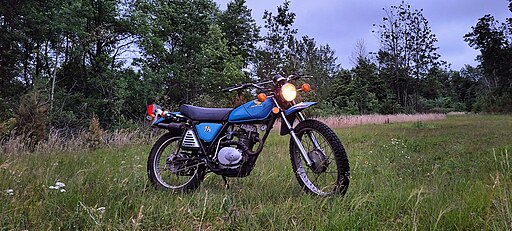
Honda XL175: An Enduring Dual-Sport Icon
The Honda XL175 stands as a testament to a time when motorcycles balanced on-road civility with off-road grit. Born in the mid 1970s, it carved out a niche among riders seeking reliability, simplicity, and enough versatility to tackle both city streets and forest trails. Even today this lightweight dual-sport remains a favorite for budget-minded enthusiasts, collectors, and riders curious about a pure, analog experience.
Historical Context and Design Philosophy
Emerging at a moment when Japanese manufacturers were pushing the boundaries of small-displacement performance, the XL175 carried forward Honda’s proven single-cylinder four-stroke architecture. Instead of chasing outright horsepower, engineers prioritized manageable torque, low maintenance, and durability. The styling fused classic scrambler cues — a high-mounted front fender, minimalist rear section, modest luggage rack — with functional off-road elements like knobby tires and a long-travel suspension.
Engine and Performance
Powerplant Architecture
At the heart of the XL175 lies an air-cooled single-cylinder four-stroke engine. Displacing 174 cubic centimeters, it employs a five-speed transmission that delivers a linear, tractable powerband ideal for both trail climbing and steady highway cruising.
Key Technical Data
| Specification | Details |
|---|---|
| Engine Type | Air-cooled single-cylinder SOHC |
| Bore × Stroke | 63 mm × 55.6 mm |
| Displacement | 174 cc |
| Compression Ratio | 9.0 : 1 |
| Carburetor | 22 mm Keihin constant-velocity |
| Maximum Power | Approximately 15 hp @ 8,500 rpm |
| Maximum Torque | Around 12 Nm @ 6,000 rpm |
| Ignition | Points-type or electronic CDI (varies by year) |
| Starting System | Kick starter; optional electric start on later models |
Performance Characteristics
The XL175’s modest output belies its spirited throttle response. Peak torque arrives in the mid-range, making it forgiving for newcomers yet engaging when wrung out on twisty backroads. Fuel economy hovers around 70 miles per gallon, granting a touring range of over 200 miles on its 2.4-gallon tank.
Chassis, Suspension, and Handling
Frame and Geometry
Built around a tubular steel cradle frame, the XL175 offers a stable platform that balances lightness with structural rigidity. A narrow seat and streamlined bodywork encourage nimble maneuvering through tight turns or technical trail sections.
Front Suspension
Telescopic forks with 6.7 inches of travel absorb bumps and roots. While not adjustable in most years, the damping feels well-matched to the XL175’s 270-pound wet weight.
Rear Suspension
Dual shock absorbers with preload adjustment deliver 5.9 inches of travel. By fine-tuning preload, riders can adapt sag to solo or two-up riding conditions.
Wheels, Tires, and Braking
Spoked 21-inch front and 18-inch rear wheels support a variety of dual-sport tire sizes. Drum brakes front and rear provide predictable stopping power and simple maintenance. For those seeking an upgrade, bolt-on front discs from later Honda models are a popular aftermarket modification.
Electrical System and Lighting
Early XL175s use a 6-volt system with a points ignition and basic generator lighting. Models from 1979 onward switched to a 12-volt CDI system, improving spark stability and allowing for brighter headlamps and taillights. The electrical harness remains straightforward, simplifying troubleshooting and custom wiring projects.
Dimensions, Weight, and Ergonomics
| Dimension | Specification |
|---|---|
| Overall Length | 79.1 inches |
| Overall Width | 30.3 inches |
| Seat Height | 32.5 inches |
| Wheelbase | 50.6 inches |
| Ground Clearance | 10.6 inches |
| Wet Weight | 270 pounds |
| Fuel Capacity | 2.4 gallons |
The upright seating position, flat handlebar, and firm but forgiving seat invite long days in the saddle. Rider triangle suits a broad range of heights, while the slim tank and bodywork make footing easier on technical terrain.
Real-World Applications and Rider Appeal
The XL175 excels as a learner machine, trail commuter, and classic weekend warrior. Its low center of gravity and manageable power instill confidence in new riders. Off-road it handles fire roads and single-track paths with grace. On pavement it cruises at 55 to 60 miles per hour without undue vibration or overheating. Collectors prize well-preserved examples for their combination of nostalgia and genuine usability.
Maintenance, Reliability, and Common Upgrades
Routine service on the XL175 is approachable. Valve clearances, carburetor synchronization, chain adjustment and oil changes are the bulk of required upkeep. The simplicity of the air-cooled four-stroke means there is no radiator to leak or liquid to freeze. Common owner upgrades include:
• Disc brake conversion kits for enhanced stopping • Aftermarket exhaust systems for weight reduction and a mild performance bump • Modern LED lighting harnesses to improve nighttime visibility • High-compression piston kits that raise output by a couple horses without sacrificing reliability
Restoration Tips and Parts Availability
Thanks to Honda’s vast spare parts network and enthusiastic vintage dual-sport community, replacement components remain accessible. When restoring, seek out period correct paint codes, graphics kits, and original tooling manuals. Online forums and local meet-ups often share detailed teardown guides and troubleshooting advice.
Aftermarket Support and Community
An active community of XL175 owners shares knowledge across social media groups, dedicated web forums, and regional vintage motorcycle clubs. Annual trail rides and swap meets allow riders to swap parts, gather oral history, and compare restoration techniques. Fuel tank decals, logo plates, and reproduction side panels help maintain originality while keeping cost reasonable.
Conclusion
Few motorcycles capture the spirit of dual-sport riding in such an honest, unpretentious way as the Honda XL175. Its moderate power, user-friendly maintenance, and enduring charm ensure that it remains a living legend rather than merely a museum piece. Whether you seek a reliable beginner bike, a lightweight trail explorer, or a practical classic worthy of weekend polish, the XL175 delivers an experience that still thrills decades after its introduction.
