Hyundai Mighty: A Comprehensive Guide to the Versatile Light-Duty Truck
The History and Development of the Hyundai Mighty
The story of the Hyundai Mighty is closely connected with Hyundai Motor Company’s expansion into commercial vehicles. Hyundai recognized that growing economies required trucks that could handle frequent transportation tasks without the complexity and expense associated with larger vehicles. The company developed the Mighty as a light-duty truck platform aimed at providing professional users with a compact but capable working machine. Over the years, the model has undergone several generations of improvements, incorporating better engines, stronger chassis construction, improved driver comfort, and enhanced safety technologies. While the fundamental purpose of the truck has remained consistent, each generation has reflected changes in customer expectations and advancements in automotive engineering.
Early versions of the Hyundai Mighty focused heavily on mechanical simplicity and reliability. These characteristics were essential because commercial trucks often operate under difficult conditions, including long working hours, heavy loads, frequent stopping and starting, and challenging road environments. A truck used for business must minimize downtime because every hour spent in repair can directly affect profitability. Hyundai’s approach was therefore centered around creating a vehicle that could deliver consistent performance over many years. This philosophy helped establish the Mighty as a trusted option among small businesses, delivery operators, and fleet owners.
Modern versions of the Hyundai Mighty have expanded beyond basic utility. Today’s models combine traditional truck strengths with features commonly expected in passenger vehicles, including improved cabin ergonomics, electronic assistance systems, fuel-saving technologies, and more refined interiors. The result is a commercial vehicle that recognizes the importance of driver comfort and operational efficiency. Since many professional drivers spend entire working days inside their trucks, improvements in seating, visibility, controls, and noise reduction can significantly influence productivity and job satisfaction.
Design Philosophy and Exterior Characteristics
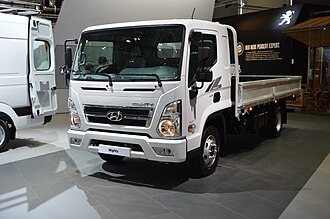
The Hyundai Mighty’s exterior design reflects its role as a practical commercial tool. Every element of the truck is created with functionality in mind, from the upright cabin shape to the easily accessible cargo area. The compact cab-over-engine layout used by many Mighty variants allows Hyundai to maximize cargo capacity while keeping the overall vehicle length relatively short. This design is particularly valuable in urban environments where narrow streets, crowded loading areas, and limited parking spaces create challenges for larger trucks.
The front design of the Mighty has evolved significantly over different generations. Earlier versions emphasized simplicity and easy maintenance, while newer models feature a more modern appearance with aerodynamic improvements and a stronger visual identity. The bold front grille, carefully shaped lighting units, and improved body panels provide the truck with a professional appearance while also contributing to improved airflow management. Although appearance is not usually the main purchasing factor for commercial vehicles, a modern design can help businesses project a more professional image when operating in public spaces.
Another important aspect of the Hyundai Mighty design is versatility. The truck is available in configurations suitable for different industries, including cargo transport, refrigerated delivery, service applications, agricultural use, and specialized commercial bodies. Owners can select different wheelbases, cargo body options, and equipment packages depending on their specific needs. This flexibility is one of the reasons the Mighty remains popular among businesses that require vehicles capable of adapting to different tasks throughout their working lives.
Engine Performance and Driving Experience
The performance characteristics of the Hyundai Mighty are designed around efficiency and dependable operation rather than extreme power. Light-duty commercial trucks rarely require sports-car levels of acceleration; instead, they need engines that provide strong low-speed pulling ability, economical fuel consumption, and reliable operation over long distances. Hyundai has equipped different Mighty generations with diesel engines engineered to deliver practical torque characteristics suitable for carrying cargo and navigating demanding routes.
Diesel power remains an important feature in this category because commercial users often prioritize operating costs. Diesel engines generally provide strong torque at lower engine speeds, making them suitable for vehicles that regularly carry significant loads. The Hyundai Mighty’s engine options have been developed to balance performance with emissions compliance, helping operators meet environmental regulations while maintaining productivity. Depending on the market and production year, available engines and specifications can vary, but the overall goal remains consistent: dependable power delivery with efficient fuel usage.
Driving the Hyundai Mighty is different from operating a passenger car because the vehicle is built around commercial priorities. However, modern versions have become increasingly easy to drive thanks to improved visibility, lighter steering systems, optimized transmission choices, and better cabin layouts. The elevated driving position provides excellent awareness of surrounding traffic, which is especially useful in busy urban areas. For professional drivers who spend many hours behind the wheel, predictable handling and simple controls are valuable advantages.
Cabin Comfort and Interior Features
Commercial truck cabins have traditionally focused on durability rather than comfort, but expectations have changed considerably. The Hyundai Mighty reflects this shift by offering a cabin environment designed to support drivers during extended working periods. The interior layout places important controls within easy reach, reduces unnecessary complexity, and provides practical storage spaces for documents, tools, and personal items.
Visibility is one of the strongest aspects of the Mighty’s cabin design. Large windows, strategically positioned mirrors, and the elevated seating position help drivers monitor the road and surrounding areas. This is particularly important during delivery operations where frequent maneuvering is required. A truck that is easy to judge in tight spaces can reduce stress for drivers and decrease the likelihood of minor accidents during daily operations.
Depending on specification and market availability, modern Hyundai Mighty models may include features such as air conditioning, audio systems, improved seats, digital displays, and advanced safety equipment. These additions demonstrate how commercial vehicles have evolved from purely functional machines into workplaces on wheels. Better working conditions can contribute to improved driver performance, reduced fatigue, and greater retention of experienced operators.
Practical Applications of the Hyundai Mighty
The Hyundai Mighty is valued because it can serve many different industries. One of its most common applications is urban delivery. Retailers, wholesalers, and logistics companies often require vehicles that can transport moderate amounts of cargo while navigating city environments efficiently. A large truck may provide additional capacity, but it can also create challenges with fuel consumption, maneuverability, and access restrictions. The Mighty provides a practical alternative by offering sufficient cargo capability without unnecessary size.
Construction companies also use light-duty trucks like the Hyundai Mighty for transporting tools, materials, and equipment between job sites. Its strong chassis and adaptable body configurations allow it to support various construction-related tasks. Agricultural businesses may use similar versions for transporting products, supplies, and machinery components. Service companies, maintenance providers, and specialized operators can also customize the truck with equipment designed for their particular operations.
The ability to modify the vehicle is a major advantage. Businesses can install different cargo boxes, platforms, refrigerated compartments, utility bodies, and other specialized equipment. This transforms the Mighty from a simple truck into a flexible commercial platform capable of supporting a wide range of professional activities.
Reliability, Maintenance, and Ownership Costs
For commercial vehicle owners, reliability is often more important than impressive specifications. A truck that spends excessive time in workshops can become a financial burden regardless of its capabilities. The Hyundai Mighty has been developed with long-term usability in mind, featuring durable mechanical components and a structure designed for regular commercial operation. Proper maintenance remains essential, but the model’s reputation has been built around providing dependable service throughout its working life.
Maintenance requirements depend on the exact engine, model year, operating conditions, and regional service practices. However, routine servicing typically includes oil changes, inspections of braking systems, checks of suspension components, and attention to wear items affected by heavy use. Fleet operators often appreciate vehicles that have predictable maintenance schedules because they can better manage operating expenses and reduce unexpected interruptions.
Ownership costs include more than purchase price. Fuel efficiency, availability of spare parts, repair accessibility, resale value, and durability all influence the total cost of operating a commercial truck. The Hyundai Mighty’s popularity in many regions contributes to strong support networks, making it easier for businesses to maintain their vehicles and keep them productive.
Safety Features and Modern Improvements
Safety has become an increasingly important consideration in commercial transportation. Truck drivers operate in complex environments where they interact with pedestrians, passenger vehicles, loading areas, and changing road conditions. Hyundai has incorporated various improvements into newer Mighty models to enhance driver confidence and vehicle control. Depending on configuration, available safety equipment may include stronger cabin structures, improved braking systems, stability technologies, and driver assistance features.
The importance of safety extends beyond protecting the driver. Commercial vehicles are part of wider transportation networks, and safer trucks contribute to safer roads overall. Features that improve visibility, braking performance, and vehicle stability can help reduce risks during daily operations. For businesses, investing in safer vehicles can also reduce downtime associated with accidents and improve operational reliability.
Why the Hyundai Mighty Remains Popular
The continuing popularity of the Hyundai Mighty can be explained by its balanced approach. It does not attempt to compete with every type of truck; instead, it focuses on doing its intended job effectively. Businesses need vehicles that are affordable to operate, easy to maintain, capable of handling daily workloads, and adaptable to different applications. The Mighty succeeds because it addresses these practical requirements.
Another reason for its success is Hyundai’s understanding of commercial customers. A truck is not simply a product; it is an essential business asset. When a delivery company, contractor, or independent operator purchases a vehicle, they are investing in their ability to generate income. The Mighty’s combination of durability, efficiency, and flexibility makes it a valuable partner for many professional users.
Technical Specifications Summary
The exact specifications of the Hyundai Mighty vary depending on generation, market, engine option, and body configuration. The following table provides a general overview of commonly associated specifications for modern Hyundai Mighty light-duty truck models.
| Specification | Hyundai Mighty (Typical Modern Configuration) |
|---|---|
| Vehicle Type | Light-duty commercial truck |
| Primary Uses | Urban delivery, cargo transport, construction support, specialized commercial applications |
| Engine Type | Turbocharged diesel engine options |
| Fuel System | Modern electronically controlled diesel injection system |
| Transmission | Manual and automated transmission options depending on market |
| Drive Layout | Rear-wheel drive commercial configuration |
| Cab Style | Cab-over-engine design |
| Seating Capacity | Typically designed for driver and passenger occupants |
| Body Options | Flatbed, cargo box, refrigerated body, utility body, and customized commercial bodies |
| Suspension | Heavy-duty suspension system designed for commercial loads |
| Braking System | Commercial braking system with modern safety enhancements depending on version |
| Cab Features | Practical storage, improved ergonomics, optional comfort and convenience equipment |
| Design Focus | Durability, efficiency, maneuverability, and low operating costs |
“`
