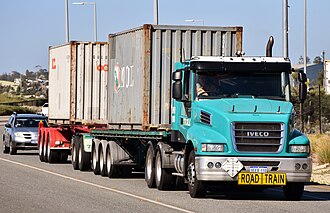
Iveco PowerStar: The Legendary Heavy-Duty Truck Built for Australian Roads and Global Transport Challenges
The Iveco PowerStar is one of the most distinctive heavy-duty trucks in the history of commercial transportation, a vehicle that became closely associated with the demanding conditions of Australian trucking while also representing Iveco’s global expertise in heavy vehicle engineering. Designed for long-distance freight, heavy hauling, road train operations, and demanding industrial applications, the PowerStar earned a reputation as a powerful and dependable machine capable of handling some of the toughest transport environments in the world. Its combination of advanced engineering, driver-focused design, impressive performance, and long-distance capability made it a favorite among professional operators who required a truck that could perform consistently over enormous distances.
Unlike many heavy-duty trucks developed primarily for European markets, the Iveco PowerStar was created with a strong understanding of Australia’s unique transportation challenges. Australian freight routes often involve extreme distances, high temperatures, remote locations, heavy payloads, and demanding road conditions. Trucks operating in this environment must be more than simply powerful; they must be durable, comfortable for drivers spending long hours behind the wheel, easy to maintain, and efficient enough to remain profitable over hundreds of thousands of kilometers.
The PowerStar became a symbol of strength and endurance because it successfully combined European engineering with local market requirements. Over its production history, it evolved through several generations, receiving improvements in engines, transmissions, cabin design, safety systems, emissions technology, and overall refinement. Today, the Iveco PowerStar remains an important name in heavy-duty trucking history and continues to represent the qualities that professional drivers and fleet operators value most.
The History and Development of the Iveco PowerStar
The Iveco PowerStar was introduced in the late 1990s as Iveco’s flagship heavy-duty truck for the Australian market. At the time, Australia had a highly specialized trucking industry with unique requirements that differed significantly from many European transportation environments. Operators needed trucks capable of handling long-distance freight routes, extreme weather conditions, and heavy combinations such as multi-trailer road trains.
Iveco developed the PowerStar as a premium heavy-duty vehicle designed specifically for these challenges. Rather than simply adapting an existing European truck, the company created a model that reflected the expectations of Australian operators. The truck featured a conventional bonneted design, which was highly valued in Australia because it provided improved engine access, additional cabin space, and a perception of greater durability in severe operating conditions.
Early PowerStar models quickly gained attention for their strong performance and distinctive appearance. The long bonnet, large cabin, and aggressive stance gave the truck a commanding presence on highways and remote freight routes. More importantly, the vehicle demonstrated the mechanical strength needed for heavy-duty work, helping it establish credibility among professional drivers.
Over the years, Iveco continued improving the PowerStar platform. Later versions incorporated more advanced engines, electronic systems, improved aerodynamics, upgraded interiors, and better fuel efficiency. The model remained focused on heavy-duty applications while adapting to changes in emissions regulations and industry expectations.
Design Philosophy: A Truck Created for Extreme Conditions
The Iveco PowerStar was designed around the principle that a heavy-duty truck must be a reliable workplace as much as it is a transportation machine. Professional drivers often spend days or weeks on the road, and fleet operators depend on vehicles that can deliver consistent performance under difficult circumstances.
The PowerStar’s conventional cab design was one of its most defining characteristics. While many modern trucks use cab-over-engine layouts to maximize space efficiency, the bonneted configuration offers several advantages for long-distance heavy hauling. The engine sits ahead of the driver, providing additional protection, easier maintenance access, and a quieter cabin environment.
This design approach was especially appropriate for Australia, where trucks often travel through remote regions with limited access to repair facilities. Easy engine access can significantly reduce maintenance time, while strong construction helps vehicles survive challenging conditions.
The Importance of Conventional Trucks in Heavy Transport
Conventional trucks remain popular in many heavy-duty markets because they provide advantages that are particularly valuable in long-haul operations. A longer wheelbase can improve ride comfort, while the extended front structure provides additional space for cooling systems and engine components.
In regions where trucks regularly carry maximum loads over thousands of kilometers, durability and driver confidence are critical. The PowerStar was developed with these priorities in mind, offering a traditional heavy truck design combined with modern engineering.
Exterior Styling and Functional Engineering
The Iveco PowerStar’s exterior design is instantly recognizable. Its large bonnet, bold grille, and muscular proportions give it a distinctive appearance that separates it from many European-style trucks. However, the styling was not merely decorative; many design elements served practical purposes.
The front-end design allowed engineers to create an effective cooling system capable of supporting powerful engines operating under heavy loads. Large airflow openings and robust construction helped the truck manage demanding conditions, particularly during high-temperature operation and long uphill climbs.
Visibility was another important consideration. Despite its larger front structure, the PowerStar was designed to provide drivers with good awareness of the surrounding environment. Large mirrors, carefully positioned windows, and a commanding seating position helped operators manage the vehicle safely.
The truck’s exterior also supported various body and trailer configurations. Whether used as a prime mover, heavy haulage vehicle, or specialized transport platform, the PowerStar provided the strength and flexibility required by professional operators.
Engine Performance and Powertrain Technology
The engine is central to the identity of any heavy-duty truck, and the Iveco PowerStar was developed with powerful diesel engines designed for demanding commercial applications. Heavy hauling requires substantial torque, reliability, and efficiency, and the PowerStar’s engines were engineered to provide these characteristics.
Depending on generation and specification, PowerStar models were equipped with Iveco and related diesel powertrains offering a wide range of performance levels. These engines were designed to deliver strong pulling power at low engine speeds, allowing the truck to move heavy loads efficiently while maintaining durability.
Torque is particularly important in heavy transport because it determines how effectively a truck can accelerate, climb hills, and maintain speed under load. The PowerStar’s engines were developed with commercial priorities in mind, focusing on consistent performance rather than short bursts of power.
Fuel Efficiency and Long-Distance Operation
For trucking companies, fuel consumption is one of the largest operating expenses. A heavy-duty truck may travel hundreds of thousands of kilometers during its working life, meaning even small efficiency improvements can create substantial savings.
Iveco incorporated improved combustion technology, electronic engine management, aerodynamic refinements, and optimized transmissions into later PowerStar models to improve fuel economy. These developments helped operators reduce costs while maintaining the performance expected from a heavy-duty vehicle.
Transmission Systems and Heavy-Haul Capability
The transmission system plays a vital role in converting engine power into usable performance. Heavy-duty trucks require gearboxes capable of handling enormous torque levels while providing smooth operation during long-distance travel.
Iveco PowerStar models were available with manual and automated transmission options depending on generation and market requirements. Manual transmissions remained popular among many traditional operators because of their direct control and proven durability, while automated systems offered advantages in driver comfort and fuel efficiency.
A well-designed transmission helps keep the engine operating within its most efficient range. This improves fuel economy, reduces mechanical stress, and contributes to longer component life. For a truck designed to travel extreme distances, these advantages are essential.
Cabin Comfort and the Professional Driver Experience
One of the strongest aspects of the Iveco PowerStar is its focus on driver comfort. Long-distance trucking can be physically demanding, and manufacturers increasingly recognize that the driver’s environment directly affects safety and productivity.
The PowerStar cabin was designed as a practical living and working space. Depending on configuration, it offered spacious interiors, comfortable seating, storage solutions, climate control systems, and sleeper arrangements suitable for long-haul operations.
The bonneted design provided additional cabin depth, allowing engineers to create a more spacious environment. Drivers appreciated the feeling of space, improved visibility, and reduced noise levels compared with some conventional heavy trucks.
Sleeper Cab Importance in Australian Trucking
Australian trucking often involves extremely long routes where drivers may spend extended periods away from home. Sleeper cabins are therefore not simply convenience features; they are essential working environments.
The PowerStar was designed to support this lifestyle by providing practical sleeping areas, storage, and amenities that help drivers remain comfortable during extended journeys. A well-designed cabin can reduce fatigue and contribute to safer operation.
The Iveco PowerStar in Australian Road Transport
The Australian trucking industry has unique characteristics that make it one of the most demanding heavy vehicle markets in the world. Trucks frequently operate across vast distances, through isolated areas, and under challenging weather conditions.
The Iveco PowerStar became well suited to this environment because it combined European engineering expertise with a design philosophy that matched local expectations. Operators valued its strength, comfort, and ability to handle heavy-duty applications.
The truck became particularly associated with line-haul operations, where reliability and driver comfort are essential. Many professional drivers developed strong loyalty to the model because of its distinctive character and dependable performance.
Applications of the Iveco PowerStar
Although strongly associated with Australian road transport, the Iveco PowerStar was suitable for many heavy-duty applications. Its robust construction and powerful drivetrain allowed it to serve multiple industries.
Long-Haul Freight Transport
The primary role of the PowerStar was long-distance freight hauling. Logistics companies used the truck to move goods between major cities, ports, warehouses, and industrial centers. Its combination of power and comfort made it suitable for extended highway operations.
Heavy Haulage and Road Trains
The PowerStar was also capable of supporting heavy haulage applications, including configurations involving multiple trailers. These operations require exceptional mechanical strength because vehicles must manage extreme weights over long distances.
Specialized Industrial Transport
The truck platform could also support specialized bodies and equipment used in mining, construction, and industrial transport. Its strong chassis and powerful engines made it adaptable to demanding professional roles.
Safety Features and Modern Development
Safety has become increasingly important in heavy-duty vehicle development. Trucks operate alongside smaller vehicles and must provide protection for drivers while maintaining control under challenging conditions.
Modern versions of the PowerStar incorporated improved braking systems, electronic controls, stability technologies, and enhanced visibility features. These developments helped drivers manage large vehicles more safely.
The conventional cab structure also provided advantages in terms of occupant protection and vehicle durability. Engineers continued improving materials and systems to meet changing safety expectations.
Maintenance, Reliability, and Ownership Considerations
Heavy-duty trucks are valuable business assets, and reliability is one of the most important factors affecting ownership costs. A truck that spends excessive time being repaired can create major financial losses for operators.
The Iveco PowerStar developed a reputation for durability because it was designed for demanding commercial work. Strong components, powerful engines, and practical service access contributed to its long-term appeal.
Like any heavy vehicle, proper maintenance is essential. Regular servicing, inspections, and preventative repairs help ensure continued performance and reduce unexpected downtime.
The Legacy of the Iveco PowerStar
The Iveco PowerStar occupies an important place in trucking history because it successfully combined European engineering with the unique demands of Australian heavy transport. It represented a time when truck manufacturers focused heavily on creating durable machines capable of surviving some of the world’s toughest operating conditions.
The model’s popularity among drivers and operators came from more than specifications alone. It developed a reputation based on real experiences: long journeys completed, heavy loads transported, and businesses supported through reliable performance.
Even as the trucking industry moves toward cleaner technologies and more advanced systems, the qualities represented by the PowerStar remain important. Strength, dependability, and driver-focused design continue to define successful heavy-duty vehicles.
Technical Specifications Summary
Specifications vary depending on production year, market, engine selection, and configuration. The following table provides a general overview of typical Iveco PowerStar characteristics.
| Specification | Iveco PowerStar (Typical Configuration) |
|---|---|
| Vehicle Type | Heavy-duty bonneted commercial truck / prime mover |
| Production Period | Late 1990s onward |
| Main Applications | Long-haul freight, road trains, heavy haulage, industrial transport |
| Cab Design | Conventional bonneted cab design |
| Engine Type | Turbocharged diesel engines for heavy-duty operation |
| Fuel System | Electronic diesel injection depending on generation |
| Transmission | Heavy-duty manual or automated transmission options |
| Drive Configuration | Multiple rear-wheel-drive axle configurations |
| Body Options | Prime mover, freight tractor, heavy haulage, specialized bodies |
| Chassis Design | Heavy-duty ladder frame construction |
| Suspension | Heavy-duty suspension systems for high payload operation |
| Cab Features | Spacious interior, sleeper options, driver-focused equipment |
| Key Strengths | Power, durability, long-distance comfort, heavy-haul capability |
.jpg)