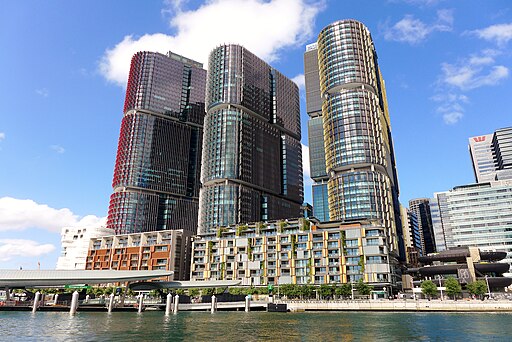
International Towers, Sydney
International Towers, Sydney: A Technical Overview
The International Towers in Sydney are a trio of skyscrapers located in Barangaroo, a waterfront redevelopment area. These towers are known for their innovative architecture, sustainability features, and cutting-edge technology. This article presents a comprehensive technical overview, detailing their design, materials, energy efficiency, and technological advancements.
Structural Design
Tower Dimensions
The three towers differ in height and design:
- Tower One: ~217 meters, 49 floors
- Tower Two: ~178 meters, 43 floors
- Tower Three: ~168 meters, 39 floors
Core Structural Elements
Each tower is built with reinforced concrete cores and steel frameworks, ensuring structural resilience against wind loads, seismic forces, and dynamic urban conditions. The buildings incorporate post-tensioned slabs for optimized load distribution.
Materials Used
Facade Materials
- Glass: Low-emissivity, high-performance glazing
- Cladding: Aluminum composite panels and precast concrete elements
- Steel: High-strength structural steel for key support components
Interior Finishes
- Flooring: Premium engineered timber and polished stone surfaces
- Walls: Acoustic-treated partitions for enhanced sound insulation
- Ceilings: Smart integrated LED lighting systems
Sustainability and Energy Efficiency
Environmental Certifications
The towers achieve top-tier environmental ratings:
- Green Star Rating: 6 Star (Australia’s highest sustainability standard)
- WELL Certification: Focuses on health and well-being of occupants
Sustainable Features
- Solar Energy: Rooftop photovoltaic systems generate renewable power
- Rainwater Management: Advanced collection and filtration systems
- Smart HVAC: Intelligent climate control optimizing energy use
Technological Features
Smart Building Integration
- Automated Security: Biometric access control and real-time monitoring
- IoT Systems: Smart sensors managing lighting, climate, and occupancy
- Automated Waste Sorting: Reducing environmental impact
Connectivity Infrastructure
The towers feature advanced telecommunications systems:
- 5G-ready network: High-speed connectivity throughout all floors
- Fiber-optic cabling: Ultra-fast broadband for commercial tenants
- Intelligent parking: Automated vehicle recognition and allocation
Conclusion
The International Towers in Sydney set a benchmark for modern urban development, combining architectural excellence, environmental sustainability, and advanced technological integration. With future-ready infrastructure and premium facilities, they remain at the forefront of innovative city living.
.jpg)