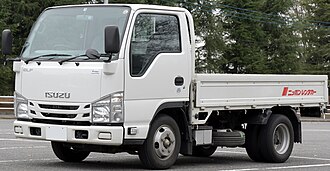
Isuzu Elf: The Legendary Light-Duty Truck That Became a Global Commercial Icon
Since its introduction in the 1950s, the Isuzu Elf has evolved through numerous generations while maintaining the core principles that made the original model successful. The truck was developed during a period when growing economies required efficient transportation solutions that could operate in crowded cities while still carrying useful amounts of cargo. Isuzu recognized the need for a compact commercial vehicle that could provide professional users with the capability of a larger truck while remaining easy to drive, economical to maintain, and suitable for narrow roads. This philosophy helped the Elf become a dominant name in the light-duty truck segment.
Today, the Isuzu Elf continues to represent the company’s expertise in commercial vehicle engineering. Modern versions combine traditional strengths such as robust construction and fuel efficiency with advanced technologies including improved safety systems, cleaner engines, automated transmissions, and enhanced driver comfort. Although transportation requirements have changed dramatically over several decades, the fundamental mission of the Elf remains unchanged: providing businesses with a reliable tool that helps them transport goods efficiently and profitably.
The History and Development of the Isuzu Elf
The history of the Isuzu Elf began in 1959 when Isuzu Motors introduced the vehicle as a compact commercial truck designed for Japan’s rapidly developing economy. At the time, businesses needed smaller trucks that could navigate busy urban areas while offering greater carrying capacity than passenger-based utility vehicles. The first Elf was created to answer this demand by combining truck-like durability with a compact footprint.
Early versions of the Elf established the design principles that would define the model for decades. The truck featured a cab-over-engine layout, which placed the driver above the front axle and allowed engineers to maximize cargo space without increasing overall vehicle length. This configuration became especially valuable in cities where narrow streets and limited parking areas created challenges for larger vehicles.
As the Japanese economy expanded, demand for efficient commercial transportation increased. The Isuzu Elf benefited from this growth and gradually became one of the country’s most popular light-duty trucks. Over successive generations, Isuzu introduced improvements in engine performance, chassis strength, driver comfort, fuel efficiency, and safety technology. The model eventually expanded beyond Japan and became available in numerous international markets under different names and configurations.
The global success of the Elf demonstrates the importance of understanding real-world commercial needs. Instead of focusing only on specifications, Isuzu designed the truck around the daily challenges faced by business owners and professional drivers. The result was a vehicle capable of supporting countless industries, from food distribution and retail deliveries to municipal services and industrial transportation.
Design Philosophy and Cab-Over-Engine Layout
One of the defining characteristics of the Isuzu Elf is its cab-over-engine design. Unlike conventional trucks with a long hood ahead of the cabin, cab-over-engine vehicles position the cabin directly above the engine compartment. This approach provides several advantages, especially for light-duty commercial applications where efficiency and maneuverability are essential.
By eliminating the need for a long front hood, the Elf can offer a larger cargo area within a relatively short overall length. This makes the truck particularly effective in urban environments where businesses must deliver goods through crowded streets, residential neighborhoods, and commercial districts. A smaller turning radius and excellent visibility also make the vehicle easier to operate for drivers who may spend entire days navigating busy locations.
The upright cabin design provides another major advantage: improved visibility. Drivers sit higher than they would in a passenger car, allowing them to better judge traffic conditions and surrounding obstacles. Large windows and strategically positioned mirrors contribute to safer maneuvering, especially during loading operations and low-speed urban driving.
Exterior Evolution Through Generations
Over the decades, the appearance of the Isuzu Elf has changed significantly. Early models featured simple and functional styling, reflecting an era when commercial vehicles were designed primarily as working tools. Later generations introduced more aerodynamic shapes, improved lighting systems, stronger body structures, and a more modern appearance.
Despite these changes, Isuzu has maintained the practical identity of the Elf. The truck has always prioritized usability over unnecessary styling elements. Every design decision serves a purpose, whether improving fuel efficiency, simplifying maintenance, increasing visibility, or protecting important mechanical components.
Engine Performance and Fuel Efficiency
The engine is one of the most important components of any commercial truck, and the Isuzu Elf has built much of its reputation around dependable diesel power. Throughout its history, the model has been equipped with various diesel engines designed to provide strong torque, efficient operation, and long service life. These characteristics are particularly important for businesses that depend on their vehicles every day.
Unlike performance-oriented vehicles where maximum horsepower is often the primary focus, light-duty trucks require a different type of engineering. The Elf’s engines are designed to deliver usable power at low and medium speeds, allowing the truck to move cargo efficiently while maintaining good fuel economy. This approach helps reduce operating expenses, which is a major consideration for commercial operators.
Fuel efficiency has always been a major priority in the development of the Isuzu Elf. Transportation companies face significant fuel costs, and even small improvements in efficiency can create substantial savings over the lifetime of a vehicle. Modern Elf models incorporate advanced combustion technology, electronic engine management, and improved transmissions to achieve better efficiency while meeting increasingly strict emissions standards.
Diesel Reliability and Long-Term Durability
Isuzu diesel engines are widely respected for their durability. Many Elf trucks remain in service for decades because their engines are designed with commercial reliability in mind. Strong internal components, proven mechanical systems, and effective cooling technologies help the truck withstand demanding operating conditions.
Regular maintenance remains essential, but the Elf’s reputation for reliability comes from its ability to continue functioning under heavy daily use. Businesses often choose the model because downtime directly affects income, and a dependable truck provides confidence that deliveries and operations can continue without unnecessary interruptions.
Driving Experience and Everyday Practicality
Although the Isuzu Elf is built as a commercial vehicle, modern versions provide a driving experience that is significantly more comfortable and refined than earlier generations. Improvements in cabin design, suspension tuning, steering systems, and noise reduction have made the truck easier to operate for long periods.
The elevated seating position gives drivers excellent road awareness, while the compact dimensions make the Elf approachable even for operators who are not accustomed to larger trucks. This combination of visibility and maneuverability is one reason why the model is so popular among small businesses and independent operators.
Many commercial drivers appreciate vehicles that are predictable and easy to operate. The Isuzu Elf does not attempt to overwhelm users with unnecessary complexity. Instead, it provides straightforward controls, practical ergonomics, and a layout designed around productivity.
Urban Delivery Advantages
Urban delivery is one of the areas where the Isuzu Elf performs especially well. Modern cities require vehicles that can move efficiently through congested environments while carrying useful amounts of cargo. Large trucks may have greater capacity, but they can struggle with narrow streets, restricted access areas, and limited parking spaces.
The Elf offers a strong balance between carrying ability and maneuverability. Retailers, courier companies, food suppliers, and service businesses often choose this type of truck because it allows drivers to complete more deliveries with fewer logistical challenges.
Versatility and Commercial Applications
A major reason for the Isuzu Elf’s global popularity is its ability to support many different applications. The basic chassis can be adapted into numerous body styles, allowing businesses to create vehicles specifically suited to their needs.
Cargo Transportation
The most common use of the Elf is general cargo transportation. Box bodies, flatbeds, and curtain-side configurations allow the truck to carry a wide range of products, from consumer goods and industrial materials to food and equipment. Its efficient size makes it ideal for regional distribution operations.
Refrigerated and Specialized Delivery
Many businesses require temperature-controlled transportation for products such as food, pharmaceuticals, and sensitive materials. The Elf’s adaptable chassis allows refrigerated bodies and specialized equipment to be installed, creating a practical solution for industries with specific transportation requirements.
Construction and Service Operations
Construction companies and maintenance providers also use the Isuzu Elf for transporting tools, equipment, and materials. Its strong frame and dependable drivetrain allow it to handle demanding work environments while remaining easier to operate than larger trucks.
Interior Comfort and Driver-Focused Features
Commercial truck drivers often spend many hours inside their vehicles, making cabin design an important factor in productivity and satisfaction. Modern Isuzu Elf models reflect this reality by providing improved seating, better ergonomics, and more convenient controls.
The interior layout focuses on functionality. Storage spaces allow drivers to organize documents, tools, and personal items, while controls are positioned for easy access. Visibility remains a major priority, with large windows and mirrors helping drivers operate safely in demanding environments.
Depending on specification and market, modern Elf trucks may include features such as air conditioning, multimedia systems, digital displays, improved suspension comfort, and advanced driver assistance technologies. These additions demonstrate how commercial vehicles have evolved into more comfortable workplaces.
Safety Technology and Modern Improvements
Safety has become increasingly important in commercial transportation, and the Isuzu Elf has continued to evolve in response to changing expectations. Modern trucks incorporate technologies designed to protect drivers, passengers, pedestrians, and other road users.
Depending on model and market, safety features may include electronic stability control, advanced braking systems, collision warning technologies, improved lighting systems, and driver assistance features. These technologies help reduce risks during daily operations and support drivers in challenging situations.
Structural safety is also a key consideration. The cabin must provide protection while maintaining practical weight levels to preserve efficiency. Isuzu engineers have continued improving vehicle structures to provide stronger protection without compromising the truck’s commercial capabilities.
Reliability, Maintenance, and Ownership Costs
The Isuzu Elf’s reputation has been built largely on reliability and affordability. For commercial operators, purchasing a truck is an investment, and the total ownership experience matters more than the initial purchase price alone. Fuel costs, maintenance requirements, repair availability, and resale value all influence the long-term financial performance of a vehicle.
The Elf benefits from a long history of production and widespread use, which means many regions have established service networks and parts availability. This support structure is especially valuable for businesses that cannot afford extended periods of downtime.
Proper maintenance is essential for maximizing service life. Regular inspections, fluid changes, and attention to wear components help ensure that the truck continues operating efficiently. Many owners report that well-maintained Elf trucks remain productive for hundreds of thousands of kilometers.
Why the Isuzu Elf Remains a Global Commercial Success
The continued success of the Isuzu Elf comes from its ability to meet practical transportation needs. It is not designed to be the largest or most powerful truck in the market. Instead, it focuses on efficiency, reliability, and versatility, which are often more important qualities for businesses.
Small companies, large fleets, and independent operators all benefit from the Elf’s balanced design. Its compact size reduces operating challenges, while its strong engineering provides the durability required for professional work. Few vehicles have achieved such widespread acceptance across different industries and geographic regions.
The Isuzu Elf represents decades of commercial vehicle expertise. It demonstrates that successful truck design is not simply about adding more technology or increasing capacity; it is about creating a dependable tool that helps people accomplish their work effectively.
Technical Specifications Summary
Specifications vary depending on generation, market, engine option, and body configuration. The following table summarizes typical characteristics of the Isuzu Elf light-duty truck family.
| Specification | Isuzu Elf (Typical Modern Configuration) |
|---|---|
| Vehicle Type | Light-duty commercial truck |
| Production Start | 1959 |
| Main Applications | Urban delivery, cargo transport, service operations, specialized commercial use |
| Cab Design | Cab-over-engine configuration |
| Engine Type | Diesel engines with modern electronic control systems |
| Fuel System | Direct injection diesel technology depending on generation |
| Transmission | Manual and automated transmission options |
| Drive Layout | Rear-wheel drive and selected all-wheel-drive variants |
| Body Options | Box body, flatbed, refrigerated body, utility body, specialized conversions |
| Chassis Design | Durable commercial ladder frame construction |
| Suspension | Heavy-duty suspension designed for cargo operation |
| Cab Features | Ergonomic controls, practical storage, improved comfort equipment |
| Key Strengths | Reliability, fuel efficiency, maneuverability, low operating costs |
