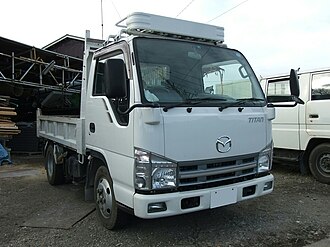
Mazda Titan: The Reliable Japanese Workhorse That Built a Legacy in Commercial Transportation
The Mazda Titan is one of Japan’s most respected light and medium-duty commercial trucks, representing decades of practical engineering, dependable performance, and adaptability. While Mazda is widely recognized around the world for passenger cars and innovative rotary engine technology, the company also created a successful commercial vehicle legacy through trucks such as the Titan. Designed to meet the needs of businesses, independent operators, delivery companies, construction firms, and industrial users, the Mazda Titan became known as a hardworking vehicle capable of handling demanding daily operations with efficiency and reliability.
Since its introduction in the early 1970s, the Mazda Titan has developed a strong reputation among commercial vehicle users, especially in Japan and other Asian markets. The truck was created during a period when economic expansion and industrial growth created increasing demand for practical transportation solutions. Businesses required vehicles that could carry useful loads, operate in urban environments, consume fuel efficiently, and remain reliable under constant use. Mazda responded with a truck designed around real-world working conditions rather than simply focusing on specifications.
Over multiple generations, the Mazda Titan evolved significantly. Although ownership of the model eventually became connected with Isuzu’s commercial vehicle technology through industry cooperation, the Titan name continued as an important part of Mazda’s truck history. Modern examples reflect decades of development in diesel engine technology, safety, comfort, efficiency, and commercial usability. The Titan remains a symbol of practical Japanese truck engineering, offering a balance between compact maneuverability and professional capability.
The History and Development of the Mazda Titan
The Mazda Titan was introduced in 1971 as Mazda entered the competitive Japanese commercial truck market. At that time, Japan was experiencing rapid economic growth, and businesses needed efficient trucks capable of supporting expanding industries. Delivery networks were becoming more complex, construction activity was increasing, and small businesses needed affordable vehicles that could perform a wide variety of tasks.
Mazda designed the Titan as a versatile commercial truck positioned between smaller delivery vehicles and larger heavy-duty trucks. The goal was to create a vehicle that could provide enough payload capacity for professional work while remaining easy to operate in cities and industrial areas. The truck quickly gained recognition for its durability, practical design, and ability to adapt to different body configurations.
During its early years, the Mazda Titan was equipped with Mazda-developed engines and mechanical systems designed for commercial use. The company focused on creating a truck that could withstand intensive operation, including frequent stops, heavy loading cycles, and long working hours. This emphasis on durability helped establish the Titan as a trusted vehicle among Japanese businesses.
As the commercial vehicle industry changed, Mazda adjusted the Titan platform to meet new requirements. Later generations incorporated more efficient diesel engines, improved transmissions, stronger chassis structures, better braking systems, and more comfortable cabins. The truck gradually transitioned from a simple work machine into a modern commercial vehicle capable of meeting increasingly demanding expectations.
Design Philosophy: Practical Engineering for Everyday Work
The Mazda Titan was created with a clear purpose: to provide businesses with a reliable transportation tool. Unlike passenger vehicles, commercial trucks are judged primarily by their ability to complete work efficiently. A successful truck must be durable, easy to maintain, economical to operate, and flexible enough to serve different industries.
Mazda followed a practical engineering approach when developing the Titan. The truck’s structure was designed to handle regular commercial workloads, while its dimensions were optimized for maneuverability. This made it suitable for crowded urban environments where larger trucks could experience difficulties navigating narrow roads and limited loading areas.
The cab-over-engine layout used by many Titan models was especially important. By placing the cabin above the engine compartment, Mazda was able to maximize cargo space without creating an unnecessarily long vehicle. This design improved visibility, reduced the turning radius, and allowed operators to access more locations efficiently.
The Importance of Compact Commercial Design
Compact commercial trucks such as the Mazda Titan occupy an important position in transportation networks. Large trucks are excellent for long-distance hauling, but many businesses require smaller vehicles that can complete frequent local deliveries. The Titan provides the ideal balance between carrying ability and everyday usability.
Restaurants, retailers, logistics companies, service providers, and construction businesses benefit from vehicles that can move through cities easily while still carrying professional amounts of cargo. The Titan’s design reflects an understanding that efficiency is not only about capacity but also about accessibility and flexibility.
Exterior Design and Functional Characteristics
The exterior appearance of the Mazda Titan has changed considerably throughout its history, but its core design philosophy has remained consistent. Every element of the truck serves a practical purpose. The shape of the cabin, placement of mirrors, location of lighting equipment, and construction of body panels are all designed around commercial usability.
Early Titan models featured a simple and durable appearance typical of Japanese commercial trucks of the era. Their designs emphasized strength and easy maintenance rather than styling. Later generations adopted more modern shapes, improved aerodynamics, and stronger visual identities while maintaining the functional characteristics expected from a working vehicle.
Visibility has always been one of the strengths of the Titan. The elevated driving position allows operators to see surrounding traffic clearly, which is especially valuable during delivery operations and low-speed maneuvering. Large windows and well-positioned mirrors contribute to safer operation in crowded environments.
The truck’s body versatility is another important advantage. Depending on customer requirements, the Titan can be configured with different cargo bodies, including flatbeds, box bodies, refrigerated units, dump beds, and specialized equipment. This adaptability allows one basic platform to support many industries.
Engine Technology and Performance
Engine performance is one of the most important aspects of any commercial truck, and the Mazda Titan has traditionally focused on reliability and efficiency rather than maximum output. Commercial users need engines that can provide consistent performance over many years, often under heavy workloads and demanding conditions.
Diesel engines became a major part of the Titan’s identity because they provide the characteristics needed for commercial transportation. Diesel power offers strong low-speed torque, excellent fuel economy, and durability under continuous operation. These qualities make diesel engines particularly suitable for trucks that frequently carry cargo and operate for long periods.
Throughout its development, the Titan received various engine improvements designed to meet changing environmental regulations and customer expectations. Modern versions benefited from improved fuel injection systems, electronic engine controls, and more efficient combustion technologies. These developments helped reduce emissions while maintaining the reliability expected from a commercial vehicle.
Performance Designed for Work, Not Competition
The Mazda Titan was never designed to compete in terms of extreme speed or performance figures. Its purpose is productivity. The truck’s power delivery is optimized for carrying loads, climbing inclines, and operating efficiently during daily business activities.
For professional operators, predictable performance is often more valuable than maximum power. A truck that starts reliably every morning, consumes fuel efficiently, and handles its workload consistently provides far greater value than one with unnecessary performance capabilities.
Driving Experience and Cabin Comfort
Commercial drivers often spend many hours inside their vehicles, making cabin design an important factor in productivity. The Mazda Titan has gradually evolved from a basic working cabin into a more comfortable environment designed to reduce fatigue and improve convenience.
Modern Titan cabins provide improved seating positions, better control placement, and enhanced visibility. The driver sits in a commanding position, allowing easier judgment of vehicle dimensions and surrounding conditions. This is especially useful when performing deliveries, parking, or navigating industrial sites.
Practical storage solutions are also important in commercial vehicles. Drivers often carry documents, tools, communication devices, and personal belongings, so efficient use of cabin space improves everyday usability. Mazda’s approach to the Titan has always emphasized function and accessibility.
Improved Comfort in Modern Generations
While older commercial trucks often prioritized durability over comfort, modern expectations have changed. Businesses recognize that driver satisfaction can influence productivity and safety. As a result, newer Titan models incorporate improvements such as better climate control systems, improved seats, quieter cabins, and modern information displays.
These features transform the truck from a simple transportation machine into a professional workplace. A comfortable driver is better able to remain focused and operate efficiently throughout a demanding workday.
Applications of the Mazda Titan Across Industries
The Mazda Titan’s versatility is one of the main reasons for its long-running success. Commercial customers require vehicles that can adapt to different tasks, and the Titan platform has supported a wide range of applications.
Delivery and Distribution
One of the most common uses of the Titan is local delivery. Businesses transporting food, retail products, industrial components, and supplies require trucks that can operate efficiently in urban environments. The Titan’s compact size and maneuverability make it well suited for these roles.
Distribution companies benefit from vehicles that can complete multiple deliveries in a single day without excessive fuel consumption or operational complexity. The Titan provides a practical solution for businesses that need reliability above all else.
Construction and Industrial Work
Construction companies often require trucks capable of carrying tools, materials, and equipment between locations. The Titan’s durable chassis and adaptable body options allow it to perform various construction-related tasks.
Utility companies and maintenance providers also use similar commercial trucks because they can be customized with specialized equipment. The Titan’s flexibility allows businesses to create vehicles specifically matched to their operational requirements.
Reliability and Maintenance Advantages
The reputation of the Mazda Titan is built largely on reliability. Commercial vehicles must minimize downtime because every day of operation contributes directly to business performance. A dependable truck reduces unexpected repair costs and allows companies to maintain consistent service.
Maintenance requirements vary depending on model year, engine type, operating conditions, and usage patterns. However, the Titan has historically benefited from durable mechanical components and straightforward engineering. Regular servicing, including oil changes, inspections, and replacement of wear components, helps ensure long service life.
Another advantage of the Titan is its established presence in many markets. Availability of parts, mechanical knowledge, and service experience contribute to easier ownership. For businesses operating fleets, these factors are essential when calculating total operating costs.
Safety Features and Modern Development
Safety has become increasingly important in commercial transportation, and the Mazda Titan has evolved to reflect modern expectations. Truck operators work in complex environments where they interact with pedestrians, passenger vehicles, and industrial equipment.
Modern commercial trucks may include technologies such as improved braking systems, stability control, driver assistance features, and enhanced visibility solutions. These developments help reduce risks and support drivers during challenging operating conditions.
Structural improvements have also contributed to safer operation. Manufacturers must balance strength, weight, and efficiency to create trucks that protect occupants while maintaining commercial capability.
The Legacy and Continued Importance of the Mazda Titan
The Mazda Titan represents an important chapter in Japanese commercial vehicle history. Although Mazda is primarily associated with passenger vehicles, the Titan demonstrates the company’s ability to develop practical and durable transportation solutions for professional users.
The truck’s success comes from understanding what businesses truly need: reliability, efficiency, versatility, and reasonable operating costs. These qualities remain valuable regardless of technological changes or market trends.
Even as the commercial vehicle industry moves toward electrification, automation, and advanced connectivity, the principles represented by the Mazda Titan remain relevant. A successful work vehicle must continue helping people complete their jobs effectively.
Technical Specifications Summary
Specifications vary depending on production year, market, engine choice, and body configuration. The following table provides a general overview of typical Mazda Titan characteristics.
| Specification | Mazda Titan (Typical Configuration) |
|---|---|
| Vehicle Type | Light and medium-duty commercial truck |
| Production Start | 1971 |
| Main Applications | Delivery, cargo transport, construction, industrial and service operations |
| Cab Design | Cab-over-engine configuration |
| Engine Type | Diesel engines designed for commercial operation |
| Fuel System | Mechanical or electronically controlled diesel injection depending on generation |
| Transmission | Manual and automated transmission options depending on model |
| Drive Configuration | Rear-wheel drive and selected configurations depending on market |
| Body Options | Flatbed, box truck, refrigerated body, dump body, specialized conversions |
| Chassis Design | Heavy-duty commercial ladder frame |
| Suspension | Commercial suspension system designed for load carrying |
| Cab Features | Practical layout, improved ergonomics, visibility-focused design |
| Key Strengths | Durability, versatility, maneuverability, economical operation |
