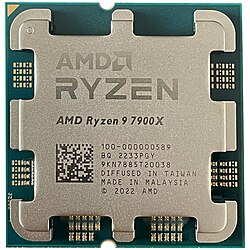
Next-Generation Semiconductor Technology: The Race to Build Faster and Smaller Chips
In today’s increasingly connected world, semiconductor technology is at the heart of nearly every major technological advancement. From smartphones and laptops to artificial intelligence (AI), autonomous vehicles, medical equipment, and advanced communication networks, semiconductors power the devices and systems that shape modern life.
As technology continues to evolve, the demand for smaller, faster, more energy-efficient, and more powerful chips is growing rapidly. This demand has sparked an intense global race among semiconductor manufacturers, research institutions, and technology companies to develop next-generation chip technologies.
But building smaller chips is no longer simply about shrinking transistors. It involves groundbreaking innovations in materials science, chip architecture, manufacturing processes, and advanced packaging. So, what does the future of semiconductor technology look like, and how will these developments transform the world?
1. The Evolution of Semiconductor Technology
Semiconductor technology has advanced dramatically since the introduction of the first integrated circuits. Early chips contained only a small number of transistors, while modern processors can integrate billions of transistors onto a single piece of silicon.
For decades, the industry followed Moore’s Law, an observation that the number of transistors on an integrated circuit tends to double approximately every two years. This trend helped drive improvements in computing performance while reducing the cost per transistor.
However, as manufacturers approach physical and economic limitations, traditional transistor miniaturization is becoming increasingly challenging.
At extremely small dimensions, engineers face problems such as heat generation, electrical leakage, power consumption, and quantum effects. These challenges are forcing the industry to explore entirely new approaches to chip design and manufacturing.
2. The Race Toward Smaller Nanometer Nodes
One of the biggest developments in semiconductor manufacturing is the transition toward increasingly advanced process nodes.
Manufacturers are developing technologies commonly described as 3-nanometer, 2-nanometer, and even smaller generations. These advances aim to increase transistor density, improve performance, and reduce power consumption.
Companies such as TSMC, Samsung Electronics, and Intel are investing billions of dollars in advanced fabrication facilities and next-generation manufacturing equipment.
However, an important distinction is that nanometer node names are now technology-generation labels rather than direct measurements of a transistor’s physical dimensions.
The goal is not simply to make transistors smaller. Manufacturers must also improve their electrical characteristics, reliability, and manufacturing efficiency.
As these technologies mature, they could enable more powerful smartphones, advanced AI processors, high-performance computers, and energy-efficient data centers.
3. EUV Lithography: Making Smaller Chips Possible
Extreme Ultraviolet (EUV) lithography is one of the most important technologies driving modern semiconductor manufacturing.
EUV uses extremely short-wavelength ultraviolet light, approximately 13.5 nanometers, to create incredibly fine patterns on silicon wafers. This allows manufacturers to produce complex transistor structures and increasingly dense integrated circuits.
Traditional deep ultraviolet (DUV) lithography often requires multiple patterning steps to achieve similar levels of detail. EUV can simplify certain manufacturing processes while improving patterning precision.
The next major development is High Numerical Aperture (High-NA) EUV lithography.
This technology is designed to provide even greater patterning resolution, helping manufacturers produce more advanced chip designs. However, High-NA EUV equipment is extremely expensive and introduces significant engineering and manufacturing challenges.
As a result, the adoption of these systems will be an important factor in determining which manufacturers can maintain a competitive advantage in the semiconductor industry.
4. Beyond Traditional Transistors: GAAFET and Advanced Chip Architectures
For many years, FinFET technology helped manufacturers improve transistor performance and control electrical leakage as chips became smaller.
However, as transistor dimensions continue to shrink, alternative transistor architectures are becoming increasingly important.
One promising development is the Gate-All-Around (GAAFET) transistor.
Unlike traditional FinFET designs, GAAFET structures surround the transistor channel with a gate on all sides. This provides improved control over electrical current and can help reduce leakage.
Another important innovation is the nanosheet transistor, which uses thin horizontal semiconductor sheets to create a compact and efficient transistor structure.
These architectures are expected to play a significant role in future advanced manufacturing nodes.
By improving transistor control and efficiency, GAAFET technology could help extend semiconductor performance improvements beyond the limitations of traditional designs.
5. AI Chips Are Driving the Next Semiconductor Revolution
Artificial intelligence is one of the biggest forces shaping the future of semiconductor technology.
Modern AI systems require enormous computing power to train large models, process information, recognize patterns, and generate content. Traditional CPUs alone are often insufficient for these demanding workloads.
This has increased demand for specialized processors such as:
- Graphics Processing Units (GPUs): Designed to handle large numbers of parallel calculations.
- Neural Processing Units (NPUs): Optimized for AI-related tasks and machine learning operations.
- Application-Specific Integrated Circuits (ASICs): Custom-designed chips built for particular computing workloads.
- Tensor Processing Units (TPUs): Specialized processors designed to accelerate machine learning computations.
Companies are also developing increasingly advanced AI accelerators that combine powerful processing capabilities with high-bandwidth memory.
The future of AI computing will depend not only on faster processors but also on better memory architectures, improved energy efficiency, and faster communication between components.
6. Advanced Packaging: Connecting Multiple Chips Together
An important shift in semiconductor development is the growing importance of advanced packaging.
In the past, manufacturers primarily focused on improving the performance of individual chips. Today, they are increasingly combining multiple chip components into a single package.
This approach is known as chiplet-based design.
Instead of manufacturing an entire processor as one large piece of silicon, engineers can create smaller specialized components called chiplets and connect them using advanced packaging technologies.
Some important developments include:
- 3D stacking: Placing semiconductor dies vertically to improve density and reduce communication distances.
- 2.5D packaging: Connecting multiple dies through an advanced interposer.
- Hybrid bonding: Connecting semiconductor components through extremely fine-pitch electrical connections.
- Chiplet architectures: Combining specialized processing components into a flexible system.
These technologies can improve performance, increase manufacturing flexibility, and reduce the cost of producing large and complex processors.
Advanced packaging is becoming particularly important for AI accelerators, high-performance computing, and data center processors.
7. New Materials Could Transform Future Chips
Silicon has been the foundation of semiconductor manufacturing for decades. However, researchers are investigating alternative materials that could improve transistor performance and energy efficiency.
Some promising materials include:
Gallium Nitride (GaN): Known for its excellent power efficiency and high-frequency capabilities, GaN is particularly useful in power electronics, fast chargers, and radio-frequency applications.
Silicon Carbide (SiC): Offers excellent thermal conductivity and high-voltage performance, making it valuable for electric vehicles, renewable energy systems, and industrial power electronics.
2D Materials: Materials such as graphene and transition-metal dichalcogenides are attracting research interest because of their extremely thin structures and unusual electronic properties.
Carbon Nanotubes: These nanoscale structures could potentially offer interesting electrical characteristics for future transistor technologies.
Although many of these materials are still facing manufacturing and integration challenges, they could become important components of next-generation semiconductor devices.
8. The Challenges Facing the Semiconductor Industry
Despite impressive technological progress, the semiconductor industry faces several major challenges.
Increasing Manufacturing Costs
Building an advanced semiconductor fabrication facility requires enormous financial investment. Cutting-edge equipment, cleanroom infrastructure, research, and highly specialized personnel make chip manufacturing increasingly expensive.
Energy Consumption and Heat Management
More powerful processors often generate substantial amounts of heat. Manufacturers must develop better cooling technologies and more energy-efficient architectures to keep devices operating reliably.
Supply Chain Complexity
Semiconductor manufacturing depends on a global network of suppliers, equipment manufacturers, material providers, and fabrication facilities. Disruptions in any part of this supply chain can affect production.
Technical Limitations
As transistors approach atomic-scale dimensions, physical limitations become more significant. Controlling electrical leakage, maintaining reliability, and achieving consistent manufacturing yields are becoming increasingly difficult.
Geopolitical Competition
Semiconductors are strategically important for economic growth, national security, and technological leadership. Governments worldwide are investing in domestic manufacturing capabilities and strengthening their semiconductor supply chains.
These challenges mean that the future of chip development will depend on more than technological innovation alone. Economic investment, international cooperation, and manufacturing expertise will also play essential roles.
9. What Does the Future of Semiconductor Technology Look Like?
The next decade could bring significant changes to the semiconductor industry.
Several emerging technologies are likely to influence its direction:
- Sub-2nm manufacturing: Continued improvements in transistor architectures and advanced lithography.
- 3D integrated circuits: Greater use of vertically stacked semiconductor components.
- Quantum computing: Specialized quantum processors designed to solve certain problems beyond the practical reach of conventional computers.
- Neuromorphic computing: Hardware architectures inspired by the way biological brains process information.
- Optical computing: Greater use of light for specific computing and data communication applications.
- Energy-efficient AI processors: Chips designed to deliver greater computing performance while consuming less electricity.
These technologies will not necessarily replace traditional silicon processors. Instead, they are likely to complement existing semiconductor architectures and expand the range of computing applications.
The biggest breakthroughs may come from combining several innovations rather than relying on transistor miniaturization alone.
Conclusion
The race to build faster and smaller chips is entering a new and exciting phase. While traditional transistor scaling continues to advance, the semiconductor industry is increasingly relying on innovative architectures, advanced lithography, new materials, AI-specific processors, and sophisticated packaging technologies.
The future of semiconductor development will not be measured exclusively by how small manufacturers can make transistors. Performance, energy efficiency, reliability, manufacturing costs, and system-level integration will be equally important.
As companies and researchers continue pushing technological boundaries, next-generation semiconductors will help shape the future of artificial intelligence, autonomous transportation, healthcare, robotics, telecommunications, and countless other industries.
Ultimately, the race to build better chips is much more than a competition between semiconductor manufacturers. It is a race to build the technological foundation of tomorrow’s digital world.
