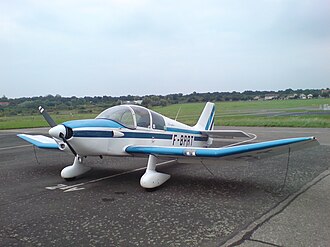
Robin DR.200: The Story, Design, Development, and Legacy of a Classic French Light Aircraft
The Robin DR.200 occupies an interesting place in the history of European general aviation. Developed in France during the 1960s, it belongs to a generation of light aircraft designed to make private flying, recreational touring, and flight training more accessible. Its combination of traditional construction, practical cabin arrangements, responsive handling, and distinctive wing design reflected the philosophy of its designers: create an aircraft that was economical to operate, straightforward to maintain, and enjoyable to fly.
The DR.200 was not simply an isolated aircraft model. It was the starting point for a family of related designs that included the DR.220, DR.221 Dauphin, DR.250 Capitaine, and DR.253 Régent. These aircraft shared the same broad design ancestry but differed in engine power, cabin dimensions, seating arrangements, and landing-gear configuration. Their development illustrates how a successful basic airframe can be adapted to meet the changing needs of private owners, flying clubs, and touring pilots.
Although the DR.200 family is sometimes discussed as a single aircraft type, it is important to distinguish the original DR.200 prototype from the production models that followed. The original design helped establish the direction of the series, while the later versions introduced more powerful engines and significant structural and equipment changes. Understanding those differences is essential when discussing performance figures or technical specifications.
Today, the Robin DR.200 family remains an appealing example of classic French light-aircraft engineering. Its wooden structure, characteristic wing planform, and practical touring role distinguish it from many contemporary all-metal aircraft. The series also helped establish the design tradition that would continue through the later Robin DR.300 and DR.400 families.
Historical Background and Development
The origins of the Robin aircraft family
The history of the DR.200 begins with the earlier Jodel and Robin aircraft developed in France during the post-war expansion of general aviation. French designers were interested in producing affordable aircraft that could serve private pilots and flying associations without the complexity and operating costs associated with larger machines. The Jodel family demonstrated that a relatively simple wooden aircraft could offer useful performance, economical operation, and enjoyable handling.
The Robin designs developed from this same general philosophy. Centre Est Aéronautique, the company responsible for the early aircraft, built upon the ideas associated with the Jodel-derived DR.100 family. The initials DR reflected the collaboration between Pierre Robin and designer Jean Délémontez, whose work helped shape the distinctive characteristics of these aircraft. Rather than abandoning the original concept, the designers progressively improved it, introducing stronger structures, different engines, and revised cabin arrangements as the requirements of the market changed.
This development process produced aircraft that retained a recognizable family resemblance while becoming increasingly capable. The DR.200 represented an important step in that progression. It was developed as a larger and strengthened evolution of the earlier design, with a longer fuselage and a configuration intended to accommodate four occupants. Its subsequent derivatives expanded the range of available choices, from relatively modest two-plus-two touring aircraft to more powerful four-seat machines.
The introduction of the DR.200
The DR.200 first flew in 1964, marking the beginning of a new stage in the evolution of the Robin light-aircraft family. It was developed from the earlier DR.1050M1 and incorporated a strengthened wing and a longer fuselage. The prototype used a Potez 105E engine, and two prototype aircraft are commonly listed in historical summaries. The project provided the foundation for the production aircraft that followed, although the DR.200 itself should not be confused with every later member of the family.
The production programme developed into several distinct models. The DR.220 offered a shorter-fuselage configuration with a two-plus-two seating arrangement and a Continental engine. The DR.221 Dauphin provided a four-seat configuration powered by a Lycoming engine, while the DR.250 Capitaine introduced a more powerful engine and an all-moving tailplane. The DR.253 Régent subsequently added tricycle landing gear, giving pilots an alternative to the traditional tailwheel arrangement.
These changes were more than cosmetic. They reflected the different priorities of aircraft owners. Some wanted an economical aircraft for local flying and training, while others needed a more capable touring machine with greater useful load and improved performance. By developing several versions around a common design philosophy, Robin could address these needs without creating an entirely unrelated aircraft for each market segment.
From Centre Est Aéronautique to Avions Pierre Robin
The DR.200 family emerged during a period of change for its manufacturer. Centre Est Aéronautique was later associated with the Avions Pierre Robin name, which became widely recognized among European general-aviation enthusiasts. The company’s aircraft developed a reputation for combining traditional construction with practical performance and a distinctive appearance.
The Robin name became particularly familiar through the later DR.300 and DR.400 series. Those aircraft continued the development of the original design ideas, incorporating refinements and additional variants for private touring, club operations, and specialist roles. The DR.200 therefore occupies an important position in the company’s product history: it was one of the links between the early Jodel-influenced aircraft and the more developed Robin designs that followed.
Design and Construction
Traditional wooden airframe
One of the defining characteristics of the Robin DR.200 family is its traditional wooden construction. Unlike many contemporary light aircraft built primarily from aluminium alloy, the DR.200 series used a wooden airframe with fabric covering in relevant areas. This approach reflected a long-established European aircraft-building tradition and allowed designers to create a relatively light structure without relying on extensive metal tooling.
Wooden aircraft construction requires careful design and workmanship. Structural components must be manufactured accurately, bonded correctly, protected against moisture, and inspected throughout the aircraft’s service life. When properly built and maintained, a wooden structure can provide excellent strength-to-weight characteristics. The choice of materials also gives the aircraft a different maintenance profile from an all-metal design, making knowledge of wooden-aircraft inspection and repair especially important.
For an owner considering a DR.200-family aircraft today, the condition of the structure is at least as important as the engine’s condition. A prospective buyer should pay close attention to maintenance records, evidence of moisture exposure, the condition of fabric coverings, and the results of inspections carried out by personnel familiar with wooden aircraft. A well-maintained example can remain a rewarding aircraft to operate, but age and storage history must be taken seriously.
The characteristic wing design
The Robin DR.200 retained the distinctive wing arrangement associated with the Jodel-derived design tradition. Its wing features a characteristic change in dihedral, producing a recognizable planform that is visually different from the straight, uniformly angled wings found on many light aircraft. This arrangement was part of the broader aerodynamic philosophy developed by the designers of the Jodel and Robin families.
The wing design contributed to the aircraft’s recognizable appearance and handling characteristics. Its structure was intended to provide a practical balance between lift, stability, and useful cruising performance. The design also reflected the priorities of aircraft intended for everyday general aviation: predictable handling, efficient operation, and sufficient performance for local flights and longer journeys.
Wing design cannot be evaluated by appearance alone. The aircraft’s behaviour depends on the complete aerodynamic configuration, including wing loading, control surfaces, tailplane arrangement, weight distribution, and the installed engine. Differences between individual DR.200-family models mean that handling characteristics and published performance figures should always be associated with the correct variant.
Fuselage and cabin arrangement
The DR.200 family included aircraft with different fuselage lengths and seating arrangements. The DR.220, for example, was developed as a shorter-fuselage two-plus-two aircraft, while the DR.221 and DR.250 provided four-seat configurations. The cabin was designed around the practical needs of recreational pilots and touring passengers rather than the requirements of commercial transport.
The four-seat versions offered greater flexibility for family flying and cross-country travel, although the presence of four seats does not automatically mean that every flight can be conducted with four adults and full fuel. As with any light aircraft, useful load is determined by the actual empty weight, maximum authorised take-off weight, installed equipment, fuel quantity, and passenger and baggage weights. Pilots must use the aircraft’s approved weight-and-balance documentation rather than relying on general descriptions of the model.
The cabin’s relatively compact dimensions are typical of light touring aircraft from this period. Its purpose was to provide a practical environment for short and medium-distance journeys while keeping the overall aircraft light and economical. The design reflects a time when private flying was often focused on weekend trips, club activities, local sightseeing, and travel between smaller airfields.
Landing gear and ground handling
The DR.200 family included conventional tailwheel aircraft, while the later DR.253 Régent introduced tricycle landing gear. This difference is important because landing-gear configuration influences ground handling, landing technique, visibility during taxiing, and the experience required of the pilot.
Tailwheel aircraft are often valued for their traditional appearance and ability to operate from suitable grass airfields. However, they demand careful directional control during taxiing, take-off, and landing. Crosswind technique and rudder coordination are particularly important, and pilots transitioning to a tailwheel Robin must receive appropriate training and familiarisation.
The DR.253’s tricycle arrangement represented a significant practical change. By placing the nosewheel ahead of the main landing gear, the design offered ground-handling characteristics more familiar to pilots accustomed to modern training aircraft. The introduction of this configuration also demonstrated the willingness of the Robin designers to adapt the established airframe concept to changing pilot preferences.
The Main Robin DR.200 Family Variants
DR.200 prototype
The original DR.200 was the prototype development of the series. It was based on the earlier DR.1050M1 but incorporated a strengthened wing and a longer fuselage. The prototype is associated with a Potez 105E engine and served as the basis for the production models that followed.
Its historical importance lies in its role as a development aircraft rather than as the most representative example of the family in service. The later production versions introduced the engine, cabin, and landing-gear changes that gave the series its wider appeal. For that reason, technical information about the DR.200 prototype should not automatically be applied to the DR.220, DR.221, DR.250, or DR.253.
DR.220 2+2
The DR.220 was a shorter-fuselage derivative intended to provide a more compact touring aircraft. Its two-plus-two seating arrangement included two main seats and a small rear seating area, making it different from a conventional four-seat aircraft designed to carry four full-size occupants in all circumstances.
The DR.220 used a Continental O-200-A engine rated at approximately 105 horsepower. This engine provided a relatively modest power level compared with the larger Lycoming engines installed in some other members of the family. The aircraft was intended for pilots who valued economical operation and practical recreational flying rather than maximum load-carrying capability.
The DR.220 illustrates the flexibility of the DR.200 concept. By shortening the fuselage and selecting a smaller engine, the manufacturer could offer a lighter and more economical alternative while retaining the essential character of the aircraft family.
DR.221 Dauphin
The DR.221 Dauphin was one of the principal four-seat developments of the DR.200 design. It was equipped with a Lycoming O-235-C2A engine producing approximately 115 horsepower. The aircraft offered a useful combination of four-seat accommodation, conventional landing gear, and touring performance.
The Dauphin’s engine represented an increase in power compared with the Continental-powered DR.220. This additional power was useful when carrying passengers and baggage, although actual climb and cruise performance depended on aircraft weight, atmospheric conditions, engine condition, and operating technique. The DR.221 is a particularly useful reference model when discussing the family because published technical data is available for its dimensions, weights, engine, and performance.
Its four-seat cabin made it suitable for private owners who wanted to travel with family members or friends. Nevertheless, the practical payload of an older four-seat light aircraft should always be checked carefully. The weight of occupants, fuel, baggage, and installed equipment can quickly determine whether a planned flight is within approved limits.
DR.250 Capitaine
The DR.250 Capitaine was a more powerful development of the series. It used a Lycoming O-320-E engine rated at approximately 160 horsepower and introduced an all-moving tailplane, also known as a stabilator. This represented a significant step in the evolution of the design, giving the aircraft a more powerful engine installation and a revised pitch-control arrangement.
The higher-powered engine made the DR.250 a more capable touring aircraft than the smaller-engined members of the family. Its four-seat configuration and increased power were attractive to pilots who wanted greater flexibility when operating with passengers or carrying additional fuel and baggage. The model also demonstrated how the original DR.200 concept could be developed into a substantially more powerful aircraft without abandoning its traditional construction philosophy.
The all-moving tailplane was an important technical feature. Unlike a conventional stabiliser and elevator arrangement, a stabilator moves as a complete surface to provide pitch control. This configuration requires appropriate design and control-system engineering, and it became one of the notable characteristics of certain Robin aircraft.
DR.253 Régent
The DR.253 Régent developed the DR.250 concept by introducing tricycle landing gear and a revised fuselage arrangement. It was powered by a Lycoming O-360-D2A engine, commonly listed at approximately 180 horsepower. The aircraft therefore combined a more powerful engine with a landing-gear layout that differed from the tailwheel configuration of earlier models.
The tricycle arrangement was a practical response to the preferences of pilots and flying organisations that wanted easier ground handling. It could make taxiing and directional control more familiar to pilots trained on nosewheel aircraft, although proper technique remained essential. The DR.253 represented an important transition in the Robin family and anticipated the wider use of tricycle landing gear in later designs.
The Régent also illustrates why the DR.200 family should not be treated as a single fixed specification. Engine power, weight limits, dimensions, seating, and handling characteristics varied between models. Any comparison must identify the exact aircraft variant being discussed.
Engine and Performance Characteristics
Engine choices across the family
The DR.200 series used several different piston engines as the design developed. The original prototype was associated with a Potez 105E engine, while the DR.220 used a Continental O-200-A producing approximately 105 horsepower. The DR.221 adopted the Lycoming O-235-C2A rated at approximately 115 horsepower, and the DR.250 used the more powerful Lycoming O-320-E rated at around 160 horsepower. The DR.253 Régent used a Lycoming O-360-D2A installation of approximately 180 horsepower.
These engine choices reflect the different purposes of the aircraft. A smaller engine could be suitable for an economical two-plus-two touring aircraft, while a larger engine offered additional power for a four-seat model with greater weight and performance requirements. Engine power alone, however, does not determine an aircraft’s practical usefulness. Fuel consumption, maintenance condition, propeller selection, operating weight, and the availability of approved replacement parts all influence the ownership experience.
The Lycoming and Continental engines used in the family belong to well-known categories of horizontally opposed, air-cooled piston engines. Their general design makes them familiar to many general-aviation maintenance organisations, although individual installations and aircraft-specific maintenance requirements must still be followed. The condition and documentation of the particular engine are more important than simply knowing its nominal horsepower rating.
Cruising speed and range
The DR.200 family was designed primarily for touring and recreational aviation. Its performance was intended to make regional journeys practical while keeping operating costs and aircraft complexity within the reach of private owners and flying clubs. Published figures differ substantially between variants, so a single speed or range figure should not be presented as representative of every aircraft in the series.
For example, technical summaries for the DR.221 Dauphin list a maximum speed of approximately 235 km/h and a cruising speed of around 220 km/h under specified conditions. These figures are associated with the 115-horsepower DR.221 and should not be transferred to the smaller DR.220 or the more powerful DR.250 and DR.253. The DR.250, with its 160-horsepower engine, belongs to a different performance category.
Range figures are equally dependent on the exact model, fuel capacity, power setting, altitude, weather, and reserve policy. A published range is not a promise that an aircraft can safely complete a journey of that distance in ordinary operating conditions. Pilots must calculate fuel requirements using the approved flight manual, account for expected conditions, and preserve the legally required reserves.
Climb performance and operating altitude
Climb performance is affected by engine power, aircraft weight, air density, temperature, and the condition of the propeller and airframe. A DR.221 specification commonly lists a climb rate of approximately 3.3 metres per second, equivalent to about 650 feet per minute. This is a published reference value for that variant, not a guaranteed climb rate for every aircraft or operating condition.
The service ceiling of the DR.221 is commonly listed at approximately 3,900 metres, or 12,800 feet. The practical altitude selected for a flight depends on weather, terrain, aircraft performance, oxygen requirements where applicable, and the pilot’s operating procedures. The aircraft was not designed as a high-altitude transport, but its performance was suitable for the general-aviation touring and training roles for which it was developed.
Flight Characteristics and Pilot Experience
Handling and control response
The Robin DR.200 family reflects the handling philosophy of traditional European light aircraft. Its relatively simple systems and conventional aerodynamic layout make it an interesting aircraft for pilots who appreciate direct control response and a close connection with the aircraft’s behaviour. However, handling characteristics differ between variants, especially where engine power, tailplane design, weight, and landing gear have changed.
The tailwheel versions require particular attention during ground operations. Pilots must maintain directional control with appropriate rudder inputs and avoid allowing the aircraft to develop an unwanted swing during take-off or landing. The aircraft’s conventional landing gear is part of its character, but it also means that pilot proficiency and suitable training are essential.
The DR.253, with its tricycle landing gear, provides a different ground-handling experience. Even so, it remains important to use the aircraft’s approved procedures and to understand the particular handling characteristics of the individual model. An aircraft’s reputation or family resemblance is never a substitute for proper conversion training and familiarisation.
Suitability for training and touring
The DR.200 family was developed for the general-aviation market, where aircraft may be used for private flying, club activities, and touring. The range of models allowed operators to select an aircraft according to their needs. A smaller-engined DR.220 could appeal to an owner looking for economical recreational flying, while the DR.221 and DR.250 offered four-seat configurations and more power.
Training suitability depends on the individual aircraft’s equipment, approved operating limitations, maintenance condition, and the requirements of the training organisation. A classic tailwheel Robin may be useful for pilots seeking experience with conventional landing gear, while the tricycle-gear DR.253 offers a different training environment. Neither should be assumed to be suitable for every training task without considering its certification and operational documentation.
For touring, the aircraft’s practical value depends on payload and fuel planning. The four-seat models offer useful flexibility, but owners must calculate actual loading rather than assume that all seats can always be occupied with full fuel. This is particularly important in older aircraft, where modifications and installed equipment may have changed the empty weight from the original published figure.
Maintenance, Ownership, and Preservation
Wooden-aircraft inspection
The wooden structure is one of the most important considerations in DR.200 ownership. Unlike an all-metal aircraft, a wooden aircraft requires careful attention to the condition of its internal structural members, bonding, protective coatings, and fabric covering. Moisture can be particularly damaging if it enters areas that are not adequately ventilated or protected.
A pre-purchase inspection should therefore be performed by a qualified person with experience in wooden aircraft. The inspection should consider the condition of the wing structure, fuselage, attachment points, control systems, fabric, and any areas where water may have accumulated. Maintenance records and evidence of previous structural repairs are important parts of the aircraft’s history.
The age of the aircraft alone does not determine its condition. A carefully stored and regularly maintained example may be in better structural condition than a younger aircraft that has spent years exposed to damp conditions. The quality of previous repairs and the availability of documentation are also important when assessing long-term ownership prospects.
Engine and systems maintenance
The engine must be assessed according to its actual condition, maintenance history, operating hours, calendar age, and compliance with applicable inspections and directives. A low-hour engine is not automatically a healthy engine, particularly if it has spent long periods inactive. Regular operation, proper storage, oil management, and adherence to manufacturer guidance all contribute to engine reliability.
Owners should also pay attention to the propeller, fuel system, electrical system, flight controls, instruments, and landing gear. Older aircraft may have undergone modifications or equipment upgrades over several decades, so the installed configuration can differ from the original factory specification. It is important to verify that modifications are approved and properly documented.
Airworthiness and technical documentation
The DR.200 family is covered by formal type-certification documentation, and its variants should be identified accurately when reviewing airworthiness information. Regulatory records distinguish the DR.200 series from the later DR.300 and DR.400 series, even though the aircraft share a common design lineage. The UK Civil Aviation Authority’s published type-certificate documentation includes the DR.200 family within the relevant Robin aircraft certification records.
Airworthiness directives and other mandatory requirements must be checked for the exact model and serial number. For example, European airworthiness documentation has addressed the stabilator attachment arrangements on certain wooden Robin aircraft. This illustrates why owners should not rely solely on general descriptions of the aircraft family: they must consult the applicable directives, approved maintenance data, and aircraft records for the specific airframe.
The DR.200’s Place in the Robin Family
Influence on the DR.300
The DR.200 series helped establish the design direction that would continue into the DR.300 family. The later aircraft retained important elements of the Robin philosophy while introducing further refinements and a broader range of configurations. The development of the DR.300 series demonstrated that the original concept could be adapted for changing expectations in the general-aviation market.
The relationship between the families is important historically, but it does not mean that their specifications are interchangeable. The DR.300 models included their own engines, weights, dimensions, and performance characteristics. Pilots and researchers should always use the technical data for the exact model under consideration.
The connection with the DR.400
The Robin DR.400 became one of the best-known aircraft in the company’s history. It continued the development of the earlier Robin designs and achieved a particularly strong presence in European flying clubs and private aviation. Its success helped make the Robin name familiar to generations of pilots.
The DR.200 should be understood as part of the development path that led to these later aircraft. Its strengthened structure, evolving cabin arrangements, and range of engine installations helped demonstrate the potential of the original design approach. The later DR.400 was a more developed aircraft, but the family resemblance and historical continuity are clear.
Comparing the Robin DR.200 Family with Other Light Aircraft
Compared with early Jodel aircraft
The Robin DR.200 family inherited important ideas from the Jodel tradition, especially its distinctive wing configuration and use of wooden construction. However, the DR.200 represented a further stage in the development of that design philosophy, with a strengthened wing, revised fuselage, and a range of engine and cabin configurations.
Early Jodel aircraft were often smaller and simpler, while the DR.200 family expanded the concept toward more capable touring aircraft. The comparison is therefore not simply between two similar-looking aeroplanes. It is a comparison between stages in the development of a broader French general-aviation design tradition.
Compared with the Cessna and Piper approach
Many Cessna and Piper light aircraft from the same broad era used metal structures and different wing and landing-gear arrangements. These manufacturers followed a different production philosophy from Robin, often favouring metal airframes and construction methods suited to larger-scale industrial production.
The Robin DR.200’s wooden construction gave it a distinctive identity, but it also created different maintenance considerations. A prospective owner comparing a Robin with a metal aircraft should consider the availability of specialist maintenance, the condition of the structure, operating costs, parts support, and the intended use of the aircraft. Neither construction method is automatically superior in every respect; the quality of the individual aircraft and its maintenance history are decisive.
Why the Robin DR.200 Still Matters
The Robin DR.200 remains historically significant because it represents a transitional stage in the development of one of France’s best-known light-aircraft families. It brought together the traditional wooden construction and distinctive aerodynamic features of earlier Jodel-influenced designs with a strengthened structure and a more developed touring-aircraft concept.
Its derivatives also demonstrate the value of incremental engineering. Rather than producing one aircraft for every possible customer, the manufacturer developed a family of related models with different engines, cabin arrangements, and landing-gear configurations. This approach allowed the design to serve a broader range of pilots while preserving a recognizable identity.
For aviation enthusiasts, the DR.200 is an appealing example of a period when general aviation was shaped by relatively simple, purpose-built aircraft. For owners and pilots, it offers the opportunity to experience a traditional design that rewards careful operation and knowledgeable maintenance. Its wooden structure and older systems demand respect, but they are also part of what makes the aircraft distinctive.
Conclusion
The Robin DR.200 was an important development in the history of French general aviation. First flown in 1964, it grew from the earlier DR.100 family and introduced a strengthened wing and longer fuselage that provided the basis for several production derivatives. The DR.220, DR.221 Dauphin, DR.250 Capitaine, and DR.253 Régent each developed the concept in a different direction, offering variations in engine power, seating, and landing-gear configuration.
The family demonstrates how a relatively simple light-aircraft design can evolve to meet a wide range of requirements. Its wooden construction, characteristic wing arrangement, and practical touring role distinguish it from many competing aircraft of the period. The more powerful variants also show how the original design could be developed into a capable four-seat aircraft without losing its traditional character.
Although the DR.200 family is no longer in production, its influence can be seen in the later Robin aircraft that became familiar throughout Europe. Its place in aviation history is not based on speed records or military service, but on the more enduring contribution of making practical private flying accessible to generations of pilots. For anyone interested in classic light aircraft, the Robin DR.200 remains a rewarding subject and an important part of the story of European general aviation.
Robin DR.200 Family: Technical Specifications Summary
The table below uses the DR.221 Dauphin as the reference production variant because it has a clearly documented set of published specifications. Figures for other members of the family differ, and should not be treated as interchangeable.
| Specification | Robin DR.221 Dauphin |
|---|---|
| Aircraft category | Single-engine light touring aircraft |
| Manufacturer | Centre Est Aéronautique / Avions Pierre Robin |
| First flight of DR.200 | 1964 |
| Crew | 1 pilot |
| Passenger capacity | 3 |
| Construction | Wooden structure with fabric covering |
| Wing configuration | Low-wing monoplane, characteristic Jodel-derived planform |
| Landing gear | Fixed conventional tailwheel |
| Length | 7.00 m (23 ft 0 in) |
| Wingspan | 8.72 m (28 ft 7 in) |
| Height | 1.85 m (6 ft 1 in) |
| Wing area | 13.60 m² (146.4 sq ft) |
| Empty weight | 475 kg (1,047 lb), equipped |
| Maximum take-off weight | 840 kg (1,852 lb) |
| Engine | 1 × Lycoming O-235-C2A |
| Engine type | Air-cooled, horizontally opposed four-cylinder piston engine |
| Rated power | 115 hp (approximately 86 kW) |
| Propeller | Two-blade EVRA, fixed-pitch |
| Maximum speed | 235 km/h (146 mph; 127 knots) |
| Cruising speed | 220 km/h (137 mph; 119 knots) at 75% power and 2,750 m |
| Stall speed | 80 km/h (50 mph; 43 knots) |
| Never-exceed speed | 290 km/h (180 mph; 157 knots) |
| Range | Approximately 910 km (565 miles; 491 nautical miles) |
| Service ceiling | 3,900 m (12,800 ft) |
| Rate of climb | Approximately 3.3 m/s (650 ft/min) |
Note: These are published reference figures for the DR.221 Dauphin, not universal specifications for the entire DR.200 family. Actual figures depend on the aircraft variant, installed equipment, approved flight manual, and individual aircraft condition.
