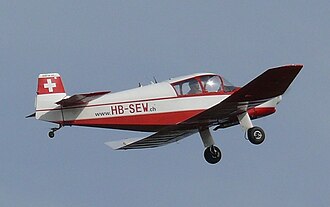
Robin DR100: The History, Design, Performance, and Legacy of France’s Classic Light Aircraft
The Robin DR100 is an important member of the French light-aircraft family developed through the collaboration of aircraft designer Jean Délémontez and aviation entrepreneur and pilot Pierre Robin. Introduced during the late 1950s, the DR100 represented an ambitious development of the distinctive Jodel aircraft concept, combining traditional wooden construction, an efficient wing design, and practical three-seat transportation capabilities. Although it was relatively small compared with many contemporary aircraft, the DR100 offered an attractive combination of economical operation, useful cruising performance, and straightforward construction that made it particularly appealing to private pilots and general aviation enthusiasts.
The aircraft emerged during a period when European aviation was experiencing considerable growth following World War II. Private flying was becoming increasingly accessible, flying clubs were expanding, and demand was growing for affordable aircraft suitable for training, recreational flying, and personal transportation. French aircraft manufacturers played an important role in this development, particularly those working with wooden structures and relatively modest piston engines. The DR100 reflected this philosophy by emphasizing simplicity, aerodynamic efficiency, and practical everyday operation rather than complicated systems or expensive manufacturing techniques.
One of the most recognizable characteristics of the DR100 is its distinctive wing configuration, inherited from the Jodel design tradition. Its wings feature a central section with relatively little dihedral and pronounced upward angles toward the outer sections, producing the characteristic cranked-wing appearance associated with several French light aircraft. This configuration became one of the defining visual features of the Robin aircraft family and contributed to its recognizable identity. Combined with a lightweight wooden structure and a relatively efficient aerodynamic design, the DR100 demonstrated that a small aircraft did not need a powerful engine to deliver useful performance.
The Robin DR100 also holds an important place in the development of the later Robin aircraft models. It established the foundations for a family of aircraft that subsequently included the DR200, DR300, and highly successful DR400. These aircraft retained many of the original design principles while introducing improvements in passenger capacity, engine power, cabin comfort, and landing-gear configuration. Consequently, understanding the DR100 provides an opportunity to explore not only one historic French aircraft but also the origins of an influential European general aviation design tradition.
Today, the Robin DR100 remains an interesting aircraft for aviation historians, collectors, private pilots, and enthusiasts interested in classic wooden aircraft. Its historical significance lies in its contribution to affordable postwar flying and its role in establishing the engineering philosophy that would define the Robin aircraft family for decades.
The History and Development of the Robin DR100
The Origins of the Jodel-Robin Concept
The history of the Robin DR100 begins with the work of Jean Délémontez, a French aircraft designer associated with the development of the Jodel family of light aircraft. Following World War II, Délémontez became interested in creating relatively simple and economical aircraft that could be constructed using traditional materials while offering good performance with modest engine power.
The Jodel concept was particularly innovative because of its characteristic wing geometry. Instead of using a conventional wing with uniform dihedral, the design incorporated a central section and sharply raised outer wing panels. This distinctive arrangement became a recognizable feature of Jodel aircraft and later influenced several Robin models.
Pierre Robin, an enthusiastic pilot and aircraft constructor, recognized the potential of this design philosophy. In the 1950s, he began working with Délémontez to develop an aircraft suitable for commercial production. Their collaboration eventually resulted in the creation of the Jodel-Robin, which became the foundation of the DR100 family.
The designation DR refers to the surnames Délémontez and Robin, acknowledging the two individuals responsible for the aircraft’s development. This naming convention reflected the collaborative nature of the project and the close relationship between design engineering and practical aviation experience.
The Establishment of Centre-Est Aéronautique
In 1957, Pierre Robin established Centre-Est Aéronautique at Dijon-Darois in Burgundy, France. The company was created to develop and manufacture light aircraft based on the engineering principles established through his collaboration with Délémontez.
The decision to establish a dedicated aircraft manufacturer was significant because it transformed an experimental design concept into a commercial aviation project. Pierre Robin had already attracted interest from potential customers before the company was formally established, demonstrating that there was demand for an affordable French light aircraft.
The new company concentrated on producing aircraft that could serve private pilots, flying clubs, and other general aviation users. Its approach emphasized relatively straightforward construction, manageable operating costs, and efficient performance. These principles were particularly important in postwar Europe, where many prospective aircraft owners had limited budgets and required practical transportation or recreational flying solutions.
The DR100 became one of the earliest aircraft associated with this new manufacturing venture. Its development helped establish the company’s reputation and provided the foundation for the aircraft models that followed.
First Flight and Early Production
The DR100 emerged during the late 1950s, with the original prototype flying in 1958 according to commonly cited aircraft histories. Early development aircraft were based closely on the Jodel-Robin concept and incorporated a Continental C90 piston engine.
The first production-oriented examples were intended to demonstrate the practicality of the design and provide feedback from pilots and customers. Centre-Est Aéronautique subsequently developed the DR100A pre-production aircraft before introducing improved commercial versions.
The early aircraft featured wooden construction, a conventional tailwheel landing arrangement, and seating for a small number of occupants. Although its dimensions were relatively modest, the DR100 provided sufficient cabin space for personal transportation and recreational flying.
The aircraft’s performance was particularly attractive because it could achieve useful cruising speeds without requiring a large or expensive engine. Its efficient wing and relatively lightweight structure helped it make effective use of the available engine power.
The Development of the DR1050 Ambassadeur
One of the most important developments in the DR100 family was the introduction of the DR105A and DR1050 Ambassadeur. These aircraft incorporated improvements to the original design and used the Continental O-200 engine, producing approximately 100 horsepower.
The additional engine power helped improve the aircraft’s performance and made it more attractive for customers seeking a practical three-seat touring aircraft. The Ambassadeur retained the characteristic wooden structure and cranked-wing configuration while benefiting from improvements to the airframe and equipment.
The DR1050 became one of the best-known members of the early DR100 family. Its combination of relatively low operating costs, practical cabin capacity, and efficient performance helped establish the aircraft’s reputation among European private pilots.
The development of the Ambassadeur also demonstrated how Pierre Robin and his engineering collaborators intended to develop their aircraft family: rather than abandoning the original concept, they preferred to introduce incremental improvements that preserved the advantages of the basic design.
The Evolution Toward the DR200 and DR300
The DR100 provided the foundation for subsequent developments within the Robin aircraft family. In 1964, the DR200 appeared as a more advanced development of the original concept, offering further improvements in performance and practicality.
The DR300 followed in 1970 and represented another important step in the evolution of the company’s aircraft. It introduced a more developed airframe and expanded the range of available configurations.
These aircraft retained the basic design philosophy established by the DR100, particularly the distinctive wing geometry and traditional construction methods. Their development eventually led to the introduction of the DR400 in 1972, which became one of the most successful French light aircraft of its generation.
The DR100 therefore deserves recognition as the starting point of an aircraft family that influenced European general aviation for many decades.
Design and Engineering Characteristics
General Airframe Configuration
The Robin DR100 is a small, single-engine, low-wing monoplane designed for private transportation, recreational flying, and general aviation activities. Its overall configuration reflects the priorities of postwar European light-aircraft development, emphasizing lightweight construction, aerodynamic efficiency, and mechanical simplicity.
The aircraft generally accommodates one pilot and two passengers, although seating and permitted loading depend on the specific model and approved configuration. Its compact fuselage provides enough space for short-distance personal transportation without introducing the structural weight and complexity associated with larger aircraft.
The DR100’s design incorporates a conventional tail assembly, a fixed tailwheel landing gear, and a piston-powered tractor engine mounted at the front of the fuselage. The relatively simple mechanical arrangement helps make the aircraft suitable for owners and flying organizations interested in maintaining a classic light aircraft.
Its proportions are particularly interesting because the aircraft was designed to provide useful interior capacity while maintaining a relatively small external profile. This balance helped make it practical for private aviation, where storage space, operating costs, and maintenance requirements are important considerations.
The Characteristic Jodel Cranked Wing
The most recognizable feature of the Robin DR100 is undoubtedly its distinctive wing design. The aircraft uses a cranked-wing arrangement in which the central wing section and the outer panels have different dihedral angles.
The outer wing panels rise noticeably toward the wingtips, producing the characteristic appearance associated with Jodel and early Robin aircraft. This arrangement is not simply a stylistic feature; it reflects the aerodynamic and structural philosophy behind the original design.
The geometry was developed to achieve useful stability and structural characteristics while retaining an efficient wing configuration. It also became an important visual identifier for the entire DR aircraft family.
For aviation enthusiasts, the wing is often the easiest way to distinguish a classic Robin or Jodel-derived aircraft from more conventional light airplanes. The unusual geometry gives the DR100 a recognizable appearance even when viewed from considerable distance.
Wooden Construction and Fabric Covering
Another defining characteristic of the DR100 is its traditional construction. The aircraft uses a predominantly wooden airframe, with structural components made from carefully selected timber and covered with fabric or other approved finishing materials according to the particular construction standard.
Wooden aircraft construction has a long history in aviation because it can provide an excellent combination of strength, low weight, and relatively straightforward manufacturing. When properly designed and maintained, wooden structures can provide many years of dependable service.
The DR100’s construction philosophy reflects the experience of French aircraft designers who developed efficient wooden aircraft during the postwar period. Rather than relying on complex metal structures, the aircraft uses traditional woodworking techniques and carefully designed structural assemblies.
However, wooden construction also creates specific maintenance requirements. Moisture protection, inspection of structural joints, assessment of bonded components, and examination of fabric coverings are essential aspects of long-term ownership. Owners must pay particular attention to storage conditions and signs of deterioration because hidden structural damage can affect airworthiness.
Fuselage and Cabin Arrangement
The DR100’s fuselage was designed to accommodate a small group of occupants in a relatively compact cabin. Its arrangement reflects the aircraft’s original purpose as an economical personal transportation machine rather than a dedicated training aircraft or high-capacity touring airplane.
Depending on the variant, the aircraft can accommodate a pilot and two passengers. The cabin provides sufficient space for short recreational journeys and local transportation, although comfort and luggage capacity are naturally more limited than in larger four-seat aircraft.
The original design also reflects the manufacturing priorities of its period. Instrumentation and interior equipment are relatively straightforward compared with modern aircraft, but this simplicity can be attractive to pilots who enjoy traditional flying experiences.
The cockpit provides the essential flight instruments, engine controls, and operating equipment required for the aircraft’s approved missions. Individual aircraft may have received avionics modifications and equipment upgrades during their service lives.
Tailwheel Landing Gear
The original Robin DR100 family is associated with a conventional tailwheel landing arrangement. This configuration places the main landing gear forward of the aircraft’s center of gravity, with a smaller wheel or skid supporting the rear fuselage.
Tailwheel aircraft have several distinctive handling characteristics, particularly during taxiing, takeoff, and landing. Pilots must maintain directional control and understand the possibility of ground loops if the aircraft is not handled correctly.
However, the tailwheel arrangement also offers advantages in terms of simplicity and suitability for certain grass airfields. It was particularly appropriate for the recreational and private flying environment in which many early DR100 aircraft operated.
Later amateur-built developments of the DR100 concept included tricycle-gear arrangements, illustrating how the original design could be adapted to different pilot preferences and operating requirements.
Aerodynamic Efficiency and Flight Characteristics
The DR100 was designed to make efficient use of relatively modest engine power. Its lightweight wooden structure and carefully developed wing geometry contribute to the aircraft’s useful performance.
The combination of low structural weight and an efficient aerodynamic profile allows the DR100 to achieve respectable cruising speeds for a small piston-powered aircraft. Its handling characteristics also reflect the traditional design philosophy of French recreational aircraft, emphasizing straightforward operation and economical flight.
Nevertheless, its exact performance depends on the specific variant, engine installation, loading, maintenance condition, and atmospheric conditions. Different DR100 family members should not automatically be assumed to have identical flight characteristics.
Engine and Propulsion System
The Continental C90 Engine
The original DR100 was powered by the Continental C90, a four-cylinder, air-cooled, horizontally opposed piston engine producing approximately 90 horsepower. This engine was well suited to lightweight aircraft because it offered a practical balance between power, weight, fuel consumption, and mechanical simplicity.
The horizontally opposed configuration placed the cylinders on opposite sides of the crankshaft, helping maintain a relatively compact engine installation. Air cooling eliminated the need for a liquid-cooling radiator and associated plumbing, reducing mechanical complexity and making the installation appropriate for a small recreational aircraft.
The Continental C90 provided sufficient power for the original three-seat design, allowing the aircraft to achieve useful cruising performance while keeping operating costs relatively manageable. Its performance was particularly attractive to private owners who wanted an aircraft capable of local flights, weekend trips, and recreational touring.
Continental O-200 Engine in Later Versions
The DR1050 Ambassadeur introduced the Continental O-200 engine, which produced approximately 100 horsepower. This engine represented an important improvement over the original C90 installation and contributed to the evolution of the DR100 family.
The additional power helped improve performance and provided a more capable propulsion system for the aircraft’s intended transportation missions. The O-200 was also widely used in other light aircraft, making it a familiar engine among general aviation maintenance organizations.
Its established service history and relatively straightforward design made it a suitable choice for an aircraft intended to remain affordable and practical for private ownership.
Potez and Lycoming Engine Options
Other DR100 variants incorporated different engine installations, demonstrating the flexibility of the basic airframe.
The DR1051 Ambassadeur used the French Potez 4E20 engine, producing approximately 105 horsepower. This installation reflected the desire to use domestically manufactured propulsion systems and provided an alternative to the Continental-powered versions.
Later Excellence variants introduced Lycoming O-235 engines with power ratings of approximately 115 or 120 horsepower, depending on the model. These versions offered additional performance potential and helped extend the development of the original aircraft design.
The availability of several engine options is important when evaluating individual DR100 aircraft. An original DR100 powered by a C90 should not be confused with a later Excellence equipped with a more powerful Lycoming engine. Their performance, weight, fuel consumption, and operating characteristics can differ significantly.
Major Robin DR100 Variants
The DR100 designation covers a family of aircraft rather than one single standardized configuration. During its development, Centre-Est Aéronautique and subsequent manufacturers introduced several versions with different engines, equipment arrangements, and structural refinements.
Jodel-Robin: The Original Concept
The Jodel-Robin was the original collaborative design developed by Pierre Robin and Jean Délémontez. It combined the characteristic Jodel wing geometry with a fuselage adapted to provide additional seating capacity.
The aircraft represented an important transition from experimental and amateur-built designs toward commercial light-aircraft production. Its development demonstrated that the distinctive Jodel concept could be adapted into a practical aircraft for private owners and flying organizations.
DR100: The Initial Prototype
The DR100 prototype established the principal configuration of the commercial aircraft family. It incorporated a wooden airframe, a tailwheel landing arrangement, a Continental C90 engine, and the distinctive cranked wing.
The aircraft was designed to accommodate a pilot and two passengers, providing a useful balance between compact dimensions and practical transportation capacity.
Its development provided the basis for the DR100A and the subsequent production versions.
DR100A: The Pre-Series Version
The DR100A was developed as a pre-production model intended to refine the original aircraft and evaluate its suitability for commercial use.
Compared with the initial prototype, the aircraft incorporated improvements to weight and aerodynamic refinement. These changes were important because the manufacturer wanted to maximize the performance available from a relatively modest engine.
The pre-series aircraft also provided an opportunity to gather feedback from early customers and pilots, helping establish the specifications of subsequent production models.
DR105A Ambassadeur
The DR105A Ambassadeur represented an important development of the original aircraft. It incorporated the Continental O-200 engine, producing approximately 100 horsepower.
The increased engine power improved the aircraft’s performance potential and made it more suitable for customers interested in longer recreational flights and personal transportation.
The Ambassadeur retained the essential characteristics of the DR100 design, including its wooden construction and distinctive wing configuration.
DR1050 Ambassadeur
The DR1050 Ambassadeur was another important member of the family and became one of the best-known versions of the early Robin aircraft.
It featured the Continental O-200 engine and retained the practical three-seat configuration. Its combination of modest operating requirements and useful cruising performance made it attractive to private pilots.
The DR1050 also helped establish the reputation of the Robin family as an interesting alternative to more conventional light aircraft.
DR1051 Ambassadeur
The DR1051 was equipped with the French Potez 4E20 engine, producing approximately 105 horsepower.
This version demonstrated the manufacturer’s willingness to explore different propulsion systems while preserving the original airframe concept.
The use of a French engine was particularly interesting in the context of the domestic aircraft industry, where manufacturers were seeking to develop products using nationally produced aviation components.
DR1050M Excellence
The DR1050M Excellence introduced additional refinements to the basic design. Among the changes associated with this version were modifications to the tail arrangement and the introduction of flaps.
These improvements were intended to refine the aircraft’s flight characteristics and operational versatility.
The Excellence designation became associated with the more developed versions of the DR100 family, which incorporated improvements beyond those found in the earliest Ambassadeur aircraft.
DR1052M and DR1053M Excellence
The DR1052M and DR1053M represented further developments of the Excellence concept.
The DR1052M used a Lycoming O-235 engine producing approximately 115 horsepower, while the DR1053M incorporated a version producing approximately 120 horsepower.
These engine installations provided additional power compared with the original C90-powered aircraft. They also demonstrate how the DR100 design could accommodate different propulsion systems as engine technology and customer requirements evolved.
Sicile-Record Versions
The Sicile-Record aircraft were developed with an emphasis on long-distance performance and efficiency. These versions were associated with the use of the DR100 design in aviation competitions and record-related activities.
The DR1050M1 Sicile-Record used a Continental O-200A engine, while the DR1051M1 incorporated the Potez 4E20.
Their development reflected the interest of early Robin designers in demonstrating the efficiency and performance potential of the aircraft through demanding cross-country flying activities.
Amateur-Built and Tricycle-Gear Developments
The DR100 family also inspired several amateur-built and experimental developments. These included versions such as the DR1050MT, DR1052M2, DR1053M, DR1054, and DR1055.
Some of these designs incorporated tricycle landing gear rather than the original tailwheel arrangement. Such adaptations made the aircraft concept available to builders and pilots who preferred different ground-handling characteristics.
The existence of these versions illustrates the influence of the DR100 beyond its original factory-produced models. Its basic construction philosophy and aerodynamic configuration continued to attract interest among homebuilders and aviation enthusiasts.
Flight Performance and Operational Capabilities
Maximum Speed and Cruising Performance
The Robin DR100 was designed as an economical light aircraft rather than a high-speed touring machine. Nevertheless, its aerodynamic efficiency allowed it to achieve respectable speeds with a relatively small engine.
The original DR100, powered by the 90-horsepower Continental C90, had a published maximum speed of approximately 210 km/h (130 mph). Its cruising speed was approximately 190 km/h (118 mph), depending on operating conditions.
These figures were competitive for an aircraft of its size and engine rating during the late 1950s. The design demonstrated that a lightweight structure and efficient wing could provide useful transportation performance without requiring an expensive or powerful engine.
Later variants equipped with more powerful engines could achieve different performance figures. The DR1050 and Excellence models should therefore be evaluated using their individual specifications rather than automatically applying the original DR100 figures to the entire family.
Range and Endurance
The DR100 was intended to support local and regional flights, recreational touring, and personal transportation. Its relatively modest fuel consumption allowed owners to undertake useful journeys without the fuel requirements associated with larger aircraft.
Range depends on engine installation, fuel capacity, payload, cruising power, atmospheric conditions, and the reserve requirements applicable to the flight.
A useful historical comparison comes from the DR100’s successor family. AOPA reports that the early three-seat DR100 concept achieved a range of approximately 520 nautical miles under suitable conditions, illustrating the efficiency of the basic design. This should not be treated as a guaranteed range for every DR100 variant or an operational planning figure.
Climb Performance
The original DR100 had a published rate of climb of approximately 590 feet per minute, equivalent to around 3 metres per second.
For an aircraft powered by a 90-horsepower engine, this was a useful performance figure. It allowed the aircraft to climb to normal recreational flying altitudes without requiring a large engine installation.
Climb performance is influenced by aircraft loading, temperature, altitude, engine condition, and other operating factors. A fully loaded aircraft operating on a warm day will generally climb differently from a lightly loaded example in cooler conditions.
Low-Speed Handling and Landing Characteristics
The DR100’s lightweight structure and wing configuration contribute to its characteristic handling. However, the aircraft must be operated within the approved airspeed and weight limitations specified for the individual variant.
The original aircraft’s published stall speed was approximately 60 km/h (37 mph), illustrating its relatively low-speed operating capability.
Its tailwheel configuration requires particular attention during ground operations. Pilots must maintain directional control during taxiing, takeoff, and landing, especially in crosswinds or when operating from grass runways.
For pilots familiar with modern tricycle-gear trainers, transitioning to a DR100 can involve learning different ground-handling techniques and understanding the aircraft’s distinctive aerodynamic characteristics.
The Robin DR100 in General Aviation
Private and Recreational Flying
Private and recreational aviation represented one of the principal intended applications of the DR100. The aircraft offered an opportunity for pilots to own and operate a relatively economical machine capable of carrying a small number of passengers.
Its compact dimensions made it suitable for use at smaller airfields, while its efficient engine and lightweight construction helped keep operating requirements manageable.
The aircraft was particularly attractive to pilots interested in traditional flying experiences. Its wooden construction, tailwheel landing gear, and straightforward cockpit arrangement provided a very different experience from that offered by more modern composite or metal aircraft.
For recreational pilots, the DR100 could support local sightseeing, weekend trips, cross-country journeys, and general aviation activities.
Flying Clubs and Pilot Development
Light aircraft such as the DR100 played an important role in the expansion of European general aviation. Flying clubs required aircraft that were economical to operate and sufficiently versatile to support different recreational activities.
The DR100’s three-seat arrangement provided flexibility for private owners and organizations, although its suitability for formal flight training depended on the particular aircraft, approved configuration, and operating requirements.
Its relatively straightforward systems also made it an interesting aircraft for pilots seeking experience with traditional piston-powered airplanes.
Tailwheel handling, engine management, navigation, and basic aircraft control could all be part of the experience of operating a classic Robin.
Touring and Regional Transportation
Although it was not designed as a commercial passenger aircraft, the DR100 offered practical transportation capabilities for short and medium-distance journeys.
Its cruising speed and relatively efficient engine allowed pilots to travel between smaller airfields without depending on airline schedules or major airports.
For private owners, this represented one of the most attractive aspects of general aviation. The aircraft provided direct transportation while preserving the freedom to choose departure times, routes, and destinations.
Its limited passenger capacity and baggage space naturally restricted the types of journeys it could perform, but these limitations were consistent with the aircraft’s original mission.
Construction, Maintenance, and Ownership
The Importance of Wooden Aircraft Construction
The DR100 is particularly interesting because of its traditional wooden construction. While many modern light aircraft use aluminum or composite materials, the DR100 reflects an era when wood remained an important material in aircraft manufacturing.
Wood can provide excellent structural properties when properly selected, prepared, bonded, and protected. It also allows manufacturers to create relatively lightweight structures using established woodworking methods.
However, maintaining a wooden aircraft requires specialized knowledge. Structural inspections must pay attention to the condition of wooden members, joints, adhesives, and protective coatings.
Moisture is one of the most important long-term concerns because water penetration can lead to deterioration and damage that may not be immediately visible from the exterior.
Routine Maintenance Requirements
Routine maintenance of a DR100 includes the inspection of its engine, propeller, flight controls, landing gear, electrical systems, and airframe.
Because the aircraft was produced in several variants, maintenance requirements depend on the exact model and installed equipment.
The engine must be maintained according to the applicable manufacturer instructions and approved maintenance documentation. Particular attention should be paid to operating history, corrosion, oil condition, component life limits, and previous maintenance work.
The wooden airframe requires additional inspection procedures that differ from those used on conventional all-metal aircraft. Owners should therefore use maintenance organizations familiar with wooden aircraft and the specific Robin or Jodel-derived construction methods.
Purchasing a Used Robin DR100
The used-aircraft market can offer interesting opportunities for pilots interested in classic French aircraft. However, purchasing a DR100 requires careful evaluation because the age and maintenance history of individual aircraft can vary considerably.
A prospective buyer should examine the aircraft’s maintenance documentation, engine history, propeller condition, airframe records, structural repairs, and compliance with applicable airworthiness requirements.
For wooden aircraft, a detailed inspection of the structure is particularly important. The condition of internal wooden components should be evaluated by an appropriately qualified specialist rather than relying solely on the aircraft’s exterior appearance.
The exact variant must also be established before making assumptions about performance or operating costs. A DR100 with a Continental C90 has different characteristics from a later Excellence version equipped with a Lycoming O-235.
Finally, buyers should consider the availability of suitable maintenance expertise and replacement components. Although the DR100 is no longer manufactured as a new production aircraft, its historical relationship with the wider Robin and Jodel community remains useful when researching technical information and maintenance practices.
The Robin DR100 Compared With Other Light Aircraft
Robin DR100 vs. Jodel D11
The Jodel D11 provides an interesting comparison because the DR100 was developed from the wider Jodel design tradition.
Both aircraft share the characteristic cranked-wing configuration and traditional construction philosophy. However, the DR100 was developed to provide additional seating capacity and a more practical personal transportation arrangement.
The D11 was originally conceived as a smaller two-seat aircraft, whereas the DR100 expanded the concept into a three-seat design.
The comparison illustrates how Pierre Robin and Jean Délémontez adapted an established aerodynamic concept to meet the needs of a growing general aviation market.
Robin DR100 vs. Robin DR200
The Robin DR200 was a direct successor to the DR100 and represented the next stage in the development of the Robin aircraft family.
The DR200 incorporated further refinements and offered a more developed configuration for private and recreational flying.
Although the two aircraft share important design characteristics, the DR200 represents an evolution rather than simply a renamed DR100. Its development helped establish the foundation for subsequent DR300 and DR400 models.
Robin DR100 vs. Robin DR400
The Robin DR400 is arguably the most famous member of the Robin aircraft family.
Introduced in 1972, the DR400 retained the basic Jodel-derived engineering philosophy while incorporating a wider cabin, a redesigned cockpit arrangement, and tricycle landing gear. It became particularly successful among flying clubs and private owners.
Compared with the original DR100, the DR400 offers greater passenger capacity, a more modern cabin configuration, and a much wider range of engine options.
The DR400’s success demonstrates how the original concept evolved over time. Many of the qualities that made the DR100 attractive, including efficient aerodynamics and traditional wooden construction, remained important characteristics of the later aircraft.
What Makes the DR100 Special?
The DR100 is special because it represents the beginning of a successful French aircraft development story. It combined the distinctive Jodel wing design with a practical cabin, modest engine power, and relatively economical construction.
Its importance is not based solely on its individual performance figures. Rather, it lies in the influence it had on later Robin aircraft and its contribution to the expansion of postwar European general aviation.
For enthusiasts, it offers an opportunity to experience an earlier generation of aircraft engineering, when lightweight wooden structures and relatively simple piston engines played a central role in recreational aviation.
The Legacy of the Robin DR100
Pierre Robin and Jean Délémontez’s Contribution
The DR100 is closely associated with the collaboration between Pierre Robin and Jean Délémontez. Their work helped establish an aircraft manufacturing tradition that became an important part of French general aviation.
Délémontez contributed his experience in aircraft design and the Jodel engineering philosophy, while Robin brought practical flying experience and the ambition to establish a commercial aircraft manufacturer.
Their partnership demonstrated how innovative aircraft designs could emerge from relatively small engineering organizations rather than only from major industrial manufacturers.
The success of the early DR aircraft helped establish the identity of the company and created the foundation for future developments.
The Influence on Later Robin Aircraft
The influence of the DR100 can be seen throughout the subsequent history of the Robin aircraft family.
The DR200, DR300, and DR400 all reflected important elements of the original design philosophy, although each introduced refinements and improvements to meet changing market requirements.
The DR400 became particularly successful, with more than 3,000 examples sold according to Robin Aircraft’s company history. Its popularity demonstrated the lasting appeal of the traditional wooden-wing concept.
The DR100 therefore deserves recognition not only as an individual aircraft but also as the starting point for a family that became a familiar sight at flying clubs and general aviation airports throughout Europe.
The DR100 in Modern Aviation History
Today, the Robin DR100 occupies an interesting position among historic European light aircraft. It is no longer a mainstream production aircraft, but it remains relevant to enthusiasts interested in classic wooden aviation designs.
Its historical importance is supported by the continued interest in the Jodel and Robin aircraft families, as well as the availability of historical technical literature and aircraft records.
Surviving examples provide an opportunity to study traditional construction methods and understand how small aircraft manufacturers approached engineering challenges during the 1950s and 1960s.
The DR100 also demonstrates the importance of incremental innovation. Rather than developing an entirely new aircraft for every market requirement, Robin and Délémontez created a basic design that could be improved and adapted over several generations.
Technical Specifications of the Robin DR100
The following specifications refer specifically to the original Centre-Est Aéronautique DR100, rather than the entire DR100 family. Later variants, including the DR1050 Ambassadeur and DR1053M Excellence, have different engine installations and performance characteristics.
Robin DR100 Technical Specifications Table
| Specification | Technical data |
|---|---|
| Aircraft designation | Robin DR100 |
| Manufacturer | Centre-Est Aéronautique |
| Country of origin | France |
| Aircraft category | Light general aviation aircraft |
| First flight | 1958 (commonly cited) |
| Crew | 1 pilot |
| Passenger capacity | 2 passengers |
| Total seating capacity | 3 |
| Construction | Predominantly wooden |
| Wing configuration | Low-wing monoplane, cranked wing |
| Landing gear | Fixed tailwheel |
| Length | 6.55 m (21 ft 6 in) |
| Wingspan | 8.72 m (28 ft 7 in) |
| Wing area | 13.15 m² (141.5 sq ft) |
| Empty weight | 300 kg (661 lb) |
| Maximum gross weight | 700 kg (1,543 lb) |
| Engine | Continental C90 |
| Engine configuration | Four-cylinder, air-cooled, horizontally opposed |
| Engine power | 90 hp (67 kW) |
| Maximum speed | 210 km/h (130 mph) |
| Cruising speed | 190 km/h (118 mph) |
| Stall speed | 60 km/h (37 mph) |
| Rate of climb | 3.0 m/s (approximately 590 ft/min) |
| Primary role | Private transportation and recreational flying |
| Production status | No longer in production |
Source: Jane’s All the World’s Aircraft 1958–59 specifications for the Centre-Est DR100, reproduced in the Robin DR100 historical reference. Figures apply to the original 90 hp DR100, not every DR100-family variant.
Important Differences Between DR100 Variants
The specifications above describe the original DR100 and should not be applied indiscriminately to later aircraft.
| Variant | Engine | Approximate power |
|---|---|---|
| DR100 | Continental C90 | 90 hp |
| DR100A | Continental C90 | 90 hp |
| DR105A Ambassadeur | Continental O-200 | 100 hp |
| DR1050 Ambassadeur | Continental O-200 | 100 hp |
| DR1051 Ambassadeur | Potez 4E20 | 105 hp |
| DR1052M Excellence | Lycoming O-235 | 115 hp |
| DR1053M Excellence | Lycoming O-235 | 120 hp |
| DR1050M1 Sicile-Record | Continental O-200A | 100 hp |
| DR1051M1 Sicile-Record | Potez 4E20 | 105 hp |
Engine ratings are representative published figures. Exact installations and approved specifications should be verified against the individual aircraft’s documentation.
Conclusion
The Robin DR100 is an important aircraft in the history of French general aviation and a fascinating example of postwar light-aircraft engineering. Developed through the collaboration of Pierre Robin and Jean Délémontez, it combined the distinctive Jodel wing configuration with traditional wooden construction and a practical three-seat cabin.
Its relatively modest Continental engine, lightweight airframe, and efficient aerodynamic design made it suitable for private transportation and recreational flying. Although it was not intended to compete with larger or more powerful aircraft, it demonstrated that a small and economical airplane could provide useful performance and practical everyday capabilities.
The DR100 also established the foundations for the later Robin aircraft family. Its successors, particularly the DR200, DR300, and DR400, introduced improvements that helped the manufacturer become one of the most recognizable names in European general aviation.
Today, the DR100 remains an interesting subject for aviation enthusiasts, collectors, and historians. Its importance extends beyond its individual specifications because it represents the beginning of a successful aircraft development tradition based on practical engineering, efficient aerodynamics, and craftsmanship.
Although modern aircraft increasingly use composite materials, digital avionics, and advanced propulsion systems, the Robin DR100 remains a reminder of the ingenuity that characterized traditional European aircraft manufacturing. Its distinctive wings, wooden structure, and straightforward mechanical design give it a unique place in aviation history.
