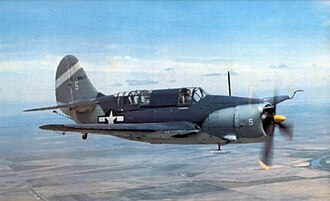
Curtiss SB2C Helldiver: The Complete History, Design, Performance, and Combat Legacy of America’s Powerful World War II Dive Bomber
The Curtiss SB2C Helldiver was one of the most important American naval aircraft developed during World War II, serving as a carrier-based dive bomber designed to attack enemy warships, military installations, transportation facilities, and other strategic targets. Manufactured by the Curtiss-Wright Corporation, the Helldiver was developed to replace the famous Douglas SBD Dauntless and provide the United States Navy with a faster, more powerful, and more capable dive-bombing aircraft. Its combination of a powerful radial engine, folding wings, internal bomb bay, defensive armament, and carrier-compatible landing equipment made it a formidable weapon in the Pacific theater. Although the aircraft experienced serious development difficulties and initially gained an unfavorable reputation among pilots and maintenance personnel, it eventually became an important component of American naval aviation during the final stages of the war.
Known by the unofficial nickname “The Beast,” the SB2C Helldiver was considerably larger and heavier than the aircraft it replaced. Its design reflected the changing requirements of naval warfare, when aircraft carriers were becoming increasingly important as offensive platforms and naval aviation was expected to deliver heavier weapons over greater distances. The Navy needed an aircraft capable of carrying substantial bomb loads while maintaining the speed, maneuverability, and structural strength required for operations from aircraft carriers. Curtiss attempted to satisfy these demanding requirements with a compact but heavily equipped aircraft that incorporated several advanced features for its time. Unfortunately, the combination of ambitious specifications, complex systems, and difficult development conditions resulted in a lengthy testing program and numerous technical problems.
Despite its troubled beginning, the Helldiver eventually demonstrated considerable combat value. It participated in major American naval operations across the Pacific, including campaigns against Japanese naval forces, airfields, industrial facilities, and military installations. During the battles of the Philippine Sea and Leyte Gulf, the aircraft became an increasingly familiar sight aboard American aircraft carriers. Its ability to carry bombs internally and externally, together with rockets and other weapons on later versions, gave it considerable flexibility in attacking different types of targets. By the end of World War II, the SB2C had become one of the principal dive bombers of the United States Navy and had helped establish the importance of increasingly versatile carrier-based strike aircraft.
The history of the Curtiss SB2C Helldiver is particularly interesting because it combines technological innovation, industrial expansion, engineering difficulties, and operational achievement. It demonstrates how difficult it could be to develop a new combat aircraft under the pressure of wartime requirements, especially when the aircraft had to satisfy demanding carrier-operating standards. The Helldiver also illustrates the evolution of naval aviation from specialized dive bombers toward more versatile aircraft capable of performing multiple attack missions. Although it was never as universally admired as its predecessor, the SB2C earned an important place in military aviation history through its contribution to the Allied victory in the Pacific.
The History and Development of the Curtiss SB2C Helldiver
The Need for a New American Navy Dive Bomber
During the late 1930s, the United States Navy recognized that its existing carrier-based aircraft would eventually become inadequate against increasingly capable enemy naval forces. The Douglas SBD Dauntless was still under development and would later become famous for its performance during the early Pacific War, but naval planners were already considering a more advanced replacement. The next generation of dive bombers needed to fly faster, carry heavier weapons, operate from modern aircraft carriers, and offer greater flexibility during combat missions.
The rapid development of aviation technology made this requirement especially important. Aircraft engines were becoming more powerful, airframe structures were improving, and military planners increasingly expected carrier aircraft to deliver substantial offensive capabilities. At the same time, American aircraft carriers were becoming larger and more sophisticated, allowing the Navy to operate heavier aircraft with greater payloads. The introduction of the Essex-class carriers further emphasized the need for a modern dive bomber capable of operating efficiently from these new ships.
In 1938, the Navy issued requirements for a new scout bomber that would combine reconnaissance and attack capabilities. The aircraft needed to carry a significant bomb load internally, incorporate folding wings for efficient storage aboard carriers, and provide adequate defensive protection for its two-person crew. Curtiss-Wright submitted a design that eventually became the SB2C Helldiver. The Navy selected the proposal because it offered an opportunity to obtain a modern monoplane dive bomber with substantially improved performance compared with earlier aircraft.
The Curtiss-Wright Corporation and the SB2C Project
The Curtiss-Wright Corporation was one of the most important American aircraft manufacturers of the first half of the twentieth century. The company had already produced numerous military and civilian aircraft, including fighters, trainers, and earlier dive bombers. Its experience in naval aviation made it a natural candidate for the development of a new carrier-based attack aircraft.
The SB2C project was led by a team of Curtiss engineers working to satisfy an unusually demanding set of military requirements. The aircraft needed to be compact enough for carrier storage while still providing sufficient internal volume for weapons, fuel, equipment, and two crew members. These requirements created considerable engineering challenges because the aircraft had to combine a relatively large payload with a structure strong enough to withstand the forces associated with dive bombing and carrier landings.
The Navy placed its production order in May 1939, before the prototype had completed its flight-testing program. This decision reflected the growing urgency of American military preparations as international tensions increased. The aircraft was designated SB2C, with the letters identifying it as a scout bomber developed by Curtiss. It also became the third Curtiss aircraft to carry the Helldiver name, although it was the first to use the name as its official service nickname.
The First Flight and Early Testing Problems
The first prototype, designated XSB2C-1, made its maiden flight on December 18, 1940. Its appearance represented an important milestone in the development of American carrier aviation, but the initial testing program quickly revealed numerous technical problems. The aircraft experienced difficulties involving stability, structural strength, control systems, and other components that required extensive modifications before it could become suitable for operational use.
The prototype was eventually lost in a crash, further complicating the development program. Additional testing revealed that the aircraft needed significant structural improvements, particularly in areas exposed to the stresses of carrier operations and steep dive-bombing maneuvers. The tail assembly, landing gear, hydraulic systems, and other components required attention before the Navy could confidently introduce the aircraft into frontline service.
The SB2C’s development was also affected by the rapid expansion of American military production after the outbreak of World War II. Curtiss needed to increase manufacturing capacity while simultaneously addressing engineering problems. The company constructed a major new production facility in Columbus, Ohio, specifically to support the aircraft program. This industrial expansion demonstrated the importance attached to the Helldiver, even while its technical difficulties remained unresolved.
The first production aircraft appeared in 1942, but additional modifications and operational evaluations delayed its widespread introduction. The Navy was determined to obtain a more capable dive bomber, yet the aircraft needed to demonstrate that it could safely operate from aircraft carriers before becoming a reliable replacement for the Dauntless.
Entry Into Operational Service
The SB2C Helldiver began reaching operational Navy units in late 1942 and 1943, but its introduction into carrier service was far from straightforward. Early carrier trials revealed problems with landing gear reliability, handling, and the aircraft’s tendency to bounce during arrested landings. A carrier aircraft must be capable of making controlled approaches and engaging the arresting cables reliably, because even relatively small landing difficulties can create serious hazards on a crowded flight deck.
The aircraft’s initial reputation suffered as a result of these problems. Pilots and maintenance crews had to become familiar with a machine that was more complex and demanding than the aircraft it was intended to replace. Its relatively short fuselage, large tail assembly, and heavy structure contributed to an appearance that was unusual compared with the sleek lines of some contemporary fighters and bombers.
The first major operational carrier deployment took place in October 1943, when Bombing Squadron 17 embarked aboard USS Bunker Hill. The Helldiver subsequently entered combat in the Pacific during November 1943. Its early operational experiences were challenging, but continued improvements gradually made the aircraft more dependable. As the war progressed, later versions incorporated important modifications that improved flight characteristics, weapon-carrying capabilities, and overall operational usefulness.
Design and Engineering Characteristics
General Airframe Configuration
The Curtiss SB2C Helldiver was a single-engine, two-seat, low-wing monoplane designed specifically for naval operations. Its fuselage was relatively deep and compact, with a large cockpit canopy accommodating the pilot and rear-seat radioman-gunner. The aircraft featured a conventional tail arrangement, retractable landing gear, and folding wings that allowed it to occupy less space inside an aircraft carrier hangar.
Its overall design was strongly influenced by the need to combine heavy weapon-carrying capacity with carrier compatibility. Unlike many land-based bombers, the Helldiver had to withstand the repeated stresses associated with catapult launches, arrested landings, and operations from a moving flight deck. Its structure therefore incorporated reinforced components and specialized equipment intended to meet the demands of naval service.
The wings were designed to fold for storage aboard aircraft carriers, reducing the space required when multiple aircraft were parked inside the hangar or on the flight deck. This feature was essential for an aircraft carrier, where available storage space was limited and operational efficiency depended on the ability to move aircraft quickly.
Wing Design and Dive Brakes
One of the most important features of the SB2C was its dive-bombing equipment. The aircraft incorporated perforated dive brakes that helped control speed during steep diving attacks. Dive bombing required pilots to descend toward a target at a carefully controlled angle, release their weapons at the appropriate moment, and recover safely without exceeding the aircraft’s structural limitations.
During a dive, gravity causes an aircraft to accelerate rapidly. Without an effective system for controlling airspeed, the aircraft could become difficult to manage or experience excessive structural loads. The Helldiver’s dive brakes increased aerodynamic drag and helped pilots maintain a more controlled descent. Their perforated construction reduced some of the airflow disturbances associated with conventional solid dive brakes and improved handling during the attack.
The wing design also incorporated folding mechanisms and structural reinforcements necessary for carrier operations. These features increased mechanical complexity, but they allowed the aircraft to combine a relatively substantial weapon load with the storage requirements of naval aviation.
Fuselage and Internal Bomb Bay
The Helldiver’s fuselage was designed around the requirement to carry bombs internally. This arrangement reduced external drag compared with carrying all weapons on wing-mounted racks and allowed the aircraft to maintain a relatively clean aerodynamic profile during transit.
The internal bomb bay could accommodate substantial weapons, including bombs weighing up to 2,000 pounds in suitable configurations. It could also be configured to carry an aerial torpedo, making the aircraft useful for different forms of naval attack. This flexibility was particularly valuable because American carrier aircraft were expected to attack both enemy warships and land-based targets.
The bomb bay was an important element of the aircraft’s overall design philosophy. Rather than developing a simple fighter with external bomb racks, Curtiss created a specialized attack aircraft capable of carrying heavy weapons while retaining the aerodynamic characteristics needed for dive bombing.
Engine and Propulsion System
The production SB2C Helldiver was powered by the Wright R-2600 Twin Cyclone, a fourteen-cylinder, air-cooled radial piston engine. Early versions used less powerful configurations, while later aircraft received the R-2600-20, which produced approximately 1,900 horsepower.
The R-2600 was a widely used American aircraft engine during World War II and powered several important military aircraft. Its radial arrangement provided substantial power and was suited to the demanding conditions of military operations. Air cooling eliminated the need for a liquid-cooling radiator system, although the engine still required careful temperature management and maintenance.
The later SB2C models used a four-bladed constant-speed propeller. This improved the aircraft’s propulsion arrangement and helped deliver the performance required for operations involving heavy bomb loads and demanding flight conditions. The engine’s power was especially important during takeoff from aircraft carriers, where pilots needed to accelerate rapidly while carrying weapons and fuel.
The combination of the R-2600 engine and the aircraft’s relatively heavy construction gave the Helldiver considerable power for its size. However, its performance depended heavily on aircraft weight, altitude, weather, and the weapons carried during a particular mission.
Performance and Flight Capabilities
Maximum Speed and Cruising Performance
The Curtiss SB2C Helldiver was considerably faster than many earlier American dive bombers. Depending on the variant and operating conditions, its maximum speed approached 295 mph (475 km/h), making it a relatively fast aircraft for a heavily armed carrier-based attack platform.
This speed was particularly important during combat operations because dive bombers needed to reach their targets, conduct their attacks, and return to their carriers while facing enemy fighters and antiaircraft defenses. A faster aircraft could reduce the time spent exposed to enemy fire and improve the flexibility of carrier strike formations.
The aircraft’s cruising speed was considerably lower than its maximum speed, as pilots needed to balance engine performance, fuel consumption, and mission requirements. During long-distance operations, fuel management was particularly important because the Helldiver frequently carried substantial bomb loads and sometimes additional external equipment.
Range and Operational Endurance
The SB2C was designed to operate over considerable distances from American aircraft carriers. Its internal fuel capacity provided the foundation for long-range missions, while additional external fuel tanks could extend its operational radius when required.
Depending on the aircraft configuration, payload, flight profile, and fuel reserves, the Helldiver could achieve a published range of approximately 1,165 miles (1,875 kilometers). Actual combat radius was necessarily shorter because aircraft had to account for the outbound journey, attack maneuvers, return flight, and potential changes in operational conditions.
Range was especially important during Pacific operations, where American carriers frequently operated far from established Allied airfields. The ability to launch aircraft against distant targets was a major advantage of carrier-based aviation, and the SB2C contributed to this capability through its combination of fuel capacity and weapon-carrying performance.
Climb Rate and Service Ceiling
The Helldiver had a published service ceiling of approximately 29,100 feet (8,870 meters), allowing it to operate at altitudes suitable for reconnaissance, transit, and certain attack missions. Its climb performance was influenced by the weight of fuel, ammunition, and weapons carried during departure.
The aircraft’s climb rate was approximately 1,800 feet per minute under representative published conditions. This performance was useful for gaining operational altitude after takeoff and establishing the aircraft within a carrier strike formation.
Although the Helldiver was not designed to compete with dedicated fighters in aerial combat, its performance gave it a reasonable ability to operate in the same general airspace as other carrier-based aircraft. Its principal strength, however, remained its ability to deliver heavy weapons against naval and ground targets.
Carrier Takeoff and Landing Performance
Carrier operations were among the most demanding aspects of the Helldiver’s design. Unlike land-based aircraft, the SB2C had to operate from a relatively short and moving runway, with takeoffs and landings taking place under changing wind and sea conditions.
The aircraft incorporated an arresting hook beneath the rear fuselage, allowing it to catch arresting cables during landing. Its landing gear was reinforced to withstand the impact forces associated with carrier recoveries, while the folding wings reduced storage requirements aboard ship.
The early Helldivers experienced significant difficulties during carrier trials, particularly involving landing gear failures and bouncing during arrested landings. These problems were among the reasons for the aircraft’s initial reputation as a difficult machine to operate. Improvements to the aircraft and greater pilot familiarity gradually reduced these difficulties, allowing the SB2C to become an established component of American carrier air groups.
Armament and Weapons Systems
Internal Bomb-Carrying Capability
The principal purpose of the SB2C Helldiver was to deliver bombs accurately against enemy targets. Its internal bomb bay allowed it to carry a substantial weapon load while maintaining a relatively streamlined aerodynamic configuration during flight.
The aircraft could carry up to approximately 2,000 pounds of bombs internally in suitable configurations. This provided considerable striking power for a single-engine aircraft and made the Helldiver particularly useful against warships, military installations, port facilities, and industrial targets.
The internal bomb bay also allowed the aircraft to carry different types of ordnance depending on the mission. Conventional high-explosive bombs were particularly effective against ships and hardened military installations, while other weapons could be selected for attacks against airfields, transport infrastructure, and ground forces.
Torpedo-Carrying Capability
In addition to bombs, the Helldiver was designed with the capability to carry an aerial torpedo. This feature reflected the Navy’s interest in developing a flexible aircraft capable of performing both dive-bombing and torpedo-attack missions.
Torpedoes were important weapons in naval warfare because they could strike below the waterline of enemy vessels and potentially cause catastrophic damage. However, torpedo attacks required pilots to approach targets under specific conditions and expose their aircraft to defensive fire.
The SB2C’s ability to accommodate a torpedo added to its theoretical mission flexibility, although its best-known wartime role remained dive bombing and conventional attack operations.
Wing-Mounted Bombs and Rockets
Later Helldiver variants received improved external weapons installations. The SB2C-3 and SB2C-4 could carry rockets beneath their wings, significantly expanding their usefulness against different categories of targets.
The SB2C-4 was particularly important because it incorporated eight rocket rails, allowing it to carry 5-inch high-velocity aircraft rockets. These weapons could be used against ships, ground installations, vehicles, and other targets that required a different attack profile from conventional dive bombing.
External bomb racks also allowed the aircraft to carry additional weapons. This increased its flexibility but created additional aerodynamic drag and could affect speed, range, and handling.
The introduction of rockets reflected a wider trend in military aviation during the final years of World War II. Aircraft were increasingly expected to perform multiple types of attack missions, rather than concentrating exclusively on one specialized role.
Defensive Machine Guns and Cannons
The SB2C Helldiver was equipped with forward-firing wing guns and defensive weapons operated by the rear crew member. Early configurations differed from later models, but the principal armament of the SB2C-4 included two 20 mm cannons mounted in the wings.
The rear cockpit contained defensive machine guns intended to protect the aircraft against enemy fighters approaching from behind. These weapons provided an additional defensive capability, although the Helldiver was not intended to engage dedicated fighter aircraft in prolonged aerial combat.
Its forward-firing cannons could also be used against ground targets during strafing attacks. This provided another operational option when the aircraft was not carrying a full bomb load or when pilots encountered suitable targets during an attack mission.
Major Curtiss SB2C Helldiver Variants
The SB2C family evolved considerably between its initial development and the final production versions. Improvements to the engine, propeller, wing equipment, radar systems, and weapons installations helped transform the original aircraft into a more effective combat platform.
XSB2C-1: The Experimental Prototype
The XSB2C-1 was the original prototype developed to demonstrate the aircraft’s design and performance characteristics. It first flew in December 1940 and was intended to provide the Navy with a modern replacement for the SBD Dauntless.
The prototype incorporated the principal features of the planned production aircraft, including a two-person crew, folding wings, internal bomb bay, and carrier landing equipment. However, flight testing exposed several serious engineering problems that required substantial modifications.
The loss of the prototype and the difficulties encountered during development contributed to the delays that affected the aircraft’s operational introduction. Nevertheless, the experience gained during this period helped establish the technical foundation for later production versions.
SB2C-1: The Initial Production Version
The SB2C-1 was the first major production version delivered to the United States Navy. It incorporated changes made in response to prototype testing and included the equipment required for operational carrier service.
Although the aircraft represented an important advancement over earlier dive bombers, it continued to suffer from technical and handling difficulties. Its early service experience demonstrated that further improvements were necessary before it could completely replace the Dauntless.
The SB2C-1 played an important role in introducing Navy pilots and maintenance personnel to the new aircraft. Its limitations also provided valuable information for the development of subsequent versions.
SB2C-1C: Improved Cannon Armament
The SB2C-1C introduced an improved forward armament arrangement featuring two 20 mm cannons. This gave the aircraft greater offensive firepower against enemy aircraft and ground targets compared with earlier machine-gun configurations.
The addition of cannons was part of the broader effort to improve the combat effectiveness of American naval aircraft. By this stage of the war, heavily armed attack aircraft were becoming increasingly important because they needed to operate in environments containing substantial enemy antiaircraft defenses.
SB2C-3: More Powerful Engine and Improved Dive Brakes
The SB2C-3 introduced one of the most significant improvements in the Helldiver family. It received the more powerful Wright R-2600-20 engine, producing approximately 1,900 horsepower, together with a four-bladed propeller.
These changes improved the aircraft’s performance and addressed some of the limitations associated with earlier configurations. The variant also incorporated perforated dive brakes and additional rocket-carrying equipment.
The SB2C-3 became an important production version and helped establish the Helldiver as a practical frontline carrier aircraft. Its improved engine and weapons capabilities made it more effective in the increasingly demanding Pacific campaign.
SB2C-4: The Main Wartime Production Version
The SB2C-4 was one of the most important versions of the Helldiver and became a major component of American carrier aviation during the final stages of World War II.
This model incorporated improvements to the dive brakes, weapons installations, and general operational equipment. Its eight rocket rails provided additional attack flexibility, allowing pilots to employ rockets against targets that might not be ideally suited to conventional dive bombing.
The SB2C-4 combined the more powerful R-2600-20 engine with improved dive-bombing equipment and substantial weapons-carrying capability. It was widely used during major American naval operations in 1944 and 1945.
Its importance lies not only in its production numbers but also in the maturity of its design. By the time this version became widely available, many of the problems that had affected the early Helldivers had been addressed through modifications and operational experience.
SB2C-4E: The Radar-Equipped Variant
The SB2C-4E was developed with additional radar equipment for missions requiring improved detection and navigation capabilities. The radar installation expanded the aircraft’s usefulness in conditions where visual identification of targets was difficult.
Airborne radar was becoming increasingly important in naval aviation, particularly for operations at night and in poor visibility. The technology allowed aircraft to detect certain surface targets and improve their ability to navigate and operate in challenging conditions.
The SB2C-4E demonstrated how the Helldiver could be adapted to incorporate increasingly sophisticated electronic equipment while retaining its principal attack capabilities.
SB2C-5: The Final Production Version
The SB2C-5 represented the final major production development of the Helldiver. It incorporated additional fuel capacity, further refinements to the cockpit arrangement, and improved radar equipment.
The increased fuel capacity helped extend the aircraft’s operational endurance, while other modifications reflected the experience accumulated during earlier combat operations. The aircraft also featured a four-bladed propeller and other improvements inherited from previous versions.
Although the SB2C-5 entered production during the final months of World War II, it arrived too late to participate extensively in the major combat operations of the conflict. Nevertheless, it continued to serve during the immediate postwar period and became an important part of the aircraft’s final development history.
Canadian-Built Versions: SBF and SBW
The production requirements of World War II encouraged the United States to expand aircraft manufacturing beyond its principal domestic factories. Canadian manufacturers contributed to the production of the Helldiver, helping satisfy the enormous demand for naval aircraft.
Fairchild Aircraft of Canada manufactured Helldivers designated SBF, while Canadian Car and Foundry produced aircraft designated SBW. These aircraft were based on the corresponding American SB2C designs and demonstrated the importance of international industrial cooperation during the war.
The Canadian production programs helped expand the number of aircraft available to Allied forces and reduced pressure on American manufacturing facilities.
The A-25 Shrike: The United States Army Version
The Helldiver also attracted interest from the United States Army Air Forces, which required a land-based dive bomber capable of performing missions similar to those of the Navy aircraft.
The resulting aircraft was designated A-25 Shrike. It was based on the SB2C design but incorporated changes appropriate for land-based operations, including modifications to equipment and carrier-specific features.
The A-25 demonstrated that the basic Helldiver design could be adapted to a different military environment. However, changing operational priorities and the growing importance of other attack aircraft limited its usefulness within the Army Air Forces.
Combat History During World War II
Early Combat Operations in the Pacific
The Pacific theater provided the environment in which the SB2C Helldiver would eventually establish its reputation. American carrier forces were conducting increasingly powerful operations against Japanese military positions, naval bases, and airfields, and the Navy required an aircraft capable of delivering heavy weapons with considerable accuracy.
The Helldiver’s early combat introduction in November 1943 came during a period when American forces were expanding their offensive operations across the central Pacific. Although the aircraft initially faced technical challenges, its ability to carry substantial weapons made it an important addition to carrier strike groups.
As more improved versions became available, the SB2C gradually replaced the SBD Dauntless in many frontline Navy units. This transition was not immediate, because the Dauntless remained a respected and dependable aircraft, but the Navy increasingly needed the greater speed and payload capacity of the newer design.
The Mariana Islands Campaign and the Battle of the Philippine Sea
The Mariana Islands campaign represented an important stage in the Helldiver’s combat history. American forces sought to capture strategic islands that would provide airfields and support future operations closer to Japan.
During the Battle of the Philippine Sea in June 1944, American carrier aircraft played a major role in attacking Japanese naval forces. The battle became one of the largest carrier-aircraft engagements of the war and demonstrated the growing superiority of American naval aviation.
The Helldiver participated in strike operations against Japanese ships and military positions. Its ability to carry heavy bombs and operate as part of coordinated carrier formations made it valuable during these missions.
The battle also demonstrated the importance of aircraft carriers as offensive platforms. American forces could launch large numbers of aircraft from multiple carriers, coordinate attacks over considerable distances, and sustain operations through an extensive logistical network.
The Battle of Leyte Gulf
The Battle of Leyte Gulf, fought in October 1944, was one of the largest naval battles in history and represented another important stage in the operational development of the Helldiver.
American carrier aircraft attacked Japanese naval formations during a series of engagements involving multiple fleets. The SB2C participated in strike missions against enemy vessels and contributed to the offensive power of American carrier groups.
The battle demonstrated that the Helldiver had become an established component of naval aviation. Although it had experienced a difficult development history, the aircraft was now being used extensively in demanding combat operations.
Its combination of heavy bomb-carrying capacity, rockets, and improved dive-bombing equipment made it suitable for attacks against different types of targets. The Helldiver’s participation at Leyte Gulf also illustrated the growing importance of coordinated air attacks in modern naval warfare.
Operations Against Japanese Naval Bases and Industrial Targets
During 1945, American carrier forces conducted increasingly frequent attacks against Japanese naval bases, airfields, industrial facilities, and other strategic targets. The Helldiver became an important element of these operations because it could deliver heavy weapons against both land and maritime targets.
Aircraft operating from carriers attacked military installations, transportation infrastructure, shipping facilities, and industrial complexes. The availability of rockets and external bomb racks gave later Helldiver variants additional flexibility during these missions.
As American forces moved closer to the Japanese home islands, carrier-based aviation became an increasingly important instrument of military pressure. The SB2C contributed to this campaign alongside fighters, torpedo bombers, and other attack aircraft.
The Battle of Okinawa
The Battle of Okinawa, which began in April 1945, represented one of the largest and most demanding American military operations in the Pacific. Carrier aviation played a central role in supporting Allied forces, attacking Japanese aircraft and naval vessels, and striking military positions on the island.
The Helldiver participated in operations against ground and maritime targets, using bombs and rockets to support the broader offensive. Its ability to carry a substantial weapon load made it useful for attacks against fortified positions and installations.
The battle also highlighted the dangers faced by carrier aircraft operating against determined Japanese defenses. Antiaircraft fire, enemy fighters, and changing weather conditions created difficult operational environments.
The SB2C’s contribution to the Okinawa campaign formed part of its wider record during the final year of World War II. By this stage, the aircraft had become a familiar and important component of American naval strike formations.
The Final Months of World War II
During the final months of the conflict, the Helldiver continued to operate from American carriers as Allied forces intensified attacks against Japanese military and industrial targets. Improved versions, particularly the SB2C-4 and SB2C-5, offered better performance and greater mission flexibility than the early aircraft.
The war ended before the SB2C-5 could see extensive frontline service, but the Helldiver had already established its position as one of the principal American naval dive bombers of the conflict.
Its wartime service demonstrated the value of combining speed, payload capacity, and carrier compatibility in a single aircraft. It also illustrated the increasing difficulty of maintaining a specialized dive-bomber role as more advanced multi-purpose aircraft became available.
The Helldiver After World War II
Postwar Service With the United States Navy
Following the end of World War II, the SB2C remained in American naval service for several years. Although newer aircraft were being developed, the Helldiver continued to provide useful attack capabilities during the immediate postwar period.
The aircraft served aboard American carriers and supported training, patrol, and other naval aviation activities. Its operational experience during the war had demonstrated that it could perform a wide range of missions, but advances in aircraft technology were rapidly changing the requirements of naval aviation.
The development of more capable multi-role aircraft gradually reduced the need for specialized dive bombers. Jet-powered aircraft were also becoming increasingly important, introducing new performance standards that piston-engine aircraft could not easily match.
As a result, the SB2C gradually disappeared from frontline American service. Nevertheless, it remained an important part of the transition between the specialized carrier aircraft of the 1930s and the more versatile naval attack aircraft of the postwar era.
International Operators
The Helldiver also served with several foreign military organizations after World War II. France was among the most important international operators, using the aircraft in naval aviation activities and during the conflict in Indochina.
The French Navy operated Helldivers from its aircraft carriers, demonstrating that the aircraft retained considerable usefulness after its American frontline career had begun to decline. These operations provided an opportunity to use the aircraft in a different geographical and operational environment.
Other countries also operated former American Helldivers, including Greece, Italy, and Portugal. Their use demonstrated the aircraft’s continued value as a relatively capable attack platform during the early postwar period.
International service extended the operational life of the design and helped preserve its importance in the history of military aviation. Although the SB2C eventually became obsolete, it remained useful for countries that needed established piston-engine combat aircraft during the transition to newer technologies.
Strengths and Weaknesses of the Curtiss SB2C Helldiver
Major Strengths
The Curtiss SB2C Helldiver offered several important advantages that made it valuable to the United States Navy. Its most significant strength was its ability to carry a substantial weapons load while operating from aircraft carriers. The internal bomb bay allowed it to transport heavy weapons without relying entirely on external installations, while later variants could carry rockets and additional bombs beneath the wings.
Another major advantage was its speed. Compared with earlier dive bombers, the Helldiver provided improved cruising and maximum-speed performance, helping carrier strike formations reach their targets more efficiently. Its more powerful engine also provided the performance needed to operate with heavy weapons and fuel loads.
The aircraft’s flexibility was another important strength. It could be employed against warships, ground installations, industrial targets, and other military objectives. Its ability to carry different types of ordnance allowed carrier commanders to adapt their strike formations to changing mission requirements.
Finally, the aircraft benefited from continuous improvements throughout its production history. Later versions incorporated more powerful engines, improved dive brakes, additional rocket rails, and better radar equipment. These changes significantly improved its operational usefulness compared with the earliest production models.
Major Weaknesses
Despite its impressive capabilities, the Helldiver experienced serious problems throughout its development and early service history. Its reputation was particularly affected by structural difficulties, unreliable components, and challenging carrier-landing characteristics.
The aircraft’s initial handling characteristics also created difficulties for pilots transitioning from the Douglas SBD Dauntless. The Helldiver was heavier and more complex, requiring familiarity with its flight characteristics and operating procedures.
Maintenance requirements were another disadvantage. The aircraft incorporated numerous mechanical systems, including folding wings, hydraulic equipment, dive brakes, retractable landing gear, and specialized carrier equipment. These systems required regular attention and created additional work for maintenance personnel.
Its size and weight also affected some aspects of carrier operations. Although it was designed specifically for aircraft carriers, its relatively heavy structure made takeoff and landing performance dependent on careful operating procedures and suitable environmental conditions.
The Helldiver’s greatest historical weakness was arguably the timing of its introduction. Its development took longer than anticipated, meaning that it arrived after the war had already begun and the Navy had become heavily dependent on the Dauntless. By the time the Helldiver reached maturity, naval aviation was moving toward more versatile aircraft that could perform several missions without requiring a specialized dive-bomber design.
Comparing the Curtiss SB2C Helldiver With Other World War II Aircraft
SB2C Helldiver vs. Douglas SBD Dauntless
Curtiss SB2C Helldiver
The newer, faster, and heavier successor, designed to carry a larger weapons load and operate with improved performance.
Douglas SBD Dauntless
The dependable predecessor, famous for its contribution to the Battle of Midway and early American victories in the Pacific.
The comparison between the SB2C Helldiver and the SBD Dauntless is particularly important because the two aircraft represented different generations of American naval aviation. The Dauntless was smaller, slower, and less heavily armed, but it earned an outstanding reputation for reliability and combat effectiveness during the early Pacific War.
The Helldiver was designed to improve upon the Dauntless through higher speed, increased weapons capacity, and more advanced equipment. However, the new aircraft initially struggled with reliability and handling problems, meaning that its technological advantages did not immediately translate into greater operational effectiveness.
Eventually, the SB2C became the Navy’s principal dive bomber, but the Dauntless retained its legendary reputation because of its achievements during the early stages of the war.
SB2C Helldiver vs. Aichi D3A Val
The Aichi D3A Val was one of Japan’s principal carrier-based dive bombers during the early Pacific War. It was widely used in the attack on Pearl Harbor and other Japanese naval operations.
Compared with the D3A, the Helldiver was a more modern design with greater speed and a heavier weapons-carrying capability. The Japanese aircraft was developed earlier and reflected the requirements of Japanese carrier aviation during the 1930s.
The difference between these aircraft illustrates the technological evolution of naval dive bombing during World War II. By the final years of the conflict, American carrier aircraft had become considerably more capable in terms of payload, propulsion, and onboard equipment.
SB2C Helldiver vs. Junkers Ju 87 Stuka
The Junkers Ju 87 Stuka was another famous dive bomber, although it was primarily designed for land-based operations rather than aircraft carrier service.
Both aircraft were developed around the principle of delivering weapons accurately through steep diving attacks. However, their intended operational environments were very different.
The Stuka became famous for its early success in European campaigns, where it supported German ground forces through precision attacks. The Helldiver was designed specifically for naval aviation, with folding wings, reinforced landing gear, an arresting hook, and an internal bomb bay.
Their comparison demonstrates that dive bombers could be adapted to very different military environments while sharing the same basic tactical principle.
Why the Curtiss SB2C Helldiver Was Nicknamed “The Beast”
The nickname “The Beast” became closely associated with the Helldiver because of its difficult development and early operational experiences. The aircraft was larger and heavier than the Dauntless, and its handling characteristics initially created challenges for pilots who were accustomed to the older aircraft.
Its relatively compact fuselage and large tail assembly gave it an unusual appearance, while its complex mechanical systems increased the maintenance burden. The problems encountered during carrier trials further contributed to its unfavorable reputation.
However, the nickname should not be interpreted as a complete description of the aircraft’s operational performance. As engineering improvements were introduced, the Helldiver became a considerably more capable and dependable combat aircraft.
Later variants demonstrated that the original design had significant potential. The SB2C-3 and SB2C-4, in particular, became effective frontline aircraft and contributed substantially to American naval operations in the Pacific.
The story of “The Beast” is therefore also a story of engineering development and adaptation. It demonstrates that an aircraft’s initial reputation does not necessarily determine its eventual contribution to military aviation.
The Curtiss SB2C Helldiver’s Historical Significance
An Important Step in American Naval Aviation
The SB2C Helldiver represents an important stage in the development of American carrier-based aviation. It was designed during a period when aircraft carriers were becoming increasingly important as the primary offensive platforms of naval warfare.
Its development reflected the Navy’s growing requirement for aircraft capable of delivering heavier weapons at higher speeds and over longer distances. The Helldiver helped satisfy these requirements and demonstrated the value of combining substantial bomb-carrying capacity with carrier compatibility.
Its combat history also illustrated the importance of industrial production. The aircraft was manufactured in large numbers, including versions produced in Canada, demonstrating how Allied manufacturing cooperation supported wartime aviation requirements.
The Evolution From Specialized Dive Bombers to Multi-Role Aircraft
One of the most interesting aspects of the Helldiver’s history is that it became one of the last major specialized American naval dive bombers.
During World War II, improvements in aircraft performance, weapons technology, and targeting equipment gradually reduced the need for aircraft dedicated exclusively to dive bombing. Later aircraft could deliver comparable weapons loads using different attack techniques and more flexible mission profiles.
The SB2C therefore represents the final stage of an important period in military aviation. It was developed as a specialized solution to a particular tactical requirement, but its service career coincided with the transition toward more versatile naval strike aircraft.
A Lasting Legacy in Aviation History
Today, the Curtiss SB2C Helldiver remains an important subject for aviation historians, aircraft collectors, and military enthusiasts. Its development history offers valuable lessons about the difficulties of designing complex combat aircraft under wartime pressure.
Surviving examples can be found in aviation museums, where they help preserve the history of American naval aviation and the technological changes that occurred during World War II.
The aircraft is also remembered for its contribution to the Pacific campaign, where American carrier aviation played a decisive role in weakening Japanese naval power. Although the Helldiver never achieved the same level of public admiration as the Dauntless, its combat record and engineering development make it an essential part of the history of World War II aircraft.
Technical Specifications of the Curtiss SB2C Helldiver
The following table presents representative technical specifications for the Curtiss SB2C-4 Helldiver, one of the most important production versions used during World War II. Specifications can differ between variants, particularly in engine power, weapons installations, equipment, and fuel capacity.
Curtiss SB2C-4 Technical Specifications
| Specification | Technical data |
|---|---|
| Aircraft designation | Curtiss SB2C-4 |
| Aircraft name | Helldiver |
| Manufacturer | Curtiss-Wright Corporation |
| Country of origin | United States |
| Aircraft category | Carrier-based dive bomber |
| First prototype flight | December 18, 1940 |
| Crew | 2 |
| Engine | Wright R-2600-20 Twin Cyclone |
| Engine configuration | 14-cylinder radial, air-cooled |
| Engine power | 1,900 hp (1,417 kW) |
| Propeller | Four-bladed constant-speed |
| Length | 36 ft 8 in (11.18 m) |
| Wingspan | 49 ft 9 in (15.16 m) |
| Height | 13 ft 2 in (4.01 m) |
| Wing area | 422 sq ft (39.2 m²) |
| Empty weight | 10,547 lb (4,784 kg) |
| Maximum loaded weight | 16,616 lb (7,537 kg) |
| Maximum speed | 295 mph (475 km/h) |
| Cruise speed | 158 mph (254 km/h) |
| Service ceiling | 29,100 ft (8,870 m) |
| Rate of climb | 1,800 ft/min (9.1 m/s) |
| Published range | Approximately 1,165 miles (1,875 km) |
| Main armament | 2 × 20 mm wing cannons |
| Defensive armament | 2 × 0.30-inch machine guns |
| Bomb capacity | Up to 2,000 lb (907 kg) internally |
| Rocket capacity | Up to 8 × 5-inch aircraft rockets |
| Additional weapons | External bombs and other approved ordnance |
| Landing gear | Retractable |
| Carrier equipment | Folding wings and arresting hook |
| Primary operator | United States Navy |
| Operational introduction | 1943 |
| Main combat theater | Pacific theater |
| Production status | Discontinued |
Specifications are representative published figures for the SB2C-4. Actual performance depended on aircraft configuration, altitude, weight, and operating conditions. Sources: Smithsonian National Air and Space Museum and aviation historical references.
Conclusion
The Curtiss SB2C Helldiver was a significant American naval aircraft whose history reflects both the achievements and challenges of wartime aircraft development. Designed to replace the Douglas SBD Dauntless, it offered greater speed, improved weapons capacity, and the ability to perform a variety of attack missions from aircraft carriers. Its sophisticated design incorporated folding wings, an internal bomb bay, powerful radial propulsion, and specialized dive brakes, making it one of the most capable American dive bombers of the final years of World War II.
Despite its difficult development and early operational problems, the Helldiver eventually became an important part of American naval aviation. Its participation in the Philippine Sea, Leyte Gulf, Okinawa, and other Pacific operations demonstrated its usefulness against enemy ships, military installations, and strategic targets. Improvements introduced through successive production variants helped transform the aircraft into a more dependable and effective combat platform.
The SB2C also represents the end of an important era in aviation history. As aircraft technology advanced, specialized dive bombers gradually gave way to more versatile attack aircraft capable of carrying out a wider variety of missions. Nevertheless, the Helldiver remains a fascinating example of American engineering and industrial production during World War II.
Although it never achieved the same legendary reputation as the Dauntless, the Curtiss SB2C Helldiver deserves recognition for its contribution to Allied naval operations and its place in the evolution of carrier-based combat aircraft. Its combination of engineering ambition, operational experience, and historical significance ensures that it remains one of the most interesting aircraft of the Second World War.
