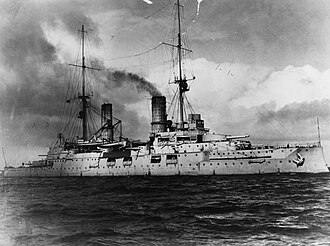
SMS Kaiser Wilhelm II: The German Pre-Dreadnought That Led the Fleet
SMS Kaiser Wilhelm II was one of the most important battleships of Germany’s pre-dreadnought era and the second vessel of the Kaiser Friedrich III class. Laid down at the Imperial Dockyard in Wilhelmshaven on 26 October 1896, launched on 14 September 1897, and commissioned on 13 February 1900, she entered service at a moment when the German Navy was rapidly developing into a serious ocean-going battle force. Although she never fought a major naval engagement, Kaiser Wilhelm II occupied an especially prestigious position: for much of her early career she served as the flagship of Germany’s Active Battle Fleet, making her one of the most visible symbols of Imperial Germany’s growing naval ambitions.
The ship belonged to a class of five battleships that marked an important departure from the earlier Brandenburg design. Instead of the Brandenburgs’ unusual six-gun main battery distributed among three twin turrets, the Kaiser Friedrich III class adopted four 24 cm guns in two twin turrets and placed much greater emphasis on a powerful secondary battery. Eighteen 15 cm quick-firing guns gave Kaiser Wilhelm II an impressive volume of medium-caliber fire, while heavy armor and three-shaft propulsion reflected the increasingly sophisticated approach of German naval architects. The resulting ship was a classic pre-dreadnought: heavily armored, strongly armed, and designed to fight in a traditional battle line, yet already incorporating features that would influence later German battleship construction.
Her career illustrates the extraordinary speed of naval technological change around the turn of the twentieth century. When Kaiser Wilhelm II became the fleet flagship in 1900, she represented the cutting edge of German naval power. By 1906, however, newer ships had replaced her in that role, and after the appearance of dreadnought battleships she rapidly became obsolete. She was modernized between 1909 and 1910, reactivated for training and reserve duties, and then returned to service when the First World War began. Her wartime career was largely confined to coastal defense and limited Baltic operations before she was withdrawn from frontline service. Ultimately, she was struck from the naval register in 1921 and scrapped the following year.
The Kaiser Friedrich III Class
A New Direction for German Battleship Design
The Kaiser Friedrich III class represented an important stage in Germany’s transition from the experimental battleships of the early 1890s toward the standardized pre-dreadnoughts that would dominate the Imperial Navy during the following decade. The four Brandenburg-class ships had demonstrated Germany’s ability to construct large ocean-going battleships, but their unusual three-turret arrangement was not repeated. Instead, German designers returned to the more conventional arrangement of two twin main-gun turrets, one forward and one aft. The reduction from six to four heavy guns may initially appear to have been a step backward, but it reflected a different interpretation of naval gunnery. The 24 cm guns were rapid-firing weapons, while the secondary battery was greatly expanded to compensate for the smaller number and caliber of the main guns.
This design philosophy reflected contemporary expectations about how battleships would actually fight. German naval planners believed that a large number of quick-firing medium-caliber guns could inflict severe damage on an enemy’s lightly protected areas, including superstructures, secondary weapons, communications equipment, and exposed personnel. At relatively short battle ranges, the sheer volume of shells delivered by eighteen 15 cm guns could potentially disrupt an opposing battleship even if the ship’s four 24 cm weapons were fewer than the heavy guns carried by some foreign contemporaries. The result was a battleship that placed considerable emphasis on a balanced combination of armor, heavy guns, and rapid secondary fire.
Kaiser Wilhelm II also incorporated several features that became characteristic of later German capital ships. Her three triple-expansion engines drove three propeller shafts, giving the ship redundancy in her propulsion system and a maximum speed of roughly 17.5 knots. Steam was supplied by twelve boilers of different types, while the hull measured 125.3 meters overall and 20.4 meters across the beam. Her design displacement was around 11,000 tonnes, making her substantially larger than many earlier German battleships.
Named for the German Emperor
The ship’s name carried an obvious political significance. Kaiser Wilhelm II was named for Wilhelm II, German Emperor and King of Prussia from 1888 until the end of the First World War. Naming a major battleship after the reigning monarch reflected the close relationship between the Imperial Navy and the imperial state. The ship was consequently more than a weapon of war; she was also a floating representation of imperial prestige.
Her commissioning in February 1900 came during a period when Wilhelm II was increasingly associated with the expansion of Germany’s naval power. Under the later naval legislation championed by Admiral Alfred von Tirpitz, the Imperial Navy would grow enormously. Kaiser Wilhelm II predated the full realization of that program, but she belonged to the generation of ships that made the subsequent expansion possible. Her role as fleet flagship gave the emperor and senior naval commanders a prominent platform from which to demonstrate the growing importance of Germany’s battle fleet.
Armament and Armor
Four Powerful 24 cm Guns
The main battery of Kaiser Wilhelm II consisted of four 24 cm SK L/40 quick-firing guns mounted in two twin turrets. One turret stood forward and the other aft, giving the ship a conventional centerline arrangement and allowing both turrets to contribute to a broadside. Although the 24 cm caliber was smaller than the 28 cm guns carried by the preceding Brandenburg class, the weapons offered a significantly higher rate of fire.
The real artillery strength of the ship was her secondary battery. Eighteen 15 cm SK L/40 guns were distributed among turrets and protected casemates. This was an exceptionally large secondary armament for a battleship of the period. Twelve 8.8 cm quick-firing guns provided close-range protection against torpedo boats, while twelve small-caliber machine cannon were originally carried for even shorter-range defense. Six 45 cm torpedo tubes completed the original armament.
The armament reflected a period when naval warfare was still dominated by uncertainty about the ideal balance between heavy and medium artillery. The later dreadnought concept would demonstrate the advantages of concentrating firepower in large-caliber guns, but in 1896–1900 the Kaiser Friedrich III design was considered a sophisticated solution. It attempted to make the battleship dangerous at several ranges rather than relying exclusively on a small number of enormous guns.
Heavy Protection
Protection was another major feature of Kaiser Wilhelm II. Her main belt armor reached approximately 300 mm, while the armored deck was around 65 mm thick. The main gun turrets and conning tower were protected by approximately 250 mm of armor, and the secondary-gun casemates received about 150 mm. Such protection reflected the German preference for heavily armored capital ships capable of remaining effective after sustaining substantial damage.
The use of advanced armor technology was particularly important. By the late nineteenth century, improvements in metallurgy were allowing designers to achieve greater resistance without simply adding enormous quantities of metal. This helped make large battleships both more heavily protected and more manageable in terms of displacement.
The armor scheme also reflected the tactical assumptions of the time. Battleships were expected to fight in relatively close formations, potentially absorbing repeated hits while maintaining their position in the line. The extensive protection of the magazines, machinery spaces, turrets, and command facilities was therefore essential to the ship’s intended role as a battle-line unit.
Becoming the Fleet Flagship
Commissioned Into a Growing Navy
After her launch in September 1897, Kaiser Wilhelm II underwent several years of fitting-out and trials before being commissioned on 13 February 1900. She entered the I Squadron of the Active Battle Fleet and simultaneously became the fleet flagship. This was a prestigious appointment that would define the first part of her operational career.
As flagship, she carried not only her normal ship’s company but also the admiral’s staff. Her duties extended beyond those of an ordinary battleship. She served as the command center for fleet exercises, carried senior officers, hosted official visitors, and represented the German Empire during foreign cruises and ceremonial occasions. The ship therefore combined military and diplomatic functions.
Her early years were dominated by training. The German Navy placed enormous importance on exercises because large battle fleets required crews to master complicated procedures for maneuvering, signaling, gunnery, navigation, and formation keeping. These exercises were the foundation upon which the later High Seas Fleet would be built.
Kaiser Wilhelm II participated in numerous exercises and cruises, including visits to foreign ports. In 1903 she cruised to Spain, while other peacetime voyages took her toward Norway and Britain. Such cruises were useful training opportunities but also demonstrated Germany’s increasing confidence in operating major warships beyond home waters.
A Collision With SMS Amazone
On 24 May 1902, Kaiser Wilhelm II was involved in an accident with the small cruiser SMS Amazone. During a formation exercise, the cruiser was rammed by the battleship in the area behind the battleship’s foremast. The incident demonstrated one of the practical dangers associated with maneuvering large warships in close formation.
Such accidents were not unusual in an era when fleets were learning how to operate increasingly large numbers of powerful ships together. Commanders had to account for enormous differences in turning radius, stopping distance, and maneuvering characteristics. A battleship weighing more than 11,000 tonnes could not react like a small cruiser or destroyer, and a mistake in formation could have serious consequences.
The Flagship Years
Exercises, Cruises, and Naval Diplomacy
For much of the first decade of the twentieth century, Kaiser Wilhelm II served at the heart of the German fleet. Her role as flagship meant that she was repeatedly involved in the annual cycle of fleet exercises. These included North Sea and Baltic operations, winter training cruises, and large-scale maneuvers intended to simulate wartime situations.
The ship also benefited from the experience of senior commanders. Her bridge and command spaces became places where German officers developed the procedures that would later be used by the High Seas Fleet. Although the ship herself never entered a major battle, her importance as a training and command platform should not be underestimated.
In 1906, however, Kaiser Wilhelm II lost her position as fleet flagship when the newer battleship SMS Deutschland entered service. This change reflected a broader transformation within the German Navy. Newer pre-dreadnoughts were larger and more capable, and the Imperial Navy was increasingly acquiring ships designed specifically for a major fleet confrontation with other naval powers.
Modernization and Obsolescence
The Arrival of New Battleships
The years after 1906 were difficult for older German battleships. The appearance of HMS Dreadnought in 1906 created a technological divide between earlier pre-dreadnoughts and the new generation of all-big-gun battleships. A ship such as Kaiser Wilhelm II, with four 24 cm main guns and eighteen 15 cm secondary weapons, belonged to a fundamentally different design philosophy.
The problem was not simply that her main guns were smaller. Dreadnoughts combined larger artillery with improved fire-control arrangements, greater displacement, and modern propulsion. In a direct confrontation, an older pre-dreadnought would struggle to compete with the concentrated heavy-gun fire of a dreadnought.
Germany nevertheless attempted to prolong the useful life of its older battleships. Kaiser Wilhelm II was taken out of active service in 1908 and underwent a major reconstruction during 1909–1910. Her superstructure was cut down to reduce excessive top weight, her funnels were altered, the fighting tops on the masts were removed, and her conning tower was enlarged. The secondary battery was also revised, with four 15 cm guns removed and additional 8.8 cm guns installed.
These changes substantially altered the ship’s appearance. More importantly, they addressed some of the stability problems that had affected the class. The Kaiser Friedrich III ships had relatively tall superstructures, and reducing the weight carried high above the waterline improved their stability and made them more suitable for continued service.
The First World War
Reactivation in 1914
When war broke out in August 1914, Germany reactivated Kaiser Wilhelm II. She became the flagship of the newly organized V Battle Squadron and was employed mainly for coastal defense in the North Sea. She also participated in occasional operations in the Baltic.
Her wartime duties demonstrated both her continuing usefulness and her limitations. She still possessed heavy armor and substantial artillery, making her potentially valuable for defending German coastal waters. But she was too slow and too lightly armed in comparison with modern dreadnoughts to be entrusted with a major role in the principal battle fleet.
One proposed operation in the Baltic involved an intended German landing near Windau in September 1914, although the operation was ultimately abandoned. Such missions illustrate the sort of secondary strategic role available to the old battleship: supporting coastal operations, protecting German positions, and providing heavy artillery rather than seeking a decisive engagement with enemy capital ships.
Withdrawal From Frontline Service
By 1915, the Kaiser Friedrich III-class battleships were increasingly regarded as unsuitable for active fleet operations. In March of that year, Kaiser Wilhelm II and her sisters were withdrawn from frontline duties, their crews reduced, and portions of their armament removed.
This was a practical consequence of the rapid transformation of naval warfare. Germany now possessed modern dreadnoughts and battlecruisers that were far more valuable for fleet operations. Keeping obsolete battleships fully crewed and armed consumed resources that could be better directed toward ships capable of fighting the principal naval war.
The withdrawal did not mean that the vessel immediately became useless. Older battleships could still provide accommodation, training, and logistical services. Their large hulls made them particularly valuable as stationary naval facilities.
The Final Years
From Battleship to Utility Vessel
After being removed from frontline service, Kaiser Wilhelm II entered a period in which her value was increasingly determined by her usefulness as a naval auxiliary rather than as a combatant. Her transformation was part of a broader pattern affecting many pre-dreadnought battleships during the First World War. Once their fighting value declined, their hulls could be reused as barracks, training ships, depot vessels, or other stationary facilities.
The contrast with her early career was striking. In 1900 she had been the flagship of the German battle fleet, carrying an admiral and representing the military prestige of the German Empire. Fifteen years later she was a secondary asset in a naval war dominated by dreadnoughts, submarines, mines, and increasingly sophisticated technology.
After the war, the restrictions imposed on Germany made the preservation of an obsolete battleship even less practical. Kaiser Wilhelm II was ultimately struck from the naval register on 17 March 1921. She was sold for scrapping and dismantled in 1922, bringing an end to more than two decades of service.
Why SMS Kaiser Wilhelm II Matters
A Flagship of Transition
The historical importance of Kaiser Wilhelm II lies in her position between two distinct phases of German naval development. She was conceived during the period when Germany was experimenting with the ideal form of the modern battleship and entered service just as the Imperial Navy was becoming a major organized battle fleet.
Her design established several patterns that would remain influential. The four-gun main battery in two turrets became a standard arrangement, while the three-shaft propulsion system was retained by later German battleships. Her enormous secondary battery reflected a distinctly pre-dreadnought approach to naval combat, emphasizing rapid-fire medium artillery as a complement to the main battery.
A Symbol of Technological Obsolescence
Perhaps the most fascinating aspect of Kaiser Wilhelm II‘s career is how quickly her status changed. She was a modern flagship in 1900, a reserve ship after 1908, a reconstructed training and reserve battleship around 1910, and a coastal-defense vessel during the First World War. The entire transformation took place within roughly fifteen years.
That rapid decline was not a failure unique to Germany. It was a consequence of the extraordinary pace of naval innovation. Battleships were expensive, complicated machines, but their useful technological life could be surprisingly short. Every advance in armor, guns, propulsion, and fire control could force designers to reconsider the balance between speed, protection, and firepower.
In this respect, Kaiser Wilhelm II provides a perfect illustration of the pre-dreadnought era. She was powerful enough to symbolize Germany’s emergence as a naval power but old enough to be rendered obsolete by the next great technological revolution.
Technical Specifications of SMS Kaiser Wilhelm II
The figures below describe the ship principally in her original configuration. Sources differ somewhat on displacement, machinery output, crew numbers, and details of the armament, particularly because Kaiser Wilhelm II underwent substantial modernization before the First World War.
| Specification | SMS Kaiser Wilhelm II |
|---|---|
| Class | Kaiser Friedrich III class |
| Type | Pre-dreadnought battleship |
| Builder | Kaiserliche Werft, Wilhelmshaven |
| Laid down | 26 October 1896 |
| Launched | 14 September 1897 |
| Commissioned | 13 February 1900 |
| Length overall | 125.3 m |
| Beam | 20.4 m |
| Draft | Approximately 7.9–8.25 m |
| Normal displacement | Approximately 11,100–11,600 tonnes |
| Full-load displacement | Approximately 11,800 tonnes |
| Propulsion | 3 vertical triple-expansion steam engines |
| Shafts | 3 |
| Boilers | 12 coal-fired boilers |
| Power | Approximately 13,000–13,500 PS |
| Maximum speed | Approximately 17.5–18 knots |
| Range | Approximately 3,420 nautical miles at 10 knots |
| Coal capacity | Approximately 650–1,070 tonnes |
| Main armament | 4 × 24 cm SK L/40 guns |
| Main-gun arrangement | 2 × twin turrets |
| Secondary armament | 18 × 15 cm SK L/40 guns |
| Anti-torpedo-boat armament | 12 × 8.8 cm SK L/30 guns |
| Small-caliber armament | 12 × machine cannon, initially |
| Torpedo armament | 6 × 45 cm torpedo tubes |
| Main belt armor | Up to approximately 300 mm |
| Armored deck | Approximately 65 mm |
| Main turret armor | Approximately 250 mm |
| Conning tower armor | Approximately 250 mm |
| Secondary casemate armor | Approximately 150 mm |
| Crew | Approximately 651, plus flagship staff |
| First World War role | Coastal defense and Baltic operations |
| Final disposition | Struck 1921; scrapped 1922 |
Conclusion
SMS Kaiser Wilhelm II was a battleship of transition, and that is precisely what makes her career historically valuable. She was not a famous victor of a great naval battle, nor did she achieve the legendary status later associated with Germany’s dreadnoughts and battlecruisers. Instead, her importance lies in the role she played during the formative years of the Imperial German Navy.
Her construction represented a significant step beyond the experimental Brandenburg class. The adoption of four 24 cm main guns, eighteen 15 cm secondary weapons, heavy armor, and three-shaft propulsion created a balanced pre-dreadnought design that reflected the naval thinking of the 1890s. When Kaiser Wilhelm II entered service in 1900, she was powerful enough to become the flagship of Germany’s Active Battle Fleet and remained at the center of fleet exercises, cruises, and naval diplomacy for years.
Her subsequent decline was equally significant. Newer German battleships gradually displaced her, and the arrival of HMS Dreadnought transformed the strategic value of every pre-dreadnought in existence. Her modernization of 1909–1910 extended her usefulness, but it could not change the fundamental limitations of a design created in the mid-1890s.
When war came in 1914, Kaiser Wilhelm II still had enough armor and artillery to perform coastal-defense duties, but she was no longer suitable for the decisive role envisioned for her when she was built. By 1915, she had been removed from frontline operations and her armament and crew were reduced. After the war, she was struck from the naval register and dismantled in 1922.
Her story therefore mirrors the rise and transformation of the Imperial German Navy itself. She began as a symbol of Germany’s growing naval confidence, served as the flagship of a fleet that was rapidly expanding, and ultimately became an obsolete reminder of how quickly battleship technology could advance. SMS Kaiser Wilhelm II may never have fired her main battery in a celebrated fleet engagement, but as a flagship, training platform, diplomatic symbol, and survivor of the pre-dreadnought era, she remains an important chapter in the history of German naval power.
