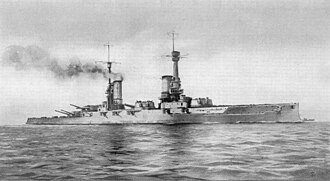
SMS Kaiserin (1911): The Story of a German Imperial Navy Dreadnought
Among the battleships of the German Imperial Navy, SMS Kaiserin occupies a distinctive place in the history of naval warfare. Launched in 1911 and commissioned in 1913, she belonged to the Kaiser class, a group of five dreadnought battleships designed to strengthen Germany’s growing High Seas Fleet during the intense naval competition with Great Britain. Built around powerful 30.5-centimeter guns, substantial armor, and modern steam-turbine machinery, Kaiserin embodied the technological confidence of the German Empire before the First World War. Yet her story was shaped by more than engineering and firepower. She served during a conflict in which the threat of the British Grand Fleet, the limitations of Germany’s strategic position, and the growing importance of submarines and naval aviation transformed the role of the battleship. Her wartime career culminated in internment at Scapa Flow and deliberate scuttling in 1919, making her both a product of Germany’s imperial ambitions and a symbol of their collapse.
The Origins of SMS Kaiserin
Germany’s Naval Ambitions Before the First World War
The construction of SMS Kaiserin must be understood within the broader context of the German naval expansion program. In the late nineteenth and early twentieth centuries, Germany transformed itself into a major industrial and military power. Under Kaiser Wilhelm II, the government increasingly viewed a powerful navy as essential to the country’s international standing, colonial ambitions, commercial interests, and security. Admiral Alfred von Tirpitz became the principal architect of the German naval buildup, promoting a battle fleet that would be sufficiently strong to threaten Britain’s maritime supremacy.
The launch of HMS Dreadnought in 1906 fundamentally changed the naval balance. The British ship’s uniform main battery of heavy guns, turbine propulsion, and high speed made earlier battleships significantly less effective by comparison. Germany responded by developing its own dreadnought classes, beginning with the Nassau class and continuing through the Helgoland and König designs. Each successive group of ships incorporated improvements in firepower, propulsion, armor, and tactical arrangement.
The Kaiser class emerged from the German naval construction program of 1909. Its ships were designed to provide the High Seas Fleet with a more capable and modern battle line. The class included SMS Kaiser, SMS Friedrich der Grosse, SMS Kaiserin, SMS König Albert, and SMS Prinzregent Luitpold. Although their main guns were not as large as those carried by some contemporary British battleships, the German ships emphasized a combination of strong protection, reliable gunnery, and effective fleet operations. Kaiserin was the third vessel of the class and represented an important step in the development of Germany’s capital-ship fleet.
Construction and Naming
SMS Kaiserin was built by Howaldtswerke at Kiel, one of the major shipbuilding centers of the German Empire. Her keel was laid down in November 1910, and she was launched on 11 November 1911. The launch marked the completion of the hull and the beginning of the extensive fitting-out process required to turn a large steel structure into an operational warship. Machinery, armor, electrical systems, weapons, communications equipment, and accommodation spaces all had to be installed before the ship could enter service.
The name Kaiserin translates approximately as “Empress” and referred to Empress Augusta Victoria, the wife of Kaiser Wilhelm II. The naming of the vessel carried an obvious connection to the imperial court and the monarchy. Battleships were not merely military assets in the German Empire; they were also symbols of national power, industrial achievement, and imperial identity. A ship bearing the name Kaiserin therefore represented both the technical progress of the German navy and the political world that had commissioned her.
After fitting-out and trials, Kaiserin was commissioned into the Imperial German Navy on 14 May 1913. Her entry into service came only a little more than a year before the outbreak of the First World War. By that time, the naval rivalry between Germany and Britain had become one of the most visible expressions of European strategic competition.
Design and Engineering of the Kaiser-Class Battleship
Hull and General Arrangement
SMS Kaiserin was a large dreadnought battleship with an overall length of approximately 172.4 meters and a beam of 29 meters. Her full-load displacement was around 27,000 metric tons, reflecting the enormous weight of her armor, machinery, weapons, ammunition, fuel, and stores. She had a draft of approximately 9.1 meters forward and 8.8 meters aft, although the exact figure could vary according to loading conditions.
The ship’s hull followed the general design principles of German dreadnoughts of the period. She possessed a long forecastle deck, an inverted bow, and a relatively compact superstructure. Her profile was dominated by two pole masts and two widely separated funnels. The masts supported observation equipment, signaling arrangements, and fire-control installations, while the funnels discharged exhaust from the coal-fired boilers below deck.
The arrangement of her main artillery was one of the most important improvements introduced by the Kaiser class. Earlier German dreadnoughts had used a hexagonal arrangement of gun turrets, which created limitations in the number of heavy guns that could be brought to bear in certain directions. Kaiserin instead carried five twin turrets arranged so that three were positioned on the centerline and two were mounted en echelon amidships. Two of the centerline turrets were placed in a superfiring arrangement toward the stern, allowing one turret to fire over the other. This layout improved the ship’s broadside capability and made more efficient use of the available hull space.
The arrangement was not simply a matter of appearance. Battleship designers had to balance the weight of turrets and armor against stability, internal compartmentation, propulsion requirements, and the need to protect ammunition handling systems. The Kaiser class demonstrated how improvements in machinery design could create additional flexibility in the placement of heavy guns.
Steam-Turbine Propulsion
Kaiserin was powered by three sets of Parsons steam turbines driving three propeller shafts. The adoption of turbine propulsion was a major innovation for the German Imperial Navy. Earlier battleships commonly relied on reciprocating steam engines, which were proven technologies but occupied considerable space and involved many moving components. Steam turbines offered smoother power delivery and made it possible to develop more compact and efficient machinery arrangements.
Steam was generated by sixteen coal-fired water-tube boilers. These boilers supplied the turbines with high-pressure steam, which was converted into mechanical energy to drive the propellers. The machinery produced approximately 27,600 indicated horsepower, or about 20,594 kilowatts. Kaiserin could reach a maximum speed of roughly 22.1 knots, equivalent to approximately 41 kilometers per hour.
Her coal capacity was around 3,600 metric tons, providing an operational range of approximately 7,900 nautical miles at a cruising speed of 12 knots. This endurance was important for fleet operations in the North Sea, where warships might need to remain at sea for extended periods while conducting patrols, exercises, reconnaissance missions, or fleet sorties.
The transition to turbine propulsion also reflected the experimental character of the German naval buildup. The Kaiser class was the first group of German battleships to use turbines as their principal propulsion system. Their successful operation helped establish turbine machinery as a practical solution for large capital ships. Although coal-fired boilers remained standard, some German naval engineers were already considering more advanced propulsion concepts, including oil firing and diesel technology.
Armament and Protection
Main Battery of 30.5-Centimeter Guns
The principal offensive weapon of SMS Kaiserin was her main battery of ten 30.5-centimeter SK L/50 guns. These weapons were mounted in five twin turrets and formed the core of the ship’s combat capability. The designation SK referred to Schnelladekanone, or quick-firing cannon, while L/50 indicated that the gun barrel was fifty calibers long.
The 30.5-centimeter gun was a powerful weapon by the standards of the early dreadnought era. It could engage enemy battleships at considerable distances, and its effectiveness depended not only on caliber but also on shell design, muzzle velocity, fire-control systems, range estimation, and crew training. German naval artillery doctrine placed considerable importance on accurate fire and coordinated salvoes, particularly in the difficult visibility conditions often encountered in the North Sea.
The five-turret arrangement allowed Kaiserin to fire a full broadside of ten heavy guns. Three turrets were located on the centerline, while the two amidships turrets were positioned diagonally. The latter arrangement offered useful broadside firing arcs, although the ship could not necessarily bring all ten guns to bear in every direction. The turrets were supported by heavily protected barbettes and ammunition-handling systems that connected them to the magazines deep within the hull.
Secondary and Torpedo Armament
Kaiserin’s secondary battery consisted of fourteen 15-centimeter SK L/45 guns mounted in casemates along the sides of the ship. These guns were intended to engage lighter surface vessels, including cruisers and destroyers, and to supplement the main battery during fleet actions. Their placement in armored casemates was typical of the period, although casemate guns could become difficult to operate in rough seas or when exposed to water and battle damage.
For defense against torpedo boats and other small craft, the ship initially carried eight 8.8-centimeter guns. During the war, her lighter armament was modified, and she received four 8.8-centimeter anti-aircraft guns. The appearance of aircraft as a serious threat to naval forces required battleships to adapt, even though early anti-aircraft weapons offered limited protection compared with the sophisticated systems developed in later decades.
Kaiserin was also equipped with five 50-centimeter torpedo tubes. One tube was installed in the bow, while the remaining tubes were arranged along the broadside. Torpedoes gave the battleship an additional offensive weapon at short range, particularly against enemy capital ships. Nevertheless, they were secondary to her heavy artillery and were rarely the decisive element in a major battleship engagement.
Armor and Survivability
German battleship construction placed strong emphasis on armor protection. Kaiserin’s central armored citadel was protected by a main belt of Krupp cemented armor reaching approximately 350 millimeters in its thickest sections. This belt guarded the machinery spaces, ammunition magazines, and other vital internal areas. The armor scheme was intended to ensure that the ship could survive enemy shellfire while retaining the ability to maneuver and fight.
Her main gun turrets were protected by armor reaching approximately 300 millimeters, while the conning tower received protection of around 400 millimeters. The conning tower was the heavily armored command position from which officers directed the ship during combat. Its protection reflected the importance of maintaining command and communications even when the vessel was under intense fire.
The Kaiser class was often regarded as exceptionally well protected compared with several contemporary foreign designs. German designers sought to reduce the likelihood that a single hit would disable a ship’s machinery, magazines, or command facilities. This approach contributed to the resilience demonstrated by German battleships during the First World War. However, armor was not an absolute guarantee of survival. Underwater explosions, torpedoes, flooding, fires, and cumulative structural damage could still threaten even the most heavily protected warship.
Kaiserin’s Early Service and the Outbreak of War
Fleet Exercises and the High Seas Fleet
After entering service in 1913, Kaiserin became part of the German High Seas Fleet. She was assigned to the III Battle Squadron, where she operated alongside other modern German dreadnoughts. Her early service involved training exercises, gunnery practice, maneuvering drills, and the development of fleet tactics. These activities were essential because a battleship’s effectiveness depended on coordinated operations rather than the performance of the individual vessel alone.
German naval planners recognized that the Royal Navy possessed a numerical advantage, especially in modern dreadnoughts and battlecruisers. The High Seas Fleet therefore sought to compensate through disciplined formations, effective fire control, careful reconnaissance, and the possibility of concentrating superior forces against isolated British units. The German fleet’s home waters also offered certain advantages, including proximity to naval bases and the ability to operate under the protection of coastal defenses and minefields.
When the First World War began in August 1914, Kaiserin became part of a fleet whose strategic mission was both ambitious and constrained. Germany hoped to challenge British naval power, but the Royal Navy’s Grand Fleet was too strong to ignore. A major defeat could have endangered Germany’s coastline and undermined the entire naval program. As a result, many German operations were designed to test British responses, support reconnaissance, or create favorable circumstances for limited engagements.
World War I Operations
The Battle of Jutland
The most important battle in Kaiserin’s career was the Battle of Jutland, fought on 31 May and 1 June 1916. This was the largest surface naval engagement of the First World War and the only major confrontation in which the German High Seas Fleet and the British Grand Fleet deployed substantial portions of their battle forces against each other.
Kaiserin took part in the battle as a member of the German battle line. The engagement developed from an attempt by German naval forces to draw out and attack elements of the British fleet. Instead, the opposing forces encountered each other in strength, producing a vast and confused battle involving battlecruisers, dreadnoughts, cruisers, destroyers, and torpedo attacks.
During the battle, Kaiserin operated among the German battleships as the fleets maneuvered through changing visibility and intense gunfire. The German ships demonstrated effective tactical coordination and strong damage-control procedures. Their armor and internal protection helped many of them survive substantial punishment. Kaiserin emerged from the battle without suffering the catastrophic damage that destroyed several other major warships.
Jutland was a tactical success for Germany in the sense that the High Seas Fleet inflicted serious losses on the British. However, it did not produce the strategic breakthrough German naval planners had hoped for. The Grand Fleet remained operational, and Britain retained its broader command of the North Sea. The German fleet returned to port, while the British fleet continued to impose the maritime pressure that was central to the Allied war effort.
Operation Albion and Later Duties
Kaiserin also participated in Operation Albion in 1917, a major German campaign in the Baltic Sea against Russian positions. The operation was designed to secure strategic islands and weaken Russian naval and military forces in the region. German battleships provided heavy artillery support, helped protect transports, and contributed to the control of sea routes.
The Baltic operations demonstrated that the High Seas Fleet still possessed substantial offensive power in a regional environment. However, they did not change the overall strategic situation in the war. Germany remained under pressure from the British blockade, while the High Seas Fleet faced the continuing challenge of operating against a stronger opponent.
As the war progressed, the importance of battleships increasingly competed with the expanding role of submarines, mines, coastal artillery, and aircraft. Large surface ships remained valuable for deterrence and fleet operations, but their use was constrained by the potential cost of losing a major capital ship. Kaiserin continued to serve in the German naval forces, but the opportunities for another Jutland-sized engagement remained limited.
The Final Chapter: Scapa Flow
Internment After the Armistice
The German naval defeat and the collapse of the imperial government in 1918 brought an end to Kaiserin’s active wartime career. Under the terms of the armistice, a large portion of the High Seas Fleet was required to surrender and be interned. The German ships were escorted to Scapa Flow in the Orkney Islands, where they were placed under Allied supervision.
For the German Navy, internment represented a humiliating reversal of the ambitions that had driven the construction of its battleships. Ships such as Kaiserin had been built to challenge British naval supremacy, yet they now lay inactive in a British-controlled anchorage. Their crews were reduced, and the vessels remained in a state of uncertainty while the terms of the postwar settlement were negotiated.
Scuttling on 21 June 1919
On 21 June 1919, German sailors began scuttling the interned fleet at Scapa Flow. Rear Admiral Ludwig von Reuter, who commanded the German ships, ordered the operation to prevent the vessels from being distributed among the victorious Allied powers. Kaiserin was among the ships deliberately sunk in Gutter Sound.
The scuttling was one of the most remarkable episodes in twentieth-century naval history. Within a few hours, many of the most advanced warships of the former German Empire were sent to the bottom by their own crews. The event reflected the bitterness and uncertainty surrounding the postwar settlement, as well as the desire to deny the ships to foreign navies.
Kaiserin was later raised and broken up for scrap in 1936. Her dismantling marked the physical end of a vessel that had once represented the technological and industrial strength of imperial Germany.
Historical Importance of SMS Kaiserin
SMS Kaiserin was not the largest or most heavily armed battleship of the First World War, but she was an important example of the naval engineering and strategic thinking of her time. Her turbine propulsion, heavy armor, modern turret arrangement, and substantial main battery placed her among the most capable battleships in the German fleet when she entered service.
Her career also demonstrates the limitations of battleship power. Even a vessel as heavily protected and well armed as Kaiserin could not independently overcome the numerical strength of the British Grand Fleet or the economic effects of a prolonged blockade. Her participation in Jutland showed the effectiveness of German naval training and design, but the battle failed to change the strategic balance in Germany’s favor.
In the broader history of naval warfare, Kaiserin represents the final generation of battleships built before the First World War transformed the relationship between technology, strategy, and national power. Her story connects the naval arms race, the rise of industrial warfare, the struggle for control of the North Sea, and the collapse of the German Empire. Her sinking at Scapa Flow provides a fitting, if tragic, conclusion to the career of a ship created to embody imperial strength.
Technical Specifications of SMS Kaiserin
| Specification | Details |
|---|---|
| Ship name | SMS Kaiserin |
| Ship type | Kaiser-class dreadnought battleship |
| Nation | German Empire |
| Namesake | Empress Augusta Victoria |
| Builder | Howaldtswerke, Kiel |
| Keel laid down | November 1910 |
| Launched | 11 November 1911 |
| Commissioned | 14 May 1913 |
| Fate | Scuttled at Scapa Flow on 21 June 1919 |
| Later history | Raised and broken up for scrap in 1936 |
| Length overall | 172.4 meters |
| Beam | 29 meters |
| Draft forward | Approximately 9.1 meters |
| Draft aft | Approximately 8.8 meters |
| Designed displacement | Approximately 24,724 metric tons |
| Full-load displacement | Approximately 27,000 metric tons |
| Propulsion | Three Parsons steam turbines |
| Propeller shafts | Three |
| Boilers | Sixteen coal-fired water-tube boilers |
| Installed power | Approximately 27,600 indicated horsepower |
| Maximum speed | Approximately 22.1 knots |
| Coal capacity | Approximately 3,600 metric tons |
| Range | Approximately 7,900 nautical miles at 12 knots |
| Crew | 41 officers and approximately 1,043 enlisted personnel |
| Main armament | Ten 30.5 cm SK L/50 guns in five twin turrets |
| Secondary armament | Fourteen 15 cm SK L/45 guns |
| Close-defense guns | Eight 8.8 cm guns |
| Anti-aircraft armament | Four 8.8 cm anti-aircraft guns |
| Torpedo armament | Five 50 cm torpedo tubes |
| Main belt armor | Up to approximately 350 mm |
| Main turret armor | Up to approximately 300 mm |
| Conning tower armor | Up to approximately 400 mm |
| Primary wartime formation | III Battle Squadron, High Seas Fleet |
| Major operations | Battle of Jutland; Operation Albion |
Technical figures may vary slightly between historical references, especially in relation to displacement, installed power, armament modifications, and crew strength.
