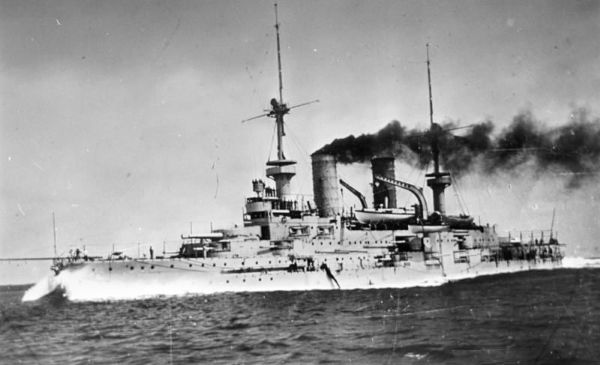
SMS Schwaben: The Story of a German Pre-Dreadnought Battleship
SMS Schwaben was one of the last generations of German battleships designed before the revolutionary arrival of the dreadnought. Built for the Imperial German Navy at the beginning of the twentieth century, she belonged to the Wittelsbach class, a group of five pre-dreadnought battleships that formed part of Germany’s ambitious naval expansion under Admiral Alfred von Tirpitz. Although Schwaben never became a celebrated combat veteran, her career provides a fascinating window into the rapid transformation of naval warfare before, during, and after the First World War. She spent much of her early career as a gunnery training ship, participated in fleet exercises, served in wartime defensive and Baltic operations, and eventually became an auxiliary vessel before being scrapped in 1921. Her story is therefore less about spectacular battles than about how a powerful battleship could quickly become obsolete and be repeatedly adapted to new purposes.
The Birth of SMS Schwaben
A Product of Germany’s Naval Expansion
The construction of Schwaben was closely connected with Germany’s decision to build a modern battle fleet capable of challenging the established naval powers of Europe. The Naval Law of 1898, strongly associated with Alfred von Tirpitz, established the framework for a major expansion of the Imperial German Navy. The Wittelsbach class was the first group of battleships constructed under this new naval program, making Schwaben part of an important stage in the development of the Kaiserliche Marine.
Schwaben was ordered under the contract name “D” and constructed at the Kaiserliche Werft in Wilhelmshaven. Her keel was laid down on 15 September 1900, and the ship was launched on 19 August 1901. Queen Charlotte of Württemberg christened the vessel at her launch, connecting the new battleship with the historic region of Swabia from which her name was derived. After fitting out, trials, and preparation for service, Schwaben was commissioned on 13 April 1904, making her the final member of the five-ship Wittelsbach class to enter service. Her construction cost approximately 21.7 million marks.
The name Schwaben, meaning Swabia, reflected a common practice in the Imperial German Navy of giving major warships names connected with German dynasties, regions, and historical identities. Her sister ships were named Wittelsbach, Wettin, Zähringen, and Mecklenburg, giving the class a distinctly German historical character.
Design and Appearance
Schwaben was a large and heavily protected ship by the standards of the early 1900s. She measured approximately 126.8 meters in length and had a beam of about 22.8 meters. Her full-load displacement was close to 12,800 metric tons. Three vertical three-cylinder triple-expansion steam engines drove three propeller shafts, while steam was supplied by a combination of six naval water-tube boilers and six cylindrical boilers. The machinery was designed to produce roughly 14,000 horsepower and propel the ship at approximately 18 knots. Her economical cruising speed gave her a range of around 5,000 nautical miles, allowing her to remain at sea for substantial periods.
The hull was protected by substantial quantities of armor, reflecting the pre-dreadnought philosophy that a battleship needed to remain operational after absorbing heavy enemy fire. The main armored belt reached approximately 225 mm at its thickest sections, while the gun turrets and command tower received armor of up to approximately 250 mm. The armored deck was around 50 mm thick. These figures made Schwaben a formidable opponent against contemporary battleships and armored cruisers, although advances in naval artillery would soon make even heavily armored pre-dreadnoughts increasingly vulnerable.
Main and Secondary Armament
Schwaben carried the standard armament of the Wittelsbach class. Her main battery consisted of four 24 cm SK L/40 guns, arranged in two twin turrets positioned forward and aft. These weapons represented the principal striking power of the ship, although their caliber was already becoming modest compared with the larger guns appearing on newer battleships. The four guns could fire heavy shells at considerable range and were supported by a large secondary battery.
The secondary armament consisted of eighteen 15 cm SK L/40 guns, a powerful collection of medium-caliber weapons intended to engage cruisers, destroyers, and other targets that did not necessarily justify the use of the main battery. Twelve 8.8 cm quick-firing guns provided additional protection, while six 45 cm torpedo tubes supplied another potential offensive weapon. The combination reflected the conventional battleship doctrine of the period: a relatively small number of heavy guns was supplemented by numerous medium and light weapons.
This arrangement would soon appear old-fashioned. The arrival of HMS Dreadnought in 1906 demonstrated the advantages of concentrating a battleship’s offensive power in numerous large-caliber guns. Suddenly, ships such as Schwaben, which had been designed around the assumption that battleship combat would involve a mixture of heavy and medium weapons, were technologically outclassed.
Early Career and the Gunnery Training Role
Schwaben’s early career was unusual because she did not immediately become a conventional front-line battleship. Shortly after entering service, she was assigned to the Torpedo Inspectorate for trials and experimental duties, and her initial period was interrupted by an accident. On 18 May 1904, during an early transfer toward Kiel, the ship ran aground north of Fehmarn and suffered hull damage. Repairs were required before her trials could resume later in the year.
The incident did not define her career, however. On 11 May 1905, Schwaben was assigned to the Inspection of Naval Artillery, replacing the older SMS Mars as an artillery training ship. This became one of the most important aspects of her peacetime existence. Rather than spending all of her time as a front-line fleet battleship, Schwaben was heavily involved in training sailors and officers in the increasingly sophisticated business of naval gunnery.
This was an important role in an era when naval warfare was becoming increasingly dependent on accurate long-range fire. Range estimation, spotting, fire control, gun handling, ammunition supply, and coordinated firing all demanded intensive practice. A dedicated artillery training ship allowed the German Navy to train personnel continuously while still retaining the ability to employ the vessel in fleet maneuvers.
Schwaben did not completely withdraw from operational fleet activity. She participated in gunnery exercises and the major annual autumn maneuvers of the German fleet. These exercises were essential preparations for the increasingly complex naval war that German planners expected to fight. Her training role therefore complemented rather than contradicted the broader development of the High Seas Fleet.
The Dreadnought Revolution
Obsolescence Arrives Quickly
The greatest challenge facing Schwaben was not an enemy shell but technological progress. When she was commissioned in 1904, she represented modern German battleship construction. Within only a few years, however, the launch of HMS Dreadnought changed the standard by which battleships were judged.
Dreadnought’s combination of heavy main guns, steam turbine propulsion, and high speed created an entirely new category of capital ship. Germany responded by building its own dreadnoughts, beginning with the Nassau class. The arrival of these modern vessels pushed the Wittelsbach-class ships into secondary positions. Historical assessments of the class note that they were already outdated by the outbreak of the First World War and were removed from active fleet service by 1916.
Schwaben’s training duties consequently became particularly valuable. Although her combat potential had declined relative to newer ships, she remained a useful platform for developing the skills required by the modern German fleet. Her crew and students could practice with a real battleship without placing one of Germany’s newest capital ships in a training-only role.
SMS Schwaben During the First World War
When war erupted in August 1914, Schwaben was mobilized along with the other Wittelsbach-class battleships and assigned to the IV Battle Squadron of the High Seas Fleet. The squadron consisted largely of older battleships, which were useful for duties that did not require the newest ships of the German fleet.
Schwaben saw limited wartime service in the North Sea and Baltic Sea. Her activities were largely associated with guard duties and operations against Russian forces in the Baltic rather than the major fleet engagements that have come to define the naval history of the First World War. The German Navy had to balance the usefulness of its older battleships against the risks created by British naval power, mines, submarines, and increasingly sophisticated enemy forces.
The Baltic was particularly important because Germany needed to monitor Russian naval forces and protect its own coastline and communications. The Wittelsbach-class battleships could provide substantial firepower for these tasks even though they were no longer suitable for a direct confrontation with the latest British dreadnoughts. Schwaben therefore remained militarily useful, but primarily as an older supporting unit rather than as a centerpiece of German battle-fleet strategy.
By 1916, the strategic situation had changed. The older battleships were considered too vulnerable for sustained front-line employment, and the threat posed by British submarines was an additional concern. The Wittelsbach-class vessels were consequently withdrawn from active fleet duties and disarmed or reassigned to secondary functions. Schwaben returned to a training role, serving as an engineering training ship for naval personnel during the later stages of the war.
The Final Years of Schwaben
From Battleship to Auxiliary Vessel
Germany’s defeat in 1918 did not immediately end Schwaben’s career. Unlike many wartime vessels that were either interned, dismantled, or abandoned, she was retained by the postwar German naval establishment. The new Reichsmarine faced severe restrictions under the Treaty of Versailles, but Germany was still required to perform certain mine-clearance duties in the North and Baltic Seas. This created a practical need for vessels that could support minesweeping operations.
Schwaben was reactivated on 1 August 1919 and converted into a depot ship for F-type minesweepers. Her weapons were removed, and arrangements were made to support the smaller minesweeping vessels. This transformation demonstrated how completely the role of a former battleship could change. A ship that had once been designed to exchange gunfire with enemy capital ships was now essentially a floating support base for much smaller vessels performing dangerous clearance work.
Other historical accounts also describe Schwaben and her sister ship Wittelsbach as depot or tender vessels supporting small craft during this period. Their careers as major warships were effectively over, but their large hulls and machinery still provided practical utility to a navy operating under severe postwar restrictions.
Scrapping in 1921
Schwaben’s final chapter came relatively quickly. She was struck from the naval list on 8 March 1921 and sold for scrapping later that year. The ship was dismantled at Kiel, bringing an end to a career that had lasted only about seventeen years from her commissioning.
Her fate was shared by most of the Wittelsbach class. The ships had been among the first products of Germany’s great naval expansion, but technological change had overtaken them with extraordinary speed. By the early 1920s, there was little reason to preserve their large, expensive hulls, especially in a German navy constrained by the postwar treaty system.
The Historical Importance of SMS Schwaben
SMS Schwaben is an interesting reminder that naval history is not composed solely of famous battles. Her career illustrates the way navies actually functioned: ships were constantly reassigned, repurposed, modernized, trained with, and eventually discarded as strategic circumstances changed.
Her most important contribution may have been made during her years as an artillery training ship. The German Navy was building a force in which gunnery proficiency was increasingly important, and Schwaben provided a practical platform for developing those skills. The fact that she continued participating in fleet exercises also meant that she retained a connection with the operational fleet even when her primary purpose was training.
Her wartime service further illustrates the limitations imposed by technological progress. In 1904, Schwaben was a modern battleship. In 1914, she was already a second-line vessel. By 1916, she was no longer considered suitable for active fleet combat. That extraordinarily rapid decline demonstrates just how disruptive the dreadnought revolution was.
At the same time, Schwaben’s conversion into an auxiliary vessel shows that obsolescence did not necessarily mean immediate uselessness. Her hull remained valuable, and the postwar German Navy found ways to exploit it for minesweeper support. In this respect, her career mirrors the broader history of early twentieth-century warships: vessels were often given new lives long after their original combat purpose had disappeared.
Technical Specifications of SMS Schwaben
| Specification | Details |
|---|---|
| Ship name | SMS Schwaben |
| Type | Pre-dreadnought battleship; later depot/tender ship |
| Class | Wittelsbach class |
| Builder | Kaiserliche Werft, Wilhelmshaven |
| Keel laid | 15 September 1900 |
| Launched | 19 August 1901 |
| Commissioned | 13 April 1904 |
| Struck from naval list | 8 March 1921 |
| Fate | Scrapped at Kiel in 1921 |
| Length | 126.8 m |
| Beam | Approximately 22.8 m |
| Draft | Approximately 8.0 m |
| Full-load displacement | Approximately 12,800 metric tons |
| Propulsion | 3 vertical triple-expansion steam engines |
| Boilers | 6 naval water-tube + 6 cylindrical boilers |
| Propeller shafts | 3 |
| Power | Approximately 14,000 hp |
| Maximum speed | Approximately 18 knots |
| Range | Approximately 5,000 nautical miles at 10 knots |
| Main armament | 4 × 24 cm SK L/40 guns |
| Secondary armament | 18 × 15 cm SK L/40 guns |
| Light armament | 12 × 8.8 cm SK L/30 guns |
| Torpedo armament | 6 × 45 cm torpedo tubes |
| Maximum belt armor | Approximately 225 mm |
| Turret armor | Up to approximately 250 mm |
| Command tower armor | Up to approximately 250 mm |
| Deck armor | Approximately 50 mm |
| Typical crew | About 680–700 personnel |
| Primary peacetime role | Artillery training ship |
| World War I role | IV Battle Squadron, guard and Baltic duties |
| Postwar role | Depot ship/tender for minesweepers |
Technical figures vary somewhat among historical references, particularly for displacement, draft, machinery output, crew size, and armor measurements. The values above represent commonly cited figures for the Wittelsbach-class ships and Schwaben specifically.
Conclusion
SMS Schwaben was never destined to become one of Germany’s most famous battleships, but her career is valuable precisely because it was so representative of a transitional period. Built during the rapid expansion of the Imperial German Navy, she embodied the pre-dreadnought battleship concept: heavy armor, a mixed-caliber battery, coal-fired steam machinery, and a large crew. Yet within only a few years, the naval revolution initiated by the dreadnought rendered that concept obsolete.
Instead of disappearing immediately, Schwaben adapted. She became a gunnery training ship, participated in fleet exercises, served during the First World War with the IV Battle Squadron, undertook secondary duties in the Baltic, and finally became a support vessel for minesweepers in the postwar Reichsmarine. Her career ended quietly in a Kiel scrapyard in 1921, but by then she had already witnessed the transformation of naval warfare from the pre-dreadnought age into the modern era.
The story of SMS Schwaben is therefore ultimately a story of technological change and adaptation. She began as one of Germany’s newest battleships and ended her life as an auxiliary vessel in a navy dramatically reduced by defeat. Between those two points, she reflected nearly every major transition affecting German naval power in the first two decades of the twentieth century.