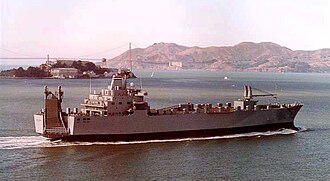
Throughout modern military history, public attention has often focused on the most visible symbols of national power. Aircraft carriers, nuclear submarines, stealth bombers, and advanced fighter jets dominate headlines and documentaries, representing the cutting edge of military capability. Yet behind every successful deployment, every overseas operation, and every large-scale military exercise stands an often-overlooked fleet of logistics vessels that make global operations possible. Among these ships is the SS Cape Isabel (AKR-5062), a vessel that may not enjoy the fame of frontline warships but plays an equally essential role in ensuring that military forces can move rapidly and effectively across the globe.
The Cape Isabel belongs to a unique class of strategic sealift vessels maintained by the United States Maritime Administration as part of the Ready Reserve Force. These ships exist for a singular but critically important purpose: to provide rapid transportation capacity during national emergencies, military deployments, humanitarian missions, and major logistical operations. Their mission is not to fight battles but to ensure that those who do have the equipment, vehicles, fuel, and supplies required to succeed.
The story of the Cape Isabel reflects broader developments in commercial shipping, military logistics, and strategic planning over the last half-century. Originally constructed for commercial service during an era of expanding global trade, the vessel eventually transitioned into government ownership, where it became an important component of America’s strategic transportation network. Although much of its career has unfolded away from public attention, its contributions demonstrate a fundamental truth of modern military operations: logistics remains the foundation of military power.
The history of the Cape Isabel offers an opportunity to explore not only the life of a remarkable ship but also the broader world of strategic sealift, a field that continues to underpin national security in ways many people never see.
The Strategic Importance of Sealift
Why Logistics Determines Success
Military historians frequently emphasize that wars are won not merely through superior weapons but through superior logistics. Throughout history, armies have depended upon reliable supply systems to sustain operations far from home. Food, fuel, ammunition, spare parts, vehicles, engineering equipment, and medical supplies must all reach their destinations on time if military forces are to remain effective.
As military technology evolved throughout the twentieth century, logistical requirements increased dramatically. Tanks became heavier, aircraft became more sophisticated, and mechanized armies required vast quantities of fuel and maintenance support. Consequently, transporting military equipment across oceans became one of the most important challenges facing defense planners.
While aircraft can transport personnel and certain types of cargo rapidly, they cannot economically move the enormous quantities of heavy equipment required for large-scale military operations. Sealift fills this gap by providing unmatched cargo capacity and efficiency.
Ships like the Cape Isabel serve as floating warehouses capable of transporting entire military unit equipment sets across thousands of miles of ocean. Without such vessels, modern military deployments would be far slower, more expensive, and considerably less effective.
The Ready Reserve Force
The Ready Reserve Force (RRF) represents one of the most important but least visible components of the United States’ defense infrastructure. Operated by the Maritime Administration (MARAD), the RRF consists of vessels maintained in reduced operating status but capable of rapid activation when needed.
Unlike active commercial ships, Ready Reserve Force vessels spend much of their time waiting. They remain moored in designated locations, carefully maintained by small crews and preservation teams. However, this apparent inactivity should not be mistaken for irrelevance. These ships function as a strategic insurance policy, ensuring that transportation capacity is available whenever national requirements arise.
The Cape Isabel is one of the vessels entrusted with this responsibility.
Origins of the Cape Isabel
Building a Modern Cargo Ship
The origins of the Cape Isabel can be traced to the transformative period of global shipping during the 1970s. This was an era marked by rapid growth in international trade, technological innovation in cargo handling, and increasing demand for larger, more efficient merchant vessels.
The ship was constructed as part of a new generation of cargo vessels designed to maximize operational efficiency while accommodating evolving transportation requirements. During this period, shipbuilders increasingly focused on vessel designs capable of handling diverse cargo types while maintaining competitive operating costs.
Unlike many older freighters that relied heavily on labor-intensive cargo operations, newer vessels incorporated features that streamlined loading and unloading processes. These innovations reduced port turnaround times and increased profitability for shipping companies.
The future Cape Isabel emerged from this environment of maritime modernization, benefiting from contemporary engineering practices and advanced cargo-handling concepts.
Commercial Beginnings
Before becoming a strategic sealift vessel, the ship spent years serving commercial shipping interests. Like many vessels later acquired by government agencies, it was originally intended to transport cargo in support of international trade.
Commercial service provided valuable operational experience and demonstrated the vessel’s reliability under real-world conditions. Long voyages, varying weather conditions, and demanding cargo schedules tested the ship’s systems and crews, helping establish a record of performance that would later prove attractive to government planners.
These years also reflected the interconnected nature of global commerce. Merchant vessels such as the future Cape Isabel formed the backbone of international trade networks, carrying goods between continents and supporting economic growth around the world.
Although its future military role was still years away, the ship was already developing the characteristics that would eventually make it a valuable strategic asset.
Transition to Government Service
Acquisition by MARAD
As geopolitical conditions evolved during the Cold War and beyond, the United States recognized the need for a robust reserve sealift capability. Maintaining a fleet of transportation vessels capable of supporting military deployments became a strategic priority.
In response, the Maritime Administration acquired numerous commercial vessels suitable for military support roles. The future Cape Isabel was among those selected.
Following acquisition, the vessel was assigned the name Cape Isabel and received the designation AKR-5062. This marked a significant transformation in its mission. No longer focused primarily on commercial profitability, the ship became part of a national transportation reserve designed to support military and humanitarian operations.
This transition reflected a broader recognition that maritime transportation remains essential to national security. Strategic mobility requires not only combat forces but also the means to transport those forces wherever they are needed.
Conversion and Adaptation
While many reserve ships retain much of their original commercial design, modifications are often necessary to support military requirements.
The Cape Isabel underwent various adaptations intended to improve compatibility with military cargo and operational procedures. Vehicle handling systems, cargo management arrangements, communications equipment, and support infrastructure were adjusted to meet government specifications.
These changes enabled the vessel to transport military vehicles, engineering equipment, support machinery, and other cargo types commonly associated with defense logistics.
The result was a ship capable of bridging the worlds of commercial shipping and military transportation.
The Role of Roll-On/Roll-Off Technology
A Revolution in Cargo Handling
One of the defining features of vessels like the Cape Isabel is the use of roll-on/roll-off (Ro-Ro) cargo handling systems.
Before the widespread adoption of Ro-Ro technology, loading vehicles aboard ships often required cranes, extensive labor, and significant amounts of time. Every vehicle had to be lifted individually and carefully positioned within cargo holds.
Roll-on/roll-off operations transformed this process.
Instead of relying on cranes, vehicles can simply be driven aboard using ramps. Trucks, armored vehicles, trailers, and construction equipment enter the ship under their own power and are secured inside specialized cargo decks.
This approach dramatically reduces loading times while improving operational flexibility.
For military logistics planners, these advantages are invaluable. Rapid loading and unloading can significantly accelerate deployment timelines, allowing forces to reach operational areas more quickly.
Military Applications
The military value of Ro-Ro vessels cannot be overstated.
Modern armed forces depend upon large numbers of vehicles. Armored personnel carriers, fuel trucks, maintenance vehicles, engineering equipment, missile launchers, and support systems all require transportation.
The Cape Isabel’s design enables it to transport these assets efficiently and securely.
By minimizing cargo handling requirements, Ro-Ro ships reduce the logistical complexity associated with large deployments. This capability makes them among the most important transportation assets available to military planners.
Service Within the Ready Reserve Force
Maintaining Readiness
A reserve vessel’s primary responsibility is readiness.
Although the Cape Isabel may spend extended periods in inactive status, substantial effort goes into ensuring it remains capable of activation. Maintenance teams perform routine inspections, preserve critical systems, monitor machinery, and address any issues that could affect operational readiness.
This process requires constant attention.
Mechanical systems must remain functional despite long periods of inactivity. Hull integrity must be preserved. Electrical systems require testing and maintenance. Cargo equipment must remain operational.
The objective is simple: if activation orders arrive, the ship must be ready to sail within its designated readiness window.
Activation Scenarios
The Cape Isabel may be activated for a variety of missions.
Military deployments represent the most obvious scenario. During major operations, additional transportation capacity may be required to move equipment overseas.
Humanitarian emergencies can also trigger activation. Natural disasters often create urgent transportation requirements that exceed available commercial capacity. In such cases, reserve vessels can help deliver relief supplies, vehicles, and emergency equipment.
National emergencies involving infrastructure disruptions or strategic transportation shortages may likewise require the use of Ready Reserve Force assets.
The Cape Isabel therefore serves as a versatile resource capable of supporting multiple mission types.
Life as a Strategic Sealift Vessel
Cargo Operations
When activated, the Cape Isabel becomes a highly organized transportation platform.
Loading operations involve detailed planning. Vehicles must be positioned carefully to maximize space utilization while maintaining proper weight distribution. Cargo securing procedures ensure equipment remains stable throughout ocean voyages.
The ship’s internal configuration allows vehicles and machinery to be arranged efficiently across multiple cargo areas. Wide access routes facilitate movement during loading and unloading operations.
Each voyage requires coordination among military planners, port personnel, logistics specialists, and ship crews.
The complexity of these operations illustrates why strategic sealift remains a highly specialized field.
Crew Responsibilities
Although reserve vessels typically maintain only small caretaker crews while inactive, activation brings larger operational crews aboard.
These mariners are responsible for navigation, engineering, communications, maintenance, safety procedures, cargo management, and administrative functions.
Operating a vessel of the Cape Isabel’s size demands extensive technical expertise. Every department contributes to the safe and efficient completion of missions.
Crew members often work long hours during cargo operations, ensuring equipment is loaded correctly and transported securely.
Their professionalism forms the foundation of successful sealift operations.
Engineering and Design Features
Dimensions and Structure
The Cape Isabel was designed to maximize cargo capacity while maintaining seaworthiness and operational flexibility.
Its large hull provides substantial internal volume, allowing it to transport a wide variety of cargo types. Reinforced decks accommodate heavy vehicles, while internal access routes facilitate movement throughout the vessel.
The ship’s dimensions place it among the larger logistics vessels within the reserve fleet.
Every aspect of its structure reflects the practical requirements of maritime transportation.
Propulsion Systems
Like many vessels built during its era, the Cape Isabel employs a propulsion system designed for reliability and long-range operations.
Strategic sealift missions often involve transoceanic voyages requiring sustained performance over extended periods. Dependable propulsion is therefore essential.
The ship’s engineering systems are maintained carefully to ensure readiness despite long intervals between activations.
This focus on reliability helps preserve operational effectiveness throughout the vessel’s service life.
Cargo Capacity
Perhaps the most important characteristic of the Cape Isabel is its ability to transport large quantities of equipment.
Military vehicles occupy significant space and weight. Tanks, armored vehicles, trucks, and engineering machinery require specialized accommodations.
The ship’s cargo configuration allows it to carry substantial loads while maintaining stability and operational efficiency.
This capability makes it an important asset within the broader sealift network.
The Human Side of Strategic Sealift
Mariners Behind the Mission
Ships often receive attention for their specifications, but their true effectiveness depends upon the people who operate them.
The Cape Isabel’s crews represent generations of maritime expertise. These professionals maintain systems, navigate challenging conditions, manage cargo operations, and ensure mission success.
Their work frequently occurs outside public view.
Unlike combat personnel who may receive media attention, merchant mariners often perform essential duties without recognition. Nevertheless, their contributions remain indispensable.
Strategic sealift depends upon their dedication and professionalism.
Working in a Unique Environment
Life aboard a reserve vessel differs from life aboard an active commercial ship.
Periods of inactivity are punctuated by intense activity during activations and exercises. Crew members must be prepared to transition quickly from maintenance operations to full-scale deployment support.
This environment requires adaptability, technical knowledge, and a strong commitment to readiness.
The mariners who serve aboard vessels like the Cape Isabel embody these qualities.
Why the Cape Isabel Still Matters
An Enduring Strategic Asset
In an era of advanced technology, some may question the relevance of older cargo ships.
However, the fundamental challenge of transporting heavy equipment across oceans remains unchanged.
Aircraft can move personnel rapidly, but ships remain the most efficient means of transporting large quantities of vehicles and supplies. Consequently, strategic sealift continues to occupy a central position within defense planning.
The Cape Isabel represents this enduring reality.
Looking Toward the Future
As military requirements evolve, logistics will remain essential.
Future operations may involve new technologies, different operational concepts, and changing geopolitical conditions. Yet all of these developments will continue to depend upon transportation networks capable of moving equipment where it is needed.
The Cape Isabel and similar vessels provide a bridge between past experience and future requirements.
Their continued service underscores the enduring importance of preparedness.
Conclusion
The SS Cape Isabel (AKR-5062) stands as a remarkable example of the often-unseen infrastructure that supports national security. From its origins in commercial shipping to its role within the Ready Reserve Force, the vessel has demonstrated the adaptability, reliability, and utility that define successful maritime transportation assets.
Although it does not carry weapons or participate directly in combat operations, its contribution is no less important. By transporting the vehicles, equipment, and supplies that enable military effectiveness, the Cape Isabel helps transform strategic plans into operational reality.
Its story illustrates a broader lesson about military power. Victory and preparedness depend not only on advanced weapons but also on the ability to move resources efficiently across the globe. Ships like the Cape Isabel make that possible.
As long as nations require the capacity to deploy forces overseas, strategic sealift vessels will remain indispensable. The Cape Isabel may operate far from the spotlight, but its role in supporting readiness, mobility, and national resilience ensures its lasting significance within the maritime history of the United States.
Technical Parameters of SS Cape Isabel (AKR-5062)
| Parameter | Specification |
|---|---|
| Name | SS Cape Isabel |
| Hull Designation | AKR-5062 |
| Type | Roll-on/Roll-off Cargo Ship |
| Fleet | Ready Reserve Force (RRF) |
| Owner | U.S. Maritime Administration (MARAD) |
| Operating Status | Reduced Operating Status / Strategic Reserve |
| Primary Mission | Military Sealift and Strategic Transportation |
| Cargo Handling Method | Roll-on/Roll-off (Ro-Ro) |
| Builder | Japanese Shipyard (commercial origin) |
| Year Built | 1970s |
| Acquisition by U.S. Government | 1980s |
| Length Overall | Approximately 700–750 ft |
| Beam | Approximately 100–105 ft |
| Draft | Approximately 30–35 ft |
| Gross Tonnage | Approximately 25,000–35,000 GT |
| Deadweight Tonnage | Approximately 20,000–30,000 tons |
| Propulsion | Steam turbine or diesel propulsion (depending on configuration history) |
| Maximum Speed | Approximately 18–22 knots |
| Crew (Activated) | Merchant Marine Crew |
| Crew (Reserve Status) | Small maintenance detachment |
| Vehicle Capacity | Hundreds of military vehicles |
| Cargo Decks | Multiple enclosed vehicle decks |
| Military Compatibility | Tanks, trucks, engineering vehicles, support equipment |
| Activation Role | Rapid deployment support |
| Humanitarian Support Capability | Yes |
| Armament | None |
| Aviation Facilities | None |
| Home Fleet Assignment | Ready Reserve Force |
