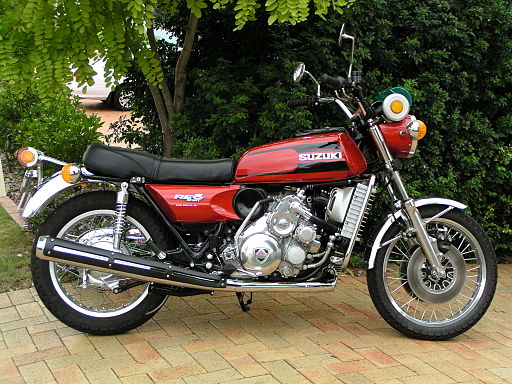
Suzuki RE5: The Rotary Engine Pioneer on Two Wheels
The Suzuki RE5 remains one of the most unique motorcycles in history, standing as a testament to bold innovation in the 1970s. Featuring a Wankel rotary engine, the RE5 was Suzuki’s ambitious attempt to revolutionize motorcycle engineering. While it was only produced for a short period between 1974 and 1976, the RE5 has become a collector’s item and an enduring symbol of an era when manufacturers were willing to take risks in pursuit of groundbreaking technology.
This article provides an in-depth exploration of the Suzuki RE5, covering its history, engineering innovations, design features, and detailed technical specifications.
Development and Background
In the early 1970s, the motorcycle industry was in a state of rapid evolution. Manufacturers were competing to create more powerful and smoother-running machines, and new technologies were being tested to push the limits of motorcycle performance. Suzuki, inspired by the success of the rotary (Wankel) engine in Mazda’s automobiles, saw an opportunity to introduce this cutting-edge technology to the two-wheeled world.
The Wankel engine, originally developed by German engineer Felix Wankel, promised several advantages over conventional piston engines. These included a more compact design, fewer moving parts, and a high power-to-weight ratio. Encouraged by the potential benefits, Suzuki acquired the necessary rights to develop rotary-powered motorcycles and introduced the RE5 in 1974 as a flagship model aimed at redefining the sport-touring segment.
Despite its promising engineering, the RE5 faced several challenges, including high production costs, an unfamiliar engine design for consumers, and growing concerns over fuel economy. Nevertheless, it remains an iconic example of Suzuki’s ingenuity and willingness to experiment with alternative propulsion systems.
The Rotary Engine: How It Works
Unlike traditional piston engines, which use reciprocating motion to generate power, the Wankel rotary engine employs a rotating triangular rotor inside an epitrochoidal housing. This design allows for smoother operation, reduced vibration, and fewer moving parts, theoretically leading to higher reliability.
The Suzuki RE5’s engine had a single-rotor design, similar to Mazda’s early rotary engines. This rotary powerplant was compact and lightweight, yet capable of delivering strong mid-range torque and a linear powerband.
Advantages of the Rotary Engine in the RE5:
- Compact Size: The Wankel engine’s small dimensions allowed Suzuki to maintain a streamlined and balanced motorcycle design.
- Smooth Operation: Without traditional pistons, connecting rods, and crankshafts, the RE5’s engine produced far less vibration than a conventional four-stroke motor.
- Linear Power Delivery: The rotary engine’s continuous combustion cycle resulted in smooth acceleration and a consistent power output.
However, the engine also had some drawbacks. Fuel consumption was relatively high compared to traditional piston engines of similar displacement, and heat management was a challenge due to the unique nature of rotary combustion.
Technical Specifications of the Suzuki RE5
Engine and Performance
- Engine Type: Liquid-cooled, single-rotor Wankel rotary engine
- Displacement: 497 cc
- Compression Ratio: 9.4:1
- Maximum Power Output: 62 hp at 6,500 rpm
- Maximum Torque: 55 Nm at 3,500 rpm
- Fuel System: Mikuni 32mm carburetor
- Cooling System: Liquid-cooled with an external radiator
- Ignition System: Contact breaker points with dual-spark ignition
The RE5’s 497 cc rotary engine produced performance comparable to many larger displacement four-stroke twin-cylinder engines of the time. The smooth power delivery and lack of vibration made it an excellent machine for long-distance touring.
Transmission and Final Drive
- Clutch: Multi-plate wet clutch
- Transmission: 5-speed manual gearbox
- Final Drive: Chain
Suzuki retained a traditional chain drive to transfer power to the rear wheel, ensuring ease of maintenance and compatibility with existing motorcycle designs.
Chassis and Suspension
- Frame Type: Steel double-cradle frame
- Front Suspension: Telescopic forks
- Rear Suspension: Dual shock absorbers with adjustable preload
- Wheelbase: 1,505 mm
- Rake and Trail: 27° rake, 108 mm trail
The steel double-cradle frame provided a solid foundation for the RE5, ensuring stability and handling precision. Suzuki designed the frame to accommodate the rotary engine’s unique shape and cooling requirements while maintaining a balanced weight distribution.
Braking System
- Front Brake: Single 295 mm disc brake
- Rear Brake: Drum brake
For a motorcycle of its class, the RE5 featured a respectable braking setup. The single front disc brake provided strong stopping power, while the rear drum brake contributed to balanced deceleration.
Wheels and Tires
- Front Tire: 3.25-19
- Rear Tire: 4.00-18
The choice of 19-inch front and 18-inch rear wheels contributed to stable handling and a comfortable ride, making the RE5 a competent sport-touring motorcycle.
Unique Design Features
One of the most distinguishing aspects of the Suzuki RE5 was its futuristic design, which reflected the bike’s innovative nature. The most noticeable design element was its cylindrical instrument cluster and tail light, which resembled jet turbine components. The speedometer and tachometer were housed within a rotating cylindrical pod, adding to the bike’s sci-fi aesthetic.
The fuel tank and side covers were styled with rounded edges, creating a streamlined appearance that emphasized the RE5’s smooth character. Suzuki’s designers took inspiration from space-age concepts to create a machine that looked as advanced as its engine technology.
Riding Experience
The Suzuki RE5 offered a unique riding experience that differed significantly from traditional four-stroke motorcycles of the time. The rotary engine’s smoothness made long rides comfortable, while its power delivery was predictable and free from abrupt surges. The bike’s weight distribution contributed to balanced handling, and the suspension provided a stable and composed ride over varying road conditions.
However, the high fuel consumption, complexity of maintenance, and unfamiliarity of the rotary engine proved to be obstacles for widespread consumer adoption. Many riders were hesitant to embrace the Wankel engine due to concerns about long-term reliability and serviceability.
The RE5’s Legacy and Collector Status
Despite its innovative design and engineering, the Suzuki RE5 struggled in the marketplace. Its high production cost, unfamiliar engine technology, and the oil crisis of the mid-1970s led to slow sales. As a result, Suzuki discontinued the model in 1976, marking the end of its experiment with rotary-powered motorcycles.
Today, the RE5 has become a sought-after collector’s item due to its rarity and historical significance. Enthusiasts appreciate it as a symbol of Suzuki’s bold ambition and willingness to push the boundaries of conventional motorcycle design. Well-preserved examples command high prices at auctions, and dedicated owners continue to maintain and restore these rotary-powered machines.
Conclusion
The Suzuki RE5 stands as one of the most fascinating motorcycles ever produced. Its revolutionary Wankel rotary engine set it apart from its peers, offering a unique blend of smooth power delivery and advanced engineering. While commercial success eluded the RE5, its influence lives on as a symbol of innovation and experimentation in the motorcycle industry.
For enthusiasts and collectors, the RE5 remains a prized possession, representing an era when motorcycle manufacturers dared to dream beyond the norm. Suzuki’s foray into rotary technology may have been short-lived, but it cemented the RE5’s place in history as one of the most ambitious motorcycles ever built.
