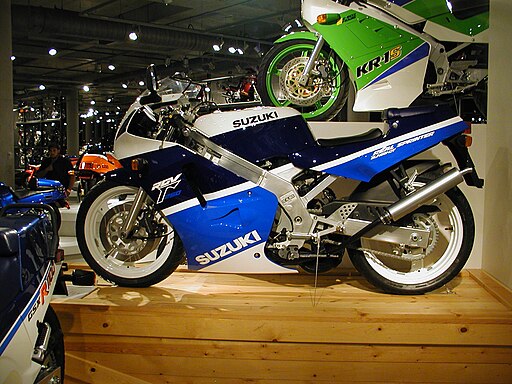
Suzuki RGV250
Suzuki RGV250: A High-Performance Two-Stroke Legend
The Suzuki RGV250 is a legendary sportbike that earned a reputation for being one of the most exciting and high-performance two-stroke motorcycles of its era. Produced by Suzuki from the late 1980s to the mid-1990s, the RGV250 was designed to deliver exceptional agility, raw power, and cutting-edge technology in a compact, lightweight package. With its refined handling characteristics, aggressive styling, and potent two-stroke engine, the RGV250 became a beloved machine among motorcycle enthusiasts and is still highly regarded today.
History and Legacy of the Suzuki RGV250
The Suzuki RGV250 was introduced in 1983 as a successor to the earlier Suzuki RG250, and it represented a significant leap forward in terms of performance and technological advancements. While the RGV250 was primarily designed for road use, it was heavily influenced by Suzuki’s success in the world of professional road racing, particularly in the 250cc class. This was evident in its racing-inspired features, including its lightweight aluminum frame, high-revving two-stroke engine, and aggressive aerodynamics.
The RGV250 was produced in several different versions during its production run, with the most iconic being the VJ21 (1983–1987) and VJ22 (1989–1997) models. The VJ21 was the first iteration of the RGV250 and featured a more basic design compared to the later VJ22, which incorporated more advanced suspension, a more refined engine, and improved aerodynamics. The VJ22 also introduced the use of the newer RGV250 “Gamma” branding, which helped solidify the model’s position as a high-performance sportbike.
Although production ended in the mid-1990s, the RGV250’s influence continues to be felt today. Its combination of lightweight handling, cutting-edge technology, and a thrilling two-stroke engine made it a sought-after machine by collectors and enthusiasts. For many motorcyclists, the RGV250 represents the epitome of the two-stroke sportbike era.
Technical Specifications of the Suzuki RGV250
Engine:
- Type: 249cc, liquid-cooled, two-stroke, parallel twin
- Bore x Stroke: 56.0 x 50.5 mm
- Compression Ratio: 6.7:1
- Power Output: Approximately 45 hp (33.5 kW) at 10,500 rpm
- Torque: 34 Nm (25 lb-ft) at 9,000 rpm
- Fuel System: Dual Mikuni BS 30mm carburetors
- Ignition: Digital CDI (Capacitor Discharge Ignition)
- Lubrication System: Premix (requires mixing oil with fuel)
- Cooling System: Liquid-cooled
- Exhaust: Two-stroke expansion chambers
The RGV250’s engine is a high-performance parallel twin configuration, designed for peak power output at high RPMs. With a bore and stroke of 56.0 x 50.5 mm, it is finely tuned to produce an impressive 45 horsepower at 10,500 RPM, delivering an exciting riding experience. The engine’s power characteristics are typical of a two-stroke engine, with a strong powerband that peaks at higher revs. The dual carburetors deliver fuel to the engine with precision, ensuring that the RGV250 is both responsive and powerful.
The two-stroke design of the RGV250 means that the engine delivers its power with a distinctive “hit” that is beloved by two-stroke enthusiasts. However, it also requires a different approach to maintenance compared to four-stroke engines, including regular oil mixing with the fuel, and frequent attention to the exhaust system to prevent carbon buildup.
Chassis and Suspension:
- Frame Type: Aluminium alloy, twin-spar frame
- Front Suspension: 37mm telescopic fork with 130mm of travel
- Rear Suspension: Monoshock, linked to a swingarm, with 110mm of travel
- Front Brake: 2 x 267mm discs with twin-piston calipers
- Rear Brake: Single 220mm disc with single-piston caliper
- Front Tire Size: 90/90-17
- Rear Tire Size: 130/70-17
- Wheelbase: 1,375 mm (54.1 inches)
- Dry Weight: 138 kg (304 lbs)
The RGV250 is built around a lightweight aluminum twin-spar frame that gives the bike excellent rigidity and agility, allowing it to handle corners with ease. The compact size of the frame makes the bike extremely nimble, while the overall lightweight construction ensures that it remains easy to handle even in tight situations. At just 138 kg (304 lbs), the RGV250 was one of the lightest bikes in its class, contributing significantly to its agile and responsive handling.
The front suspension consists of a 37mm telescopic fork with 130mm of travel, while the rear features a monoshock linked to a swingarm, offering 110mm of travel. This combination of suspension components provides a balanced and responsive ride, making the RGV250 capable of handling the most demanding corners and uneven surfaces with minimal disruption.
The braking system on the RGV250 consists of twin 267mm discs at the front, paired with twin-piston calipers, and a single 220mm disc with a single-piston caliper at the rear. The braking system is designed to provide powerful stopping power, enabling the bike to safely decelerate at high speeds and in tricky riding conditions. The front tire size of 90/90-17 and rear tire size of 130/70-17 offer a perfect balance between traction and agility.
Performance:
- Top Speed: 180-190 km/h (112-118 mph)
- 0-100 km/h (0-62 mph) Time: Approximately 5 seconds
- Fuel Tank Capacity: 17 liters (4.5 gallons)
- Fuel Efficiency: Approximately 10-15 km/l (23-35 mpg)
One of the standout features of the Suzuki RGV250 is its impressive performance. With a top speed of around 180-190 km/h (112-118 mph), the RGV250 was among the fastest 250cc sportbikes of its time. The bike accelerates from 0 to 100 km/h (0-62 mph) in just around 5 seconds, offering an exhilarating burst of power that is typical of two-stroke engines.
While the RGV250’s fuel economy is relatively modest compared to modern four-stroke bikes, it remains competitive for its class. The 17-liter fuel tank provides a decent range for a two-stroke, allowing riders to enjoy extended riding sessions without frequent refueling stops.
Handling and Ride Experience
The Suzuki RGV250 excels in handling, a characteristic that made it a favorite among enthusiasts and racers alike. Thanks to its lightweight frame, responsive suspension, and aggressive geometry, the bike is incredibly agile and stable in tight corners. The two-stroke engine’s quick throttle response further enhances the bike’s cornering capabilities, making it perfect for track days or spirited riding on twisty roads.
The bike’s lightweight nature and precise handling characteristics give it a distinct advantage over heavier, four-stroke bikes, particularly in terms of maneuverability. The RGV250’s compact dimensions allow it to quickly change direction and maintain excellent stability at high speeds. Riders often describe the bike’s handling as “flickable” and “nimble,” making it an ideal choice for those who appreciate a more aggressive and engaging riding experience.
Maintenance and Considerations
The Suzuki RGV250 is a two-stroke motorcycle, and as such, it requires specific maintenance considerations. One of the key aspects of owning an RGV250 is the need to regularly mix oil with fuel, as two-stroke engines do not have separate lubrication systems. This requires careful monitoring of the oil-to-fuel ratio to ensure optimal performance and longevity.
Additionally, due to the high-revving nature of the engine, riders must pay close attention to the exhaust system. Carbon buildup can occur over time, and regular cleaning or replacement of the exhaust components may be necessary to maintain peak engine performance. As with any high-performance motorcycle, routine checks of the engine, suspension, and braking components are essential to keep the bike running smoothly.
Conclusion
The Suzuki RGV250 remains one of the most iconic two-stroke motorcycles ever produced, and its combination of lightweight handling, advanced technology, and exhilarating performance continues to captivate motorcyclists around the world. Whether you’re a seasoned enthusiast or a collector of classic bikes, the RGV250 is a machine that offers an unforgettable riding experience. Despite the passage of time, the Suzuki RGV250’s legacy as one of the most thrilling and nimble sportbikes of its era is secure, making it a must-have for those who truly appreciate the art of motorcycle engineering.
