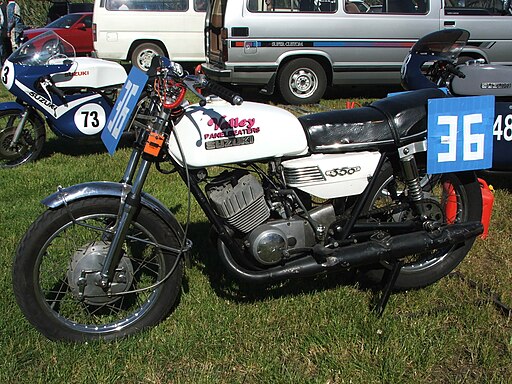
Suzuki T350
Suzuki T350: Detailed Overview of Technical Parameters and History
The Suzuki T350, also known as the Suzuki Rebel, is a legendary motorcycle that was produced in the late 1960s and early 1970s. As a part of Suzuki’s growing lineup of two-stroke motorcycles, the T350 was a performance-oriented bike designed to attract riders looking for a combination of power, handling, and affordability. It was known for its smooth twin-cylinder engine and agile handling, making it an exciting choice for both experienced riders and those entering the world of motorcycling.
In this article, we will explore the history, technical specifications, and unique characteristics of the Suzuki T350, shedding light on why it remains a beloved classic motorcycle.
History of the Suzuki T350
Introduced in 1968, the Suzuki T350 was the successor to the T250 and was positioned as a more powerful alternative in Suzuki’s expanding range of two-stroke motorcycles. It was part of the “Rebel” series, a designation that Suzuki used for a group of sportier, middleweight two-stroke bikes that aimed to balance performance with reliability.
The T350 was designed to appeal to riders who wanted something faster and more powerful than the 250cc class but not as large or heavy as the 500cc models. The bike’s performance capabilities, combined with its reasonable price point, made it one of the more popular motorcycles of its era.
With its parallel twin-cylinder, two-stroke engine, the Suzuki T350 delivered an impressive amount of power for its size, making it a top contender in the 350cc motorcycle market. The T350 also boasted advanced features for its time, including a six-speed transmission and a relatively lightweight chassis. Its sleek and distinctive design, coupled with its excellent performance, earned it a loyal following among motorcyclists.
Over the years, the T350 earned a reputation for being both a fun-to-ride and practical motorcycle, thanks to its solid reliability, decent fuel efficiency, and the exhilarating sound of its two-stroke engine. Despite being discontinued in the early 1970s, the Suzuki T350 continues to be a popular bike among vintage motorcycle enthusiasts and collectors.
Technical Parameters of the Suzuki T350
The Suzuki T350 was packed with cutting-edge technology for its time. Its 350cc engine, sporty design, and overall performance made it a standout motorcycle in the two-stroke category. Let’s break down the technical specifications that contributed to the T350’s popularity and performance.
Engine
- Engine Type: Air-cooled, 2-stroke, parallel twin-cylinder
- Displacement: 315 cc
- Bore x Stroke: 57.0 mm x 56.0 mm
- Compression Ratio: 6.8:1
- Power Output: 31 horsepower (23.1 kW) at 7,500 rpm
- Torque: 28.5 Nm (21 lb-ft) at 6,500 rpm
- Fuel System: Dual Mikuni VM26 carburetors
- Ignition Type: Transistorized ignition
- Cooling System: Air-cooled
The Suzuki T350’s engine was a parallel twin-cylinder configuration, which was typical for the era’s middleweight motorcycles. It featured a 315cc displacement, giving it the ideal balance between power and weight. With a compression ratio of 6.8:1, the engine was able to produce a maximum output of 31 horsepower at 7,500 rpm. This made it one of the more powerful motorcycles in its class at the time.
A unique feature of the T350’s engine was its dual Mikuni VM26 carburetors, which helped deliver smooth throttle response and reliable fuel delivery. The air-cooled system kept the engine’s temperature in check, and the use of transistorized ignition helped improve spark reliability and overall engine efficiency.
Transmission and Final Drive
- Transmission Type: 6-speed constant mesh
- Final Drive: Chain
The Suzuki T350 featured a 6-speed constant mesh transmission, which was a significant advantage over many of its competitors, who often had fewer gears. This allowed the rider to extract more power from the engine and achieve smoother acceleration at different speeds. The 6-speed transmission contributed to a more flexible riding experience, whether on highways or winding country roads.
The bike’s final drive was a chain, which was both lightweight and durable, providing reliable power transfer to the rear wheel. This chain drive system was common in motorcycles of this era and offered relatively easy maintenance.
Chassis and Suspension
- Frame Type: Steel tubular frame
- Front Suspension: Telescopic fork, 6.3 inches (160 mm) of travel
- Rear Suspension: Dual shock absorbers, 4.3 inches (110 mm) of travel
- Front Brake: Drum brake, 180 mm
- Rear Brake: Drum brake, 180 mm
- Wheelbase: 1,365 mm (53.7 inches)
- Seat Height: 780 mm (30.7 inches)
- Dry Weight: 154 kg (340 lbs)
The T350 was built around a steel tubular frame, which provided a solid yet flexible structure that contributed to the motorcycle’s handling characteristics. The frame allowed the T350 to remain relatively lightweight, which, in combination with its engine design, gave the bike excellent maneuverability.
The front suspension of the T350 consisted of a telescopic fork with 6.3 inches (160 mm) of travel, offering effective shock absorption on uneven surfaces and providing a smooth ride on most roads. The rear suspension used dual shock absorbers with 4.3 inches (110 mm) of travel, contributing to overall comfort during longer rides or rougher conditions.
Both the front and rear brakes were drum brakes with a diameter of 180 mm. While drum brakes were common at the time, they did not offer the same level of stopping power or precision as modern disc brakes. Nevertheless, the T350’s brakes were effective for everyday riding and offered adequate control for most conditions.
The wheelbase of 1,365 mm contributed to a stable yet agile feel, while the seat height of 780 mm made it accessible to riders of various sizes. The dry weight of the T350 was 154 kg (340 lbs), making it light enough to handle easily yet substantial enough to feel stable at higher speeds.
Fuel and Economy
- Fuel Tank Capacity: 12 liters (3.2 US gallons)
- Fuel Consumption: 5.5 liters per 100 km (42 mpg)
The Suzuki T350 had a fuel tank capacity of 12 liters (3.2 US gallons), providing a decent range for long-distance trips and commutes. The bike’s fuel consumption was approximately 5.5 liters per 100 km (42 mpg), which was relatively efficient for a bike with a 350cc engine. Its fuel economy made the T350 an attractive option for riders who wanted a balance of performance and practicality.
Electrical System
- Battery Type: 6V lead-acid
- Headlight: 12V halogen
- Taillight: 12V incandescent
The electrical system on the T350 used a 6V lead-acid battery, a standard configuration for motorcycles of the time. The bike’s headlight was powered by a 12V halogen bulb, providing better illumination than previous models, while the taillight utilized a standard 12V incandescent bulb. This setup ensured that the bike had sufficient lighting for both daytime and nighttime riding.
Performance and Riding Experience
The Suzuki T350 was a very capable motorcycle, offering a smooth, powerful ride. Thanks to its parallel twin engine, it delivered good acceleration and a high top speed of around 160 km/h (100 mph), which was impressive for a 350cc motorcycle of its time. The engine’s responsiveness made the bike particularly fun to ride on twisty roads and highways.
The 6-speed gearbox allowed riders to optimize the T350’s performance in various conditions, while the lightweight design made it easy to handle through tight corners and crowded streets. The suspension system, while basic by modern standards, provided decent comfort and stability for most riding conditions.
With its balanced power, manageable weight, and relatively easy-to-maintain components, the T350 was an ideal motorcycle for everyday use, weekend rides, and even entry-level sport riding.
Conclusion
The Suzuki T350 was a standout motorcycle in its class, offering a fantastic blend of power, performance, and practicality. With its 315cc parallel twin engine, 6-speed transmission, and lightweight frame, it provided a thrilling yet accessible riding experience for both beginners and experienced riders alike. The bike’s timeless design, reliability, and performance capabilities have allowed it to remain a beloved model among motorcycle enthusiasts, particularly those who appreciate vintage two-stroke motorcycles.
Today, the Suzuki T350 is highly sought after by collectors and vintage motorcycle lovers, thanks to its unique blend of cutting-edge technology and classic styling. Whether for restoration projects or for simply enjoying the ride, the T350 is a bike that continues to capture the spirit of classic motorcycling.
.jpg)