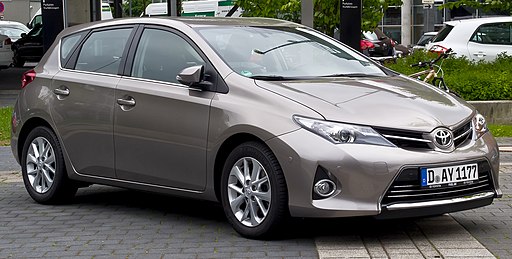
Toyota Auris faults
The Toyota Auris is celebrated for reliability and efficiency, but like any vehicle, it has its share of recurring issues. Below is a detailed overview of the most frequently reported faults, organized by system, along with typical symptoms, underlying causes, and practical remedies.
Engine and Emissions
EGR Valve and Cooler Blockage
- Symptoms: Rough idle, loss of low-speed torque, check-engine lamp with P0401 or P0402 codes.
- Cause: Carbon deposits in the exhaust-gas recirculation passages and cooler unit, particularly on diesel variants and high-mileage petrol engines.
- Consequence: Elevated combustion temperatures, higher NOₓ emissions, and potential turbocharger stress.
- Remedy: Remove and clean the EGR valve and cooler with solvents or ultrasonic methods, replace gaskets, and consider periodic decoking every 50 000 km.
Excessive Oil Consumption
- Symptoms: Rapid drop on the dipstick between services, occasional blue smoke on overrun.
- Cause: Worn piston rings or valve-stem seals on 1.6 L engines, often exacerbated by high city mileage and infrequent oil changes.
- Consequence: Engine wear risk, low-oil warnings, reduced lubrication protection.
- Remedy: Top up with manufacturer-specified oil grade, monitor consumption rate, and plan for ring and seal inspection if usage exceeds 1 L per 1 000 km.
Black Smoke and Surging (Diesel Models)
- Symptoms: Transient cloud of soot under load, surging at steady throttle, elevated fuel consumption.
- Cause: Faulty mass-airflow sensor or leak in the intake boot allowing unmetered air, leading to rich running.
- Consequence: Catalytic converter and particulate filter contamination, potential sensor failure.
- Remedy: Clean or replace the MAF sensor, inspect and tighten intake hoses, reset ECU adaptations after repair.
Transmission and Drivetrain
CVT Shudder and Belt Slippage
- Symptoms: Noticeable shudder when accelerating from low speed or climbing gentle gradients, whining noise under load.
- Cause: Worn steel belt and pulley wear rings, plus degraded factory CVT fluid losing friction properties.
- Consequence: Harsh drivability, overheating of pump and valve body, risk of belt failure.
- Remedy: Service CVT fluid and filter every 40 000 km with approved oil, and replace the belt assembly at high mileage if slip persists.
Manual Gearbox Clutch Judder
- Symptoms: Vibration through the clutch pedal during take-off, rattling noise at idle when the clutch is disengaged.
- Cause: Dual-mass flywheel damping springs fatigue, clutch disc friction material glazing.
- Consequence: Reduced clutch smoothness, accelerated wear to transmission input shaft bearing.
- Remedy: Replace the dual-mass flywheel and clutch kit together; fit a single-mass flywheel only if additional noise is acceptable.
Harsh Shifts in Automatic Models
- Symptoms: Delayed or clunky shifts, slipping under acceleration, occasional limp-home mode.
- Cause: Valve body wear and clutch pack glazing from neglected fluid and filter changes.
- Consequence: Accelerated transmission wear, risk of total failure.
- Remedy: Full fluid and filter service every 60 000 km, followed by valve-body overhaul if shifting quality does not improve.
Brakes and Steering
Front Brake Squeal
- Symptoms: Loud squealing or chirping under light braking, typically in damp or early-morning conditions.
- Cause: Moisture-induced rust on rotors, high-metal-content aftermarket pads, or glazed pad surfaces.
- Consequence: Annoying noise, though braking performance usually remains unaffected.
- Remedy: Fit high-quality ceramic pads, have rotors skimmed or replaced, and apply anti-squeal lubricant to pad backs.
Steering Rack Leak and Play
- Symptoms: Power-steering fluid pools under the front chassis, loose feel in steering center, whining pump noise.
- Cause: Deteriorated rack seals or worn universal joints in tie-rod ends.
- Consequence: Reduced steering assistance, potential ingress of contaminants.
- Remedy: Rebuild or replace the steering rack, renew tie-rod ends, and bleed the system with fresh fluid.
Electrical and Comfort Systems
Battery Drain Issues
- Symptoms: Flat battery after short periods of inactivity, inability to crank engine without jump-start.
- Cause: Parasitic draw from faulty door-module electronics or aftermarket audio wiring left live.
- Consequence: Unreliable starting, accelerated battery ageing.
- Remedy: Perform a parasitic current test, isolate and repair leaking circuits, fit a battery-disconnect switch if long-term storage is expected.
Electric Window Regulator Failure
- Symptoms: Window moves slowly, binds midway, or drops into the door unexpectedly.
- Cause: Frayed regulator cables or stripped plastic pulleys in the door mechanism.
- Consequence: Complete loss of window control, risk of glass shattering.
- Remedy: Replace the entire window regulator assembly with an OEM or reinforced aftermarket unit.
Dashboard Rattles and Trim Looseness
- Symptoms: Persistent buzzing or knocking from the instrument panel at highway speeds or over bumps.
- Cause: Aging plastic clips and fasteners losing grip, trim panels warping under temperature cycles.
- Consequence: Cabin noise intrusion and perceived drop in build quality.
- Remedy: Replace worn retainers with new clips, install foam-backed adhesive strips behind panels to damp vibrations.
Hybrid and Fuel System (Auris Hybrid)
Hybrid Battery Degradation
- Symptoms: Frequent transitions between petrol and electric modes, reduced EV-only range, hybrid warning light.
- Cause: Loss of capacity in Ni-MH battery modules over 8–12 years, especially in hot climates.
- Consequence: Lower fuel economy, potential limp-home mode if battery falls below minimum threshold.
- Remedy: Have modules tested and rebalance cell voltages; replace degraded modules individually or as a pack under warranty if available.
Fuel Pump and Injector Seal Leaks
- Symptoms: Fuel odor in engine bay, intermittent hesitation under load, visible drips at injector rail.
- Cause: Hardened O-rings and seals around injectors and fuel-pump housing.
- Consequence: Fire risk, erratic running, misfire codes.
- Remedy: Replace injector seals and O-rings with a complete seal kit, inspect rail and pump for cracks before reassembly.
Body and Corrosion
Underbody and Wheel-Arch Rust
- Symptoms: Bubbling paint, flaking metal at sill seams, underbody pitting around suspension mounts.
- Cause: Thin factory underseal and trapped road salt in wheel arches and subframe pockets.
- Consequence: Structural weakening at key load points, potential suspension failures.
- Remedy: Fully strip affected areas with a wire wheel or media blast, weld in new steel sections, and apply wax-based underseal and rust-neutralizing primer.
Door Sill Drain Blockages
- Symptoms: Water pooling inside footwells after rain, musty odor in the cabin.
- Cause: Blocked door-sill scuppers and drainage channels becoming clogged with leaves and debris.
- Consequence: Accelerated interior trim rot, potential electronic module corrosion.
- Remedy: Clear scuppers regularly, run a flexible brush through channels, and test drainage by pouring water over the roof gutters.
Toyota Auris as a used car
Choosing a Toyota Auris on the second-hand market combines Toyota’s reputation for reliability with a practical hatchback platform. This guide explores the Auris across its generations, dives into technical specifications, highlights known concerns when shopping used, and offers expert tips for a confident purchase.
Introduction
The Toyota Auris launched in 2006 as a compact five-door alternative to the Corolla saloon. Positioned around fuel efficiency and build quality, it gained traction in Europe through petrol, diesel, and hybrid powertrains. Used examples typically range from budget city cars to well-equipped family hatchbacks.
As a used purchase, the Auris delivers low running costs, straightforward maintenance, and a robust parts network. Depreciation on early models means strong value for money, especially on high-spec trims with safety packs and factory alloys.
This guide unpacks key data on engines, dimensions, performance, safety features, and ownership considerations. Whether you want a commuter car or a long-term family runaround, you’ll find detailed insight to weigh the Auris against rivals.
Model Generations
First Generation (E150; 2006–2012)
The E150 Auris debuted with five-door hatch and five-door estate layouts. Styling was conservative, emphasizing utility over flair. Interiors featured durable plastics with optional soft-touch trims on higher grades.
Key attributes included straightforward MacPherson-strut front suspension, torsion-beam rear, and a choice of 1.4 L petrol, 1.6 L petrol, 1.33 L VVT-i petrol, and 2.0 L D-4D diesel engines. Early hybrids were not offered until the next generation.
Strong build quality and Toyota’s dealer network made the E150 a dependable used buy. Watch for high-mileage diesels with EGR clogging and petrol units on city miles showing higher oil consumption.
Second Generation (E180; 2012–2018)
The E180 Auris refined the formula with sharper styling and improved interior ergonomics. Dashboard materials earned higher marks for fit and finish, and an updated multimedia interface arrived on mid-range models.
Hybrid technology joined the range in 2013, pairing a 1.8 L Atkinson-cycle petrol engine with an electric motor for Combined Cycle economy typically between 4.0–4.5 L/100 km. Diesel variants continued with updated D-4D units, while petrol models gained direct injection on some trims.
Electrified models often command a premium but deliver real-world savings in urban use. Battery wear is minimal up to 200 000 km if maintained, though module replacement can be costly out of warranty.
Third Generation (E210; 2018–Present)
While newer E210 Auris models (badged Corolla in many markets) remain scarce on the used market, early examples already demonstrate Toyota’s full suite of active-safety systems. Full-LED lighting, lane-keep assist, and adaptive cruise with stop-start appear standard at mid-trim levels.
Powertrains evolved with a stronger hybrid system and a new 2.0 L Dynamic Force engine option. Buyers focused on low depreciation and long-term use will find 2019-onward cars appealing for technology and drivetrain efficiency.
Engine and Transmission Options
Petrol Engines
- 1.33 L VVT-i Inline-4
- Power: 99 PS at 6 000 rpm
- Torque: 128 N·m at 4 400 rpm
- Transmissions: 5-speed manual, 4-speed automatic
- 1.6 L Valvematic Inline-4
- Power: 132 PS at 6 000 rpm
- Torque: 160 N·m at 4 400 rpm
- Transmissions: 6-speed manual, 7-speed CVT
- 2.0 L Dynamic Force Inline-4 (E210)
- Power: 180 PS at 6 600 rpm
- Torque: 205 N·m at 4 800 rpm
- Transmissions: 6-speed manual, Direct-Shift CVT
Diesel and Hybrid
- 2.0 L D-4D Inline-4 Diesel
- Power: 124 PS at 3 600 rpm
- Torque: 310 N·m at 1 800–2 400 rpm
- Transmissions: 6-speed manual, 6-speed automatic
- 1.8 L Hybrid Synergy Drive
- Combined System Power: 136 PS
- Electric Motor Torque: 300 N·m (peak)
- Transmissions: e-CVT
Technical Specifications Table
| Specification | E150 Petrol | E180 Hybrid | E150 Diesel |
|---|---|---|---|
| Engine Displacement | 1 330 cm³ | 1 798 cm³ + electric | 1 998 cm³ |
| Max Power | 99 PS | 136 PS (combined) | 124 PS |
| Max Torque | 128 N·m | 300 N·m (electric) | 310 N·m |
| 0–100 km/h | 11.8 s | 10.9 s | 10.3 s |
| Top Speed | 180 km/h | 180 km/h | 190 km/h |
| Fuel Economy (Combined) | 6.5 L/100 km | 4.0 L/100 km | 4.2 L/100 km |
Dimensions and Capacities
Exterior Dimensions
The Auris offers a compact footprint suited to urban and suburban parking. Wheelbase variations reflect hatch (2 600 mm) versus Touring Sports estate (2 620 mm) configurations.
Interior and Cargo Volumes
Higher-trim models feature sliding rear seats for variable luggage space. Hybrid cars lose some boot space to battery packaging, but still yield competitive cargo capacity.
| Dimension | Hatchback | Touring Sports |
|---|---|---|
| Length | 4 265 mm (E180) | 4 525 mm |
| Width | 1 760 mm | 1 760 mm |
| Height | 1 515 mm | 1 495 mm |
| Wheelbase | 2 600 mm | 2 620 mm |
| Boot Capacity (seats up) | 360 L | 530 L |
| Fuel Tank Capacity | 50 L | 55 L |
| Curb Weight | 1 200–1 450 kg | 1 350–1 600 kg |
Performance and Fuel Economy
Real-World Economy
- Petrol manual: 6.0–7.5 L/100 km
- Diesel manual: 4.0–4.5 L/100 km
- Hybrid: 3.8–4.2 L/100 km
City driving in hybrids often drops into the low-3 L/100 km range when batteries are cycled effectively. Diesels stand out on continuous motorway journeys.
Driving Dynamics
MacPherson struts at the front and a semi-independent torsion beam at the rear balance comfort with predictable handling. Higher-spec models add sport-tuned suspension and larger brake discs for improved front-end feel.
The CVT offers smooth, uninterrupted pull but can feel disconnected compared to manuals. A six-speed gearbox remains the enthusiast choice for sharper throttle-to-road response.
Chassis, Suspension, and Safety
Suspension Layout
- Front: MacPherson strut with stabilizer bar
- Rear: Torsion beam axle or multi-link on high trims
- Steering: Electric power-assisted rack
Ride quality is composed, with minimal body roll in corners. Optional adaptive dampers on late-generation Auris models deliver a firmer, more controlled ride.
Safety Equipment
Toyota’s commitment to active and passive safety evolves across generations. Standard features on used Auris include:
- Dual front, side, and curtain airbags
- Vehicle Stability Control (VSC) and Traction Control
- ISOFIX child-seat mounts on rear bench
- Antilock Braking System (ABS) with Brake Assist
E180 and later models often add lane-departure alert, automatic high-beam, pedestrian detection, and adaptive cruise control under the Toyota Safety Sense suite.
Common Issues in Used Auris
When inspecting a pre-owned Auris, look for known wear points:
- EGR valve buildup on high-mileage diesels causing rough idle
- CVT belt shudder under load if fluid hasn’t been changed
- Hybrid battery module degradation after 150 000 km in hot climates
- Electric window regulator failures on front doors
- Brake-pad squeal from glazed surfaces or thin rotors
Regular service records and proof of recall compliance reduce the risk of these faults. A thorough pre-purchase inspection by a Toyota specialist is highly recommended.
Maintenance and Buying Tips
- Confirm timing belt or chain service intervals for petrol engines.
- Check CVT and AT fluid change history; plan a fresh service if unknown.
- Test battery state-of-health on hybrids using a Toyota diagnostic scan.
- Inspect suspension bushes and steering racks for leaks or play.
- Verify all recall campaigns have been completed via Toyota’s national database.
- Compare fuel bills across fuel types to match your typical mileage and driving style.
Documented service history, original tool kits, and two-key sets elevate resale value and ownership satisfaction.
Conclusion
The Toyota Auris remains a compelling choice for buyers seeking a reliable, efficient, and practical compact hatchback on the used market. With diverse engine options, robust safety equipment, and a proven chassis, it adapts to daily commuting, family duties, or economical long-distance touring.
