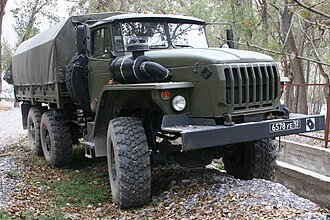
Ural-4320: The Legendary Heavy-Duty Military Truck Built for Extreme Conditions
The Story Behind the Ural-4320
The Ural-4320 is one of the most recognizable heavy-duty trucks ever produced for military, industrial, and off-road applications. Developed in the Soviet Union during the late 1970s, this rugged vehicle was created to operate in some of the most challenging environments on Earth, including deep mud, snow-covered terrain, deserts, forests, and poorly developed road networks. Built around simplicity, durability, and exceptional off-road capability, the Ural-4320 became a trusted platform for armed forces, emergency services, construction companies, and logistics operators that required dependable transportation under extreme conditions.
Unlike many modern trucks that rely heavily on complex electronic systems, the Ural-4320 was designed around mechanical reliability and ease of maintenance. Its creators focused on producing a vehicle that could continue operating far away from repair facilities and in environments where fuel quality, weather conditions, and road infrastructure could be unpredictable. This practical philosophy made the truck highly valuable in remote regions where reliability was often more important than comfort or speed.
The Ural-4320 belongs to a long tradition of Russian heavy-duty vehicles designed for difficult terrain. Its three-axle, all-wheel-drive configuration, strong chassis, and powerful engine allowed it to carry heavy loads while maintaining mobility in areas where conventional trucks would quickly become immobilized. Decades after its introduction, the Ural-4320 remains a symbol of toughness and engineering focused on survival.
The Development and History of the Ural-4320
Origins and Purpose of the Design
The Ural-4320 was developed by the Ural Automotive Plant, one of the most important truck manufacturers in Russia. The vehicle was introduced as an improved successor to earlier Ural models, combining proven design concepts with a more powerful engine and improved operational capabilities. The main objective was to create a universal military transport truck that could perform a wide range of missions, from carrying troops and equipment to transporting supplies across difficult terrain.
Military requirements strongly influenced the truck’s design. Armed forces needed vehicles that could move reliably across areas without paved roads, especially in regions with extreme climates. The Ural-4320 was therefore engineered with high ground clearance, strong suspension components, and a permanent all-wheel-drive system capable of handling challenging surfaces.
The truck’s simple construction also allowed it to be repaired in field conditions. Many components were designed to be durable and accessible, reducing the need for specialized equipment during maintenance. This approach was especially important for military operations, where vehicle availability could directly affect mission success.
Evolution Through the Years
Since its introduction, the Ural-4320 has undergone numerous improvements while maintaining the basic design principles that made it successful. Different versions have been produced with various engines, body configurations, and specialized equipment. These adaptations have allowed the platform to serve many purposes beyond its original military role.
Although the basic appearance of the truck has remained familiar, later versions have benefited from improvements in engine technology, driver comfort, safety equipment, and environmental standards. However, the central characteristics of the vehicle—strength, simplicity, and off-road performance—have remained unchanged.
Exterior Design and Construction
A Chassis Built for Extreme Environments
The foundation of the Ural-4320 is its exceptionally strong chassis, which was designed to withstand heavy loads and harsh operating conditions. The frame provides the structural strength required for military equipment, cargo platforms, fuel tanks, recovery systems, and other specialized installations.
The truck’s three-axle configuration provides excellent weight distribution and allows it to maintain traction even when carrying significant payloads. Combined with large off-road tires and a high ground clearance, this design enables the Ural-4320 to travel across mud, sand, snow, and rocky terrain.
The vehicle’s durability comes from a design philosophy that prioritizes function over unnecessary complexity. The body panels, suspension components, and drivetrain systems were created to survive demanding use over long periods, making the truck especially valuable in regions where replacement parts and service facilities may be limited.
Recognizable Military Appearance
The Ural-4320 has a distinctive appearance characterized by its tall stance, large wheels, and practical cab design. Its exterior reflects its intended purpose as a working machine rather than a consumer vehicle. The high driving position provides improved visibility, while the robust front section protects important mechanical components during off-road operation.
Many versions of the truck feature a simple cargo platform with removable side panels, allowing it to transport personnel, equipment, or supplies. The flexible design has also made the Ural-4320 a popular base vehicle for specialized conversions, including mobile workshops, command vehicles, emergency response units, and utility systems.
Engine Performance and Off-Road Capability
Powerful Engines for Demanding Missions
The performance of the Ural-4320 comes from its heavy-duty engine options, which were developed to provide dependable power in difficult conditions. Early versions commonly used diesel engines known for their durability and ability to operate in demanding environments.
The engine’s main purpose is not high-speed performance but reliable torque delivery. Heavy trucks operating off-road require strong pulling power to overcome obstacles such as deep mud, steep inclines, and uneven terrain. The Ural-4320’s powertrain is designed to provide the steady performance necessary for these challenges.
Its mechanical systems are also valued for their ability to function in extreme temperatures. Military vehicles may need to operate in freezing conditions, hot climates, or remote areas where maintenance opportunities are limited. The Ural-4320’s engineering reflects these requirements.
Advanced All-Wheel-Drive System
One of the defining features of the Ural-4320 is its full-time all-wheel-drive system. Power is delivered to all wheels, allowing the truck to maintain traction when road conditions become difficult. This capability is one of the main reasons the vehicle has gained a reputation as an outstanding off-road performer.
The suspension system is designed to absorb shocks from uneven terrain while maintaining vehicle stability. Large wheels and significant ground clearance help the truck pass through obstacles that would stop many standard commercial vehicles.
The combination of engine power, drivetrain strength, and suspension capability allows the Ural-4320 to perform tasks in locations where infrastructure is minimal or nonexistent.
Interior and Driver Experience
A Functional Rather Than Luxury-Oriented Cabin
The cabin of the Ural-4320 was designed primarily for practicality. Unlike modern commercial trucks that emphasize comfort and advanced electronics, the interior focuses on reliability and straightforward operation. Controls are arranged for functional use, and the cabin provides the basic requirements needed for long working periods.
The elevated seating position gives drivers a commanding view of the surrounding terrain, which is especially useful during off-road driving. Visibility and vehicle awareness are critical when navigating narrow trails, construction areas, or difficult landscapes.
While comfort features are limited compared with contemporary trucks, the cabin reflects the vehicle’s purpose. The Ural-4320 was created as a dependable tool capable of completing demanding tasks rather than as a luxury transportation solution.
Maintenance-Friendly Engineering
A major advantage of the Ural-4320 is its ease of maintenance. The truck’s mechanical systems are relatively simple, allowing technicians to perform repairs without highly specialized diagnostic equipment.
This characteristic has contributed greatly to the vehicle’s popularity in remote areas. Operators value machines that can be repaired locally and returned to service quickly. The Ural-4320 represents an era of vehicle engineering where mechanical reliability was a primary design goal.
Military and Civilian Applications
Military Service Around the World
The Ural-4320 was originally created for military transportation and has served in numerous armed forces. Its ability to transport personnel, ammunition, fuel, and equipment has made it an important logistics vehicle.
Military operators appreciate its ability to function in environments where roads are damaged or unavailable. The truck’s reliability and load capacity allow it to support a wide range of missions, including supply operations and field transportation.
Civilian and Industrial Uses
Beyond military applications, the Ural-4320 has found extensive use in civilian industries. Its off-road ability makes it suitable for oil and gas operations, forestry, mining, construction, and emergency services.
Companies working in remote locations often require vehicles that can carry equipment and supplies while handling difficult terrain. The Ural-4320’s rugged construction makes it well suited for these tasks.
Emergency organizations have also used modified versions of the truck because of its ability to reach areas affected by natural disasters, poor road conditions, or extreme weather.
Why the Ural-4320 Remains Important Today
The continued interest in the Ural-4320 demonstrates the lasting value of durable engineering. Although newer trucks may offer greater comfort, efficiency, and electronic technology, the Ural-4320 represents a different approach focused on reliability and simplicity.
In many challenging environments, a vehicle’s ability to keep working is more important than advanced features. The Ural-4320 remains respected because it was designed around real-world demands rather than ideal operating conditions.
Its reputation as a dependable off-road truck has allowed it to remain relevant decades after its introduction. Whether used for military logistics, industrial operations, or specialized transport, the Ural-4320 continues to represent strength and endurance.
Conclusion: A Symbol of Rugged Truck Engineering
The Ural-4320 is more than just a heavy-duty truck; it is a representation of practical engineering designed for some of the toughest environments imaginable. Its powerful drivetrain, durable chassis, and exceptional off-road capability have made it one of the most recognizable utility vehicles produced in Russia.
While modern trucks continue to introduce new technologies and improved efficiency, the Ural-4320 remains admired for its simplicity and reliability. It demonstrates that a well-designed machine built around durability can continue serving effectively for generations.
For military organizations, industrial operators, and enthusiasts of rugged vehicles, the Ural-4320 remains an iconic example of a truck created to overcome challenges rather than avoid them.
Ural-4320 Technical Specifications Summary
| Specification | Details |
|---|---|
| Vehicle Type | Heavy-duty off-road cargo truck |
| Manufacturer | Ural Automotive Plant |
| Production Start | 1977 |
| Primary Use | Military transport, logistics, industrial operations |
| Drive Configuration | 6×6 all-wheel drive |
| Engine Type | Diesel engine options depending on production version |
| Engine Power | Approximately 210–312 horsepower depending on model and engine |
| Transmission | Manual gearbox with multi-speed configuration |
| Payload Capacity | Approximately 4.5–6 tonnes depending on version |
| Maximum Weight | Around 13–14 tonnes depending on configuration |
| Suspension | Heavy-duty leaf spring suspension designed for off-road use |
| Ground Clearance | Approximately 400 mm |
| Fuel Capacity | Varies by configuration, commonly equipped for long-range operation |
| Maximum Speed | Approximately 80–85 km/h |
| Off-Road Capability | Designed for mud, snow, sand, and rough terrain |
| Cab Style | Forward-control or conventional military-style cab depending on version |
| Main Strengths | Durability, reliability, high mobility, simple maintenance |
| Common Applications | Military transport, construction, emergency services, remote logistics |
