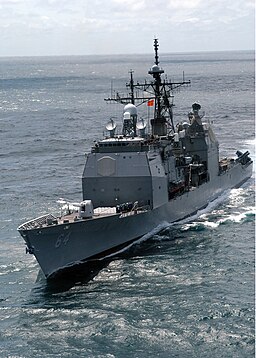
USS Gettysburg (CG-64)
The USS Gettysburg (CG-64) is a Ticonderoga-class guided missile cruiser in the United States Navy, renowned for its advanced combat systems, versatile mission capabilities, and storied service history. Named in honor of the historic Battle of Gettysburg, this warship has evolved into a modern multi-role platform capable of delivering potent air, surface, and subsurface defense. With an extensive array of offensive and defensive systems, the USS Gettysburg remains a vital asset in maintaining maritime security and projecting American power around the globe.
Historical Background and Development
Origins and Commissioning
The USS Gettysburg was commissioned during an era when the U.S. Navy was redefining its approach to multi-domain warfare. As part of the Ticonderoga-class, Gettysburg was built on a proven hull design and integrated with the Aegis Combat System—a revolutionary radar and fire control technology that set new standards for naval warfare. Commissioned in the late 1980s, the ship was designed to operate in a rapidly changing security environment, where threats from both conventional and asymmetric sources demanded versatile and highly responsive platforms.
Naming and Heritage
The name “Gettysburg” is steeped in historical significance. By carrying the legacy of one of the most pivotal battles in American history, the USS Gettysburg symbolizes the enduring spirit of resilience and determination. This heritage is reflected in the ship’s commitment to protecting freedom at sea and supporting global stability.
Evolution and Upgrades
Over the years, the USS Gettysburg has undergone numerous upgrades to maintain its technological edge. These modernization efforts have focused on enhancing its combat systems, updating its weapons suite, and improving overall operational efficiency.
Modernization Initiatives
- Software and Hardware Enhancements: Upgrades to the Aegis Combat System and radar arrays have significantly increased the ship’s ability to detect, track, and engage multiple targets simultaneously.
- Weapons System Integration: The addition of advanced missile systems and improvements in electronic warfare capabilities have broadened the ship’s offensive and defensive options.
- Sustainability Upgrades: Continuous improvements in propulsion and power management have extended the operational life of the vessel while ensuring reduced maintenance downtimes.
Design and Engineering Features
Hull and Structural Design
The USS Gettysburg boasts a robust, stealth-enhanced hull designed to withstand the rigors of high-intensity conflict. Its construction incorporates advanced materials and engineering techniques aimed at minimizing its radar signature while ensuring maximum structural integrity.
Structural Resilience
- Durable Construction: The steel hull and superstructure are engineered to absorb battle damage and withstand extreme maritime conditions.
- Stealth Features: Shaping and materials used in construction contribute to a reduced radar cross-section, enhancing the ship’s survivability in contested environments.
Propulsion and Performance
The propulsion system of USS Gettysburg provides a blend of speed, maneuverability, and endurance essential for modern naval operations. The ship is powered by gas turbine engines that allow rapid acceleration and high speeds, ensuring that it can quickly respond to emerging threats.
Efficiency and Agility
- High-Speed Capability: Advanced turbines and efficient power transmission enable the cruiser to achieve rapid deployment speeds.
- Operational Range: The propulsion system is designed for extended missions, providing the vessel with the endurance needed for long-duration deployments.
Advanced Combat Systems
At the heart of the USS Gettysburg’s operational prowess is its integrated combat system, which combines sophisticated radar, missile, and electronic warfare capabilities to create a formidable defensive and offensive platform.
Aegis Combat System
- Multi-Target Engagement: The Aegis system enables the ship to track and engage multiple airborne and surface threats simultaneously with unprecedented precision.
- Real-Time Data Processing: Cutting-edge radar and sensor arrays feed real-time information to the combat system, allowing rapid decision-making and coordinated missile launches.
Missile Systems and Armament
The armament of the USS Gettysburg includes a versatile mix of missiles and guns designed to counter a broad spectrum of threats.
- Vertical Launch System (VLS): The VLS can fire a variety of missiles, including Standard Missiles for air defense and Tomahawk cruise missiles for land attack missions.
- Close-In Weapon System (CIWS): An essential layer of defense, the CIWS provides rapid-fire protection against incoming anti-ship missiles and aircraft.
- Additional Armaments: The ship is also equipped with traditional naval guns, which offer both offensive firepower and defensive capabilities in various combat scenarios.
Mission Roles and Operational Capabilities
Air Defense and Missile Defense
One of the primary roles of the USS Gettysburg is to serve as an air defense platform, protecting carrier strike groups and amphibious task forces from aerial and missile threats.
Multi-Layered Defense
- Long-Range Engagement: With its advanced missile systems, Gettysburg can intercept threats at extended ranges before they reach critical assets.
- Close-In Protection: The combination of CIWS and point-defense systems provides a robust last line of defense against incoming projectiles.
Surface and Subsurface Warfare
In addition to its air defense responsibilities, USS Gettysburg is equipped to engage surface and subsurface targets, ensuring maritime superiority across multiple domains.
Anti-Surface Operations
- Precision Strikes: Equipped with Tomahawk cruise missiles, the cruiser can deliver precision strikes against enemy vessels and shore installations.
- Surface Combat: Its array of sensors and weapons allows for effective engagement of fast attack craft and other surface threats.
Submarine Threat Mitigation
- Underwater Surveillance: The ship’s integrated sensor suite is capable of detecting and tracking submarines, providing early warning and situational awareness.
- Coordinated Response: When teamed with other assets, Gettysburg can contribute to multi-dimensional anti-submarine warfare strategies.
Support for Joint and Multi-Domain Operations
The USS Gettysburg plays a crucial role in joint operations, serving as a command and control hub that links air, land, and sea forces.
Integrated Command
- Real-Time Communication: Advanced communications systems enable seamless integration with other naval vessels, aircraft, and ground forces.
- Operational Coordination: As part of a larger task force, Gettysburg facilitates coordinated responses to emerging threats, ensuring a unified operational approach.
Modernization and Future Outlook
Technological Enhancements
Continued investments in technology ensure that the USS Gettysburg remains at the forefront of naval warfare. Ongoing upgrades are designed to improve both its offensive and defensive capabilities, as well as to enhance its overall operational efficiency.
Future Upgrades
- Cybersecurity Measures: Enhancing the ship’s digital defenses to counter emerging cyber threats is a key focus for future modernization efforts.
- Enhanced Sensor Networks: Upgrades to radar and sensor systems will further improve the ship’s ability to detect and respond to threats in real time.
- Weapon System Integration: Continued refinement of missile and electronic warfare systems will ensure that Gettysburg remains a versatile and lethal combat platform.
Role in Future Naval Operations
The strategic importance of the USS Gettysburg is set to grow as modern naval warfare increasingly relies on multi-domain integration and rapid response capabilities. Its advanced systems and proven combat record position it as a critical asset for future operations in both high-intensity conflict and peacetime deterrence.
Adapting to Emerging Threats
- Flexibility in Mission Profile: The cruiser’s ability to switch between air, surface, and subsurface roles makes it adaptable to a wide range of operational scenarios.
- Joint Force Synergy: As U.S. and allied forces continue to integrate their capabilities, Gettysburg will play a central role in ensuring interoperability and collective defense.
Conclusion
The USS Gettysburg (CG-64) embodies the evolution of modern naval warfare, combining cutting-edge technology, robust design, and multi-mission versatility. From its origins as a pivotal asset in the Cold War to its current role as a multi-domain combatant, Gettysburg has consistently demonstrated the ability to adapt and excel in an ever-changing security environment. With its advanced Aegis Combat System, formidable missile arsenal, and ongoing modernization efforts, the USS Gettysburg stands as a testament to American innovation and commitment to maritime superiority. As it continues to evolve and integrate with joint force operations, Gettysburg will undoubtedly remain a cornerstone of U.S. naval power for decades to come.
_pulls_alongside_the_USS_Enterprise_(CVN_65)_to_receive_fuel_during_a_replenishment_at_sea_(RAS).jpg)