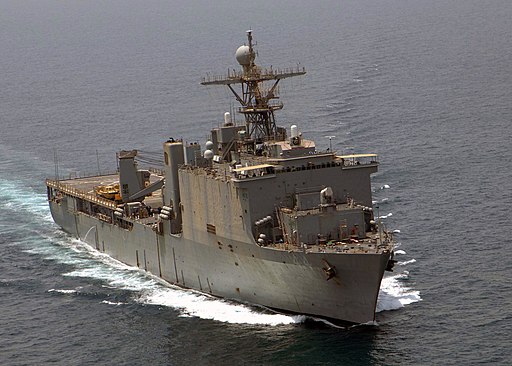
USS Gunston Hall (LSD-44)
USS Gunston Hall (LSD-44) is a distinguished dock landing ship of the United States Navy, renowned for its vital role in amphibious operations. As a key asset in transporting troops, vehicles, and equipment from sea to shore, this ship exemplifies the blend of robust engineering and operational flexibility. With a design tailored for both combat support and humanitarian missions, USS Gunston Hall stands as a symbol of maritime innovation and resilience.
Historical Background and Naming
Heritage and Namesake
USS Gunston Hall is named in honor of Gunston Hall, the historic estate of George Mason, one of America’s Founding Fathers. This namesake reflects the Navy’s tradition of linking its vessels to significant chapters of American history. The legacy of Gunston Hall is echoed in the ship’s commitment to service, embodying both tradition and modernity.
Service History and Contributions
Since her commissioning, USS Gunston Hall (LSD-44) has played an integral role in numerous amphibious operations and exercises. Over the decades, she has supported fleet operations, participated in multinational training missions, and provided disaster relief during humanitarian crises. Her enduring service highlights the ship’s adaptability and the Navy’s commitment to maintaining a versatile amphibious force.
Design and Construction
Construction Process and Timeline
USS Gunston Hall was constructed through a meticulous process that combined traditional shipbuilding techniques with state-of-the-art modern practices. Laid down in the late 1960s and commissioned in the early 1970s, her construction was part of a broader initiative to modernize the Navy’s amphibious capabilities. The vessel was built in modules, ensuring that every component met rigorous standards for durability and performance.
Design Innovations
The design of USS Gunston Hall reflects years of evolution in amphibious warfare technology. Every aspect of her construction—from the hull form to the integration of advanced systems—was optimized for efficient transport and rapid deployment of forces.
Hull and Structural Integrity
The ship’s hull is engineered for maximum strength and stability, featuring a reinforced structure capable of withstanding harsh maritime conditions. Its design minimizes resistance in various sea states, thereby improving fuel efficiency and operational range. The robust construction ensures that the vessel can safely launch and recover amphibious craft even in adverse weather conditions.
Propulsion and Powerplant
USS Gunston Hall is powered by a twin-shaft propulsion system that delivers a combined output of approximately 25,000 shaft horsepower. This powerplant enables the ship to achieve a top speed of around 20 knots while maintaining fuel efficiency over long deployments. The propulsion system’s reliability is critical for rapid maneuvering during amphibious operations, ensuring timely response in both combat and humanitarian scenarios.
Technical Specifications
Dimensions and Displacement
USS Gunston Hall (LSD-44) is designed to balance capacity with maneuverability. Key dimensions include:
- Length: Approximately 610 feet
- Beam: Around 84 feet
- Draft: Nearly 24 feet
- Displacement: Roughly 16,300 long tons at full load
These dimensions provide ample space for embarked troops, vehicles, and equipment while ensuring the ship remains agile in complex operational environments.
Propulsion and Performance
Engine and Propulsion System
The vessel’s twin-shaft propulsion system is powered by advanced marine turbines. This setup not only provides the necessary thrust for high-speed transit but also ensures steady and reliable performance during prolonged missions. The propulsion design supports a maximum speed of roughly 20 knots, ideal for keeping pace with carrier strike groups and rapid amphibious assaults.
Range and Endurance
Designed for extended deployments, USS Gunston Hall has an operational range of approximately 4,000 nautical miles at economical speeds. This endurance enables the ship to operate far from home ports, making her a versatile asset in both peacetime exercises and wartime contingencies.
Armament and Defensive Capabilities
While primarily an amphibious transport, USS Gunston Hall is equipped with defensive armaments to protect herself and the embarked forces from aerial and surface threats.
Close-In Defensive Systems
The ship is outfitted with automated close-in weapon systems (CIWS) and medium-caliber chain guns. These defensive measures provide a protective umbrella against missiles, small craft, and other immediate threats, ensuring the safety of the vessel during high-risk operations.
Electronic Countermeasures
In addition to physical armament, USS Gunston Hall employs a suite of electronic countermeasures and decoys. These systems enhance her survivability by disrupting enemy targeting and radar systems, making it difficult for adversaries to lock onto the ship during combat operations.
Capacity and Mission Support
Amphibious Craft and Vehicle Operations
A defining feature of USS Gunston Hall is her well deck—a spacious, floodable compartment designed for launching and recovering amphibious craft. The well deck can accommodate:
- Landing Craft Air Cushion (LCAC): For rapid beach assault and logistical support.
- Landing Craft Utility (LCU): For transporting vehicles and heavy equipment.
- Other Amphibious Vehicles: Facilitating troop movements and supply missions.
This versatility allows the ship to deploy a wide array of amphibious vehicles, thereby enhancing the Navy’s ability to conduct diverse amphibious operations.
Troop and Equipment Capacity
USS Gunston Hall is capable of carrying hundreds of Marines and their associated equipment. The ship’s design supports:
- Troop Accommodations: Modular living spaces that can house a significant number of embarked personnel.
- Vehicle Storage: Deck areas designed to safely transport armored vehicles, trucks, and other essential equipment.
- Cargo Handling: Integrated systems for rapid loading and unloading, ensuring swift transitions from sea to shore.
Communications, Navigation, and Sensor Systems
Integrated Communication Suite
The ship is equipped with an advanced communication suite that facilitates secure voice and data links with command centers and other naval vessels. This integration is critical for coordinating complex amphibious operations in real time.
Navigation and Radar Systems
Modern navigation systems, including GPS and inertial navigation units, work in tandem with high-performance radar systems to provide comprehensive situational awareness. These systems enable precise maneuvering in congested or contested maritime environments.
Sensor and Surveillance Capabilities
USS Gunston Hall employs a range of sensors to monitor both surface and subsurface activities. This includes advanced sonar systems for detecting underwater threats and infrared sensors for enhanced night-time operations. The sensor suite is pivotal in ensuring the ship can maintain operational readiness and respond quickly to evolving threats.
Operational Capabilities and Missions
Amphibious Warfare Role
USS Gunston Hall plays a central role in amphibious warfare by bridging the gap between naval forces and ground operations. Her ability to transport, launch, and recover landing craft makes her an indispensable asset during amphibious assaults, beach landings, and rapid force deployments.
Humanitarian and Disaster Relief Operations
Beyond combat roles, the ship has proven its versatility in humanitarian missions. With ample space for relief supplies, medical facilities, and support vehicles, USS Gunston Hall can quickly transition to disaster relief operations, providing vital assistance in the aftermath of natural disasters and humanitarian crises.
Modernization and Upgrades
Technological Enhancements
Throughout her service life, USS Gunston Hall has undergone several modernization initiatives. Upgrades to her electronic systems, communication suite, and sensor arrays have ensured that the ship remains capable of addressing contemporary threats. These improvements have also enhanced her interoperability with modern naval platforms, ensuring seamless integration into multi-domain operations.
Future-Proofing the Fleet
Ongoing modernization programs aim to extend the service life of USS Gunston Hall while incorporating emerging technologies. Plans include upgrading propulsion control systems, enhancing cybersecurity measures, and integrating new defensive countermeasures. These efforts underscore the Navy’s commitment to maintaining a robust and agile amphibious fleet well into the future.
Conclusion
USS Gunston Hall (LSD-44) is a paragon of modern amphibious warfare, merging advanced engineering with operational versatility. From her robust hull and efficient propulsion system to her comprehensive suite of defensive and communication technologies, every aspect of the ship has been designed to support the demanding nature of naval operations. As a key component in both combat and humanitarian missions, USS Gunston Hall continues to serve as a crucial asset for the United States Navy, embodying the spirit of innovation, resilience, and service that has defined her throughout her illustrious career.
_conducts_Surface_Action_Group_operations_during_exercise_Nautical_Union._Nautical_Union_is_a_joint_exercise_between_U.S._and_coalition_forces.jpg)