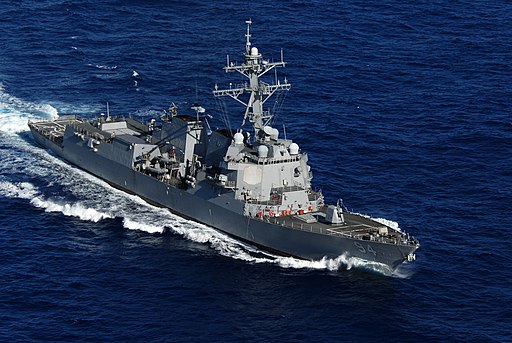
USS Nitze (DDG-94): Precision Power on the High Seas
USS Nitze (DDG-94) prowls global waters as a Flight IIA Arleigh Burke–class guided-missile destroyer, blending lethal force with networked defense and versatile mission profiles. Commissioned in 2005, she carries the name of Cold War strategist Paul Nitze and embodies next-generation naval warfare through advanced Aegis combat systems, stealth-honed design and comprehensive self-defense.
Design and Construction
Hull Form and Signature Reduction
Nitze’s hull follows the classic Arleigh Burke teardrop contours optimized for wave piercing and efficient cruising. Vertical surfaces are angled to scatter radar, while external fittings—from lifelines to ventilation trunks—are recessed or faired over to shrink her radar cross-section. Underwater, anechoic coatings and specially shaped bilge keels minimize acoustic signature, granting stealth in anti-submarine operations.
Modular Assembly and Shipyard Expertise
Built by Bath Iron Works, USS Nitze leveraged block-construction techniques. Prefabricated modules—each complete with piping, electrical wiring and machinery—were joined in a drydock, significantly reducing build time. Integrated testing of machinery and combat systems began ashore, ensuring rapid activation once afloat.
Technical Specifications
| Parameter | Value |
|---|---|
| Displacement (full load) | 9,200 tons |
| Length overall | 509 ft (155 m) |
| Beam | 66 ft (20 m) |
| Draft | 31 ft (9.4 m) |
| Propulsion | 4 × GE LM2500 gas turbines, 100,000 shp total |
| Shafts | 2 |
| Speed | 30+ knots |
| Range | 4,400 nm at 20 knots |
| Crew Complement | ~28 officers, ~301 enlisted |
| Aviation Facilities | Flight deck and hangar for 2 × MH-60R Seahawks |
Propulsion, Power Generation and Performance
COGAG Powerplant
Two shaft lines driven by four LM2500 gas turbines in a Combined Gas And Gas arrangement produce 100,000 shaft horsepower. This delivers dash speeds above 30 knots and rapid acceleration—critical for escorting carrier strike groups or evading threats.
Electrical Generation
Three 1,000 kW diesel generators supply hotel services, combat systems and sensor suites. An uninterrupted power system (UPS) buffers against electrical transients, ensuring Aegis fire control and radar remain online during battle damage or system failures.
Combat Systems and Sensor Suite
Aegis Baseline 9
At the heart of Nitze’s warfighting is Aegis Baseline 9, fusing air- and missile-defense tracks into a single combat picture. Digital consoles in the Combat Information Center display real-time weapon readiness, threat engagement windows and networked targeting data.
Radar and Sonar Arrays
- AN/SPY-1D(V) multi-function phased-array radar for long-range air and surface detection
- AN/SPS-67 surface-search radar for littoral and small-boat surveillance
- AN/SQQ-89(V)15 integrated antisubmarine warfare suite combining hull, flank and towed arrays
- AN/SPQ-9B high-resolution fire-control radar for over-the-horizon targeting
Electronic Warfare and Decoys
- AN/SLQ-32(V)3 electronic support measures for radar warning and jamming
- Mk 36 decoy launchers dispensing chaff and infrared flares
- Nulka active missile decoy for seduction of inbound anti-ship missiles
Armament
Vertical Launch System
Two Mk 41 VLS arrays—forward (61 cells) and aft (32 cells)—total 93 ready-to-launch cells (with some reserved for strike length rounds). Loadout options include:
- SM-2 and SM-6 surface-to-air missiles for area defense
- Tomahawk land-attack cruise missiles
- ASROC anti-submarine rockets with Mk 54 torpedo warheads
- Standard SM-3 interceptors on BMD-equipped vessels
Gun Systems and Point Defense
- One 5-inch/62-caliber Mk 45 Mod 4 naval gun delivers rapid-fire surface bombardment
- Two Mk 41 Phalanx CIWS provide last-ditch defense against missiles and aircraft
- Two rolling airframe missile (RAM) launchers for quick reaction to anti-ship threats
Torpedo Tubes
Two Mk 32 triple-tube launchers amidships fire Mk 46/54 lightweight torpedoes in anti-submarine engagements.
Aviation Facilities
A flight deck and enclosed hangar support two MH-60R Seahawk helicopters. These rotorcraft extend Nitze’s reach for submarine hunts, surface surveillance and search-and-rescue operations. A dedicated Aviation Support Equipment room stores mission-specific gear and munitions.
Crew Accommodations and Habitability
Space-efficient berthing compartments employ hot-racking for enlisted sailors, while officers enjoy two-person staterooms. Shared recreation areas include a gym, multimedia lounge and study rooms. Advanced HVAC systems regulate temperature and humidity, critical for electronics cooling and crew comfort during extended deployments.
Mission Profiles and Operational Capabilities
Air and Missile Defense
Nitze screens high-value units against aircraft and cruise or ballistic missiles. Aegis Baseline 9’s Integrated Air and Missile Defense allows simultaneous trackers of dozens of targets, engaging multiple threats with layered missiles.
Antisubmarine Warfare
A dense sonar envelope, towed array, rocket-delivered torpedoes and embarked Seahawk helos create a multidimensional submarine hunt package. Rapid data fusion ensures swift threat classification and prosecution.
Strike Warfare
With up to 24 Tomahawk missiles onboard, USS Nitze can deliver precision strikes against strategic land targets. Her naval gun system adds close-in fire support for amphibious operations or littoral engagements.
Ballistic Missile Defense
BMD-enabled configuration permits SM-3 interceptors to engage short- and medium-range ballistic missiles during ascent, contributing to regional missile defense architecture.
Surface Warfare
SM-2 and over-the-horizon targeting from Aegis radar enable engagements of enemy ships beyond visual range. Harpoon missiles can be embarked for additional anti-ship punch.
Service History
Commissioning and Early Deployments
Commissioned November 19, 2005, in Norfolk, USS Nitze joined Destroyer Squadron 22. Early deployments focused on Atlantic patrols, exercise support with NATO allies and counter-drug operations in the Caribbean.
Middle East Operations
Multiple deployments to the U.S. 5th and 6th Fleet AOR have seen Nitze escort carrier strike groups, perform maritime security patrols and participate in coalition operations, including strike missions in support of counter-terrorism campaigns.
Humanitarian and Disaster Relief
During regional crises, Nitze has provided medical evacuation, helicopter-borne supply delivery and communication relays—underscoring the flexibility of a well-armed destroyer in non-combat roles.
Modernization and Future Enhancements
Periodic overhauls update combat systems, install advanced generators and retrofit radar arrays with gallium-nitride transceivers for greater power efficiency. Planned upgrades include integration of directed-energy weapons and enhanced cyber resiliency modules, ensuring Nitze remains at the forefront of surface warfare well into the 2040s.
Conclusion
USS Nitze (DDG-94) unites stealth-aware design, formidable firepower and networked sensors to confront threats across the spectrum. Whether defending carrier groups from missile salvos, hunting silent adversaries beneath the waves or projecting precision strike ashore, she stands as a testament to flexible, future-ready naval engineering. As she sails toward new theaters, Nitze continues a legacy of adaptability and deterrence forged in steel, steam and Aegis lightning.
_is_underway_during_the_Atlantic_phase_of_UNITAS_52.jpg)