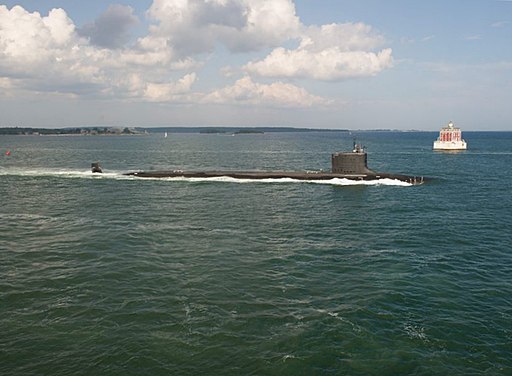
USS North Dakota (SSN-784): Technical Deep Dive
USS North Dakota (SSN-784) is a Block III Virginia-class nuclear-powered attack submarine commissioned in October 2014. She represents a major leap in undersea warfare through enhanced stealth, modular payloads and digital combat systems. Her mission set spans from intelligence gathering and special-operations support to anti-submarine and anti-surface warfare. North Dakota’s design emphasizes reduced acoustic signature and rapid adaptability to emerging threats.
Design and Construction
Block III Evolution
Block III boats introduced the Virginia Payload Tube concept, replacing twelve individual launch tubes with two large-diameter tubes. Each tube can house up to six cruise missiles or unmanned underwater vehicles. This change lowers construction costs and simplifies reloading procedures. The design also paves the way for future payloads like hypersonic missiles and seabed sensors.
Hull Architecture
The hull combines a high-strength HY-100 steel pressure shell with advanced anechoic coatings. Its teardrop form reduces hydrodynamic drag and minimizes flow noise. A reinforced bow region supports deeper test depths and exceptional maneuverability. Exterior fairings conceal control surfaces and streamline water flow.
Propulsion System
Nuclear Reactor and Turbines
North Dakota is powered by a single S9G pressurized water reactor fueled for a 33-year core life without refueling. Steam produced in the reactor drives two high-efficiency turbines generating roughly 30 MW of mechanical power. Heat exchangers and redundant safety systems ensure continuous operation under combat conditions.
Pump-Jet Propulsor and Silent Drive
A pump-jet propulsor replaces a traditional propeller to drastically cut acoustic emissions. The main shaft is coupled to both the pump-jet and a secondary low-speed electric motor. During silent operations, the electric motor alone propels the submarine at low speed with minimal noise. The arrangement balances top-end speed and stealthy creep.
Combat Systems and Armament
Vertical Launch and Torpedo Tubes
- Two Virginia Payload Tubes, each accommodating up to six UGM-109 Tomahawks or new payload types.
- Four 533 mm bow torpedo tubes firing Mk 48 heavyweight torpedoes, Harpoon anti-ship missiles and mobile mines.
- Quick-change modular launch interfaces support special-operations canisters and unmanned systems.
Sonar and Electronic Warfare Suite
North Dakota carries a bow-mounted spherical array, a towed sonar array and high-frequency flank arrays. Hull-mounted intercept sensors detect incoming active sonar pings. An integrated combat control system fuses acoustic, electronic-support measures and tactical data links. Automation accelerates target classification and engagement cycles.
Habitability and Crew Support
Accommodations and Life Support
The crew of 134 is housed in improved berthing modules with increased personal storage and privacy. Advanced air-scrubbing, water-reclamation and waste-management systems extend patrol durations. A modular galley and fitness area help sustain morale on long deployments. LED lighting mimics natural daylight cycles for better sleep regulation.
Training and Automation
Integrated ship-handling simulators and virtual-reality stations enable continuous watch-team training off-duty. Automated machinery-control systems reduce manual monitoring and free personnel for tactical tasks. Predictive-maintenance analytics schedule system checks before failures occur. These features cut crew fatigue and enhance mission readiness.
Operational Capabilities
Stealth, Speed and Endurance
- Maximum submerged speed: 25 knots (46 km/h)
- Endurance: reactor-limited, over 30 years without refueling
- Test depth: exceeds 240 m (800 ft)
- Acoustic signature: among the lowest of any attack submarine
Mission Profiles
Typical deployments include undersea surveillance, strike warfare, special-operations delivery and anti-submarine warfare. North Dakota can support unmanned undersea vehicle swarms for mine countermeasures or seabed mapping. Her digital architecture allows real-time sharing of sensor and targeting data with allied platforms. Exercises have demonstrated rapid Tomahawk reloads and integrated fleet defense.
Future Upgrades and Strategic Impact
Block III’s payload flexibility sets the stage for hypersonic missile integration, under-ice Arctic operations and advanced sensor packages. Ongoing software modernization will introduce artificial-intelligence-assisted decision aids in the combat suite. As part of a growing Virginia-class fleet, North Dakota reinforces U.S. undersea dominance and deterrence. Lessons learned from her deployments feed into the development of the next-generation SSN(X) design.
_underway_during_trials_in_August_2014.JPG)